Artwork
Landscape with Battle Scene
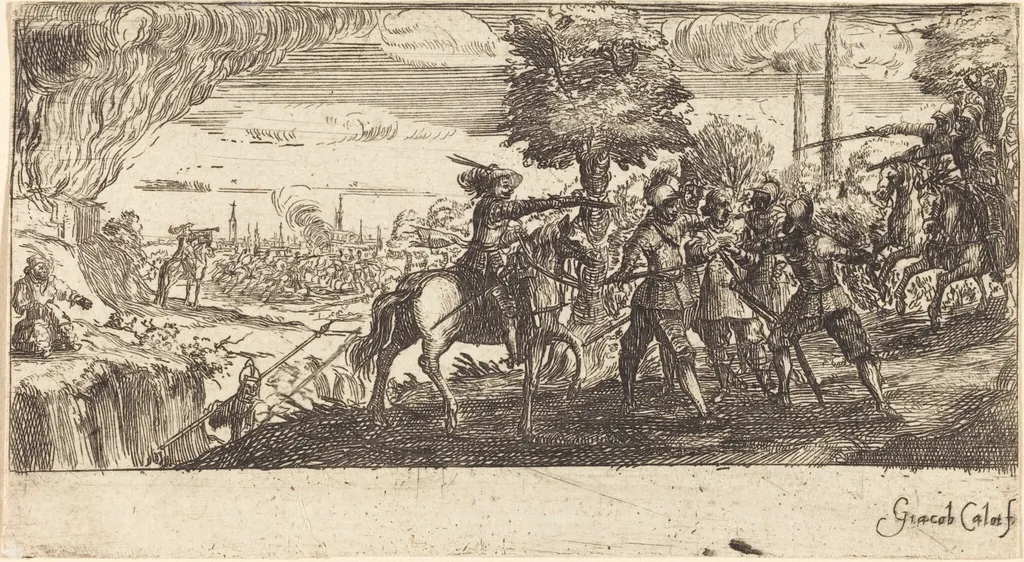
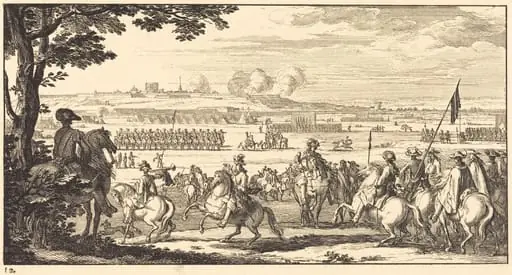
Landscape with Battle Scene is an ink print by the Baroque artist French 17th Century. It dates from 1650 and is held in the collection of the National Gallery of Art. The work is a monochrome print depicting a tumultuous battlefield.
About this work
The rough texture of the paper suggests this is an etching, a printmaking method that uses acid to carve into metal plates.
This black-and-white print shows a chaotic battle scene. Soldiers on horseback clash with others on foot, surrounded by trees and a distant city skyline. The artist used sharp lines to show movement, with swirling clouds and windblown hair adding drama.
The rough texture of the paper suggests this is an etching, a printmaking method that uses acid to carve into metal plates. The artist focused on action and energy, packing the scene with figures and movement.
If you like this style, check out more works by the French 17th Century artists.
Overview
The work is a monochrome print depicting a tumultuous battlefield. Mounted troops engage foot soldiers amid a wooded landscape, while a distant urban skyline looms on the horizon. Dynamic lines convey motion, and swirling clouds and wind‑tossed hair heighten the sense of chaos. Executed on laid paper, the image balances densely populated foreground action with a more open background.
Subject & Meaning
The composition portrays a clash between cavalry and infantry, suggesting a historic or mythic conflict. The inclusion of trees and a cityscape situates the combat within a recognizable terrain, perhaps alluding to the impact of war on both nature and civilization. The crowded figures and turbulent atmosphere emphasize the violence and disorder inherent in armed confrontation.
Technique & Style
Created through etching, the artist incised a metal plate with acid, then transferred the image onto laid paper. The pronounced texture of the paper highlights the fine line work and deep shadows characteristic of the medium. Sharp, intersecting lines render movement, while the contrast between dark ink and white surface intensifies the dramatic effect.
History & Provenance
The print belongs to the tradition of 17th‑century French printmaking, a period when etching was widely employed to disseminate complex narrative scenes. While specific details of its creation and ownership are not recorded, its stylistic traits align it with works produced by French artists of that era.
Context
During the 1600s, French artists frequently explored military subjects, reflecting contemporary conflicts and the patronage of aristocratic collectors. Prints such as this served both as visual documentation of battles and as decorative objects for educated audiences, illustrating the period’s fascination with heroic and turbulent narratives.
Artist & collection

Artist
Seventeenth-century French printmakers turned ink into story. Their tools were burin and acid, paper their stage. Look at the Beggar Woman with Rosary (1622), etched on laid paper, her hands folded around faith, or The…

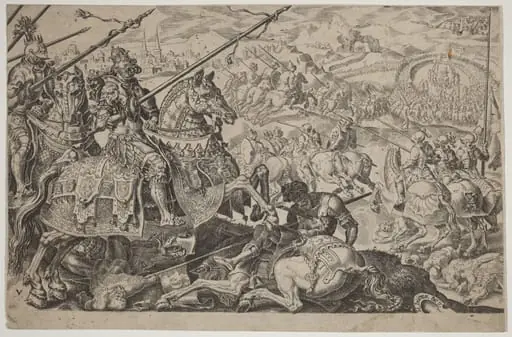 Suleiman the Magnificent Forced to Raise the Siege of Vienna
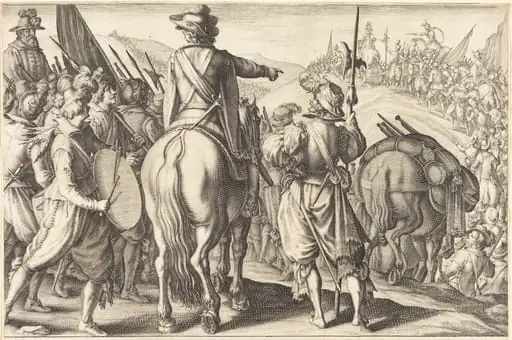 The Troops on the March
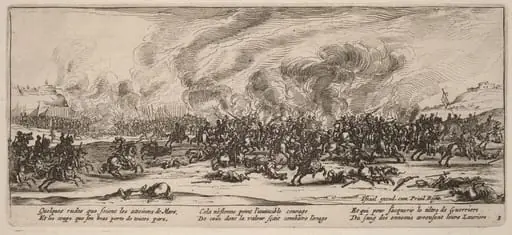 The Battle
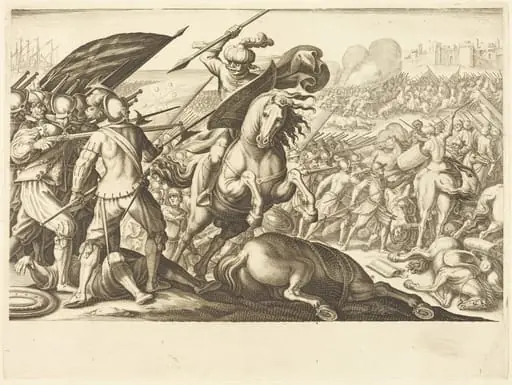 The Defeat of the Turkish Cavalry
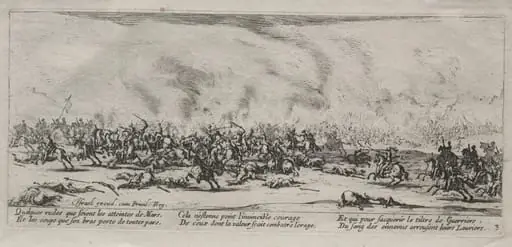 The Large Miseries of War: The Battle
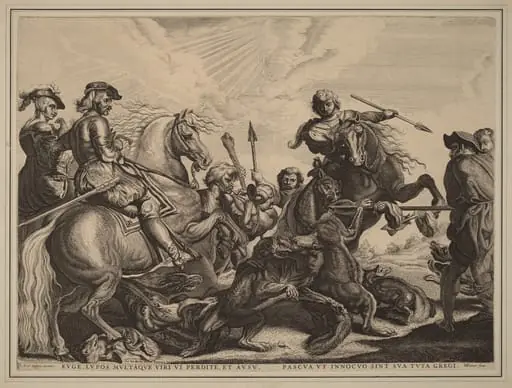 The Wolf Hunt
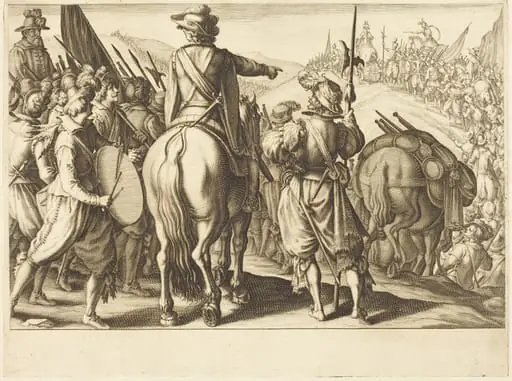 The Troops on the March
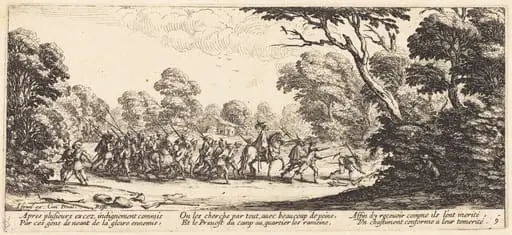 Discovery of the Criminal Soldiers
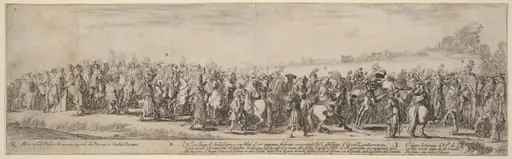 Polish Nobles, His Excellency the Ambassador, and His Carriage
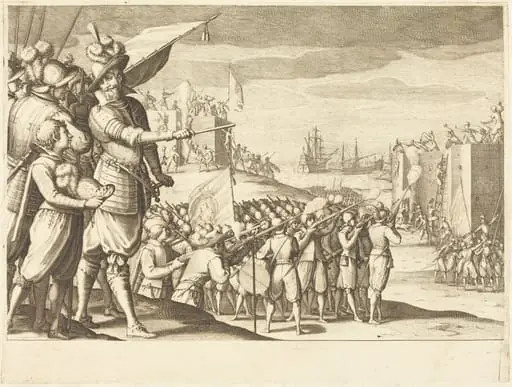 Assault on Two Fortresses
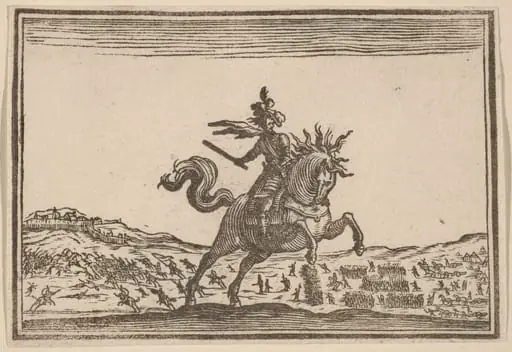 Military Commander on Horseback
 Landscape with an Army