Artwork
The Conversion of Saint Augustine; Saint Hilary; Saint John before the Latin Portal; Saint John of Damascus
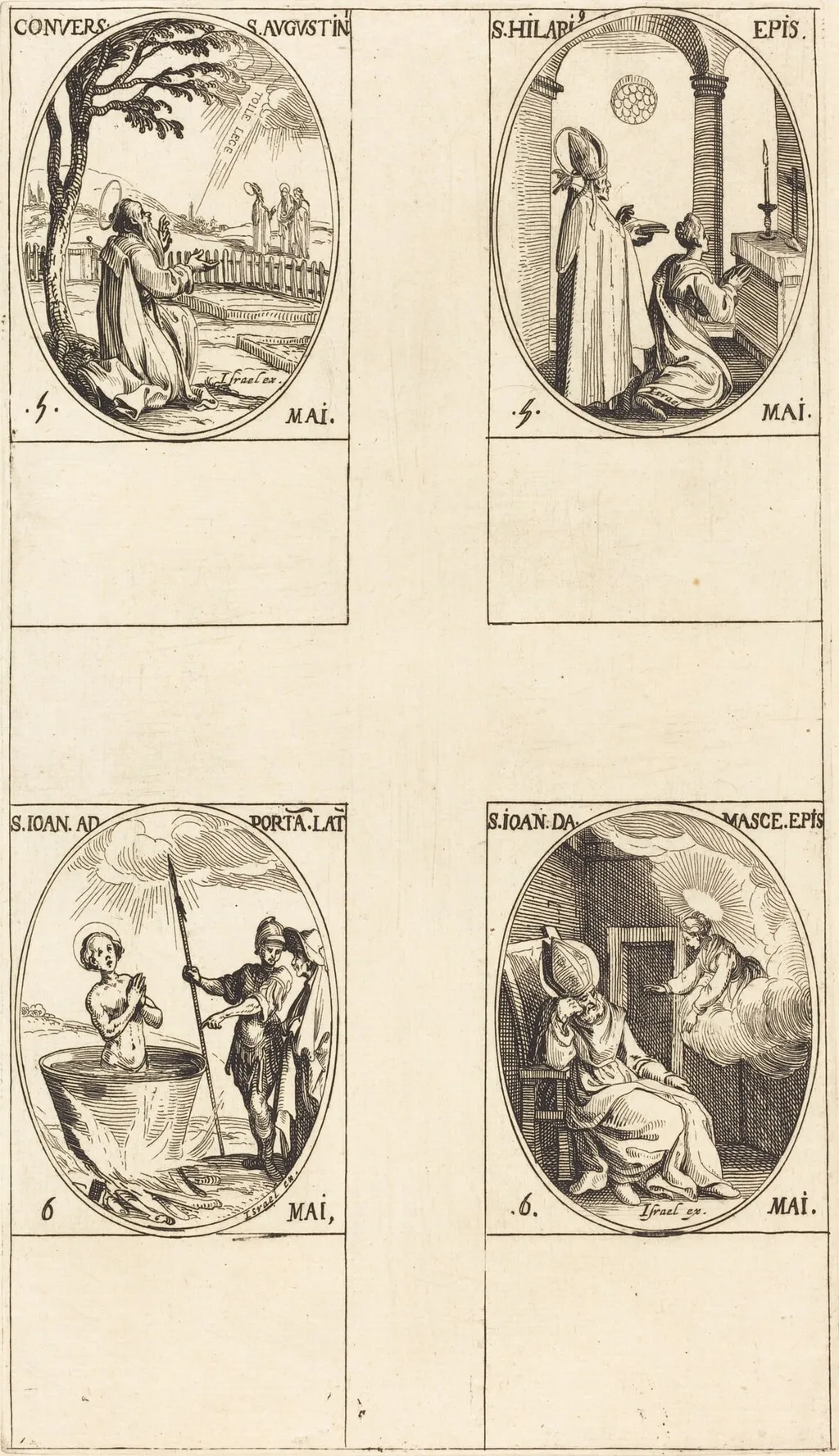
The Conversion of Saint Augustine; Saint Hilary; Saint John before the Latin Portal; Saint John of Damascus is an ink print by the Baroque artist Jacques Callot. It dates from 1634 and is held in the collection of the National Gallery of Art.
About this work
Overview
This etching on laid paper, created by French baroque printmaker Jacques Callot around 1634, presents four distinct scenes within circular frames, each depicting a pivotal moment in the lives of four different saints.
Subject & Meaning
Each scene highlights a transformative or contemplative instant in the saints' lives, unified by themes of devotion and spiritual epiphany.
The composition brings together four religious narratives: the conversion of Saint Augustine, Saint Hilary in contemplation, Saint John before the Latin Portal (likely a reference to Saint John the Baptist or Saint John the Evangelist in a specific context), and Saint John of Damascus. Each scene highlights a transformative or contemplative instant in the saints' lives, unified by themes of devotion and spiritual epiphany.
Technique & Style
Callot employed etching, a technique characteristic of his oeuvre, to craft intricate, detailed black and white images. The dense linework and the use of circular frames for each scene exemplify Callot's mastery of composition and his ability to convey depth and narrative within constrained, rounded spaces.
History & Provenance
Part of Callot's extensive religious output within his over 1,400 etchings, this work reflects his contribution to 17th-century old master printmaking. Specific provenance details are not provided, but it aligns with Callot's practice of producing works that could be widely disseminated due to the nature of printmaking.
Context
Created during the Baroque period, this etching taps into the era's emphasis on emotional intensity and detailed realism in religious art. Callot's choice of multiple scenes in one work may also reflect the contemporary interest in compiling and comparing saintly virtues and stories.
Legacy
As part of Callot's prolific output, this etching contributes to his legacy as a innovator in etching techniques and a chronicler of religious themes in early 17th-century Europe. It showcases his capacity to balance multiple narratives within a single, cohesive artwork.
Artist & collection
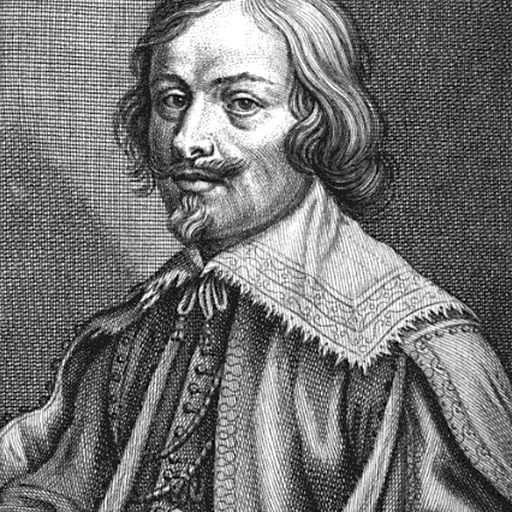
Artist
Jacques Callot was a baroque printmaker and draftsman from the Duchy of Lorraine.

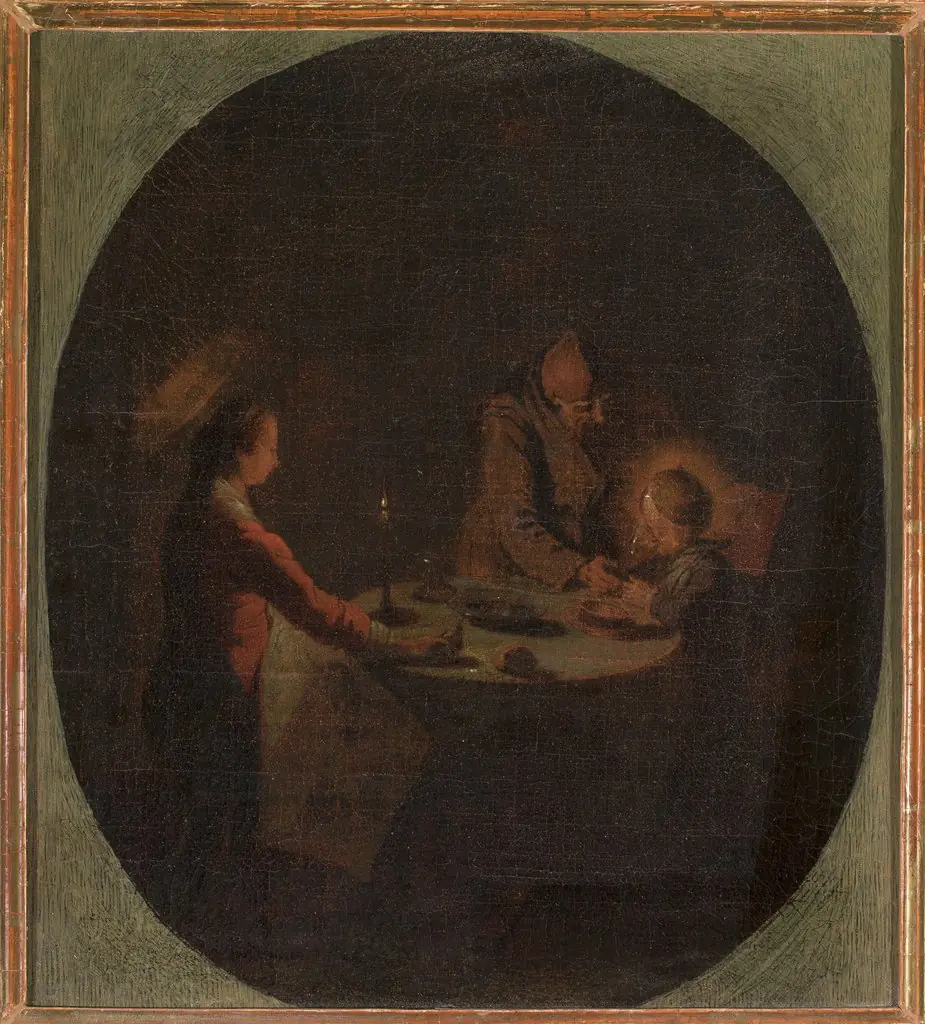 Holy Family at supper
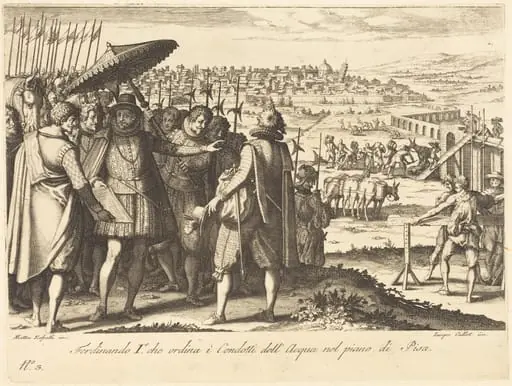 Restoration of the Aqueduct at Pisa
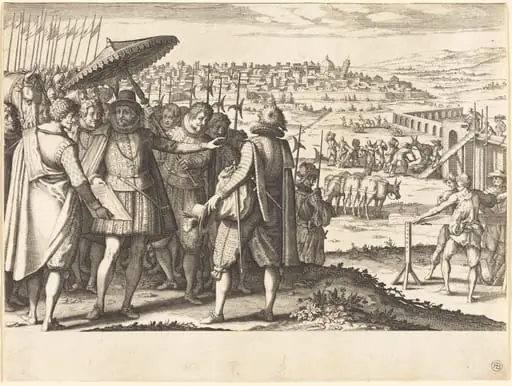 Restoration of the Aqueduct at Pisa
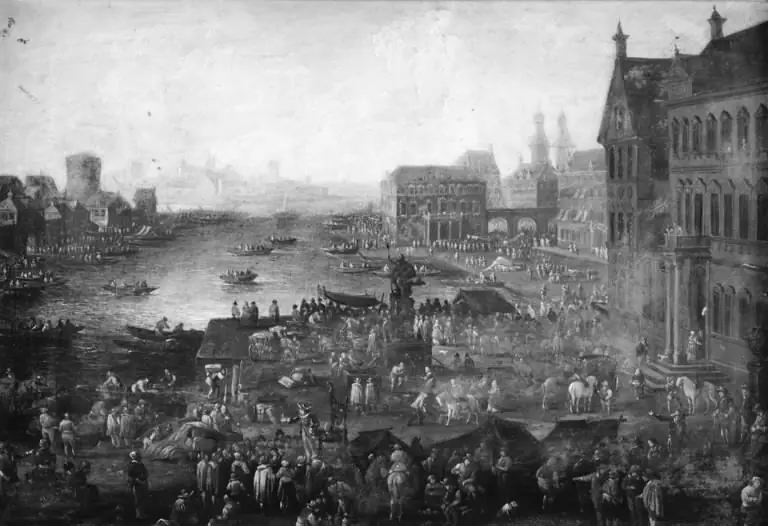 Square in Paris with Many Figures
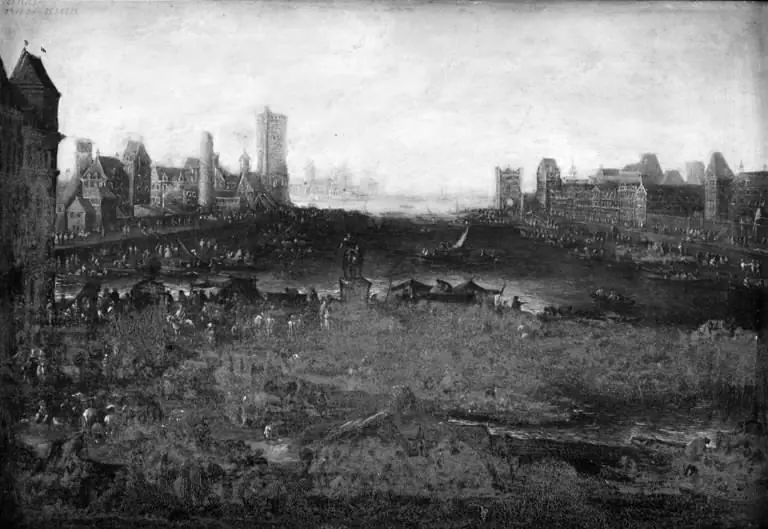 Square in Paris with Many Figures
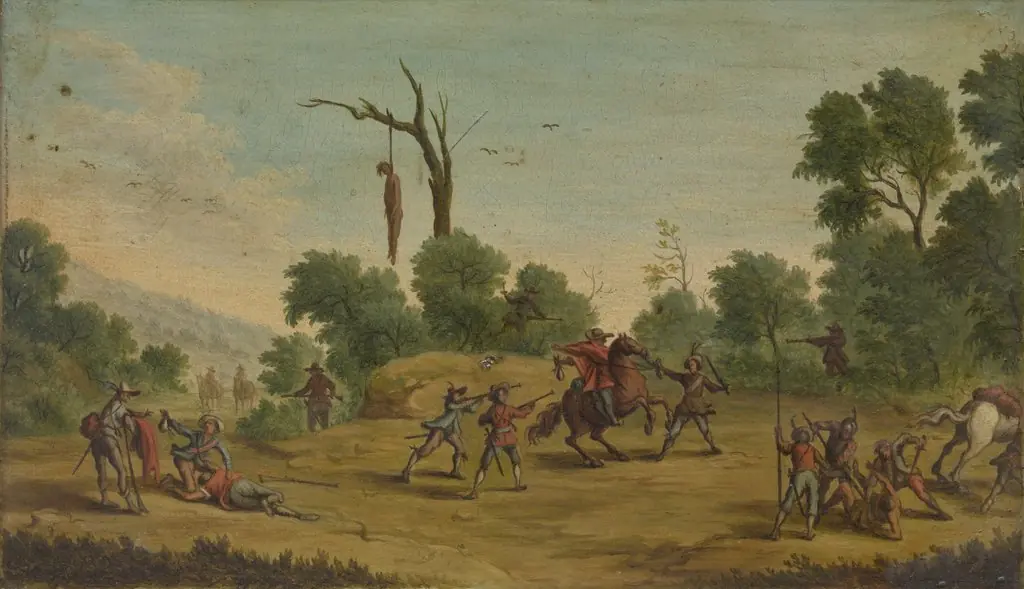 Horsemen Attacked by Robbers
 HOW WILL A COVERED PART BE CORRECTED?HOW WIKA A COVERED HEART DEED CORRECTED?
![Christ Walking on the Water [second plate], by Jacques Callot](https://artifactworldgallery.com/img/jacques-callot--christ-walking-on-the-water-second-plate--2069f3bfe4cb2126-w320.webp) Christ Walking on the Water [second plate]
Christ Walking on the Water [second plate]
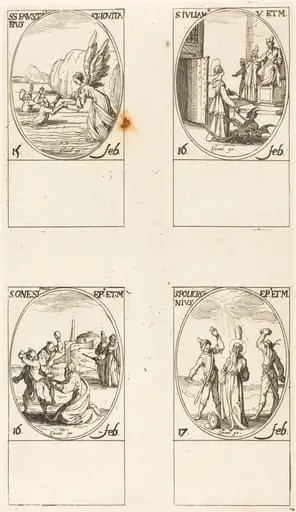 Sts. Faustinus and Jovita; St. Juliana; St. Onesimus; St. Policronius
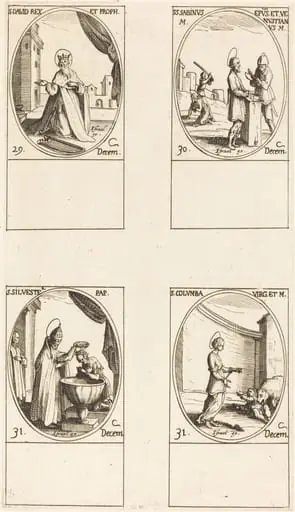 St. David, King and Prophet; Sts. Sabinus and Venustianus; St. Sylvester; St. Colomba
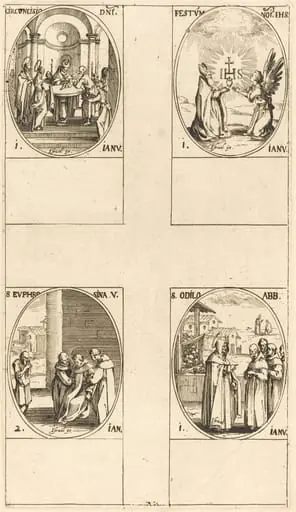 Circumcision; Festival of Name of Christ; St. Odilo; St. Euphrosyna
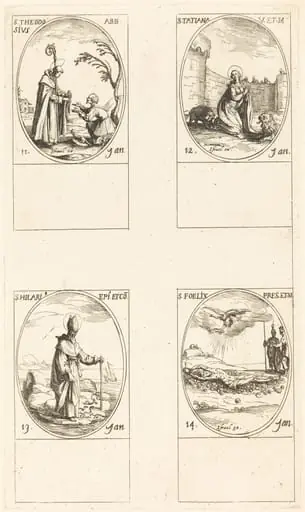 St. Theodosius; St. Tatiana; St. Hilary; St. Felix
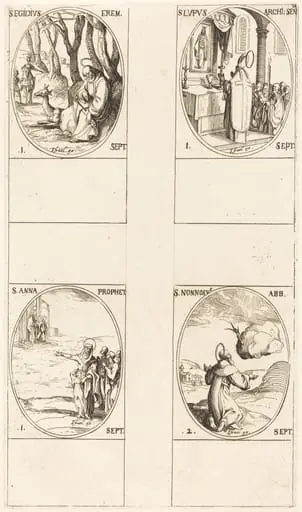 St. Giles; St. Lupus; St. Anne; St. Nonnosus
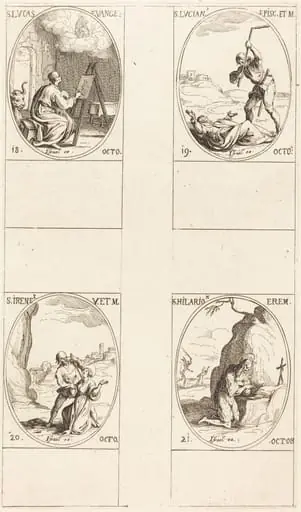 St. Luke; St. Lucian; St. Irene; St. Hilarion
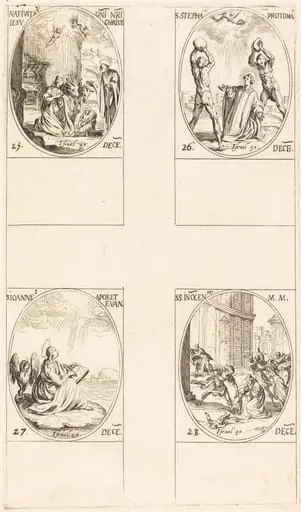 The Nativity; St. Stephen; St. John; Holy Innocents
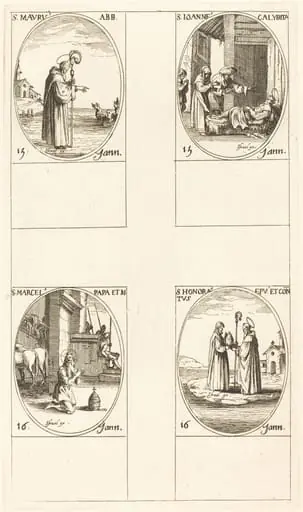 St. Maurus; St. John Calybite; St. Marcellus; St. Honoratus
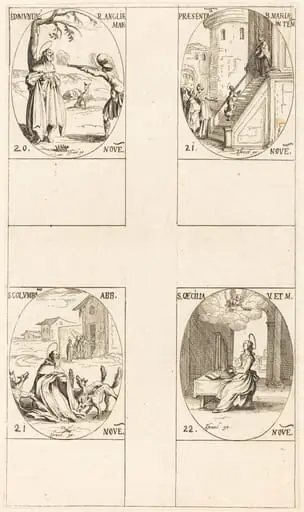 Edmund, King of England, Martyr; Presentation of the Virgin; St. Columban; St. Cecelia
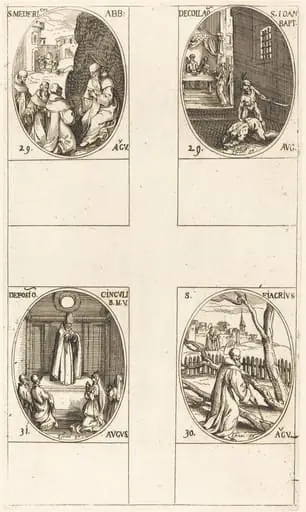 St. Mederic, Abbot; Beheading of John the Baptist; St. Fiacre; Festival of the Belt of the Virgin
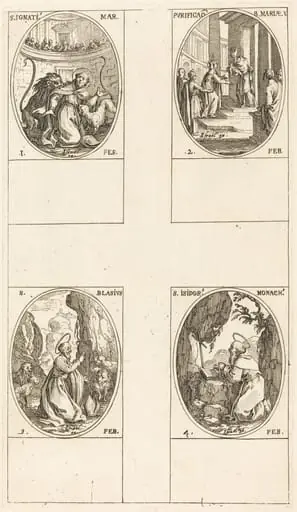 St. Ignatius; Purification of the Virgin; St. Blaise; St. Isidore
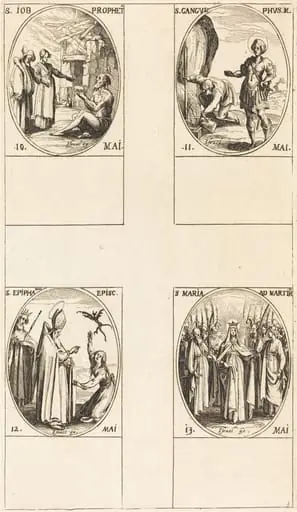 St. Job, Prophet; St. Gangulphus; St. Epiphanius; St. Mary of Martyrs