Artwork
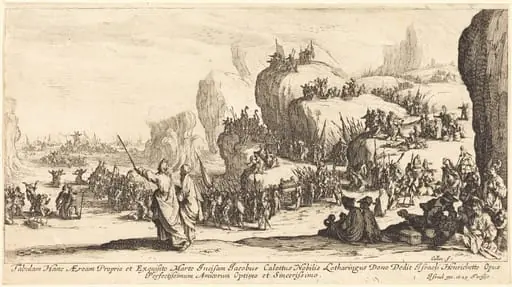
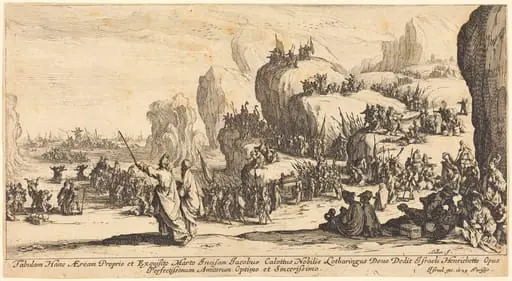
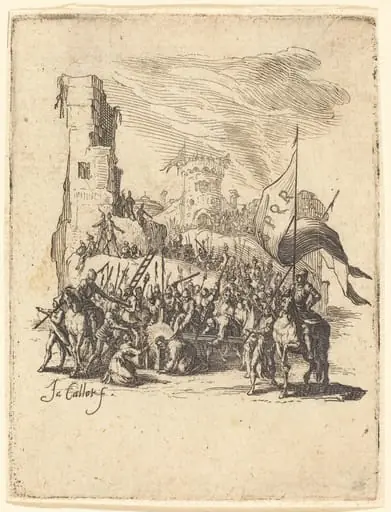
The Carrying of the Cross
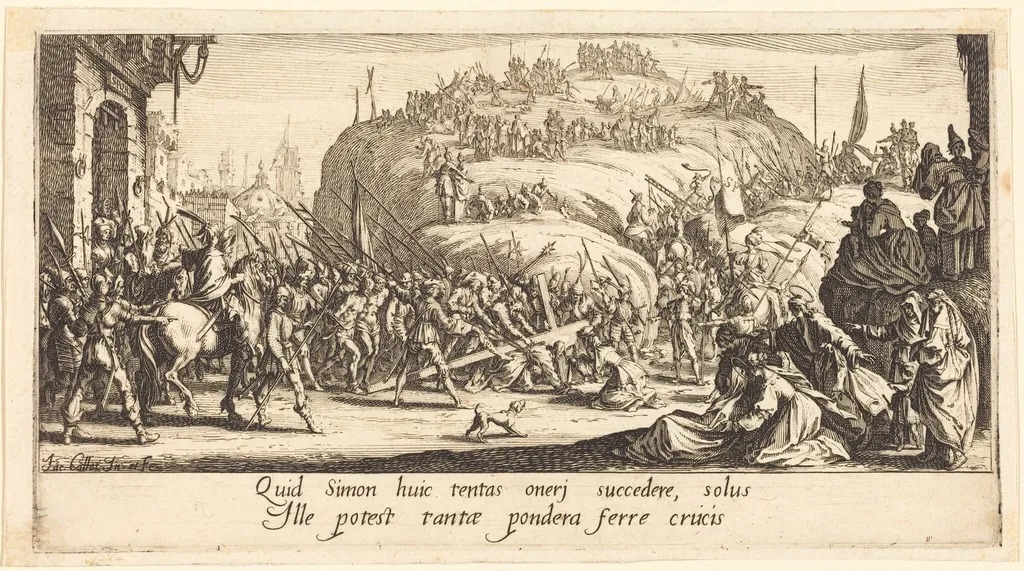
The Carrying of the Cross is an ink print by the Baroque artist Jacques Callot. It dates from 1618 and is held in the collection of the National Gallery of Art.
About this work
Overview
The Carrying of the Cross is a print created by Jacques Callot around 1618, utilizing etching and engraving techniques on laid paper. Characteristic of Callot's prolific output, this work showcases his ability to capture dynamic scenes.
Subject & Meaning
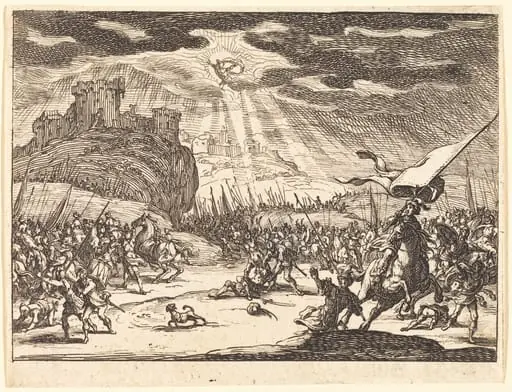
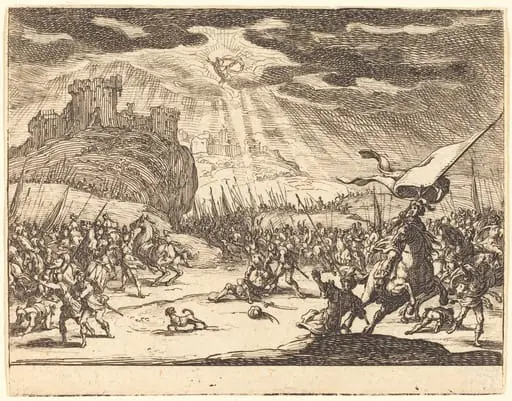
Contrary to its title, the print depicts a chaotic battle scene rather than the traditional biblical narrative of Christ carrying the cross. The composition emphasizes turmoil, with a wounded figure, clashing soldiers, horses, and weaponry, set against a distant cityscape.
Technique & Style
Callot employed fine etching lines to convey intense movement and drama. The crowded grouping of figures was a deliberate choice to heighten the sense of tension and action within the scene.
History & Provenance
Created in the early 17th century by French baroque printmaker Jacques Callot, this work is part of his extensive corpus of over 1,400 etchings, which often blended detailed landscapes with contemporary and religious subjects.
Context
While titled after a religious theme, the print reflects Callot's interest in documenting the tumultuous aspects of his time, possibly alluding to the conflicts of the Thirty Years' War or the general unrest in Europe during the early 17th century.
Legacy
The Carrying of the Cross contributes to Callot's legacy as a master of etching, influencing subsequent generations of printmakers with its dynamic composition and technical precision, despite its deviation from the expected biblical narrative.
Artist & collection
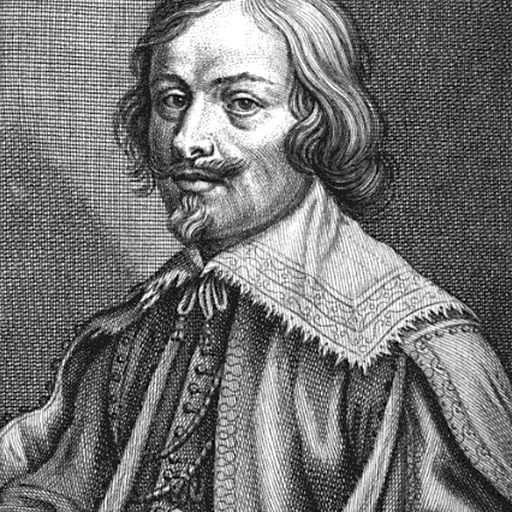
Artist
Jacques Callot was a baroque printmaker and draftsman from the Duchy of Lorraine.

 Holy Family at supper
 Restoration of the Aqueduct at Pisa
 Restoration of the Aqueduct at Pisa
 Square in Paris with Many Figures
 Square in Paris with Many Figures
 Horsemen Attacked by Robbers
 HOW WILL A COVERED PART BE CORRECTED?HOW WIKA A COVERED HEART DEED CORRECTED?
![Christ Walking on the Water [second plate], by Jacques Callot](https://artifactworldgallery.com/img/jacques-callot--christ-walking-on-the-water-second-plate--2069f3bfe4cb2126-w320.webp) Christ Walking on the Water [second plate]
Christ Walking on the Water [second plate]