Artwork
The Crowning with Thorns
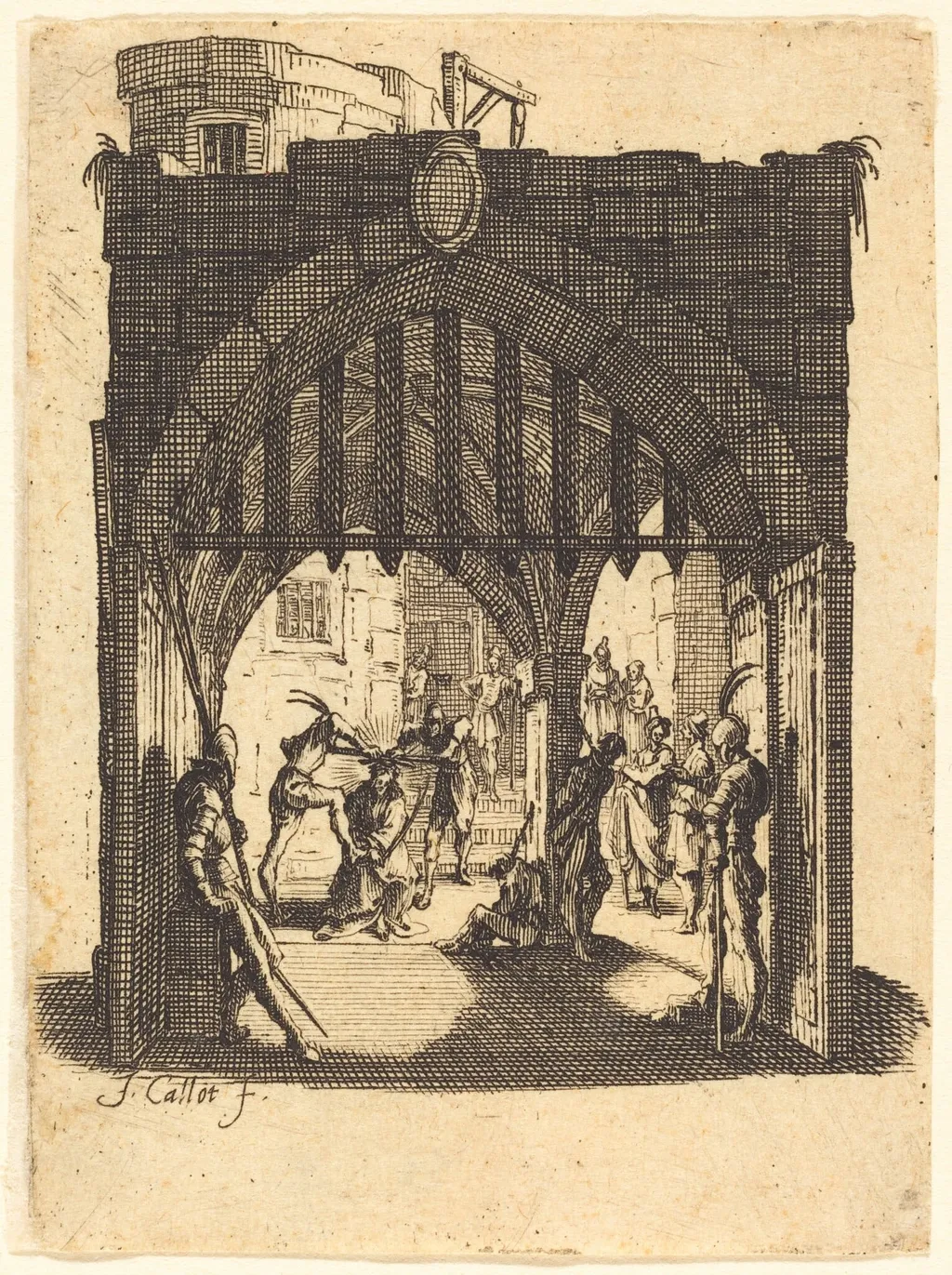
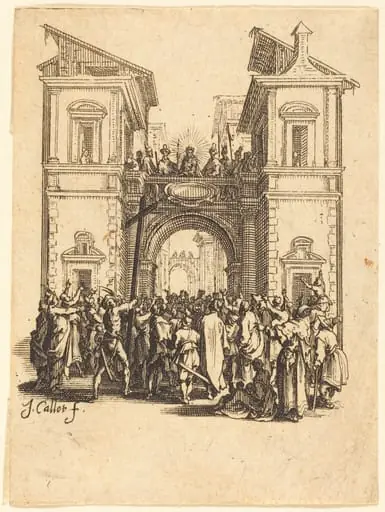
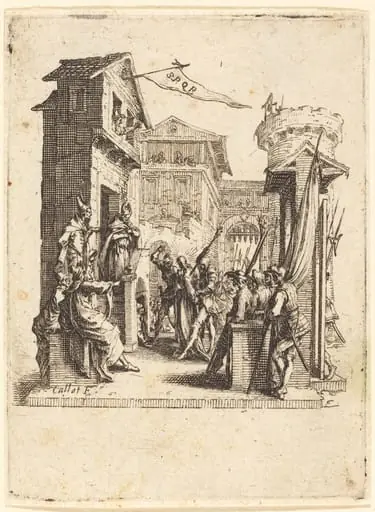
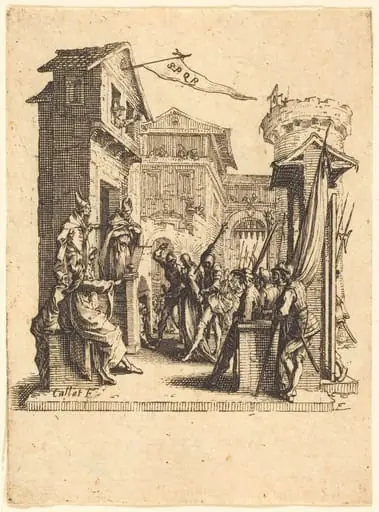
The Crowning with Thorns is an ink print by the Baroque artist Jacques Callot. It dates from 1624 and is held in the collection of the National Gallery of Art.
About this work
Overview
Created around 1624 by Jacques Callot, *The Crowning with Thorns* is an etching on laid paper that captures a pivotal moment from the Passion of Christ.
Created around 1624 by Jacques Callot, *The Crowning with Thorns* is an etching on laid paper that captures a pivotal moment from the Passion of Christ. As one of over 1,400 prints by the Lorrainer artist, this work exemplifies his dedication to printmaking as a medium for both narrative and technical exploration. Unlike painted altarpieces, Callot’s etching reaches broader audiences through reproducibility, aligning with the era’s growing demand for devotional imagery in accessible forms.
Subject & Meaning
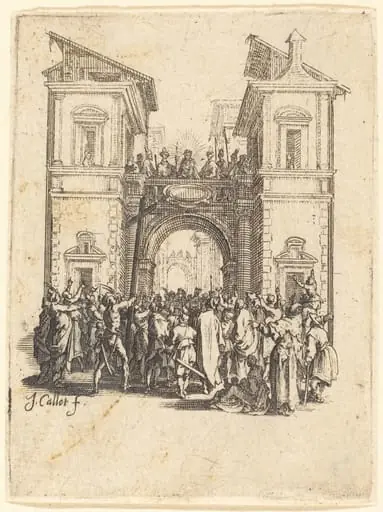
The scene depicts Christ being mocked by Roman soldiers as they press a crown of thorns onto his head, a moment of suffering central to Christian theology. Callot renders the event with restrained gravity, avoiding overt drama. The crowd of figures surrounds Christ, their gestures and postures suggesting cruelty and indifference, while his quiet resignation draws the viewer’s attention. The composition emphasizes spiritual endurance amid human brutality, reflecting devotional priorities of early 17th-century Catholicism.
Technique & Style
Callot employed fine, controlled etching lines to model form and express emotion with minimal means. His use of cross-hatching and delicate tonal gradations creates depth and texture without heavy ink washes. Despite the small scale and crowded composition, individual expressions are rendered with precision—eyes downcast, mouths twisted, hands gripping or recoiling. This meticulous line work showcases his mastery of the etching needle and his ability to convey psychological nuance through line alone.
History & Provenance
The print emerged during Callot’s most productive years, following his time in Florence and Rome, where he absorbed Italian compositional traditions. It was likely produced in Nancy or Paris for a devotional market, possibly commissioned or circulated among religious patrons. Few original impressions survive in public collections, but its presence in multiple institutional holdings suggests it was widely distributed in its time, reflecting its resonance within Catholic visual culture.
Context
In early 17th-century Europe, religious imagery remained vital amid the Counter-Reformation’s emphasis on emotional engagement with sacred narratives. Callot’s etchings, including this one, responded to a demand for portable, affordable devotional aids. His focus on marginalized figures and violent scenes—like soldiers, beggars, and crucifixions—aligned with a broader trend toward humanizing biblical stories, making them immediate and tangible for viewers outside elite ecclesiastical circles.
Legacy
Callot’s technical innovations in etching influenced generations of printmakers across Europe, particularly in the use of fine line and expressive detail. *The Crowning with Thorns* stands as an early example of how printmaking could convey complex religious emotion without grandeur or color. Its restrained intensity and narrative clarity helped establish etching as a legitimate medium for sacred subjects, paving the way for later artists like Rembrandt and Goya.
Artist & collection
Artist
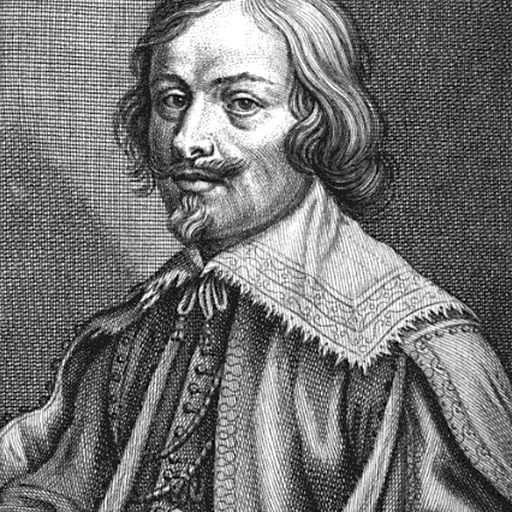
Jacques Callot was a baroque printmaker and draftsman from the Duchy of Lorraine.

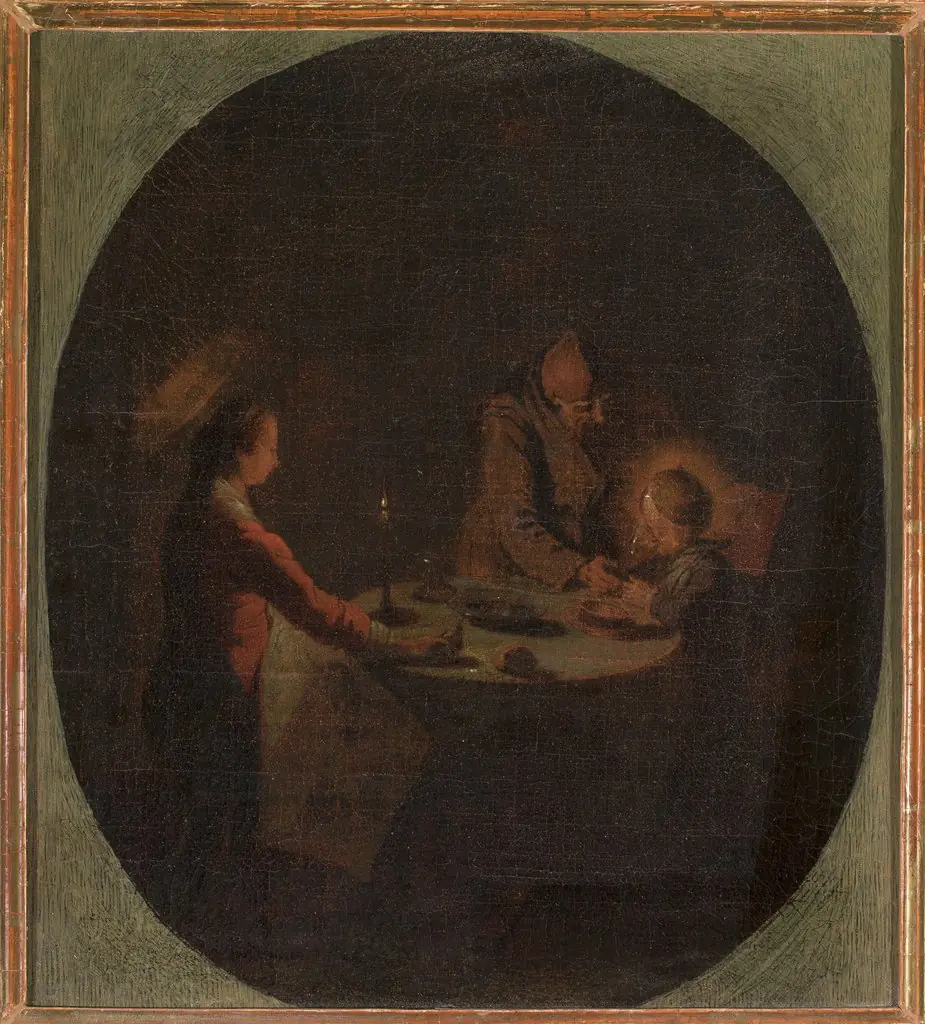 Holy Family at supper
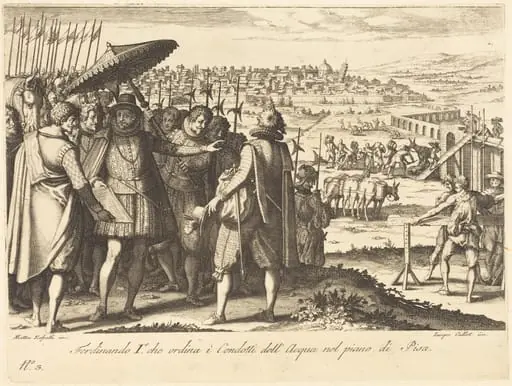 Restoration of the Aqueduct at Pisa
 Restoration of the Aqueduct at Pisa
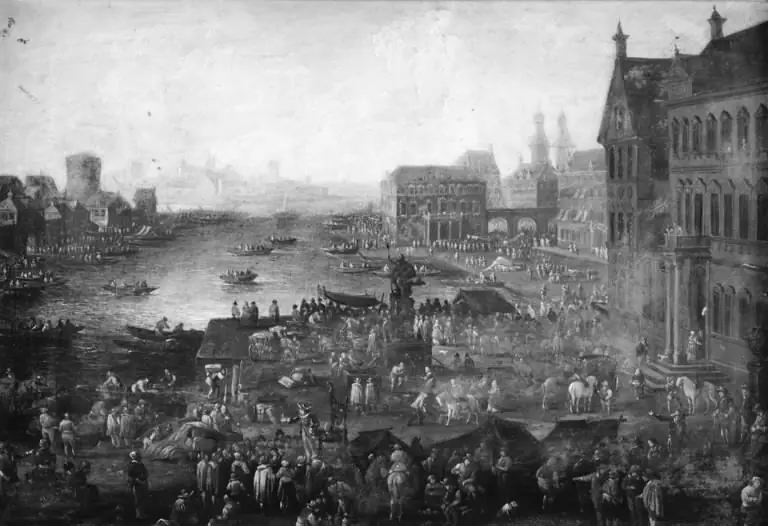 Square in Paris with Many Figures
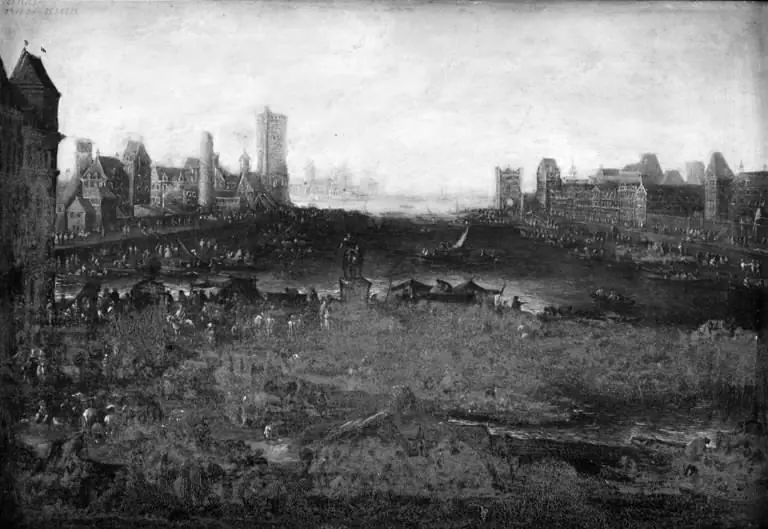 Square in Paris with Many Figures
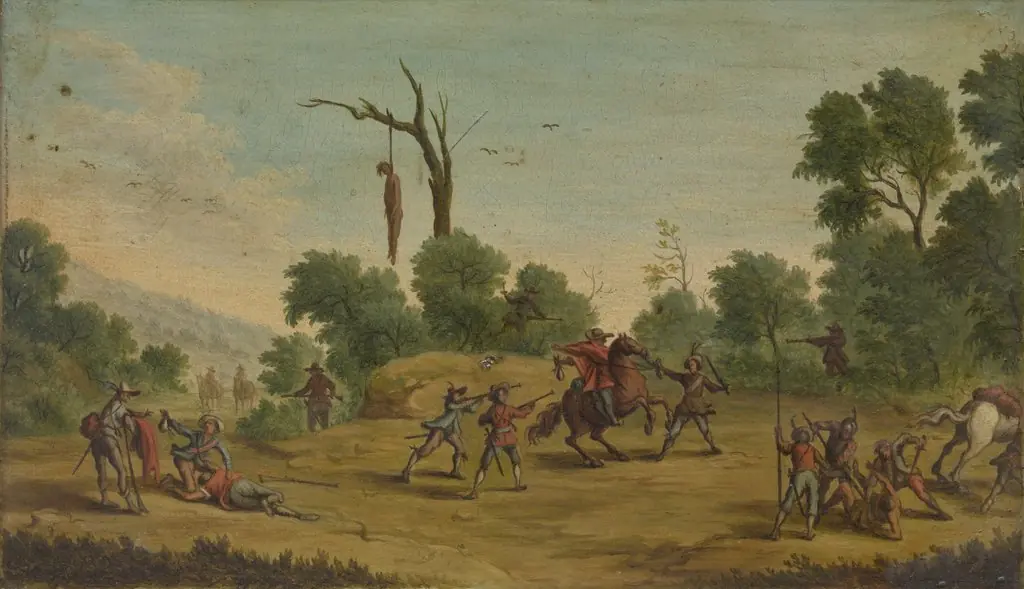 Horsemen Attacked by Robbers
 HOW WILL A COVERED PART BE CORRECTED?HOW WIKA A COVERED HEART DEED CORRECTED?
![Christ Walking on the Water [second plate], by Jacques Callot](https://artifactworldgallery.com/img/jacques-callot--christ-walking-on-the-water-second-plate--2069f3bfe4cb2126-w320.webp) Christ Walking on the Water [second plate]
Christ Walking on the Water [second plate]