Artwork
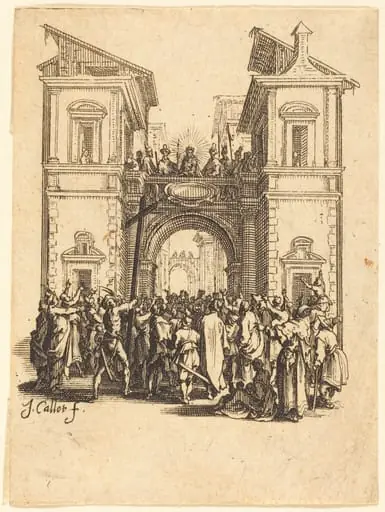
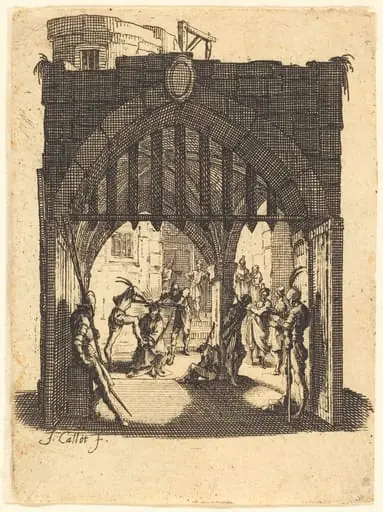
Christ before Caiaphas
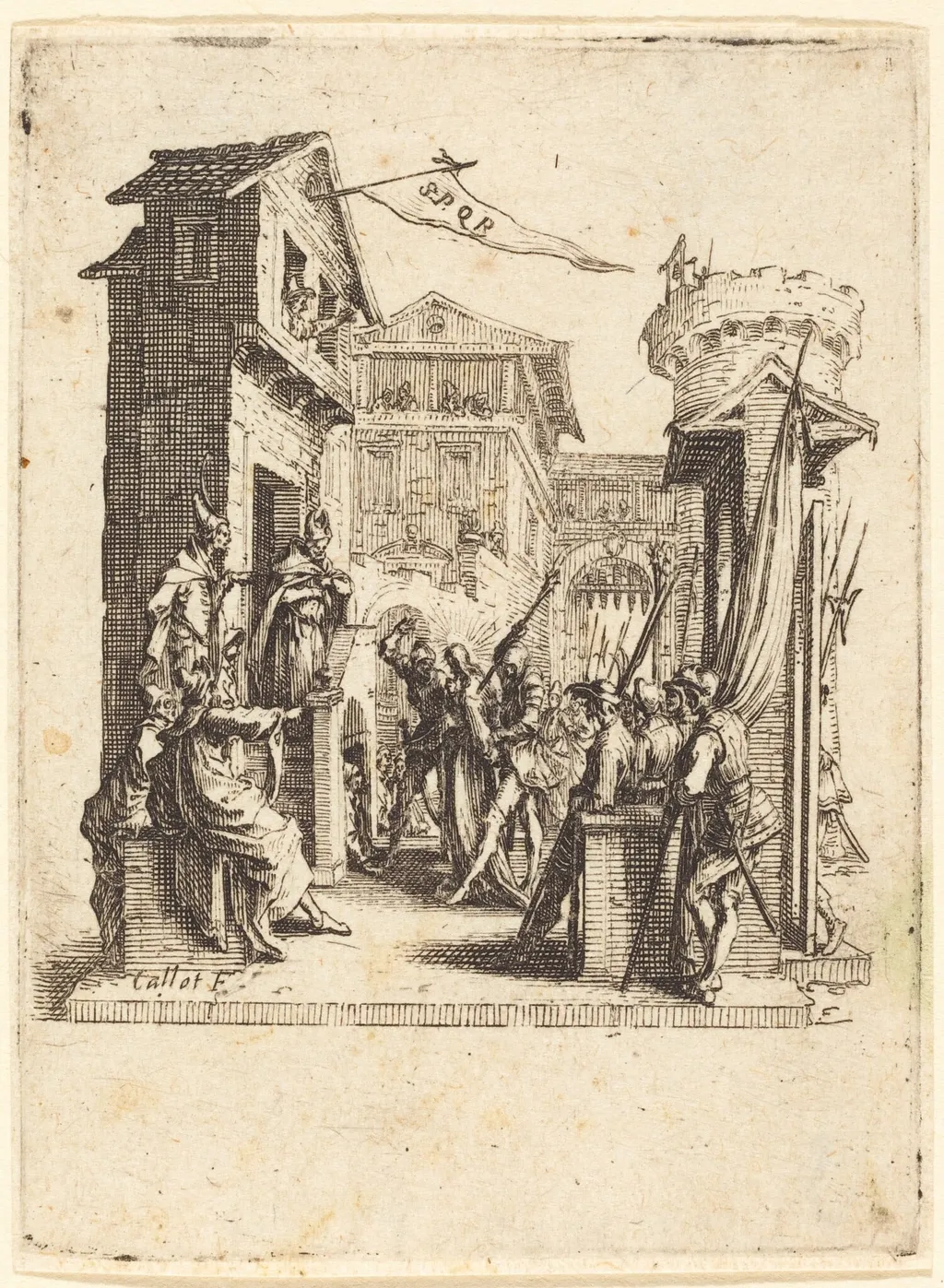
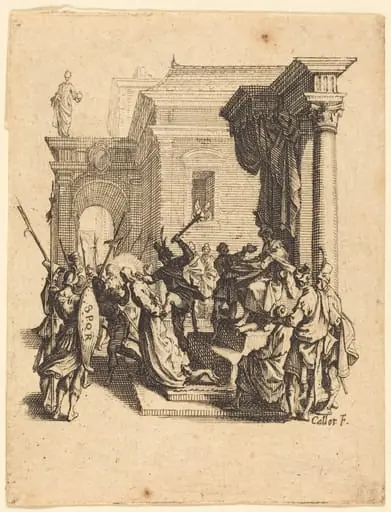
Christ before Caiaphas is an ink print by the Baroque artist Jacques Callot. It dates from 1624 and is held in the collection of the National Gallery of Art.
About this work
Overview
Christ before Caiaphas is an etching on laid paper created by Jacques Callot around 1624. The work is a representation of a pivotal biblical scene, showcasing Callot's technical proficiency in printmaking and his interest in religious narratives.
Subject & Meaning
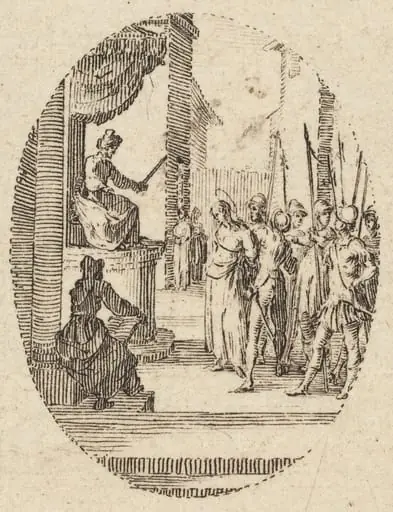
The etching depicts the dramatic moment of Christ's interrogation by Caiaphas, a high priest in Jerusalem. Christ, with bound hands, stands before Caiaphas, who is seated on a raised platform. The scene is populated by a crowd of onlookers, some gesturing angrily towards Christ, highlighting the tension and conflict of the encounter.
Technique & Style
Callot employed chiaroscuro to create depth and draw attention to the central figures. The etching features intricate details, evident in the textures of clothing and architectural elements, demonstrating Callot's mastery of etching techniques.
History & Provenance
Created circa 1624 by Jacques Callot, a prolific French baroque printmaker from Lorraine, this etching is one of over 1,400 works in his oeuvre, reflecting his documentation of religious and historical subjects.
Context
This work is part of Callot's broader output of religious narratives, set against detailed, often grand backgrounds, characteristic of his engagement with biblical themes during the baroque period.
Legacy
While specific legacy details of *Christ before Caiaphas* are not highlighted, as part of Callot's extensive body of work, it contributes to his reputation as a skilled printmaker who effectively captured religious and historical scenes for his contemporaries.
Artist & collection
Artist
Jacques Callot was a baroque printmaker and draftsman from the Duchy of Lorraine.

 Holy Family at supper
 Restoration of the Aqueduct at Pisa
 Restoration of the Aqueduct at Pisa
 Square in Paris with Many Figures
 Square in Paris with Many Figures
 Horsemen Attacked by Robbers
 HOW WILL A COVERED PART BE CORRECTED?HOW WIKA A COVERED HEART DEED CORRECTED?
![Christ Walking on the Water [second plate], by Jacques Callot](https://artifactworldgallery.com/img/jacques-callot--christ-walking-on-the-water-second-plate--2069f3bfe4cb2126-w320.webp) Christ Walking on the Water [second plate]
Christ Walking on the Water [second plate]