Artwork
The Death of Judas
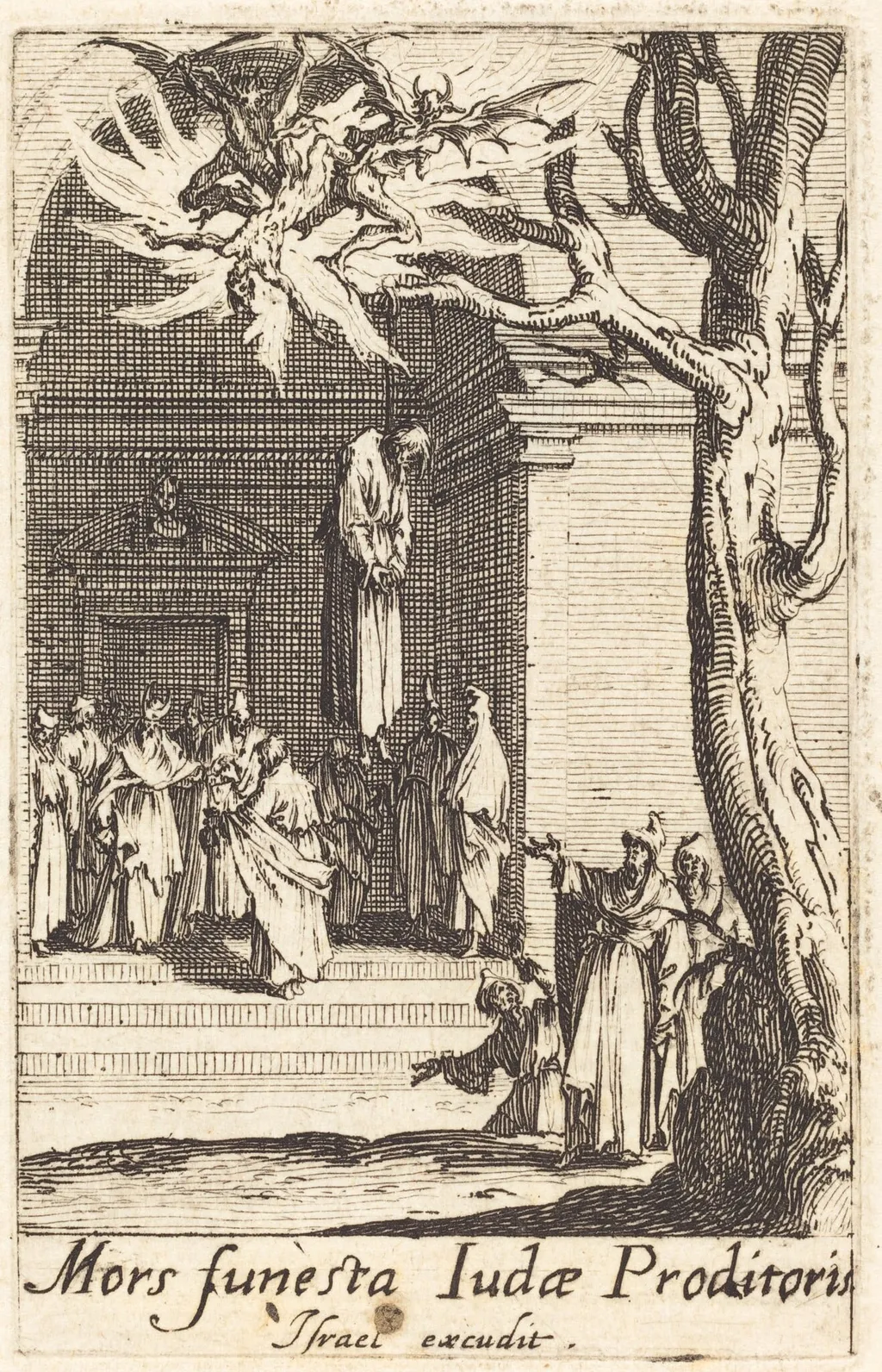
The Death of Judas is an ink print by the Baroque artist Jacques Callot. It dates from 1634 and is held in the collection of the National Gallery of Art.
About this work
Overview
With over 1,400 prints to his name, Callot consistently engaged with moral and spiritual themes through meticulous detail and emotional nuance.
Jacques Callot, a French printmaker from the Duchy of Lorraine, produced this etching around 1634 as part of his extensive series of religious and historical scenes. Executed on laid paper, the work exemplifies his mastery of fine-line etching and his interest in dramatic narratives drawn from scripture. With over 1,400 prints to his name, Callot consistently engaged with moral and spiritual themes through meticulous detail and emotional nuance.
Subject & Meaning
The scene illustrates the suicide of Judas Iscariot, as described in the Gospel of Matthew. A lifeless figure hangs from a tree, his body slumped in final surrender. Around him, figures in long robes react with anguish, their gestures conveying grief and moral reckoning. The composition underscores the tragedy of betrayal and its consequences, aligning with Counter-Reformation themes of repentance and divine justice prevalent in early 17th-century religious art.
Technique & Style
Callot employed fine etched lines to render texture, depth, and movement with precision. The figures are rendered with expressive postures, while the background architecture and foliage are suggested through delicate, layered strokes. His use of chiaroscuro and crowded composition heightens emotional tension. Unlike broad brushwork in painting, Callot’s etching technique allowed for intricate storytelling within a small format, characteristic of his printmaking innovation.
History & Provenance
Created during Callot’s mature period in Nancy, the etching likely circulated among collectors and clergy in Lorraine and beyond. Though no early ownership records are widely documented, similar works from his series were held in ecclesiastical and private collections across Europe. The print’s survival in multiple impressions suggests it was reproduced and disseminated as a devotional or educational image during the Baroque era.
Context
In the 1630s, religious imagery remained central to artistic production, especially in regions affected by the Thirty Years’ War. Callot’s depictions of biblical episodes served both spiritual and didactic purposes, offering viewers moral reflections amid social upheaval. His focus on human suffering and psychological realism aligned with broader Baroque trends, while his technical precision distinguished him from contemporaries working in larger media.
Legacy
Callot’s etchings, including this one, influenced generations of printmakers through their narrative clarity and technical rigor. His ability to convey complex emotions in miniature scenes set a standard for religious printmaking. Though less celebrated than painters of his time, his contributions to the graphic arts ensured his enduring presence in collections and scholarly study of early modern visual culture.
Artist & collection
Artist
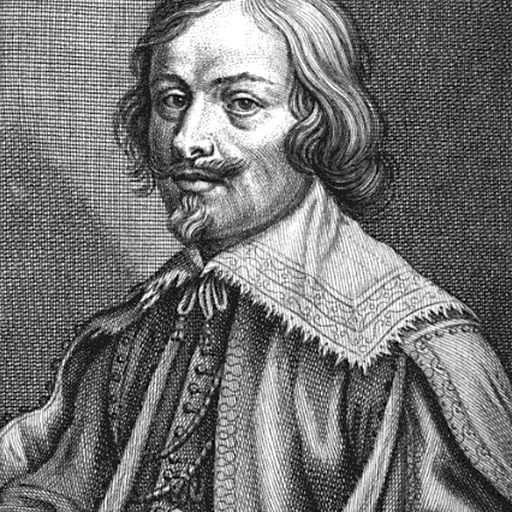
Jacques Callot was a baroque printmaker and draftsman from the Duchy of Lorraine.

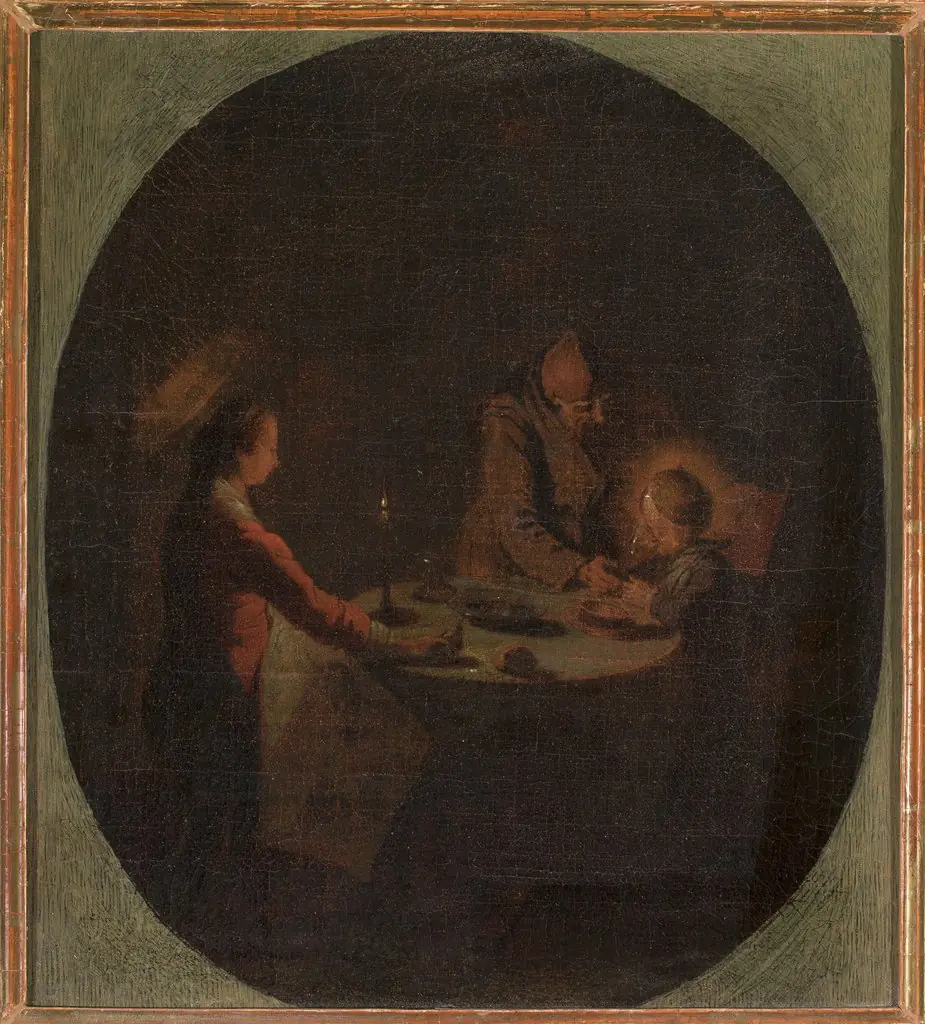 Holy Family at supper
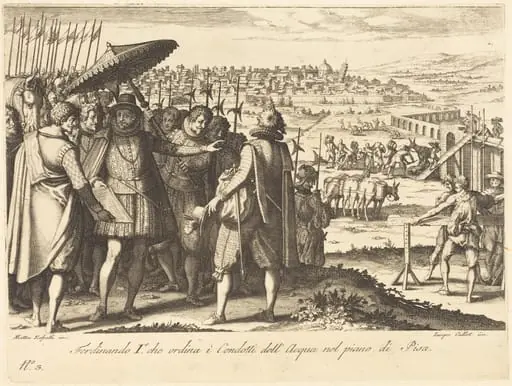 Restoration of the Aqueduct at Pisa
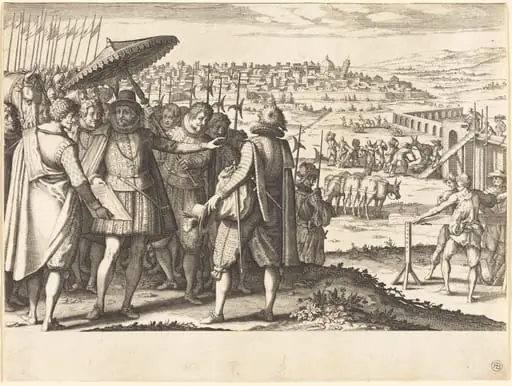 Restoration of the Aqueduct at Pisa
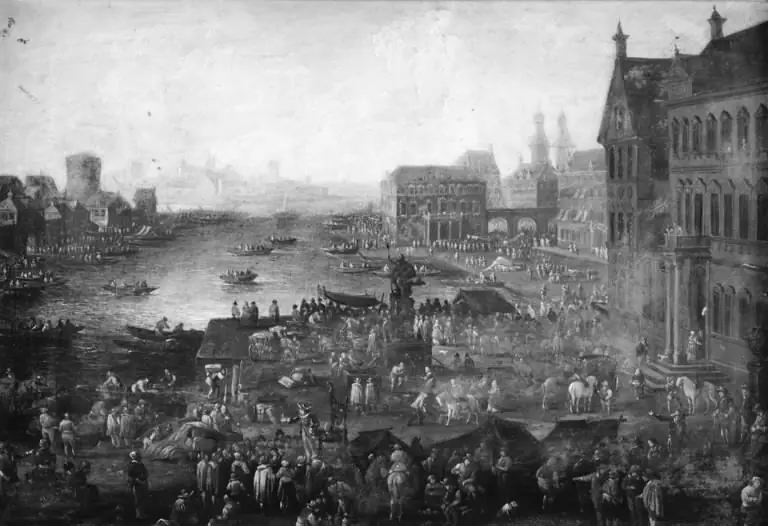 Square in Paris with Many Figures
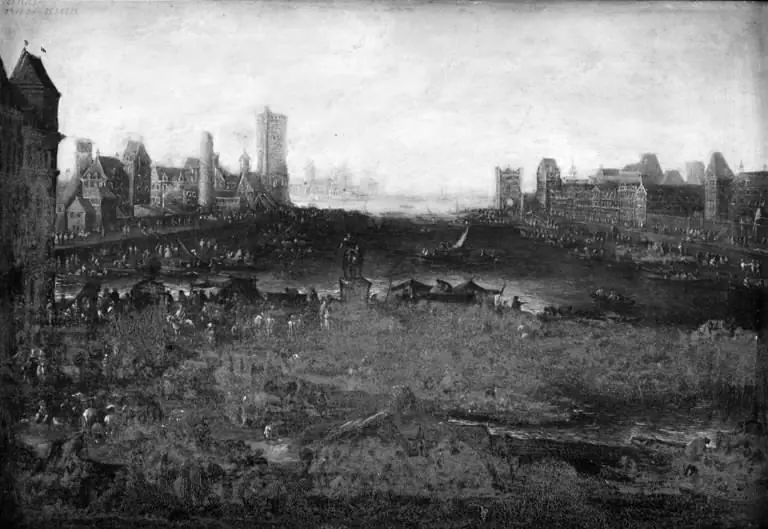 Square in Paris with Many Figures
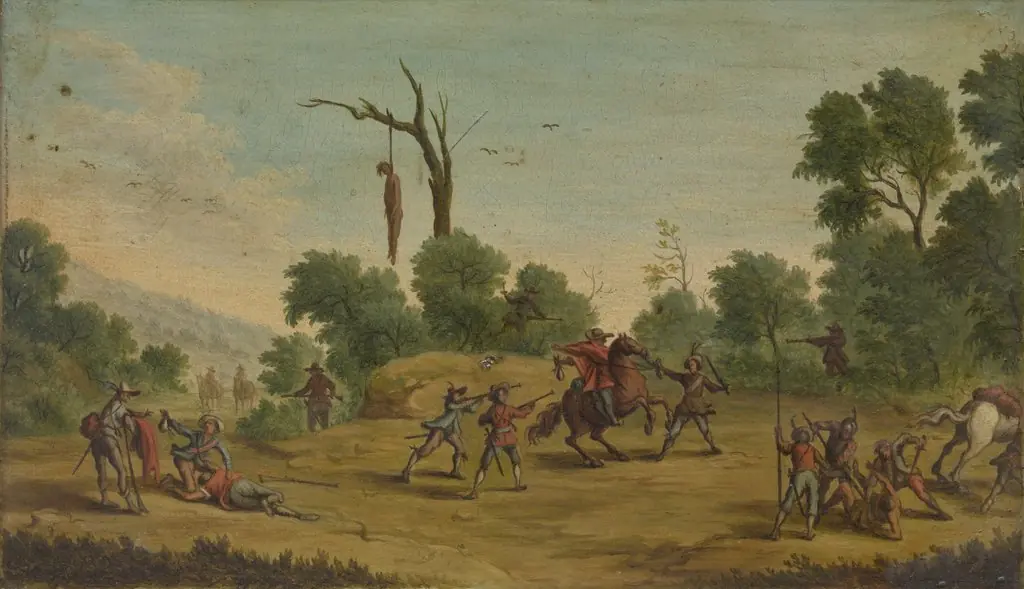 Horsemen Attacked by Robbers
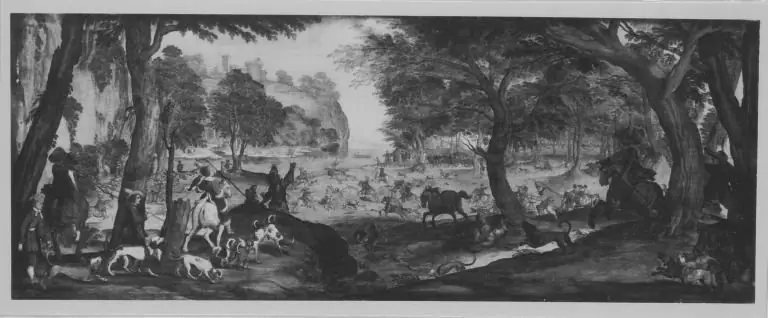 HOW WILL A COVERED PART BE CORRECTED?HOW WIKA A COVERED HEART DEED CORRECTED?
![Christ Walking on the Water [second plate], by Jacques Callot](https://artifactworldgallery.com/img/jacques-callot--christ-walking-on-the-water-second-plate--2069f3bfe4cb2126-w320.webp) Christ Walking on the Water [second plate]
Christ Walking on the Water [second plate]
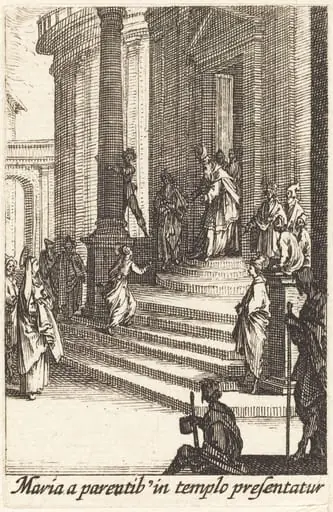 The Presentation of the Virgin
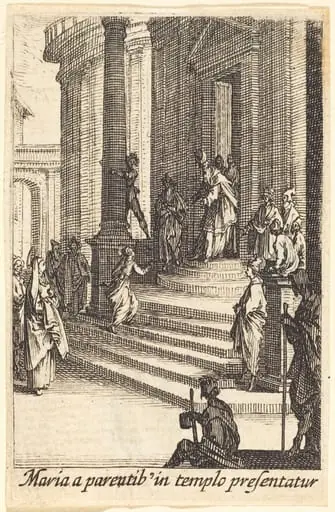 The Presentation of the Virgin
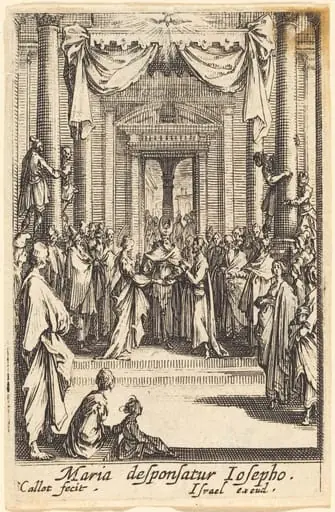 The Marriage of the Virgin
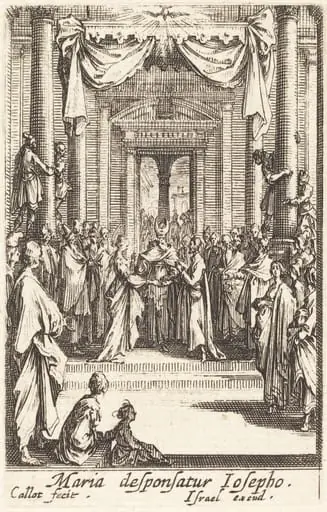 The Marriage of the Virgin
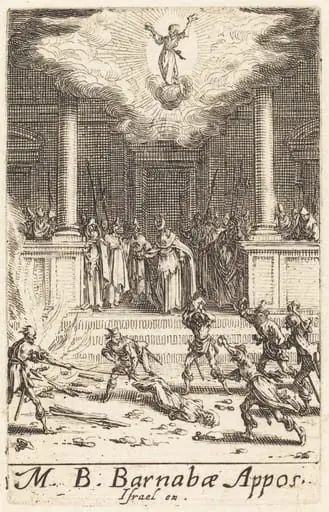 The Martyrdom of Saint Barnabas
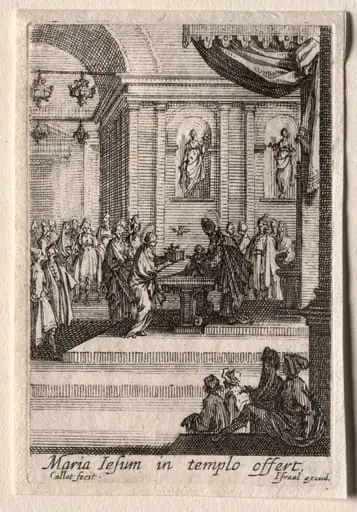 The Life of the Virgin: The Presentation of Christ in the Temple
 The Martyrdom of Saint Barnabas
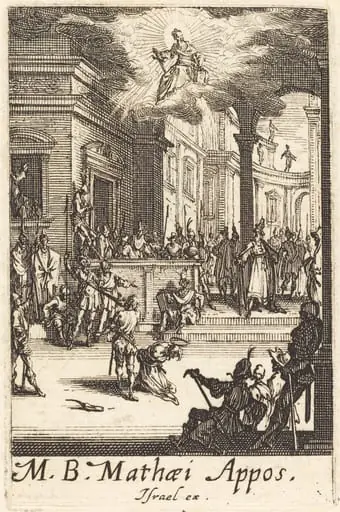 The Martyrdom of Saint Matthew
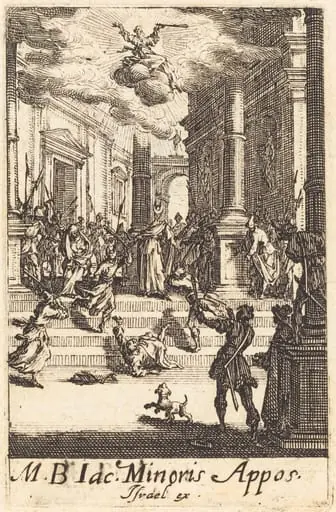 The Martyrdom of Saint James Minor
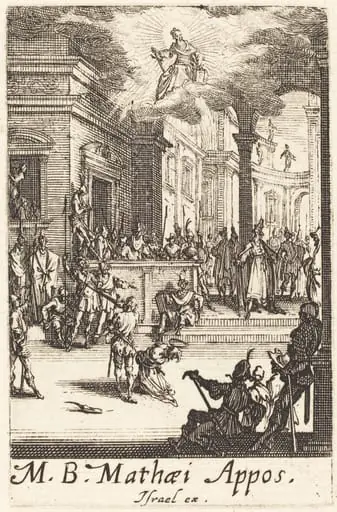 The Martyrdom of Saint Matthew