Artwork
The Inheritance
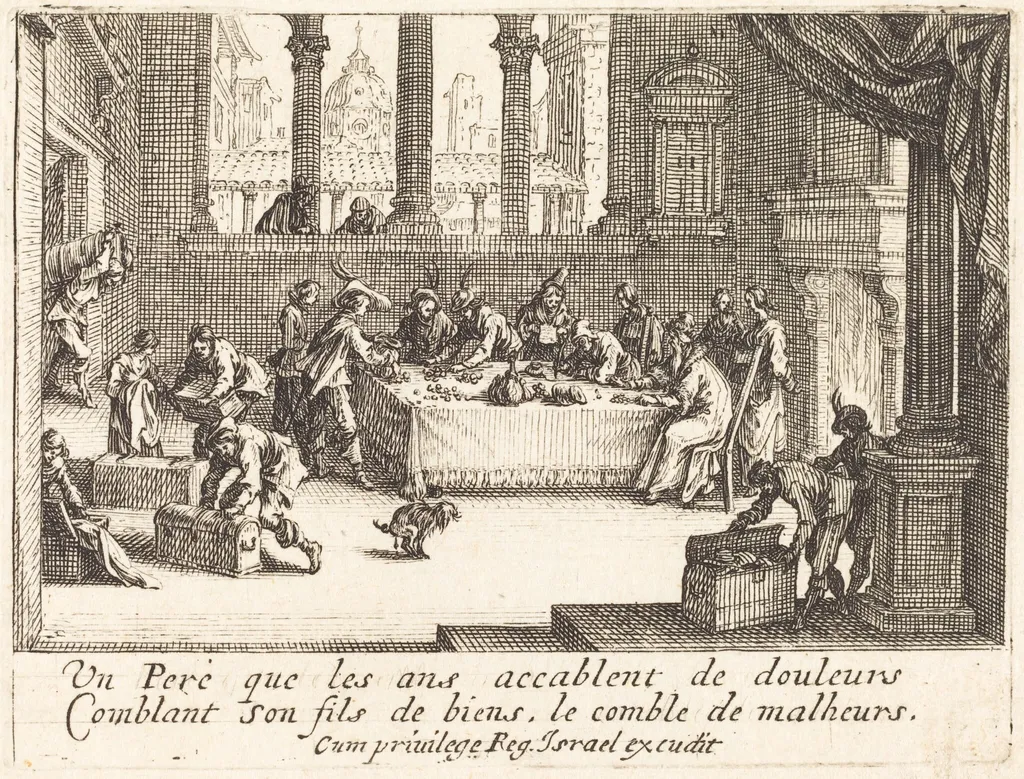
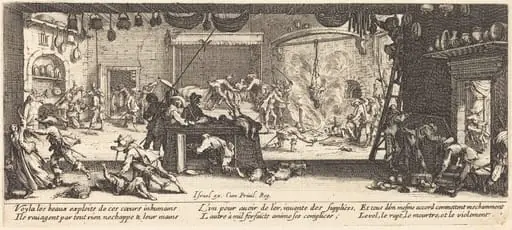
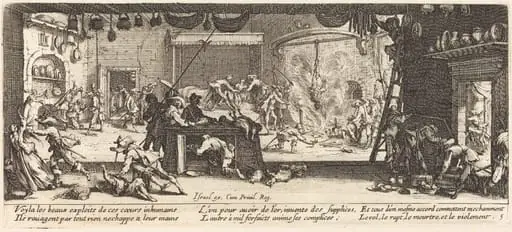
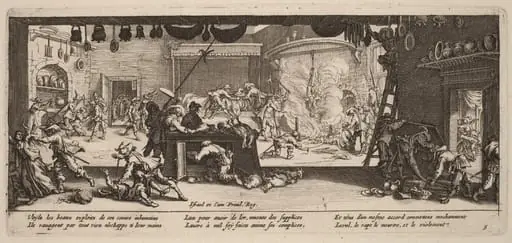
The Inheritance is an ink print by the Baroque artist Jacques Callot. It dates from 1635 and is held in the collection of the National Gallery of Art.
About this work
Overview
Created in 1635 by Jacques Callot, *The Inheritance* is an etching on laid paper that captures a domestic scene of inheritance distribution.
Created in 1635 by Jacques Callot, *The Inheritance* is an etching on laid paper that captures a domestic scene of inheritance distribution. As one of over 1,400 prints by the Lorraine-born artist, it exemplifies his focus on everyday life in early 17th-century Europe. The work is part of a broader body of prints that record social customs, labor, and human interaction with quiet precision, avoiding idealization in favor of observed reality.
Subject & Meaning
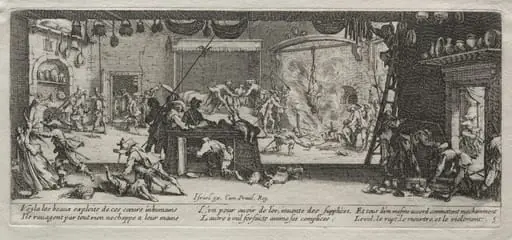
The scene depicts a group gathered in a dimly lit interior, likely heirs and servants, as possessions are distributed following a death. Figures display varied reactions—some weary, others attentive—while animals move freely among them, suggesting a lack of formal order. The inscription at the base alludes to familial succession, framing the moment as both legal and emotional. Callot presents inheritance not as ceremonial, but as a messy, human affair.
Technique & Style
Callot employed fine, controlled etching lines to model light and shadow with unusual subtlety, enhancing spatial depth and texture. His use of cross-hatching and varied line weight allowed for nuanced tonal gradations, a refinement in etching technique uncommon at the time. The composition is densely packed yet carefully organized, guiding the viewer’s eye through the room’s architecture and the figures’ interactions without clutter.
History & Provenance
Produced in Nancy, then part of the Duchy of Lorraine, the print circulated among collectors and artists across Europe. It was likely issued in small editions, as was standard for etchings of the period. While its early ownership is undocumented, it entered institutional collections in the 19th century, where it has remained as a representative example of Callot’s social realism and technical innovation.
Context
In the 1630s, Lorraine was a contested region caught between French and Imperial influences, and Callot’s work often reflected the instability of daily life. His prints documented soldiers, beggars, and domestic rituals with documentary intent, offering a counterpoint to grand historical or religious subjects. *The Inheritance* fits within this tradition, portraying private moments shaped by broader social and economic pressures.
Legacy
Callot’s precise etching methods influenced generations of printmakers, particularly in their ability to render complex scenes with clarity. *The Inheritance* stands as an early example of genre printmaking that prioritized observation over narrative moralizing. Its quiet realism helped shift the focus of printmaking toward the everyday, paving the way for later artists who sought to capture ordinary life with dignity and detail.
Artist & collection
Artist
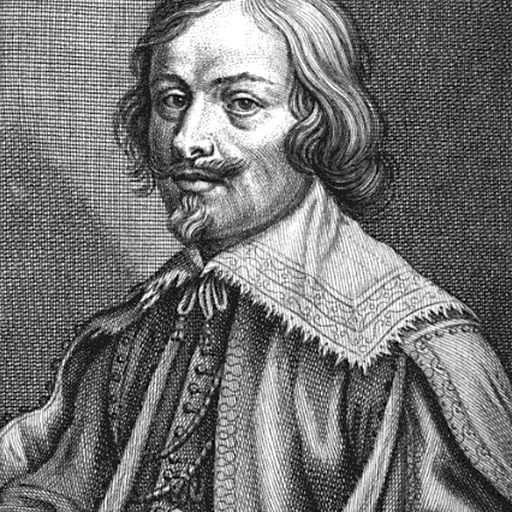
Jacques Callot was a baroque printmaker and draftsman from the Duchy of Lorraine.

 Holy Family at supper
 Restoration of the Aqueduct at Pisa
 Restoration of the Aqueduct at Pisa
 Square in Paris with Many Figures
 Square in Paris with Many Figures
 Horsemen Attacked by Robbers
 HOW WILL A COVERED PART BE CORRECTED?HOW WIKA A COVERED HEART DEED CORRECTED?
![Christ Walking on the Water [second plate], by Jacques Callot](https://artifactworldgallery.com/img/jacques-callot--christ-walking-on-the-water-second-plate--2069f3bfe4cb2126-w320.webp) Christ Walking on the Water [second plate]
Christ Walking on the Water [second plate]