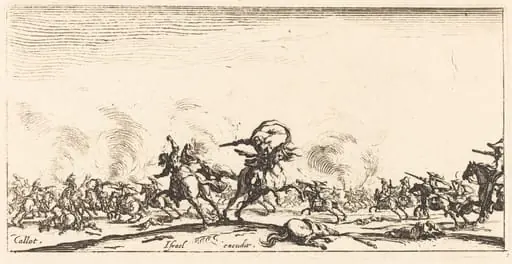
Artwork
The Firing Squad
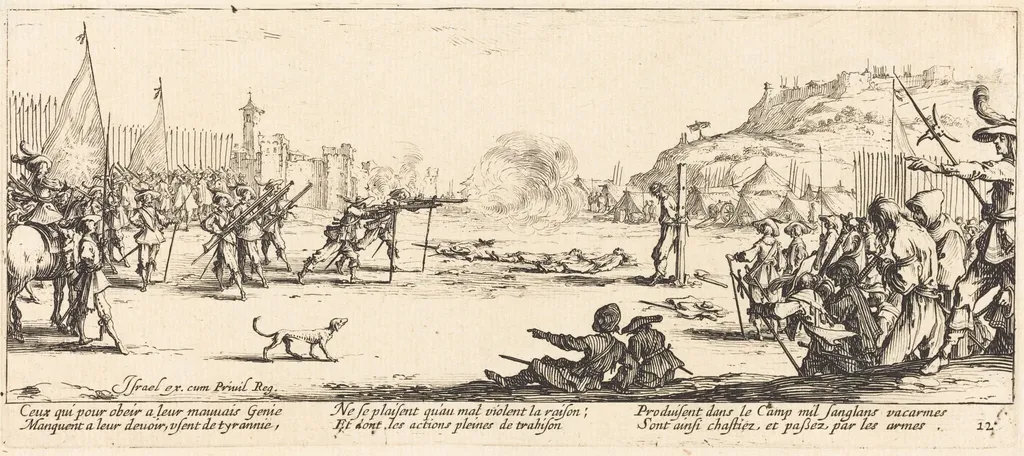
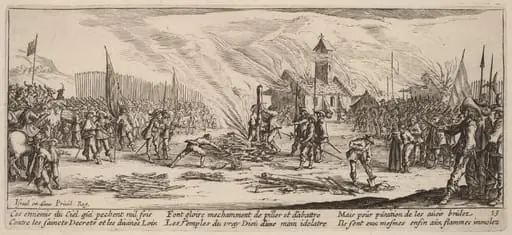
The Firing Squad is an ink print by the Baroque artist Jacques Callot. It dates from 1633 and is held in the collection of the National Gallery of Art.
About this work
Jacques Callot shows a firing squad in three neat rows. The condemned stand blindfolded. Muskets aim at their chests.
This etching is from 1633. It records war’s cruelty in cold, precise lines. The soldiers look bored. One checks his watch.
It feels like a photo taken centuries too early. The paper still holds the ink’s sharp bite.
Look up Callot, Jacques next.
Overview
Jacques Callot’s etching *The Firing Squad* (c. 1633) is a print on laid paper that depicts a group of soldiers preparing to execute a line of blindfolded prisoners. Executed in a tight, linear composition, the image records the grim routine of a military execution with a stark, documentary quality.
Subject & Meaning
The scene presents three orderly rows of armed men, muskets trained on the chests of condemned figures whose eyes are covered. The work foregrounds the mechanical nature of state violence, emphasizing the detachment of the soldiers—one even glances at a watch—while the blindfolded victims underscore the helplessness of those subjected to war’s punitive measures.
Technique & Style
Callot employs fine, precise etching lines on laid paper, achieving a high level of detail that renders textures of uniform, weaponry, and facial expressions. The crisp incisions give the image a photographic immediacy, while the controlled use of hatching creates depth and a sense of cold, clinical observation typical of his Baroque printmaking.
History & Provenance
Created around 1633, the print belongs to Callot’s prolific output of more than 1,400 etchings that document everyday and military life in 17th‑century Europe. As a native of the Duchy of Lorraine, Callot worked extensively as a draftsman and printmaker, and this piece forms part of his larger series of military subjects that often incorporate expansive landscape backgrounds.
Context
During the early Baroque period, European artists increasingly used prints to disseminate images of war and social order. Callot’s work reflects contemporary concerns about the brutality of armed conflict and the bureaucratic nature of execution, aligning with his broader interest in portraying both the spectacle and the routine of military life.
Artist & collection
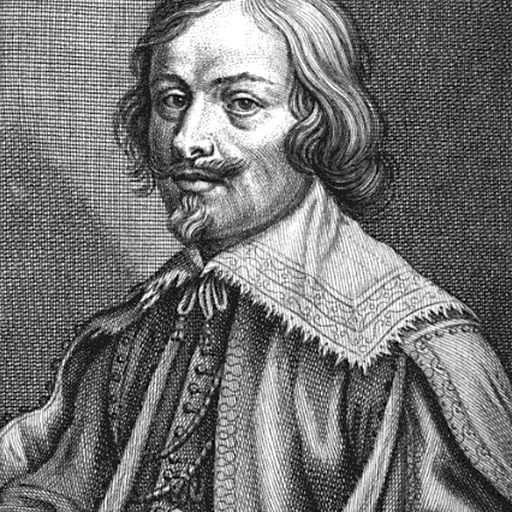
Artist
Jacques Callot was a baroque printmaker and draftsman from the Duchy of Lorraine.

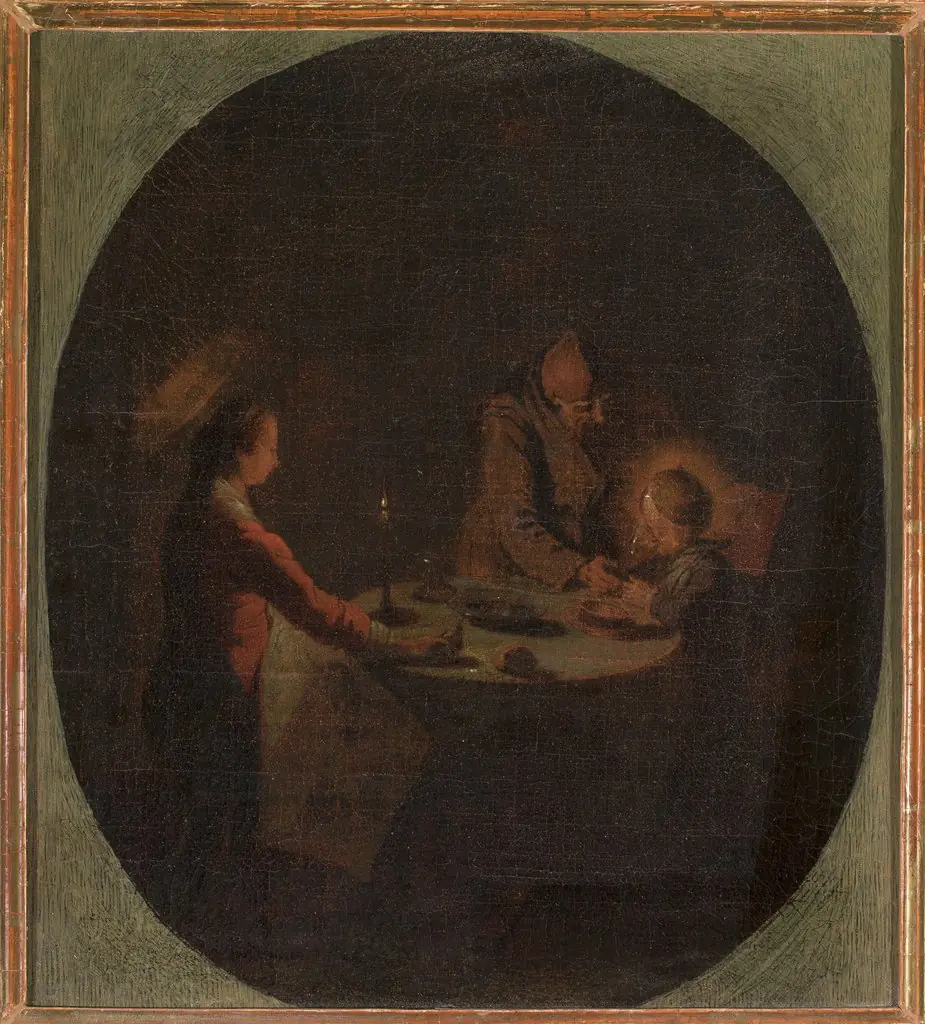 Holy Family at supper
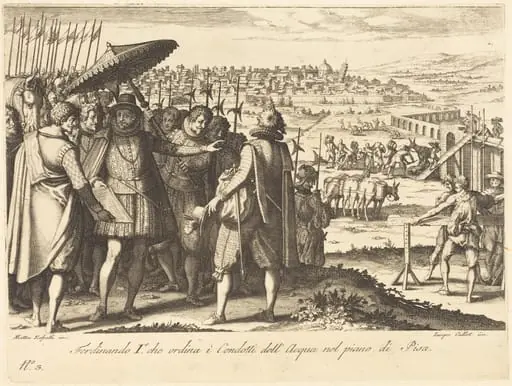 Restoration of the Aqueduct at Pisa
 Restoration of the Aqueduct at Pisa
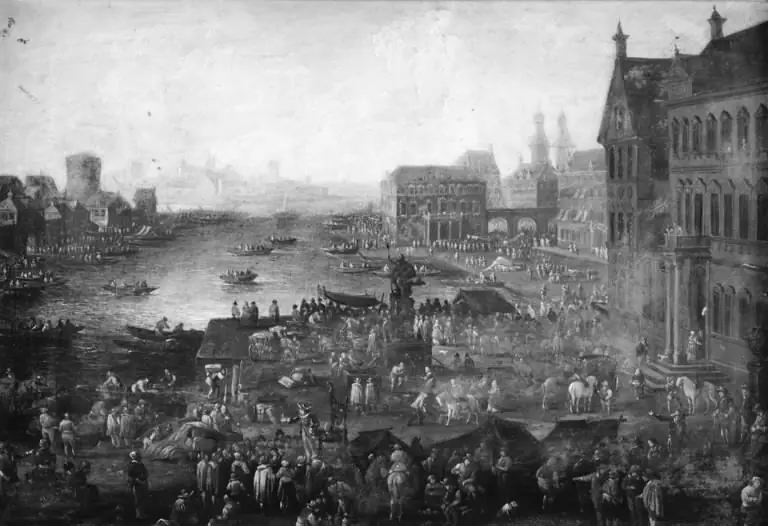 Square in Paris with Many Figures
 Square in Paris with Many Figures
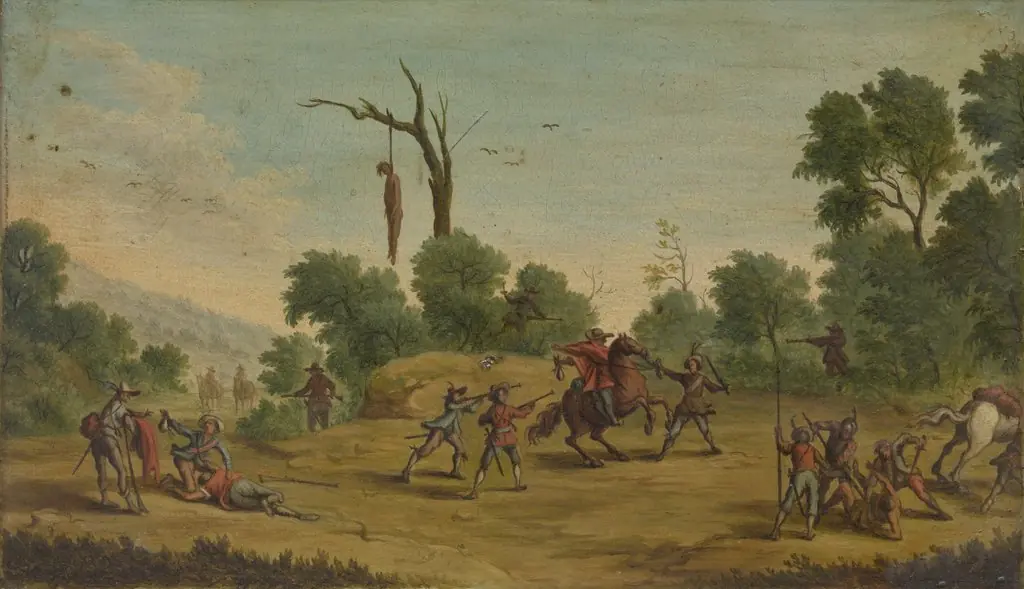 Horsemen Attacked by Robbers
 HOW WILL A COVERED PART BE CORRECTED?HOW WIKA A COVERED HEART DEED CORRECTED?
![Christ Walking on the Water [second plate], by Jacques Callot](https://artifactworldgallery.com/img/jacques-callot--christ-walking-on-the-water-second-plate--2069f3bfe4cb2126-w320.webp) Christ Walking on the Water [second plate]
Christ Walking on the Water [second plate]