Artwork
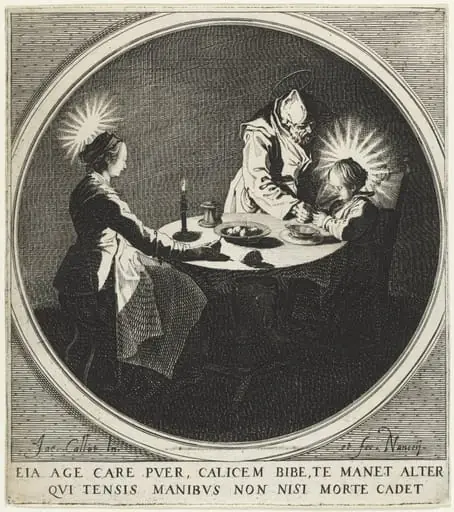
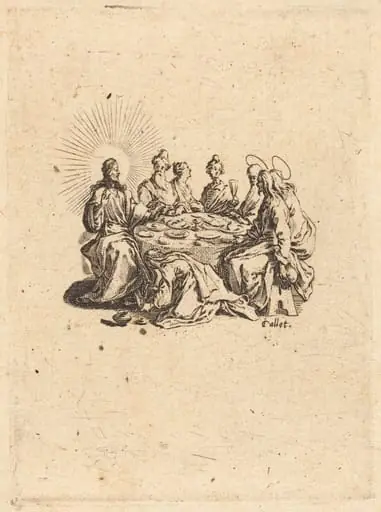
The Holy Family at Table
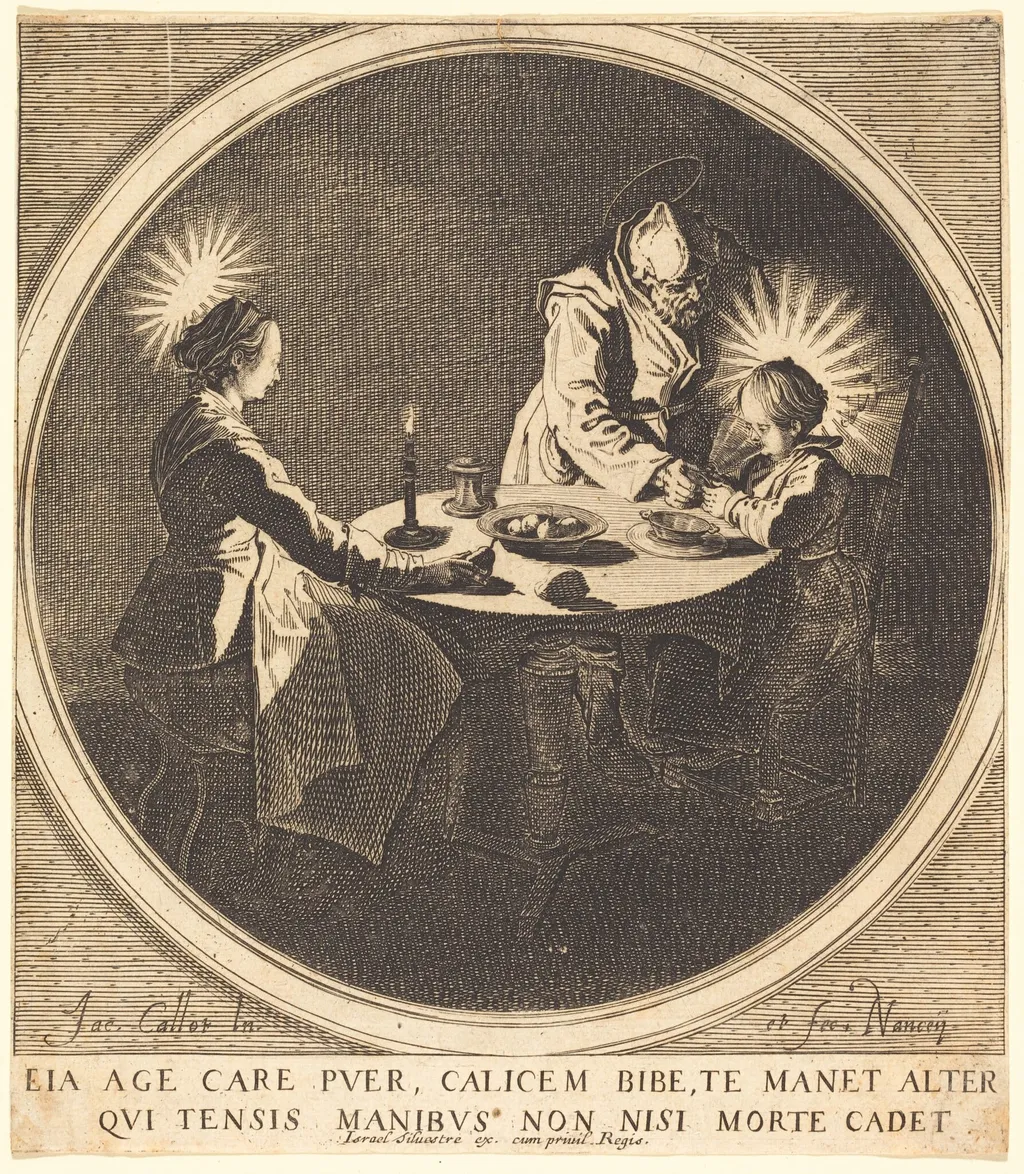
The Holy Family at Table is an ink print by the Baroque artist Jacques Callot. It dates from 1628 and is held in the collection of the National Gallery of Art.
About this work
Overview
Created around 1628 by Jacques Callot, this black-and-white print depicts a quiet domestic moment of the Holy Family sharing a meal.
Created around 1628 by Jacques Callot, this black-and-white print depicts a quiet domestic moment of the Holy Family sharing a meal. Executed in etching and engraving on laid paper, it reflects Callot’s mastery of fine line work and his interest in blending sacred subjects with everyday realism. The composition is intimate, avoiding grandeur in favor of humble detail, characteristic of his approach to religious themes.
Subject & Meaning
The scene portrays Mary, Joseph, and two children at a simple table, engaged in the ordinary act of eating. Mary stands, guiding one child, while another leans forward, drawn to the food. A candle illuminates the meal, and radiant lines behind Joseph’s head suggest divine presence without overt symbolism. The Latin inscription below underscores themes of labor and the passage of time, framing the moment as both tender and morally reflective.
Technique & Style
Callot employed fine etched lines to render fabric folds, bread crusts, and candlelight with precision. Engraving added depth to shadows and textures, particularly in the tableware and clothing. The background is deliberately minimal, focusing attention on the figures and the glow of the candle. The contrast between the soft light and sharp contours enhances the scene’s quiet solemnity, showcasing Callot’s technical control.
History & Provenance
Produced during Callot’s mature period in Nancy, the print emerged from a prolific career spanning over 1,400 works. It was likely made for private collectors or devotional use, common among Northern European audiences. While its early ownership is undocumented, it entered institutional collections in the 19th century, preserved as an example of Baroque printmaking’s narrative intimacy.
Context
In early 17th-century Lorraine, religious imagery often merged with domestic realism as Counter-Reformation ideals encouraged personal piety. Callot, influenced by Flemish and Italian traditions, avoided theatricality in favor of grounded scenes. His prints circulated widely, offering accessible spiritual reflection. This work aligns with broader trends favoring quiet, humanized depictions of sacred figures over celestial spectacle.
Legacy
Callot’s detailed etchings influenced generations of printmakers across Europe, particularly in the use of fine line and narrative compression. *The Holy Family at Table* exemplifies his ability to elevate mundane moments into contemplative imagery. Though not widely exhibited today, it remains a key reference in studies of Baroque print culture and the intersection of faith with daily life.
Artist & collection
Artist
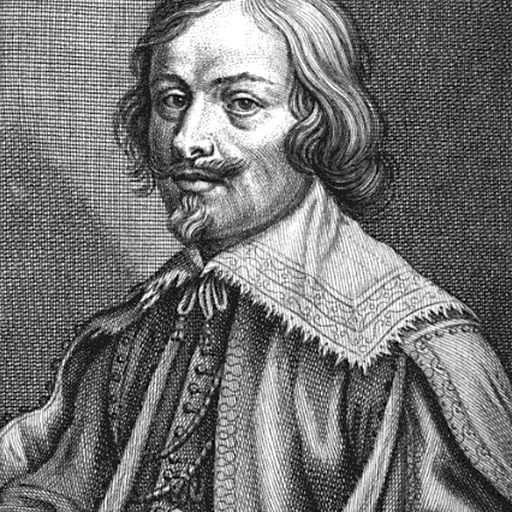
Jacques Callot was a baroque printmaker and draftsman from the Duchy of Lorraine.

 Holy Family at supper
 Restoration of the Aqueduct at Pisa
 Restoration of the Aqueduct at Pisa
 Square in Paris with Many Figures
 Square in Paris with Many Figures
 Horsemen Attacked by Robbers
 HOW WILL A COVERED PART BE CORRECTED?HOW WIKA A COVERED HEART DEED CORRECTED?
![Christ Walking on the Water [second plate], by Jacques Callot](https://artifactworldgallery.com/img/jacques-callot--christ-walking-on-the-water-second-plate--2069f3bfe4cb2126-w320.webp) Christ Walking on the Water [second plate]
Christ Walking on the Water [second plate]