Artwork
Peasant Defecating
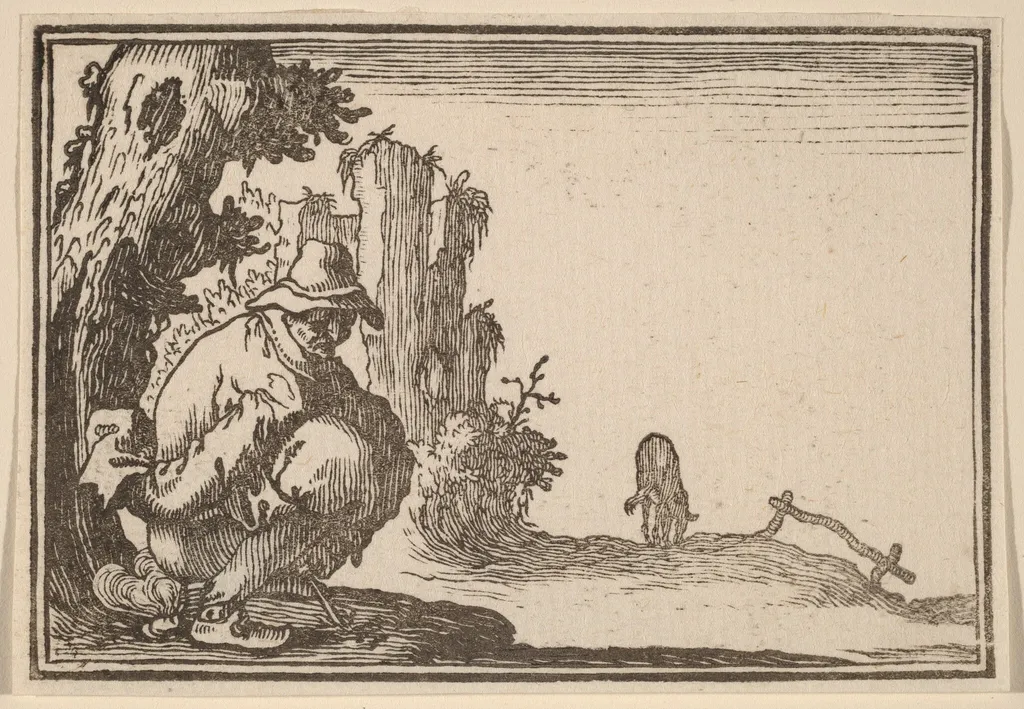
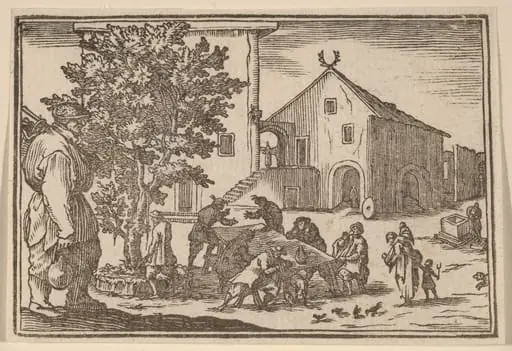
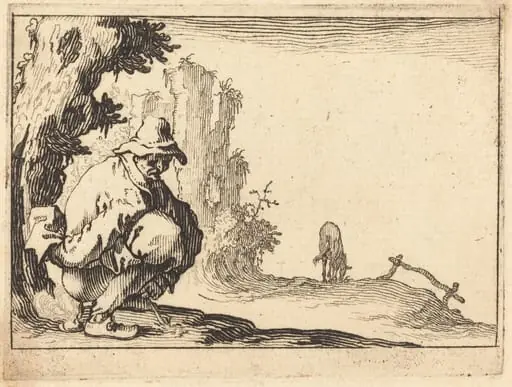
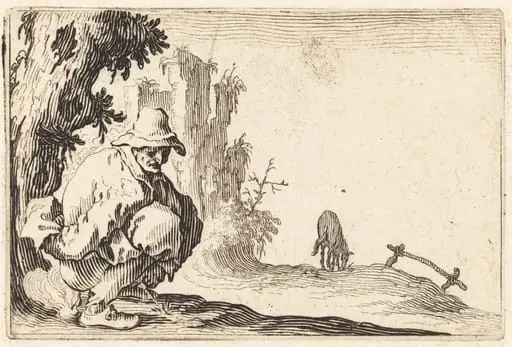
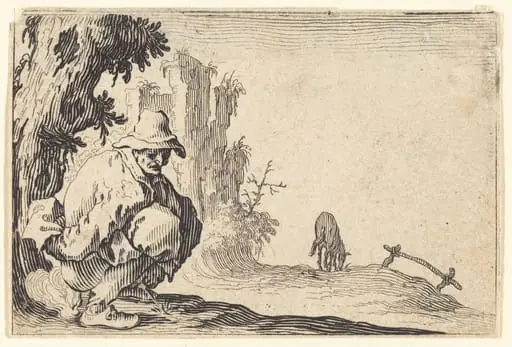
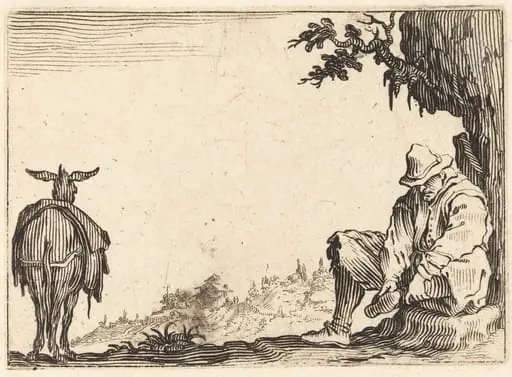
Peasant Defecating is an ink print by the Baroque artist Edouard Eckman. It dates from 1621 and is held in the collection of the National Gallery of Art.
About this work
Overview
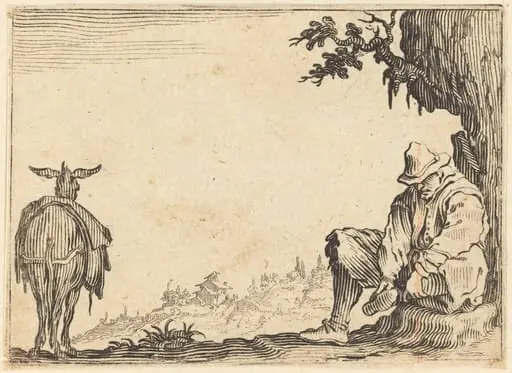
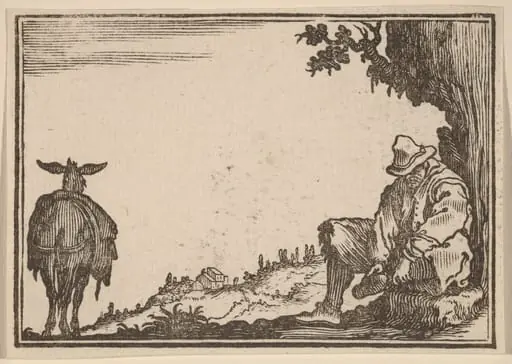
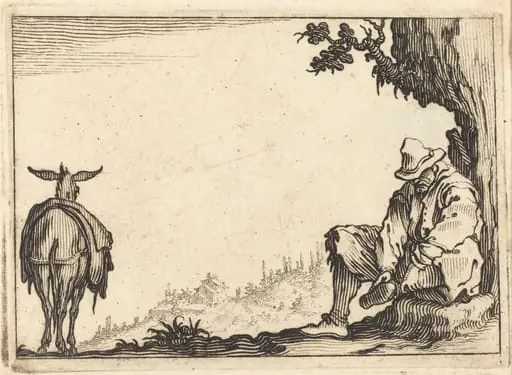
Created in 1621 by Edouard Eckman, this woodcut on laid paper depicts a solitary peasant in an open landscape, engaged in a private bodily act.
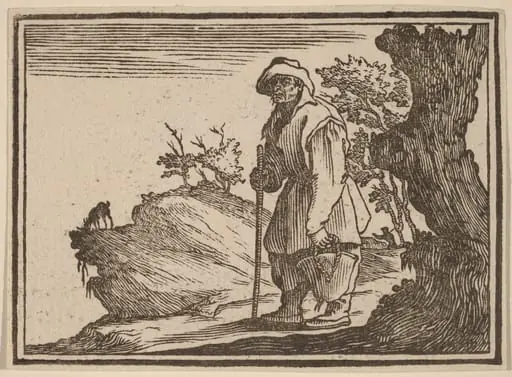
Created in 1621 by Edouard Eckman, this woodcut on laid paper depicts a solitary peasant in an open landscape, engaged in a private bodily act. Rendered in stark black and white with unmodulated lines, the image lacks detail or shading, emphasizing form over realism. The medium—woodcut—involved carving the design into a wooden block, then inking and pressing it onto paper. Its crude aesthetic aligns with folk traditions rather than refined artistic conventions of the period.
Subject & Meaning
The figure, isolated in a sparse rural setting, is presented without irony or moral judgment, yet the act itself invites interpretation. As an allegory, the image may critique social norms, bodily functions as equalizers, or the unvarnished reality of peasant life. Its deliberate crudeness contrasts with idealized depictions of the rural poor, suggesting a subversive or satirical intent, possibly commenting on class, dignity, or the natural state of human existence.
Technique & Style
Executed as a woodcut, the image relies on bold, incised lines to define form, with no tonal gradations or hatching. The artist exploited the medium’s inherent limitations, using high contrast and simplified shapes to convey the scene. The rough texture of the carved wood is visible in the print’s edges and irregular lines, reinforcing its handmade character. This approach prioritizes immediacy and symbolic clarity over naturalistic detail.
History & Provenance
The print originates from early 17th-century Northern Europe, a time when woodcuts were widely used for broadsheets and satirical imagery. While Eckman’s broader oeuvre is poorly documented, this work survives in limited institutional collections, likely preserved for its unusual subject matter. Its survival suggests it was circulated among audiences familiar with folk humor or social commentary, though its original context remains obscure.
Context
In early 1600s Europe, depictions of bodily functions were common in popular prints, often serving as moralizing or comic relief. This image fits within a tradition of low-life scenes that contrasted with religious or aristocratic subjects. Its rural backdrop and unidealized figure reflect a growing interest in everyday life, even when rendered with deliberate crudeness, hinting at tensions between elite aesthetics and vernacular culture.
Legacy
Though not widely reproduced or studied, the print endures as an example of how marginalized subjects entered visual culture through accessible print media. Its unembellished portrayal of the human body challenges idealized norms of the time, offering a rare glimpse into the visual language of the non-elite. Later artists and scholars have referenced it as a precursor to modern realism and social critique in printmaking.
Artist & collection