Artwork
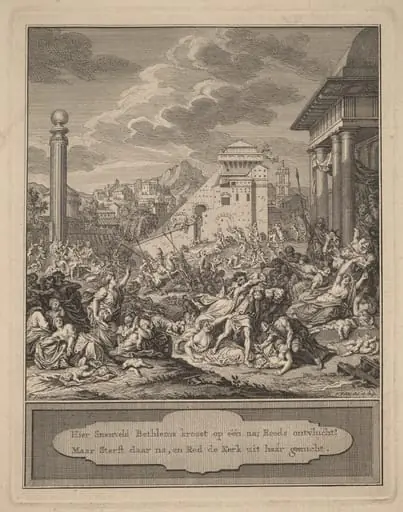
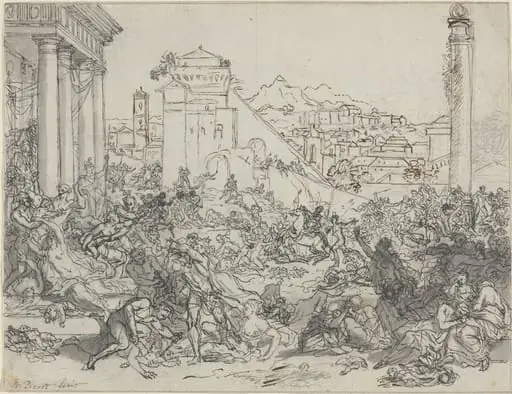
The Massacre of the Innocents
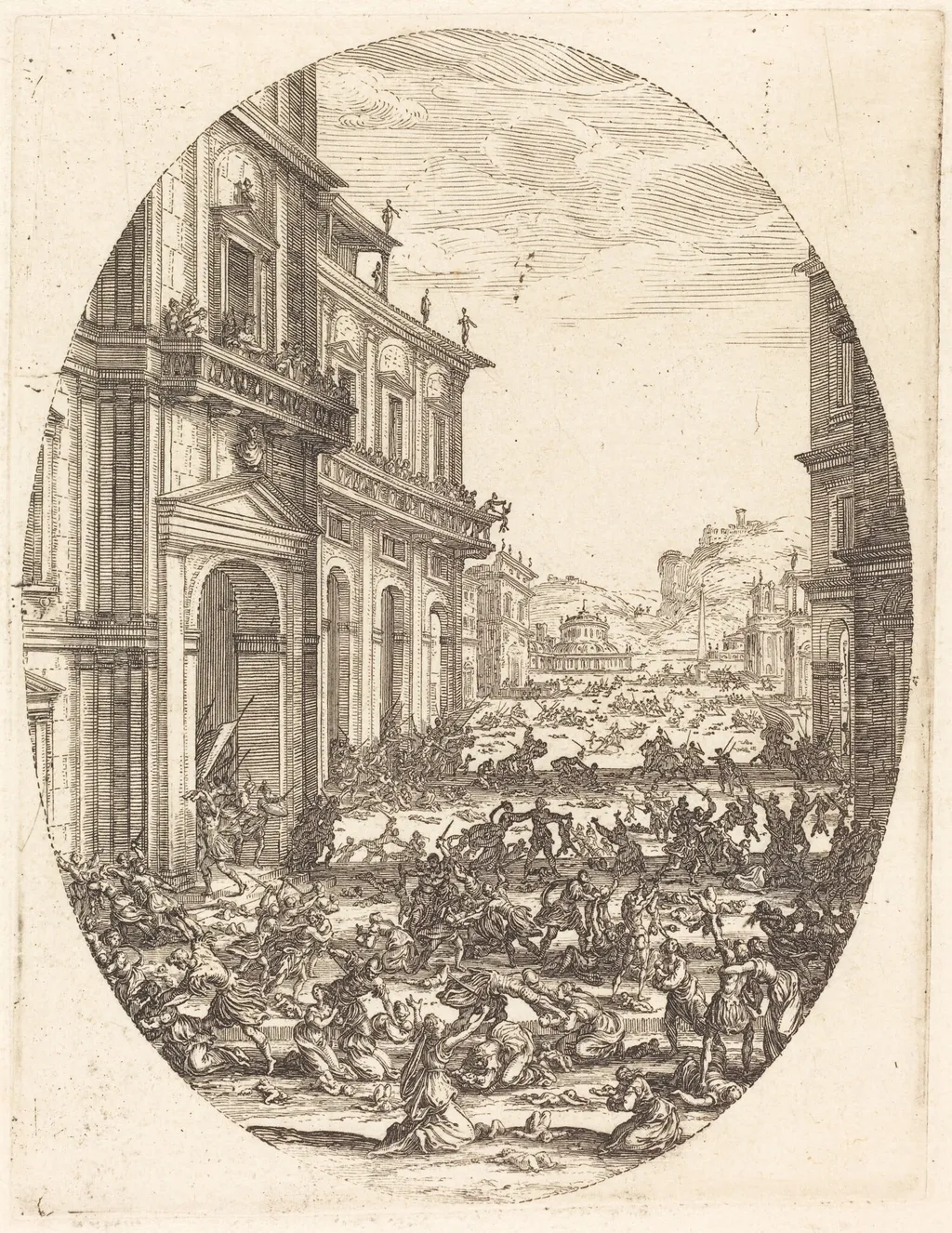
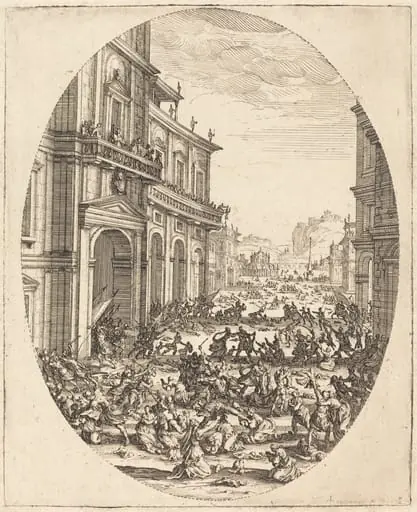
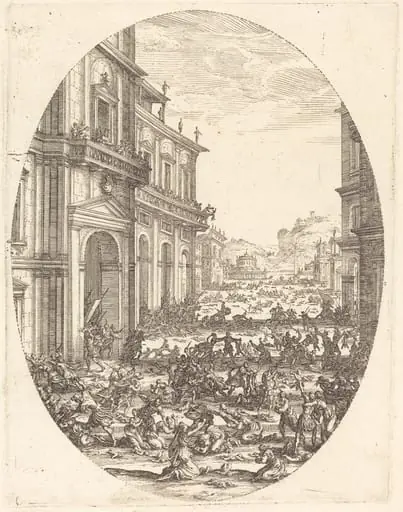
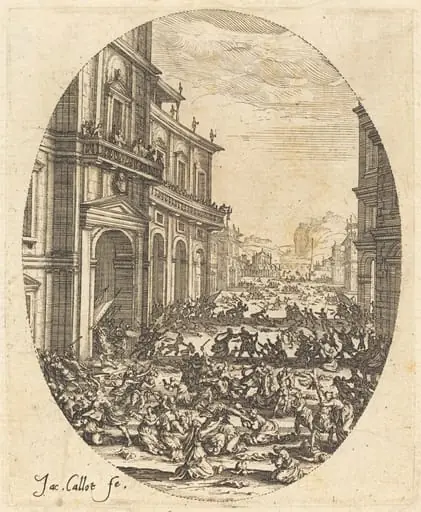
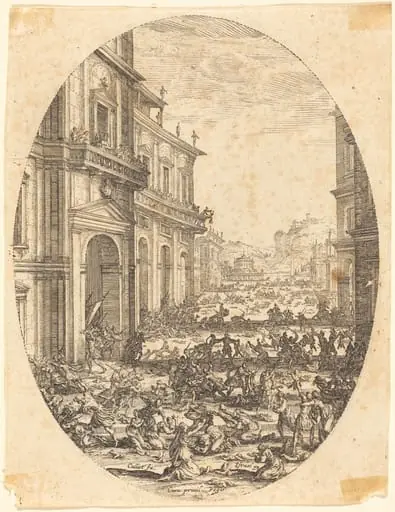
The Massacre of the Innocents is an ink print by the Baroque artist Jacques Callot. It dates from 1619 and is held in the collection of the National Gallery of Art.
About this work
Overview
As one of over 1,400 prints in his career, it exemplifies Callot’s focus on dramatic, often harrowing scenes drawn from history and scripture.
Created around 1619 by Jacques Callot, this etching on laid paper depicts a violent episode from the Gospel of Matthew. As one of over 1,400 prints in his career, it exemplifies Callot’s focus on dramatic, often harrowing scenes drawn from history and scripture. The work is notable for its dense composition and fine linear detail, achieved through the precise scratching of lines into a metal plate, a hallmark of etching technique.
Subject & Meaning
The print illustrates the biblical account of King Herod’s order to kill all male infants in Bethlehem. Callot renders the event not as a solemn ritual but as a brutal, chaotic assault. Soldiers on horseback overrun a panicked crowd, while abandoned buildings and ruined structures suggest the collapse of order. The absence of divine intervention in the scene underscores the raw human cruelty of the moment.
Technique & Style
Callot employed fine etching lines to capture intricate movement and texture within a confined space. The dark, sharp contours define the thrashing bodies and galloping horses, while the background remains relatively sparse, heightening the foreground’s intensity. His use of layered, closely spaced lines creates depth and volume, demonstrating mastery over the medium’s capacity for detail without relying on tone or shading.
History & Provenance
Produced during Callot’s time in Florence, the print reflects his exposure to Italian art and the political unrest of early 17th-century Europe. Though no early ownership records are widely documented, the work circulated among collectors and artists familiar with Northern European print traditions. Its survival in multiple institutional collections suggests its early recognition as a significant example of Baroque printmaking.
Context
In the decades following the Thirty Years’ War’s outbreak, scenes of military violence were increasingly common in Northern European art. Callot’s depiction aligns with contemporary anxieties about soldierly excess and civilian suffering. His choice of a biblical subject allowed him to critique real-world atrocities indirectly, using sacred narrative as a vehicle for social commentary.
Legacy
Callot’s technical innovations in etching influenced generations of printmakers, particularly in their ability to render complex scenes with clarity. While not widely reproduced in his lifetime, this work later became a reference for artists studying narrative composition and expressive line. Its unflinching portrayal of violence contributed to the evolution of printmaking as a medium for historical and moral inquiry.
Artist & collection
Artist
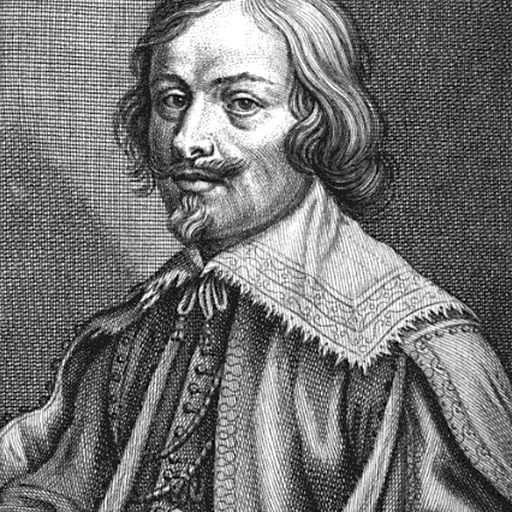
Jacques Callot was a baroque printmaker and draftsman from the Duchy of Lorraine.

 Holy Family at supper
 Restoration of the Aqueduct at Pisa
 Restoration of the Aqueduct at Pisa
 Square in Paris with Many Figures
 Square in Paris with Many Figures
 Horsemen Attacked by Robbers
 HOW WILL A COVERED PART BE CORRECTED?HOW WIKA A COVERED HEART DEED CORRECTED?
![Christ Walking on the Water [second plate], by Jacques Callot](https://artifactworldgallery.com/img/jacques-callot--christ-walking-on-the-water-second-plate--2069f3bfe4cb2126-w320.webp) Christ Walking on the Water [second plate]
Christ Walking on the Water [second plate]