Artwork
The Review
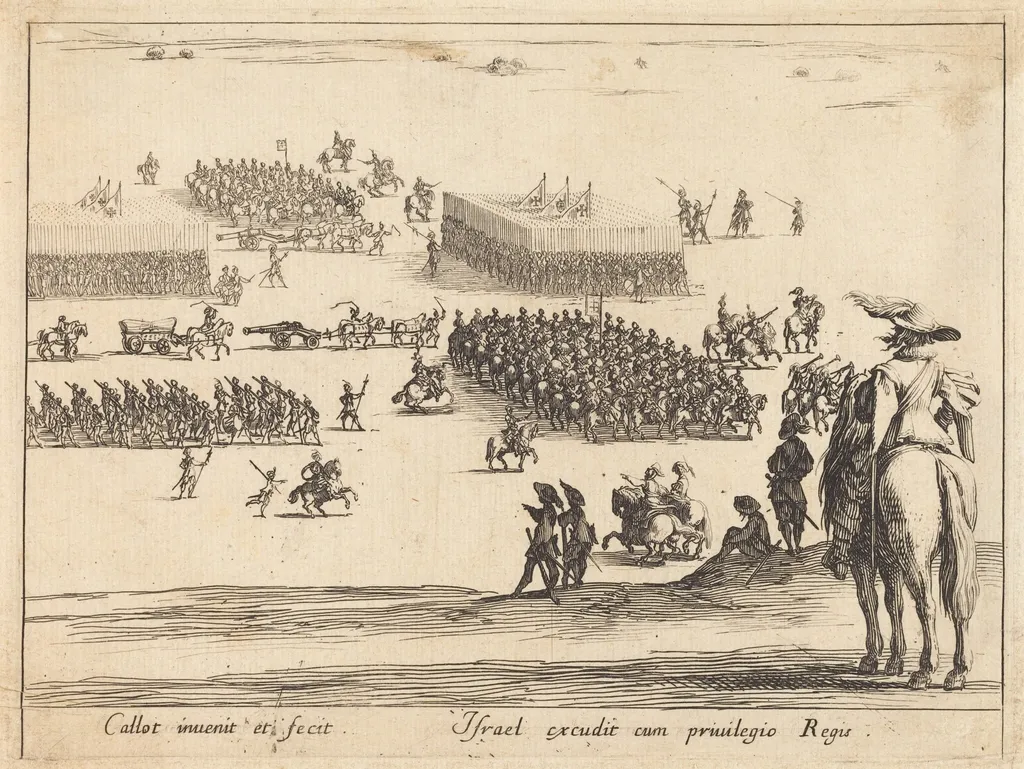
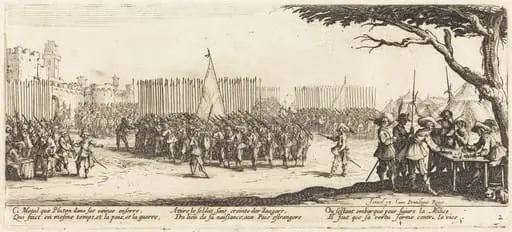
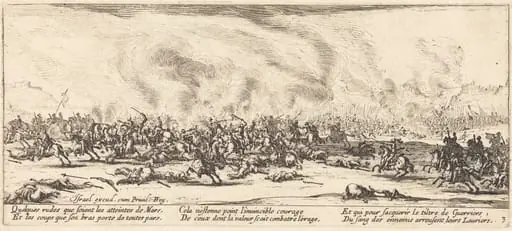
The Review is an ink print by the Baroque artist Jacques Callot. It dates from 1628 and is held in the collection of the National Gallery of Art.
About this work
Overview
Callot, a printmaker from the Duchy of Lorraine, produced over 1,400 works documenting the social and military life of his time.
Created around 1628 by Jacques Callot, *The Review* is an etching on laid paper that captures a densely packed military scene. Callot, a printmaker from the Duchy of Lorraine, produced over 1,400 works documenting the social and military life of his time. This piece exemplifies his focus on contemporary events, rendered with meticulous line work and a sense of spatial compression that heightens the scene’s intensity.
Subject & Meaning
The scene depicts a chaotic muster of soldiers, horses, and artillery, suggesting a formal review rather than active combat. A centrally placed officer in ornate armor and a broad hat draws attention, possibly symbolizing authority amid disorder. The crowded composition, with rising smoke and fluttering flags, evokes tension and scale, hinting at the overwhelming nature of military organization—or its potential for absurdity.
Technique & Style
Callot employed fine, controlled etching lines to render each figure and object with precision, despite their diminutive scale. The use of laid paper enhanced the texture and tonal range of the print. His technique allowed for extraordinary detail—individual weapons, harnesses, and banners are legible—creating a sense of immersive clutter. The composition’s tight framing and layered depth mimic theatrical staging, emphasizing narrative over realism.
History & Provenance
The work is part of Callot’s extensive series documenting military and civic life in early 17th-century Europe. Though its early ownership is undocumented, it aligns with prints circulated among collectors and military observers of the period. As part of his broader output, *The Review* reflects the growing interest in visual records of war and ceremony during the Thirty Years’ War.
Context
Produced during the height of the Thirty Years’ War, the print responds to a Europe deeply engaged in military conflict. Callot’s focus on drills and troop formations reflects both fascination and unease with the growing scale of professional armies. His prints were widely disseminated, serving as visual reports for audiences beyond the battlefield, blending observation with subtle commentary.
Legacy
Callot’s detailed etching style influenced later generations of printmakers, particularly in the depiction of crowded scenes and military subjects. *The Review* exemplifies how printmaking evolved into a medium for documenting social order and chaos. His ability to compress complex narratives into small, intricate compositions set a precedent for narrative print cycles in the centuries that followed.
Artist & collection
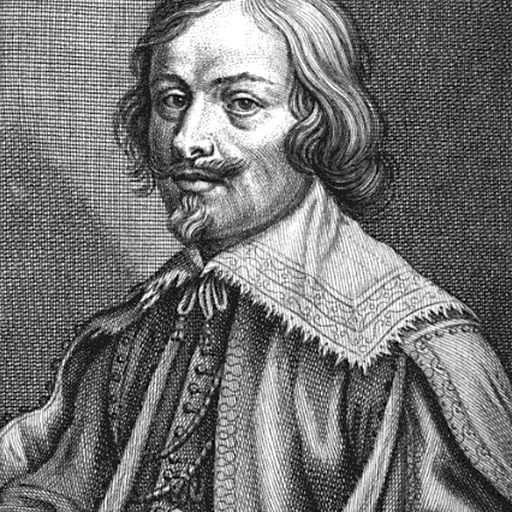
Artist
Jacques Callot was a baroque printmaker and draftsman from the Duchy of Lorraine.

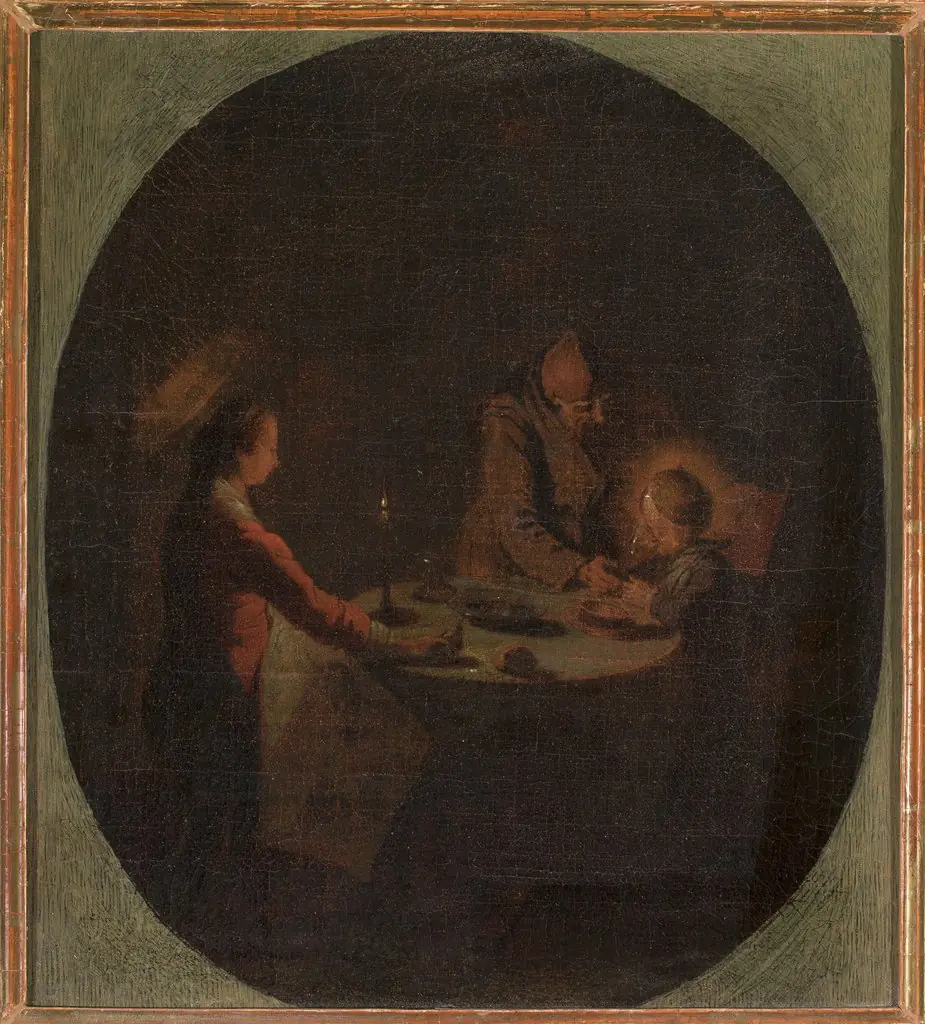 Holy Family at supper
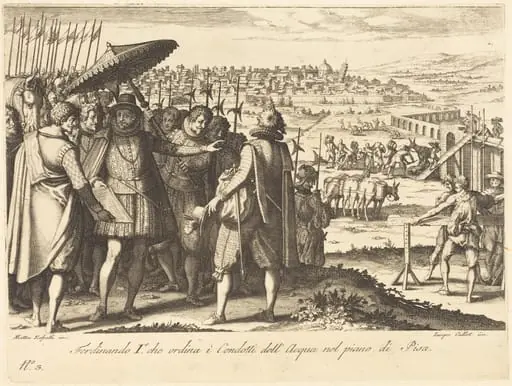 Restoration of the Aqueduct at Pisa
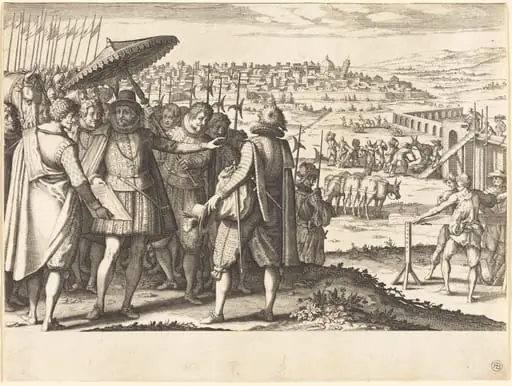 Restoration of the Aqueduct at Pisa
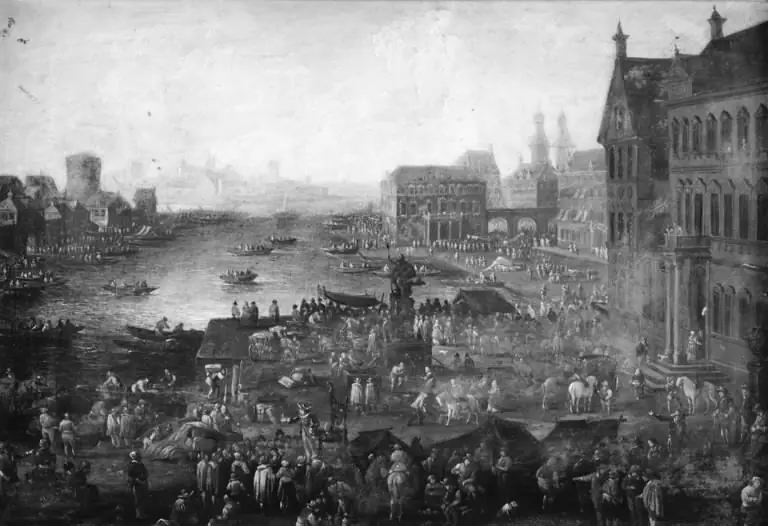 Square in Paris with Many Figures
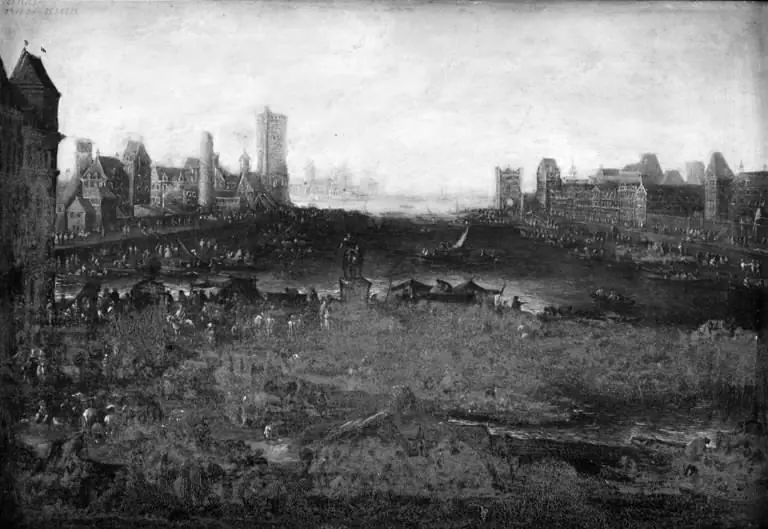 Square in Paris with Many Figures
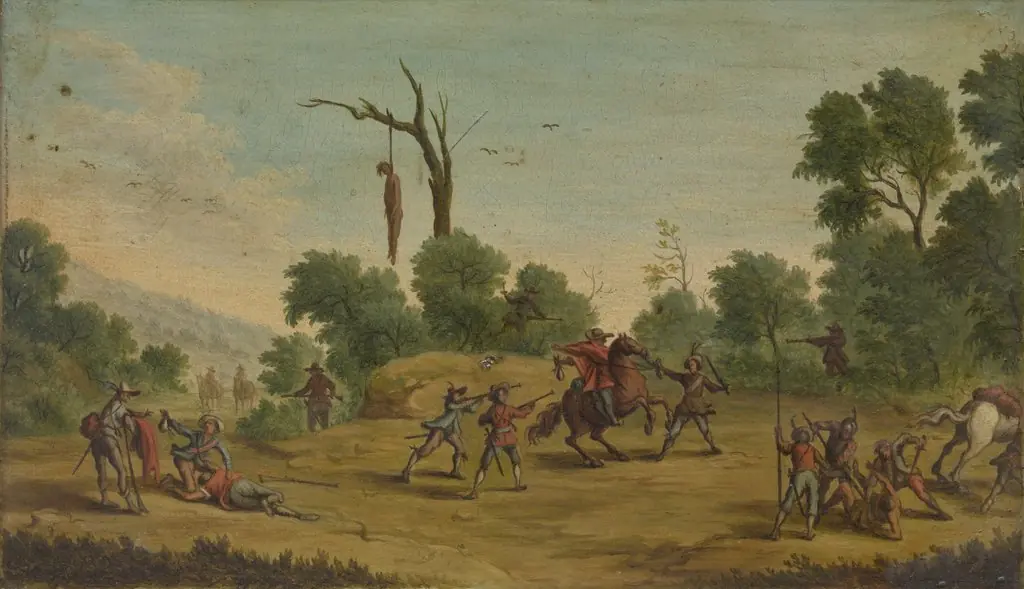 Horsemen Attacked by Robbers
 HOW WILL A COVERED PART BE CORRECTED?HOW WIKA A COVERED HEART DEED CORRECTED?
![Christ Walking on the Water [second plate], by Jacques Callot](https://artifactworldgallery.com/img/jacques-callot--christ-walking-on-the-water-second-plate--2069f3bfe4cb2126-w320.webp) Christ Walking on the Water [second plate]
Christ Walking on the Water [second plate]
 Recruitment of Troops
 Recruitment of Troops
 The Large Miseries of War: Enrollment of the Troops
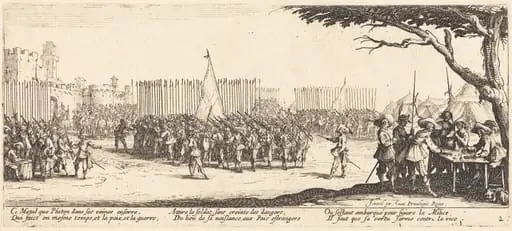 Recruitment of Troops
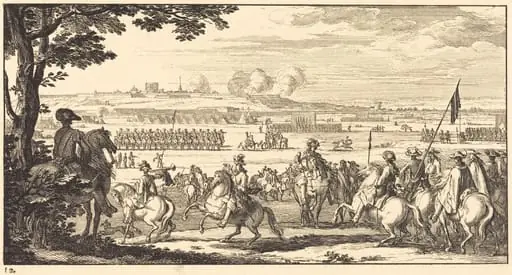 Landscape with an Army
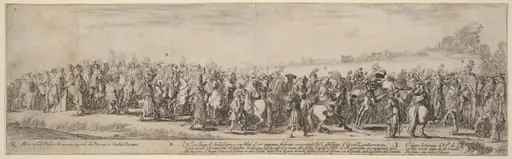 Polish Nobles, His Excellency the Ambassador, and His Carriage
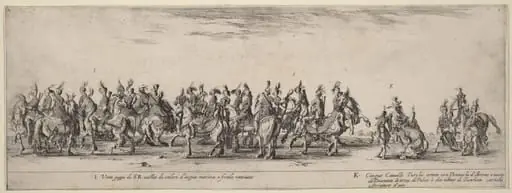 Twenty Pages and Five Turkish Horses
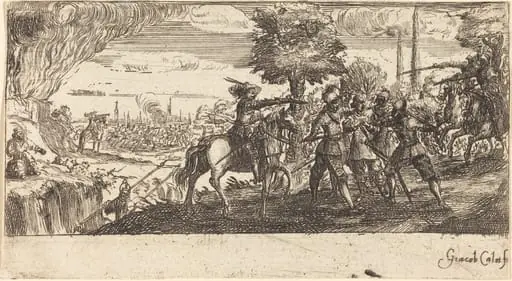 Landscape with Battle Scene
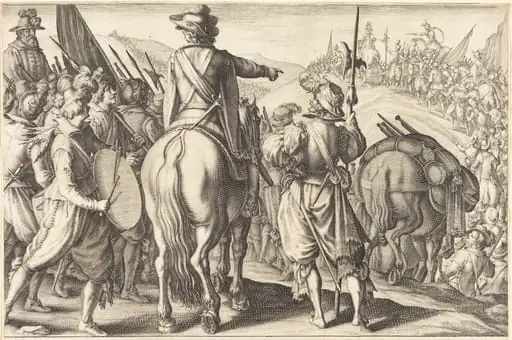 The Troops on the March
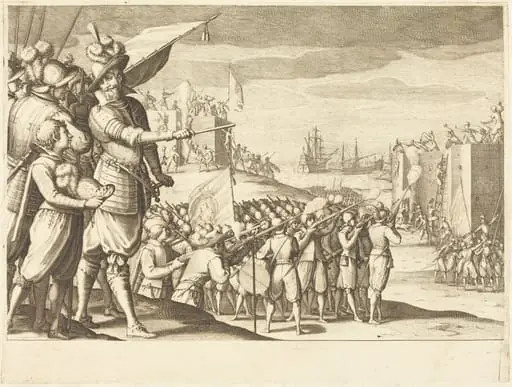 Assault on Two Fortresses
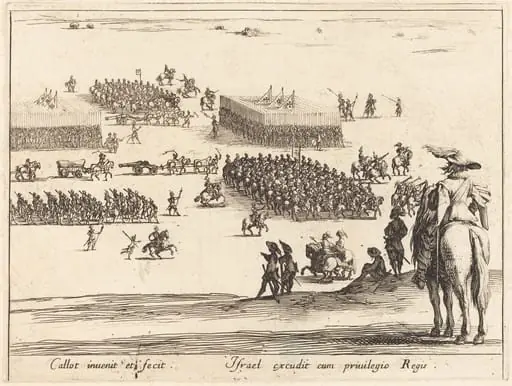 The Review
 The Battle