Artwork
Landscape with an Army
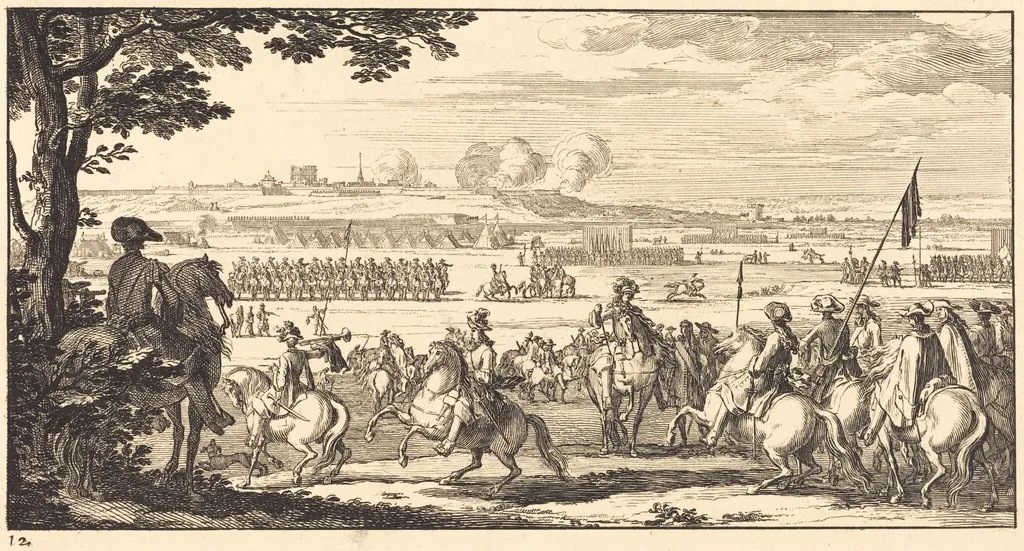
Landscape with an Army is an ink print by the Baroque artist Sébastien Le Clerc I. It dates from 1673 and is held in the collection of the National Gallery of Art.
About this work
Overview
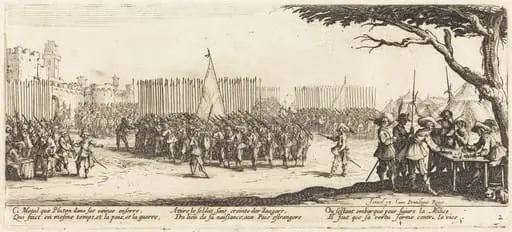
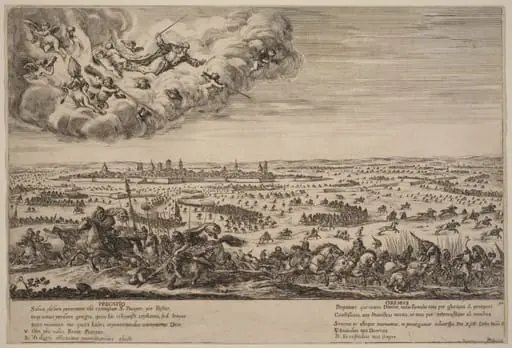
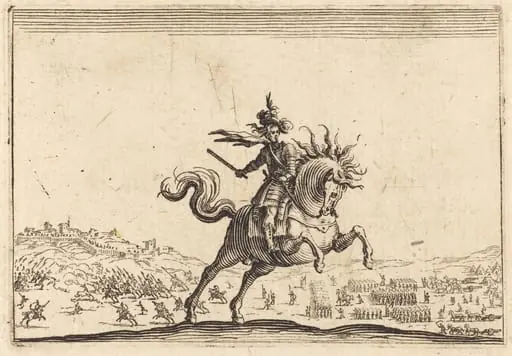
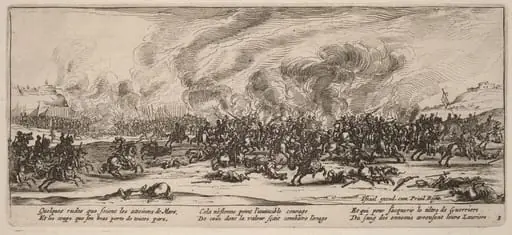
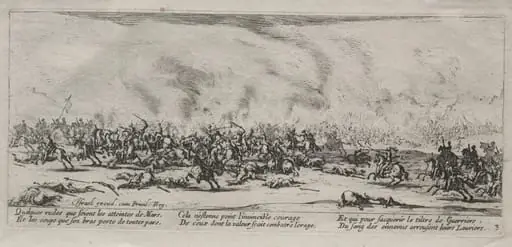
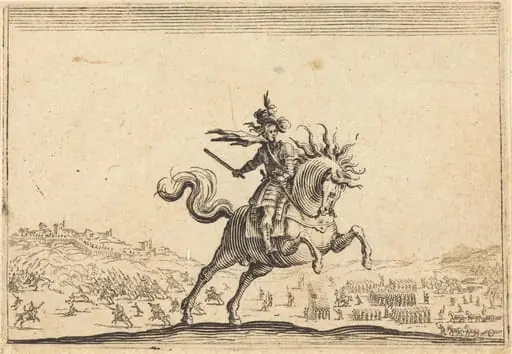
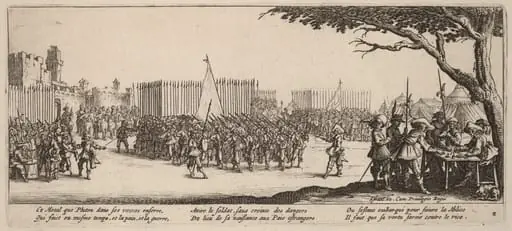
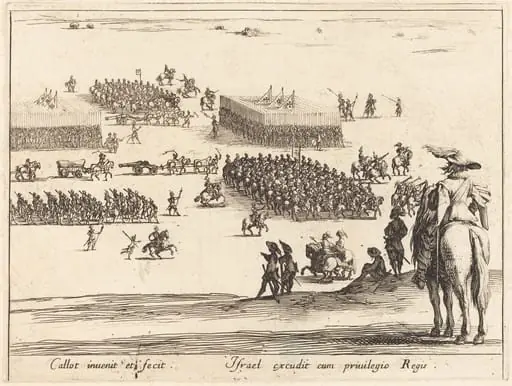
Landscape with an Army is an etching produced in 1673 by the French printmaker Sébastien Le Clerc I. Executed on a metal plate, the work presents a panoramic view of a military encampment set within a flat countryside. The composition balances a foreground of mounted troops with a distant, densely packed army, a solitary tree, and hints of architecture and water on the horizon.
Subject & Meaning
Riders bearing standards lead the charge, while rows of infantry stretch across the plain, suggesting a coordinated march or deployment.
The image records a bustling battlefield scene, emphasizing the order and disorder of war. Riders bearing standards lead the charge, while rows of infantry stretch across the plain, suggesting a coordinated march or deployment. Smoke drifting from an unseen conflict and the sparse natural elements frame the human activity, reflecting contemporary interests in documenting military might and the landscape’s role in such events.
Technique & Style
Le Clerc employed the etching process, incising lines into a copper plate that were then inked and pressed onto paper. The work is characterized by crisp, intersecting lines that convey movement and density, a hallmark of 17th‑century battle prints. The careful rendering of texture—smoke, foliage, and architectural silhouettes—creates a sense of depth while maintaining a tightly organized visual field.
History & Provenance
Created in the late 17th century, the print belongs to a period when French artists frequently produced illustrative military scenes for patrons and collectors. While specific ownership records are scarce, the etching has appeared in several catalogues of Le Clerc’s oeuvre and is held in a number of European print collections, attesting to its circulation among connoisseurs of the era.
Artist & collection