Artwork
The Sick Man
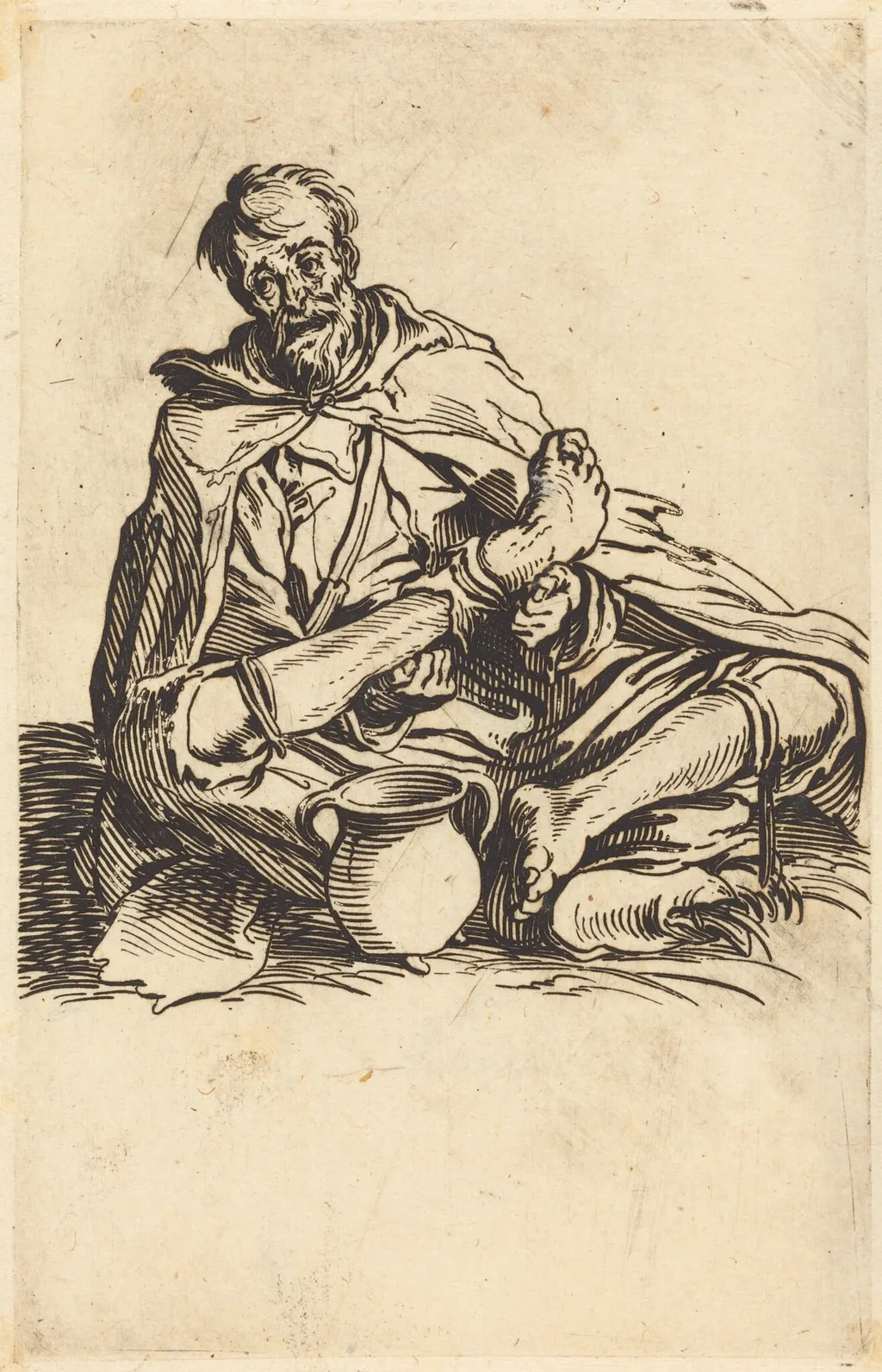
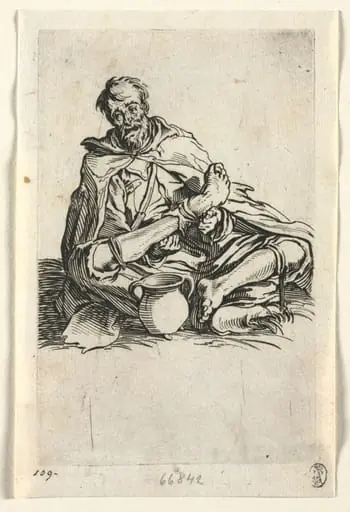
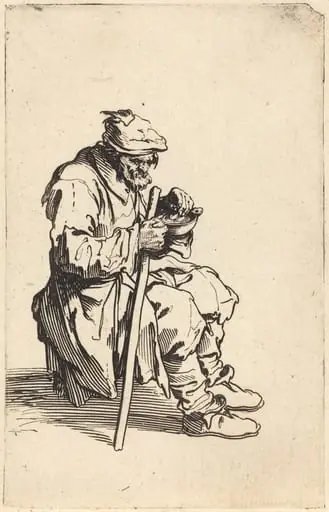
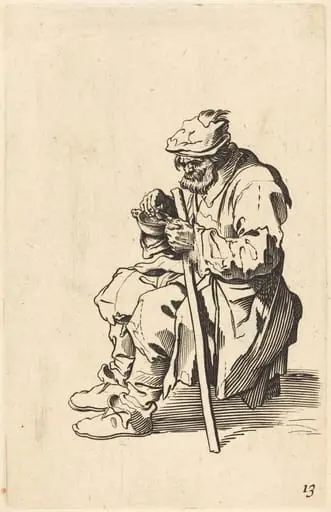
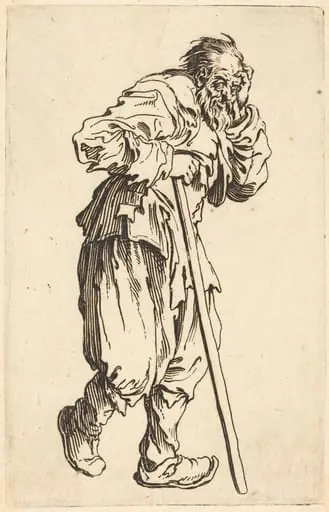
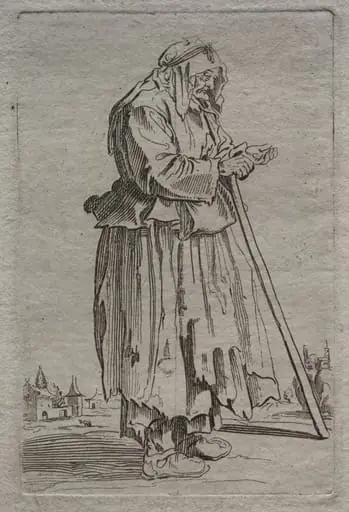
The Sick Man is an ink print by the Baroque artist Jacques Callot. It dates from 1622 and is held in the collection of the National Gallery of Art.
About this work
Overview
Created around 1622 by Jacques Callot, *The Sick Man* is an etching on laid paper that captures a moment of quiet vulnerability. As part of a vast output of over 1,400 prints, this work exemplifies Callot’s interest in ordinary human conditions. Unlike grand historical or mythological subjects, it focuses on an unadorned domestic scene, reflecting his commitment to observing life as it was lived.
Subject & Meaning
The image depicts an elderly man seated on a bed, wrapped in thick blankets, his posture conveying exhaustion. He holds a small cup, perhaps for medicine, while resting his head on a pillow. A dog lies curled at his side, offering silent companionship. The absence of narrative detail invites contemplation of solitude and care, emphasizing dignity in frailty rather than pity or drama.
Technique & Style
Callot employed etching to achieve fine, irregular lines that mimic the texture of worn fabric and tired skin.
Callot employed etching to achieve fine, irregular lines that mimic the texture of worn fabric and tired skin. The ink sits in the grooves of the metal plate, producing deep contrasts against the paper’s pale surface. The scratchy, uneven quality of the lines suggests immediacy, as if drawn from direct observation. This deliberate roughness enhances the emotional weight of the scene without idealization.
History & Provenance
The print emerged during Callot’s time in Florence, where he was influenced by Italian artistic traditions and the social realities of early 17th-century Europe. Though specific early ownership records are sparse, the work aligns with his broader practice of documenting marginalized figures. It entered public collections in the 19th century as interest grew in Northern European printmaking.
Context
In early 17th-century Europe, widespread illness, war, and poverty shaped daily life. Callot’s prints often recorded these conditions with minimal sentimentality. *The Sick Man* fits within a tradition of humanist observation, paralleling the work of contemporaries who turned away from religious grandeur toward intimate, unvarnished portrayals of common experience.
Legacy
Callot’s technical innovations in etching influenced generations of printmakers, but his enduring impact lies in his empathetic focus on the overlooked. *The Sick Man* remains a quiet testament to the power of observation in art — not as spectacle, but as witness. Its unembellished realism continues to resonate in works that prioritize humanity over heroism.
Artist & collection

Artist
Jacques Callot was a baroque printmaker and draftsman from the Duchy of Lorraine.

 Holy Family at supper
 Restoration of the Aqueduct at Pisa
 Restoration of the Aqueduct at Pisa
 Square in Paris with Many Figures
 Square in Paris with Many Figures
 Horsemen Attacked by Robbers
 HOW WILL A COVERED PART BE CORRECTED?HOW WIKA A COVERED HEART DEED CORRECTED?
![Christ Walking on the Water [second plate], by Jacques Callot](https://artifactworldgallery.com/img/jacques-callot--christ-walking-on-the-water-second-plate--2069f3bfe4cb2126-w320.webp) Christ Walking on the Water [second plate]
Christ Walking on the Water [second plate]