Artwork
The Siege of Breda [plate 1 of 6]
![The Siege of Breda [plate 1 of 6], by Jacques Callot, ink, 1628](https://artifactworldgallery.com/img/jacques-callot--the-siege-of-breda-plate-1-of-6--979d3482f5499305-w1024.webp)
The Siege of Breda [plate 1 of 6] is an ink print by the Baroque artist Jacques Callot. It dates from 1628 and is held in the collection of the National Gallery of Art.
About this work
If you're interested in learning more about this style of painting, you might want to look into the work of artist Callot, Jacques.
The painting shows a battle scene with soldiers and horses in the foreground, and a city in the background. The city has a large wall surrounding it, with towers and gates visible. In the top-left corner, there is a coat of arms with a crown and other symbols. The painting is done in a detailed, realistic style, with many small figures and objects visible.
The painting depicts a specific event, the Siege of Breda, which is a historical battle that took place in the 17th century. The level of detail in the painting suggests that it was created by an artist who was skilled in depicting realistic scenes.
If you're interested in learning more about this style of painting, you might want to look into the work of artist Callot, Jacques.
Overview
Jacques Callot, a French printmaker from the Duchy of Lorraine, produced this etching in 1628 as the opening image of a six-part series documenting the Siege of Breda. Executed in fine, precise lines on laid paper, the work exemplifies his mastery of etching and his focus on military campaigns of the era. As part of a larger narrative sequence, it captures a moment in the Eighty Years' War with clinical attention to spatial and human detail.
Subject & Meaning
The scene portrays the Dutch city of Breda under Spanish siege, with troops encamped and fortifications under pressure. The inclusion of the city’s walls, towers, and gates underscores its strategic importance, while the coat of arms in the upper left identifies the ruling authority. Callot presents no overt heroism; instead, the image conveys the scale and order of military operations, reflecting the administrative reality of early modern warfare.
Technique & Style
Callot employed fine-line etching to render hundreds of minute figures, horses, and architectural elements with clarity. His use of layered tonal gradations and controlled cross-hatching creates depth without washes or color. The composition is tightly structured, guiding the eye from foreground activity to the distant cityscape, demonstrating his technical precision and commitment to observational accuracy over dramatic flourish.
History & Provenance
The etching was made during the Spanish campaign to reclaim Breda, a key event in the Eighty Years' War. Callot, who accompanied military forces as a documentarian, likely based the image on firsthand sketches. The plate was published as part of a commercial series, widely circulated among collectors and military observers in Europe, ensuring its role as both record and propaganda.
Context
In the early 17th century, etching emerged as a favored medium for depicting contemporary conflicts, especially in the Low Countries. Callot’s series responded to public interest in war news and the rise of printed visual journalism. His work aligned with broader trends in Northern European printmaking that prioritized factual representation over idealized history painting.
Legacy
Callot’s detailed military scenes influenced generations of printmakers and war illustrators. His ability to convey complex battlefield dynamics through etching set a standard for documentary precision. Though not widely exhibited as fine art in his time, his plates became reference points for later historians and artists seeking authentic depictions of 17th-century warfare.
Artist & collection

Artist
Jacques Callot was a baroque printmaker and draftsman from the Duchy of Lorraine.

 Holy Family at supper
 Restoration of the Aqueduct at Pisa
 Restoration of the Aqueduct at Pisa
 Square in Paris with Many Figures
 Square in Paris with Many Figures
 Horsemen Attacked by Robbers
 HOW WILL A COVERED PART BE CORRECTED?HOW WIKA A COVERED HEART DEED CORRECTED?
![Christ Walking on the Water [second plate], by Jacques Callot](https://artifactworldgallery.com/img/jacques-callot--christ-walking-on-the-water-second-plate--2069f3bfe4cb2126-w320.webp) Christ Walking on the Water [second plate]
Christ Walking on the Water [second plate]
![The Siege of Breda [plate 5 of 6], by Jacques Callot](https://artifactworldgallery.com/img/jacques-callot--the-siege-of-breda-plate-5-of-6--26a8f60b8b09e851-w320.webp) The Siege of Breda [plate 5 of 6]
The Siege of Breda [plate 5 of 6]![The Siege of Breda [plate 6 of 6], by Jacques Callot](https://artifactworldgallery.com/img/jacques-callot--the-siege-of-breda-plate-6-of-6--2a4732053c4510b6-w320.webp) The Siege of Breda [plate 6 of 6]
The Siege of Breda [plate 6 of 6]![The Siege of Breda [plate 3 of 6], by Jacques Callot](https://artifactworldgallery.com/img/jacques-callot--the-siege-of-breda-plate-3-of-6--c43bd4a835426ed7-w320.webp) The Siege of Breda [plate 3 of 6]
The Siege of Breda [plate 3 of 6]![The Siege of Breda [plate 4 of 6], by Jacques Callot](https://artifactworldgallery.com/img/jacques-callot--the-siege-of-breda-plate-4-of-6--3e777c648194dcba-w320.webp) The Siege of Breda [plate 4 of 6]
The Siege of Breda [plate 4 of 6] The Siege of La Rochelle: Plate 11
 The Siege of La Rochelle: Plate 10
 The Siege of La Rochelle: Plate 12
 The Siege of La Rochelle: Plate 7
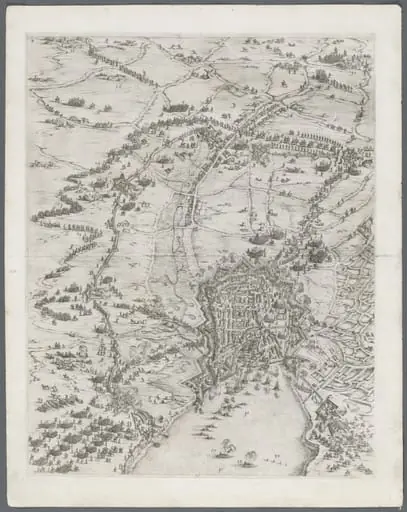 The Siege of La Rochelle: Plate 6
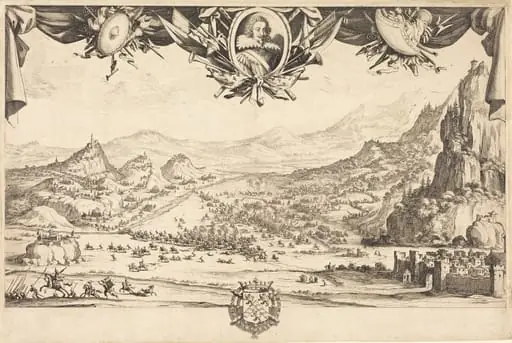 The Combat of Avigliana