Artwork
The Siege of La Rochelle [plate 1 of 16; set comprises 1952.8.97-112]
![The Siege of La Rochelle [plate 1 of 16; set comprises 1952.8.97-112], by Jacques Callot, ink, 1630](https://artifactworldgallery.com/img/jacques-callot--the-siege-of-la-rochelle-plate-1-of-16-set-comprises-1952-8--4a7a47fc234f38f8-w1024.webp)
The Siege of La Rochelle [plate 1 of 16; set comprises 1952.8.97-112] is an ink print by the Baroque artist Jacques Callot. It dates from 1630 and is held in the collection of the National Gallery of Art.
About this work
Overview
Executed on laid paper, the work belongs to a cohesive series that records the military campaign through precise, layered linework.
Created in 1630 by Jacques Callot, this etching and engraving is the first of sixteen plates documenting the Siege of La Rochelle. Executed on laid paper, the work belongs to a cohesive series that records the military campaign through precise, layered linework. Callot’s technique combines etching for tonal depth with engraving for sharp detail, resulting in a dense, narrative-rich composition that balances topographical accuracy with human drama.
Subject & Meaning
The plate divides visually into two zones: a heraldic shield on the left, bearing royal insignia, and a chaotic urban scene on the right. Crowds gather around a central figure, likely a commander or emissary, while figures flee or gesture in alarm. The coat of arms asserts royal authority, while the surrounding turmoil reflects the civilian strain of prolonged siege warfare, subtly linking political power with human suffering.
Technique & Style
Callot employed fine, controlled etching lines to render architecture, clothing, and movement with unusual clarity. Engraved accents define armor, windows, and facial expressions, enhancing depth. The composition’s crowdedness is managed through overlapping planes and atmospheric perspective, a hallmark of his ability to compress complex events into single frames without losing legibility or emotional weight.
History & Provenance
The series was commissioned to commemorate the 1627–1628 siege, a pivotal moment in Louis XIII’s suppression of Huguenot resistance. Callot, present with the royal army, produced these plates shortly after the event. The set entered the collection of the Metropolitan Museum of Art in 1952, cataloged as part of a larger group of his war-related prints, preserving their historical and artistic significance.
Context
Callot’s work emerged during a period when printmaking became a tool for both propaganda and documentation. The Siege of La Rochelle, a turning point in France’s religious conflicts, was widely publicized. His series avoided overt glorification, instead offering a granular view of military logistics, civilian displacement, and the physical toll of war—aligning with broader European trends in纪实版画.
Legacy
Callot’s La Rochelle series influenced later generations of war illustrators and satirists through its unflinching detail and compositional innovation. The plates remain among the earliest systematic visual records of a modern siege, bridging documentary reporting and artistic interpretation. Their survival in major collections underscores their role in shaping how early modern conflicts were visually understood and remembered.
Artist & collection

Artist
Jacques Callot was a baroque printmaker and draftsman from the Duchy of Lorraine.

 Holy Family at supper
 Restoration of the Aqueduct at Pisa
 Restoration of the Aqueduct at Pisa
 Square in Paris with Many Figures
 Square in Paris with Many Figures
 Horsemen Attacked by Robbers
 HOW WILL A COVERED PART BE CORRECTED?HOW WIKA A COVERED HEART DEED CORRECTED?
![Christ Walking on the Water [second plate], by Jacques Callot](https://artifactworldgallery.com/img/jacques-callot--christ-walking-on-the-water-second-plate--2069f3bfe4cb2126-w320.webp) Christ Walking on the Water [second plate]
Christ Walking on the Water [second plate]
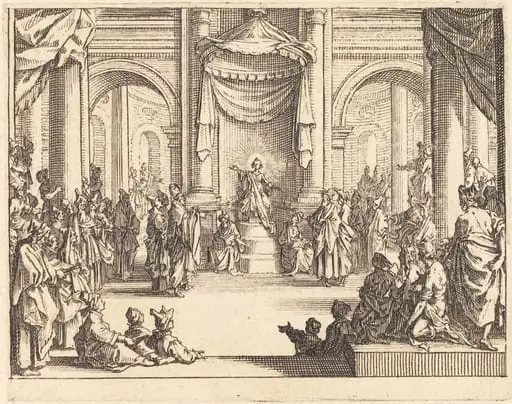 Christ Disputing with the Doctors
 Christ Disputing with the Doctors
 The Banquet of the Piacevoli
 Marriage at Cana
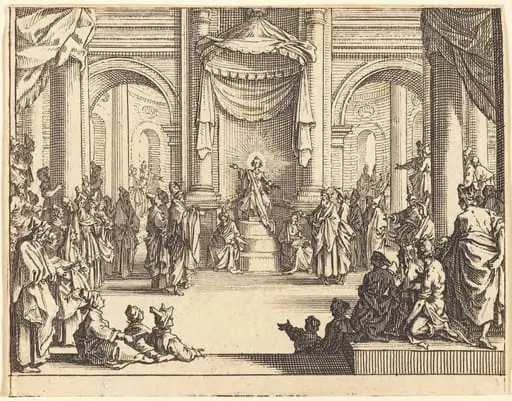 Christ Disputing with the Doctors
 Il Greco in Troia: Plate 8
 Design for a Fan: Courtly Figures in a Landscape
 Uytrecht Herstelt (The Recapture of Utrecht, 1673)
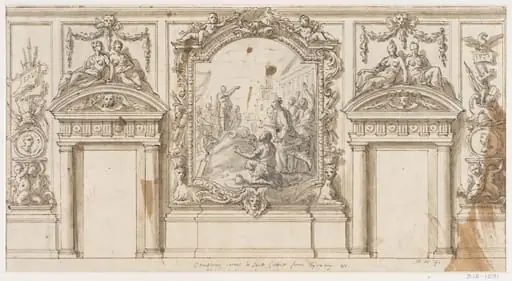 Early project design for the lower wall of the Great Hall at Moor Park, Hertfordshire
![The Siege of La Rochelle [plate 14 of 16; set comprises 1952.8.97-112], by Abraham Bosse](https://artifactworldgallery.com/img/abraham-bosse--the-siege-of-la-rochelle-plate-14-of-16-set-comprises-1952-8--ab2e920f7fcf3f5f-w320.webp) The Siege of La Rochelle [plate 14 of 16; set comprises 1952.8.97-112]
The Siege of La Rochelle [plate 14 of 16; set comprises 1952.8.97-112]