Artwork
Early project design for the lower wall of the Great Hall at Moor Park, Hertfordshire
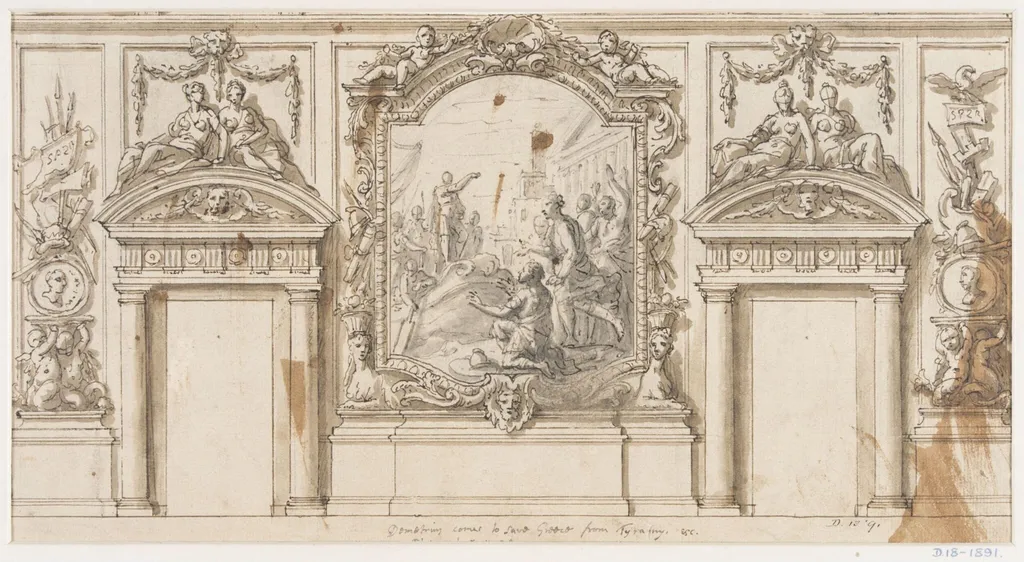
Early project design for the lower wall of the Great Hall at Moor Park, Hertfordshire is a drawing by the Baroque artist James, Sir Thornhill. It dates from 1725 and is held in the collection of the Victoria and Albert Museum. The drawing records an early design proposal for the lower wall of the Great Hall at Moor Park, Hertfordshire.
About this work
Overview
The drawing records an early design proposal for the lower wall of the Great Hall at Moor Park, Hertfordshire. It was prepared after the estate changed hands to Benjamin Haskins Styles, who commissioned the decorative scheme. The composition is presented as a full‑scale plan, showing how the wall would be divided into a central panel, side panels, doorways and lunette sections.
Subject & Meaning
At the heart of the design lies a narrative scene portraying Demetrius I of Macedon, known as Poliorcetes, arriving by sea to liberate Athens. The episode is drawn from Plutarch’s biography of Demetrius and serves as a classical allegory of triumph and civic virtue, intended to lend the hall an erudite, heroic atmosphere.
Technique & Style
The proposal is executed in ink and wash, with the central historical vignette rendered in a subdued grey wash that contrasts with the more linear, cross‑hatched treatment of the surrounding decorative elements. Pedimented doorways, reclining figures in the lunettes, and putti bearing trophies frame the central image, reflecting a Baroque‑inspired ornamental vocabulary.
History & Provenance
Created as a preparatory study for the interior of Moor Park, the drawing remained in the estate’s archives after the project’s completion. Later annotations suggest a second hand may have added or altered the central panel, indicating that the design was revisited during the execution phase.
Context
The design aligns with early‑18th‑century English country house trends, where owners employed classical narratives and elaborate wall schemes to demonstrate cultural refinement. Moor Park’s Great Hall, intended for public reception, would have displayed the completed scheme as a visual testament to the patron’s taste and learned interests.
Artist & collection


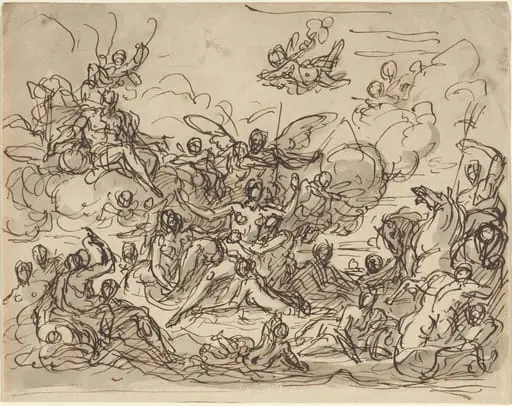 Birth of Venus
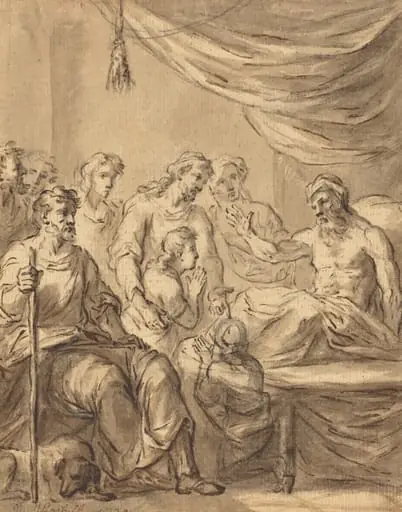 Jacob Allowing Benjamin to Go to Egypt with His Brothers
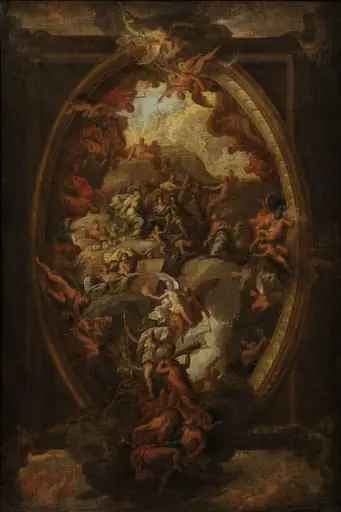 William and Mary Presenting the Cap of Liberty to Europe (sketch for the painted ceiling of the Great Hall, Greenwich Hospital)
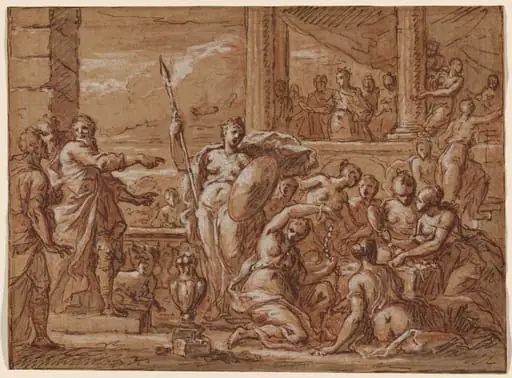 The Discovery of Achilles among the Daughters of Lycomedes
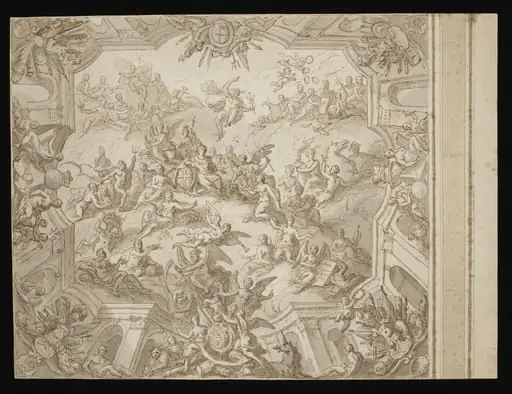 Preliminary design for the ceiling of the Upper Hall at Greenwich
 Design for a coffered ceiling
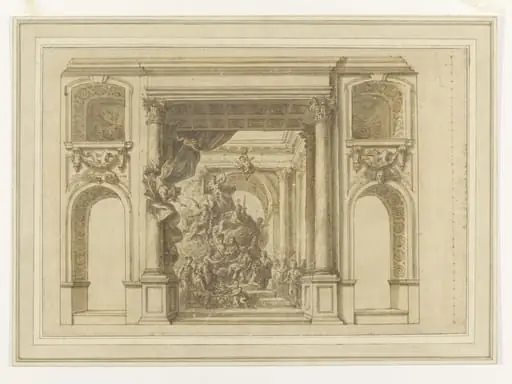 Design for the west wall of the Upper Hall at Greenwich
 Untitled
 An Elaborate Altar with the Resurrection of Christ and the Martyrdom of Saint Andrew
 Untitled
 Illusionistic Ceiling with a Grape Arbor, Figures Poised on Galleries, and a Central Scene of Olympian Gods
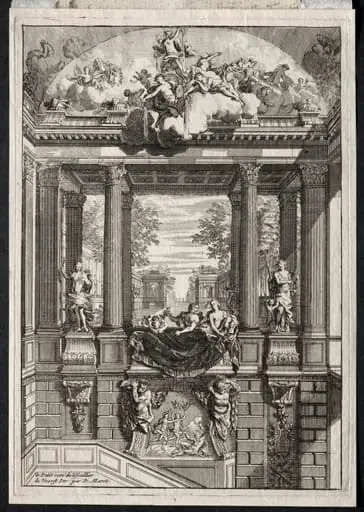 Staircase at the Palace of Voorst in Holland
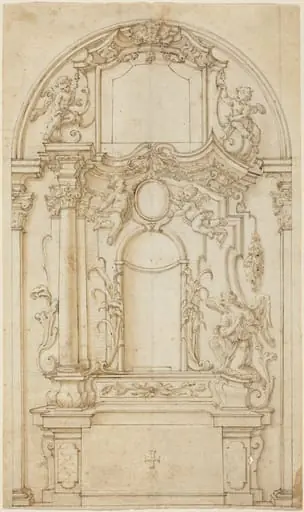 Study for an Altar and a Reredos
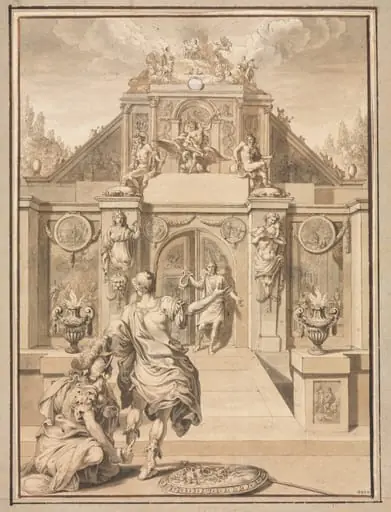 Perseus and Minerva before a Temple
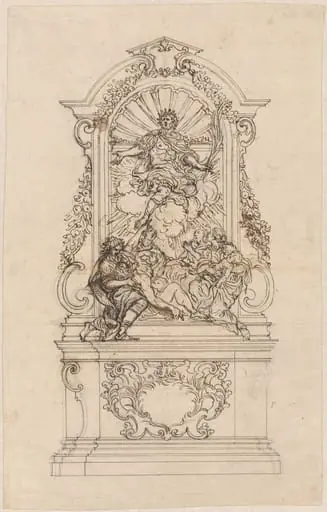 A Reliquary of Saint Sigismondo