Artwork
The Siege of La Rochelle [plate 12 of 16; set comprises 1952.8.97-112]
![The Siege of La Rochelle [plate 12 of 16; set comprises 1952.8.97-112], by Jacques Callot, ink, 1630](https://artifactworldgallery.com/img/jacques-callot--the-siege-of-la-rochelle-plate-12-of-16-set-comprises-1952-8--11aa44a7ba7b84a3-w1024.webp)
The Siege of La Rochelle [plate 12 of 16; set comprises 1952.8.97-112] is an ink print by the Baroque artist Jacques Callot. It dates from 1630 and is held in the collection of the National Gallery of Art.
About this work
Overview
Created in 1630 by Jacques Callot, this etching and engraving is the twelfth of sixteen plates documenting the Siege of La Rochelle.
Created in 1630 by Jacques Callot, this etching and engraving is the twelfth of sixteen plates documenting the Siege of La Rochelle. Produced on laid paper, the work belongs to a cohesive series that records a pivotal moment in the French Wars of Religion. Callot, a Lorrainer artist, employed meticulous line work to capture the scale and intensity of the conflict, reflecting his broader practice of documenting contemporary military events with documentary precision.
Subject & Meaning
The scene depicts the naval and land assault on the Huguenot stronghold of La Rochelle by royal French forces. Ships line the coast, cannons fire, and troops swarm makeshift earthworks under a haze of smoke. The composition conveys the chaos of urban siege warfare, with no clear hero or victor. Religious and political tensions underpin the event, though the image prioritizes the physical reality of combat over ideological messaging.
Technique & Style
Callot used fine etched lines and engraved accents to render intricate details: individual soldiers’ gear, rigging on ships, and rippling water. The density of lines creates depth and motion, while the absence of tonal shading relies on line weight and spacing for volume. His technique, refined through years of printmaking, allowed unprecedented clarity in depicting crowded, dynamic scenes, setting a standard for narrative printmaking in the early 17th century.
History & Provenance
The print was produced shortly after the 1627–1628 siege, when Louis XIII’s forces blockaded and captured the Protestant city. Callot accompanied the royal army as an official chronicler, making these images among the earliest visual records of modern siege warfare. The full series entered a major collection in 1952, where it remains part of a documented group of prints that reflect both military history and the artist’s personal engagement with the campaign.
Context
The siege was a turning point in Louis XIII’s campaign to suppress Huguenot political autonomy. Callot’s series emerged during a period when printmaking became a tool for state propaganda and historical documentation. Unlike earlier allegorical war imagery, these plates emphasize observed detail—tents, artillery, and troop movements—aligning with a growing European interest in empirical representation of contemporary events.
Legacy
Callot’s series influenced later military illustrators and printmakers through its combination of topographical accuracy and narrative complexity. The technical mastery of fine-line etching set a benchmark for detailed battlefield imagery. Though not widely exhibited as a complete set, individual plates like this one remain key references for understanding how early modern artists translated war into visual form.
Artist & collection
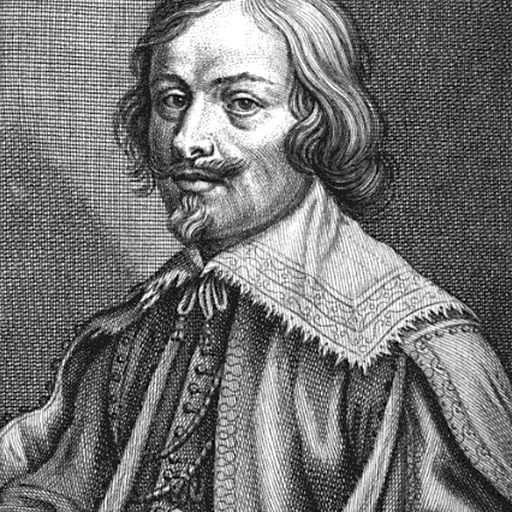
Artist
Jacques Callot was a baroque printmaker and draftsman from the Duchy of Lorraine.

 Holy Family at supper
 Restoration of the Aqueduct at Pisa
 Restoration of the Aqueduct at Pisa
 Square in Paris with Many Figures
 Square in Paris with Many Figures
 Horsemen Attacked by Robbers
 HOW WILL A COVERED PART BE CORRECTED?HOW WIKA A COVERED HEART DEED CORRECTED?
![Christ Walking on the Water [second plate], by Jacques Callot](https://artifactworldgallery.com/img/jacques-callot--christ-walking-on-the-water-second-plate--2069f3bfe4cb2126-w320.webp) Christ Walking on the Water [second plate]
Christ Walking on the Water [second plate]
![The Siege of La Rochelle [plate 11 of 16; set comprises 1952.8.97-112], by Jacques Callot](https://artifactworldgallery.com/img/jacques-callot--the-siege-of-la-rochelle-plate-11-of-16-set-comprises-1952-8--bb60a833ee7c2aa9-w320.webp) The Siege of La Rochelle [plate 11 of 16; set comprises 1952.8.97-112]
The Siege of La Rochelle [plate 11 of 16; set comprises 1952.8.97-112]![The Siege of La Rochelle [plate 10 of 16; set comprises 1952.8.97-112], by Jacques Callot](https://artifactworldgallery.com/img/jacques-callot--the-siege-of-la-rochelle-plate-10-of-16-set-comprises-1952-8--ab099ebe6617f96c-w320.webp) The Siege of La Rochelle [plate 10 of 16; set comprises 1952.8.97-112]
The Siege of La Rochelle [plate 10 of 16; set comprises 1952.8.97-112]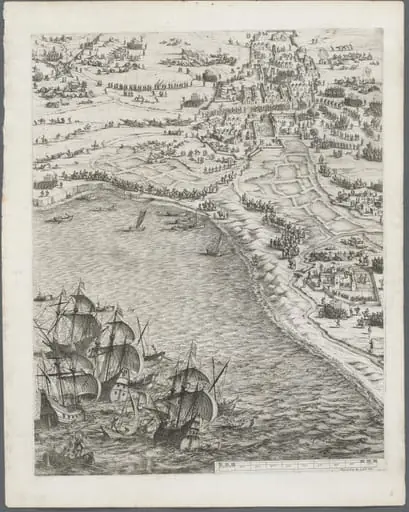 The Siege of La Rochelle: Plate 12
![The Siege of La Rochelle [plate 5 of 16; set comprises 1952.8.97-112], by Jacques Callot](https://artifactworldgallery.com/img/jacques-callot--the-siege-of-la-rochelle-plate-5-of-16-set-comprises-1952-8--26c0d48046d5d6d8-w320.webp) The Siege of La Rochelle [plate 5 of 16; set comprises 1952.8.97-112]
The Siege of La Rochelle [plate 5 of 16; set comprises 1952.8.97-112]![The Siege of La Rochelle [plate 7 of 16; set comprises 1952.8.97-112], by Jacques Callot](https://artifactworldgallery.com/img/jacques-callot--the-siege-of-la-rochelle-plate-7-of-16-set-comprises-1952-8--ed3ab4aaddd2281d-w320.webp) The Siege of La Rochelle [plate 7 of 16; set comprises 1952.8.97-112]
The Siege of La Rochelle [plate 7 of 16; set comprises 1952.8.97-112]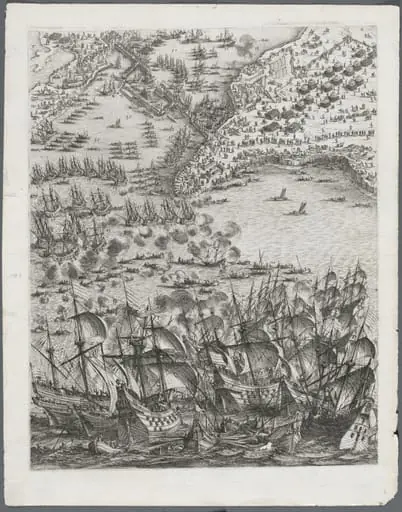 The Siege of La Rochelle: Plate 11
![The Siege of Breda [plate 4 of 6], by Jacques Callot](https://artifactworldgallery.com/img/jacques-callot--the-siege-of-breda-plate-4-of-6--3e777c648194dcba-w320.webp) The Siege of Breda [plate 4 of 6]
The Siege of Breda [plate 4 of 6]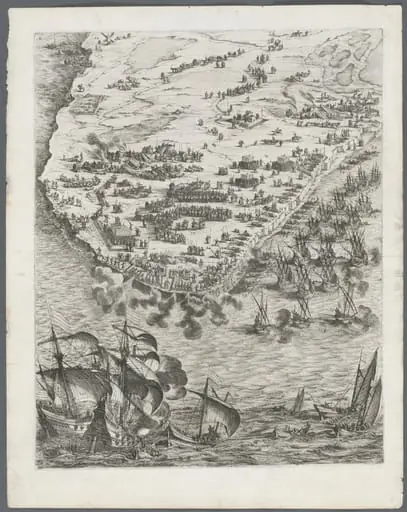 The Siege of La Rochelle: Plate 10
![The Siege of La Rochelle [plate 6 of 16; set comprises 1952.8.97-112], by Jacques Callot](https://artifactworldgallery.com/img/jacques-callot--the-siege-of-la-rochelle-plate-6-of-16-set-comprises-1952-8--87e690454dc011ee-w320.webp) The Siege of La Rochelle [plate 6 of 16; set comprises 1952.8.97-112]
The Siege of La Rochelle [plate 6 of 16; set comprises 1952.8.97-112]![The Siege of Breda [plate 1 of 6], by Jacques Callot](https://artifactworldgallery.com/img/jacques-callot--the-siege-of-breda-plate-1-of-6--979d3482f5499305-w320.webp) The Siege of Breda [plate 1 of 6]
The Siege of Breda [plate 1 of 6]![The Siege of Breda [plate 3 of 6], by Jacques Callot](https://artifactworldgallery.com/img/jacques-callot--the-siege-of-breda-plate-3-of-6--c43bd4a835426ed7-w320.webp) The Siege of Breda [plate 3 of 6]
The Siege of Breda [plate 3 of 6]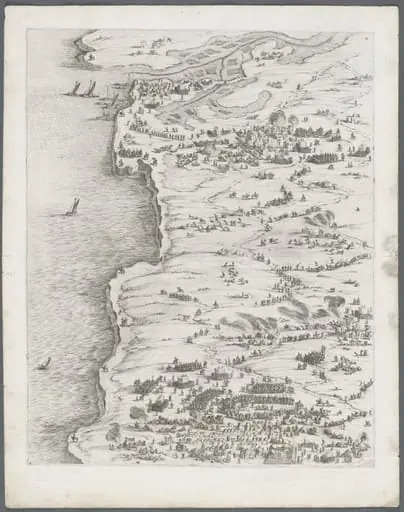 The Siege of La Rochelle: Plate 5