Artwork
The Slave Market
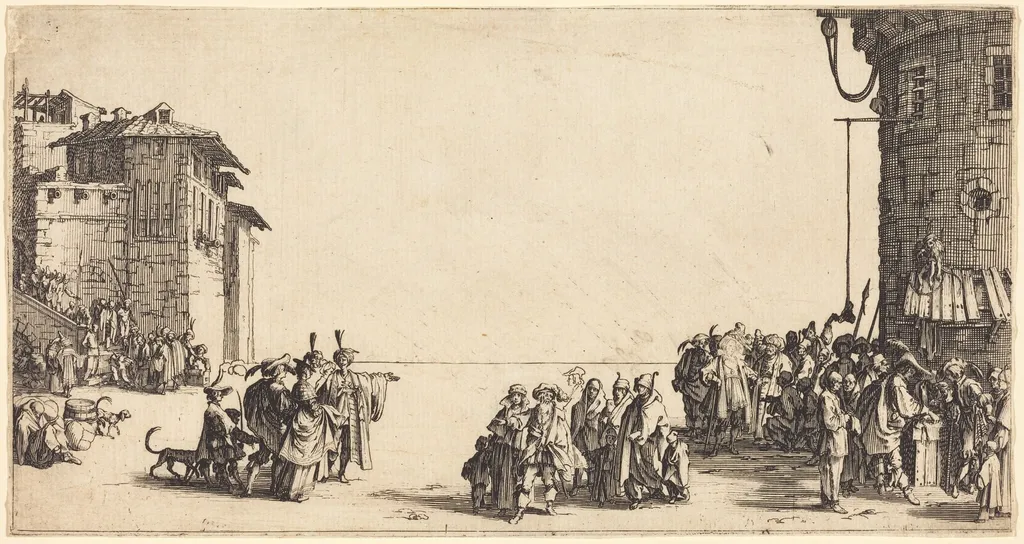
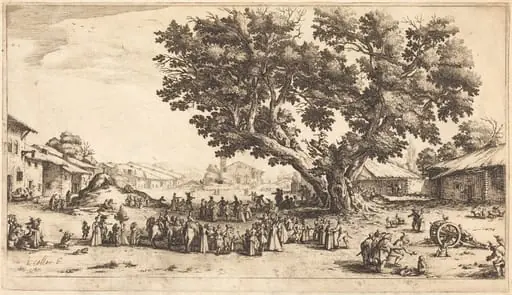
The Slave Market is an ink print by the Baroque artist Jacques Callot. It dates from 1620 and is held in the collection of the National Gallery of Art.
About this work
Overview
Jacques Callot, a French printmaker from the early seventeenth century, produced the etching titled *The Slave Market* in 1620. Executed on laid paper, the work belongs to his prolific output of more than a thousand prints, which often recorded everyday life and social conditions of his era.
Subject & Meaning
The composition presents a bustling urban street where a crowd gathers before a tall, deteriorating building. Figures range from richly dressed individuals to modestly clothed onlookers, and a few hold staffs or flags. The scene suggests a public transaction involving enslaved persons, reflecting the economic and moral dimensions of early modern human trafficking.
Technique & Style
Callot employed fine etching lines to render intricate details—individual faces, hands, a dog, and even a cat peeking through the throng. The precision of the incised lines and the careful rendering of architectural decay convey a narrative depth typical of Baroque printmaking, emphasizing observation and complex spatial arrangement.
History & Provenance
Created in the Duchy of Lorraine, the print forms part of Callot’s extensive catalog that documented contemporary military, social, and courtly scenes. While the original ownership trail is sparse, the work has been preserved within collections that value Callot’s contribution to the old master print tradition and his meticulous visual reportage.
Artist & collection
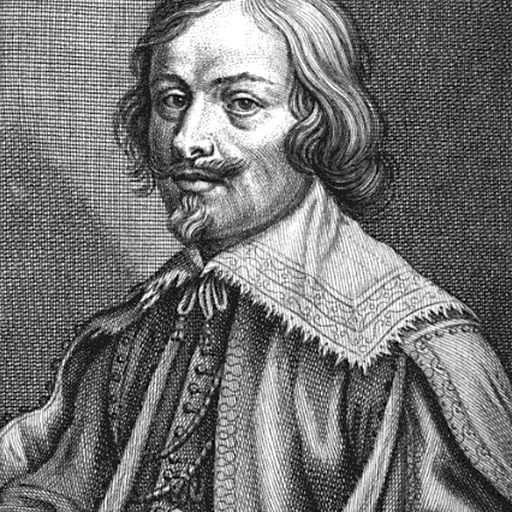
Artist
Jacques Callot was a baroque printmaker and draftsman from the Duchy of Lorraine.

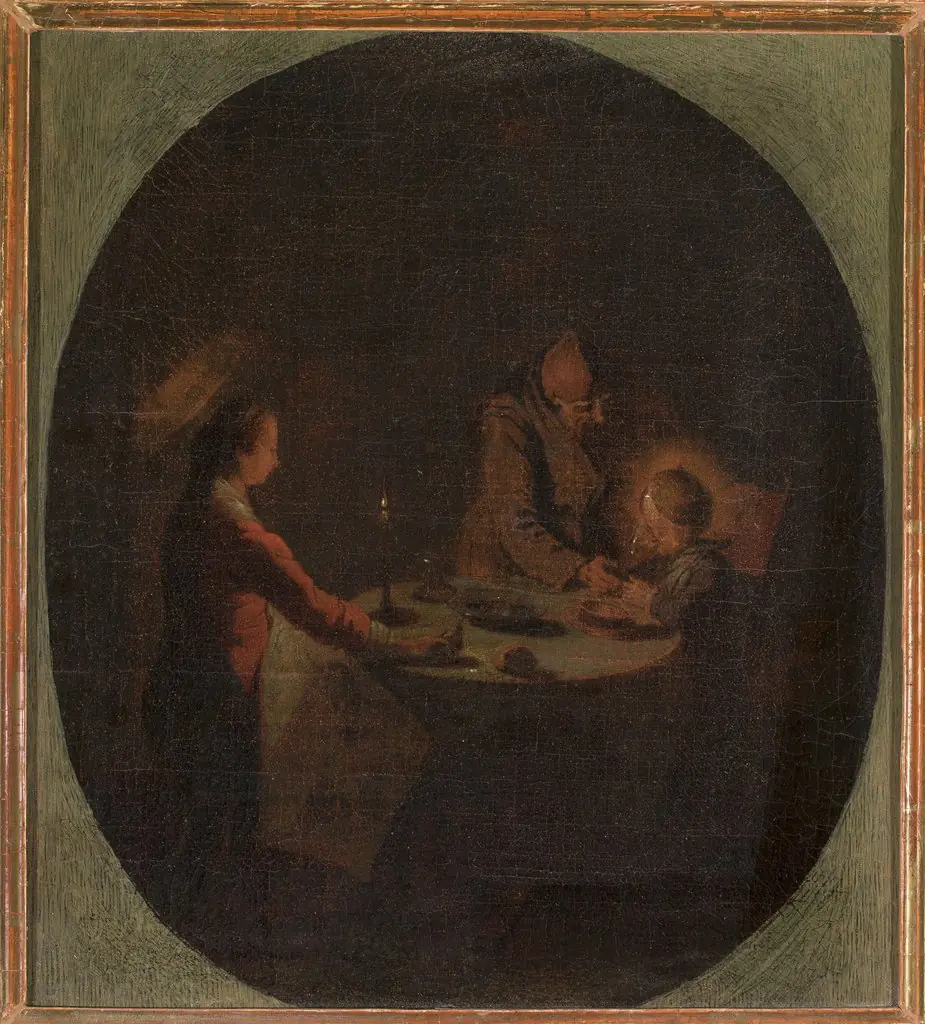 Holy Family at supper
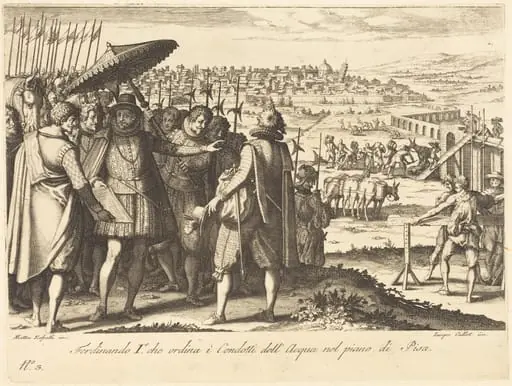 Restoration of the Aqueduct at Pisa
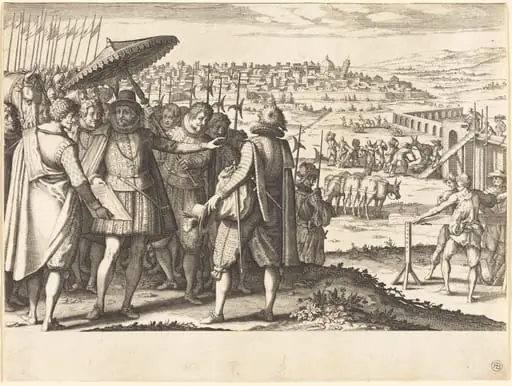 Restoration of the Aqueduct at Pisa
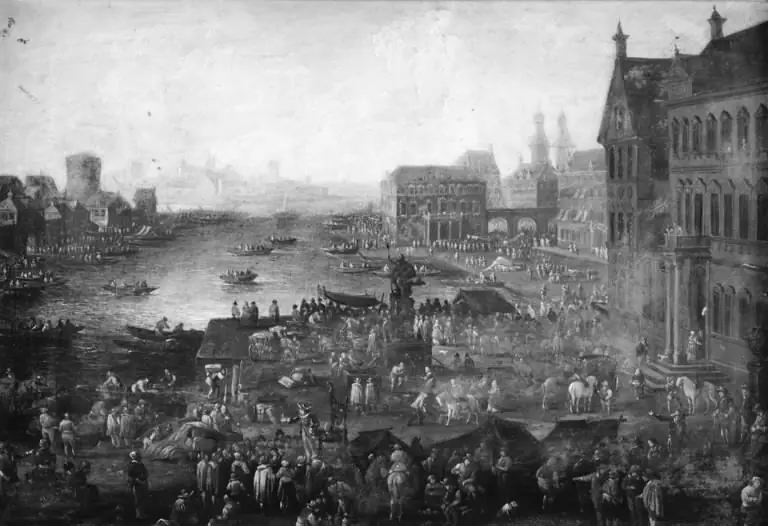 Square in Paris with Many Figures
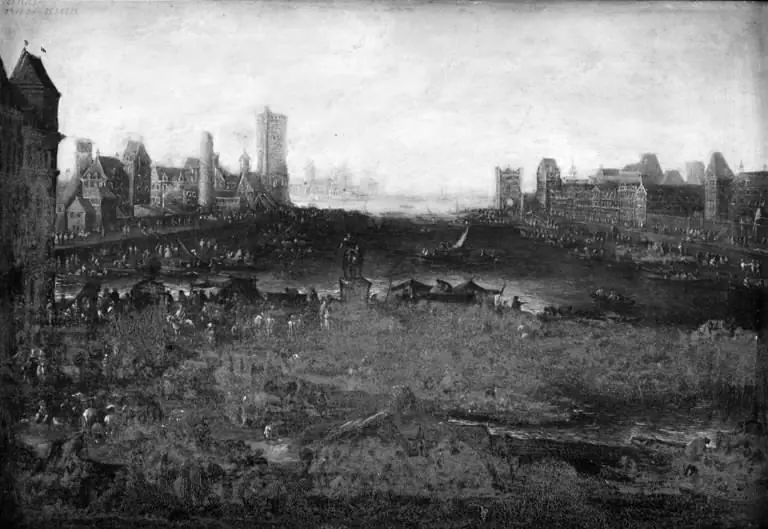 Square in Paris with Many Figures
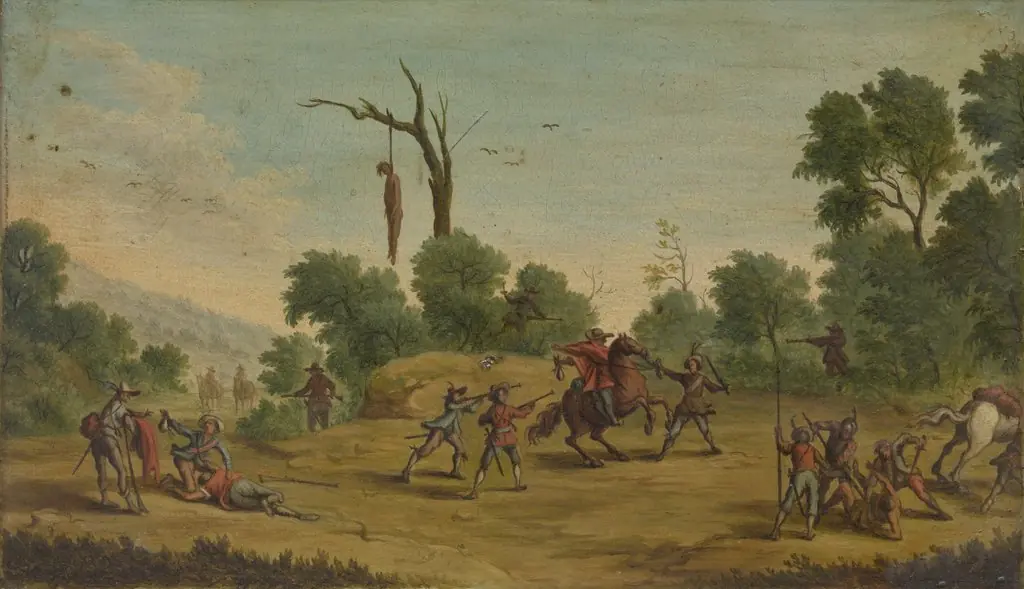 Horsemen Attacked by Robbers
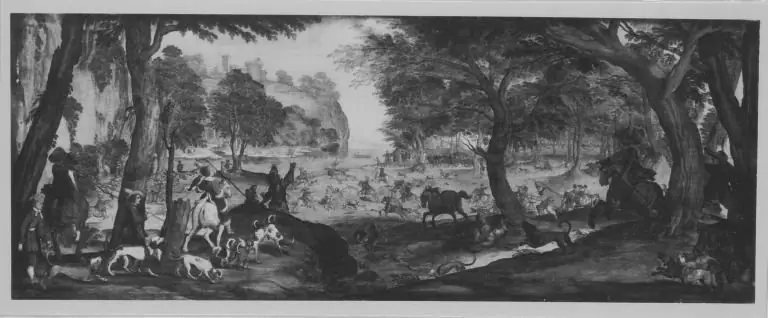 HOW WILL A COVERED PART BE CORRECTED?HOW WIKA A COVERED HEART DEED CORRECTED?
![Christ Walking on the Water [second plate], by Jacques Callot](https://artifactworldgallery.com/img/jacques-callot--christ-walking-on-the-water-second-plate--2069f3bfe4cb2126-w320.webp) Christ Walking on the Water [second plate]
Christ Walking on the Water [second plate]