Artwork
Title Page for "The Martyrdoms of the Apostles"
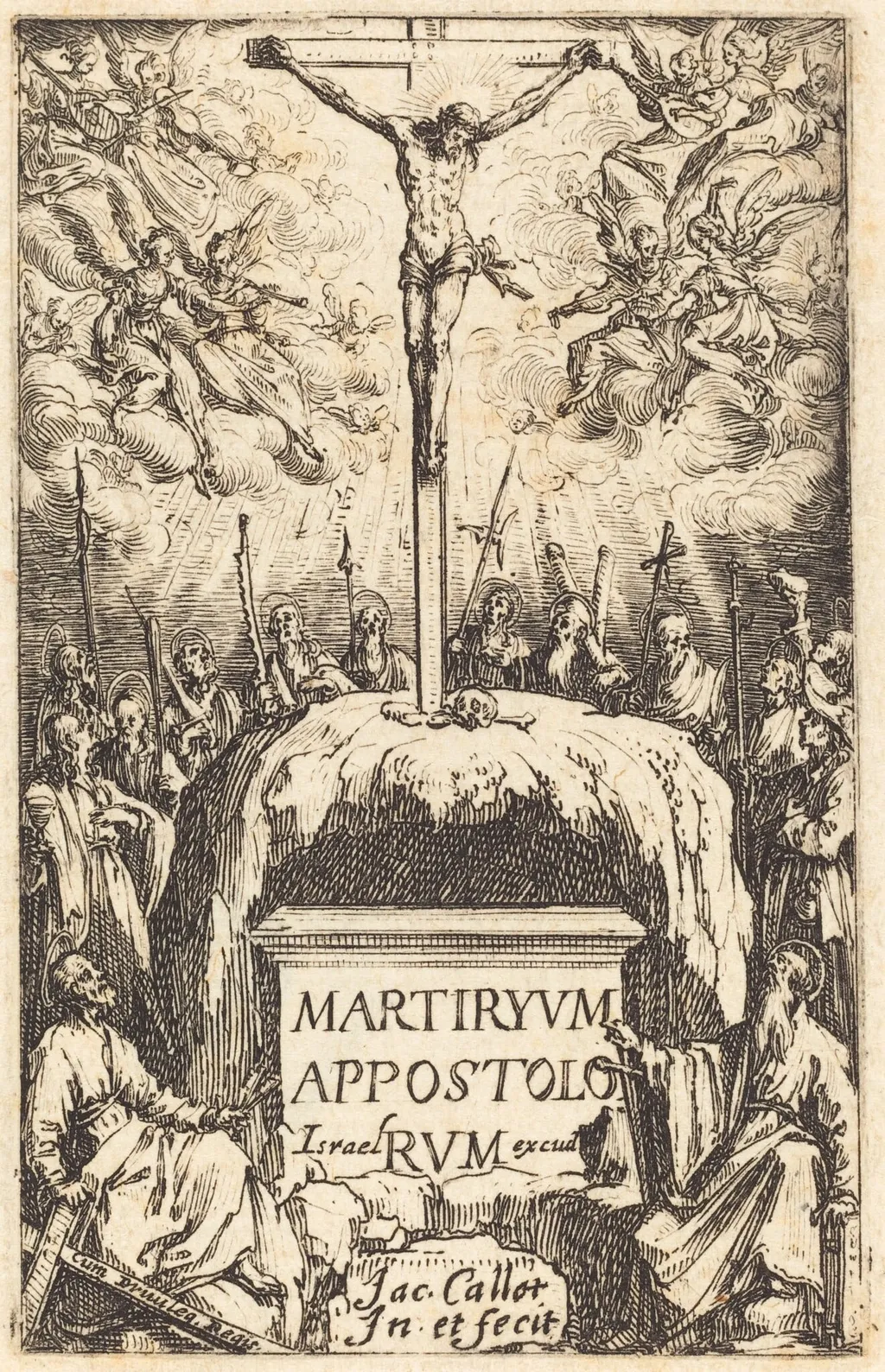
Title Page for "The Martyrdoms of the Apostles" is an ink print by the Baroque artist Jacques Callot. It dates from 1634 and is held in the collection of the National Gallery of Art.
About this work
Overview
This etching, created by Jacques Callot around 1634, serves as the title page for "The Martyrdoms of the Apostles". Executed on laid paper, it exemplifies Callot's prolific Baroque printmaking style, which spanned religious, military, and everyday themes.
Subject & Meaning
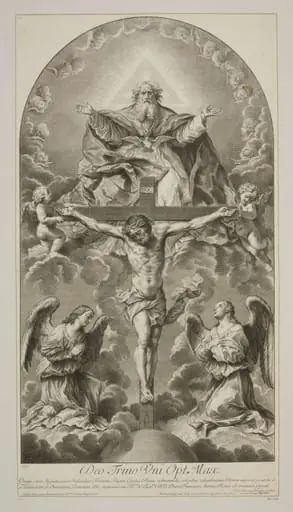
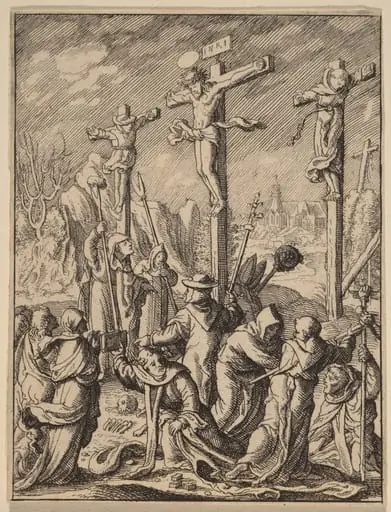
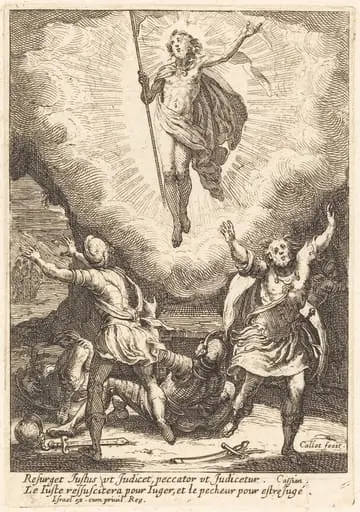
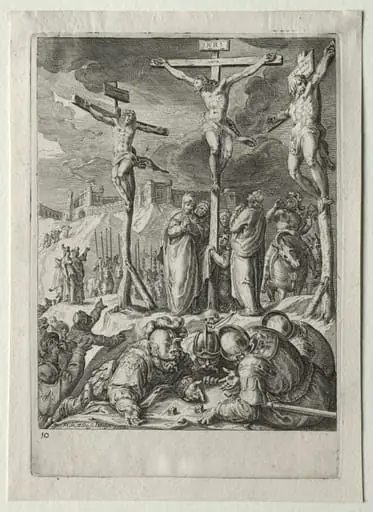
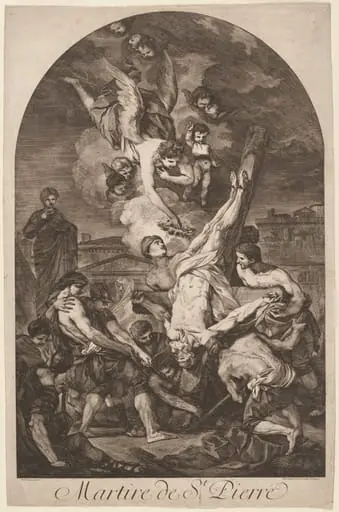
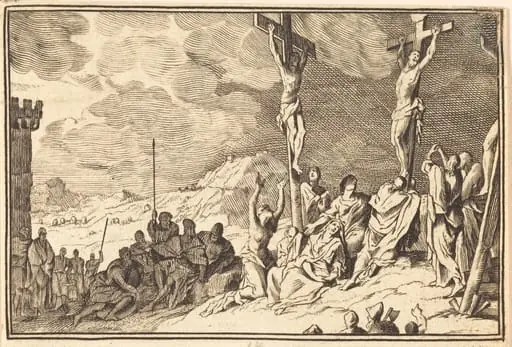
The etching depicts a martyrdom scene, centrally featuring a crucified figure surrounded by mourners and praying onlookers. A foreground monument bears a Latin inscription, while clouds and angels in the background amplify the dramatic and emotional tone, conveying solemnity and reverence.
Technique & Style
Callot's skill in etching is evident in the combination of intricately detailed figures set against a broad, expressive landscape. The work showcases his ability to balance foreground intensity with atmospheric depth.
History & Provenance
Created circa 1634 by Jacques Callot, a renowned Baroque printmaker from the Duchy of Lorraine, this etching is part of his vast oeuvre of over 1,400 works.
Context
Part of "The Martyrdoms of the Apostles" series, this title page reflects the religious themes prevalent in Baroque art, while also highlighting Callot's unique capacity to document the diverse subjects of his era.
Legacy
As a characteristic example of Callot's etching technique and thematic range, this work contributes to his lasting influence on Baroque printmaking and the broader representation of religious narratives in early modern European art.
Artist & collection

Artist
Jacques Callot was a baroque printmaker and draftsman from the Duchy of Lorraine.

 Holy Family at supper
 Restoration of the Aqueduct at Pisa
 Restoration of the Aqueduct at Pisa
 Square in Paris with Many Figures
 Square in Paris with Many Figures
 Horsemen Attacked by Robbers
 HOW WILL A COVERED PART BE CORRECTED?HOW WIKA A COVERED HEART DEED CORRECTED?
![Christ Walking on the Water [second plate], by Jacques Callot](https://artifactworldgallery.com/img/jacques-callot--christ-walking-on-the-water-second-plate--2069f3bfe4cb2126-w320.webp) Christ Walking on the Water [second plate]
Christ Walking on the Water [second plate]