Artwork
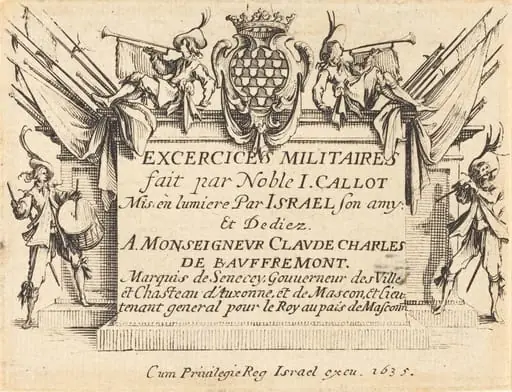
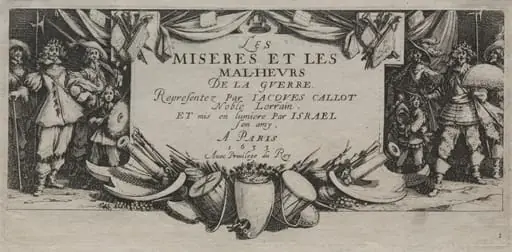
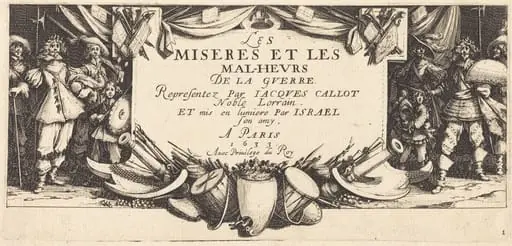
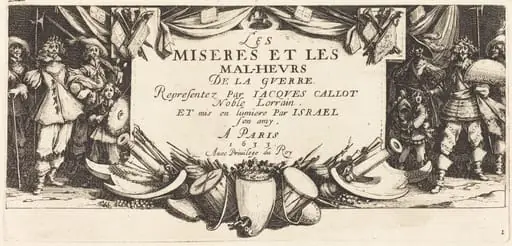
Title Page for "The Military Exercises"
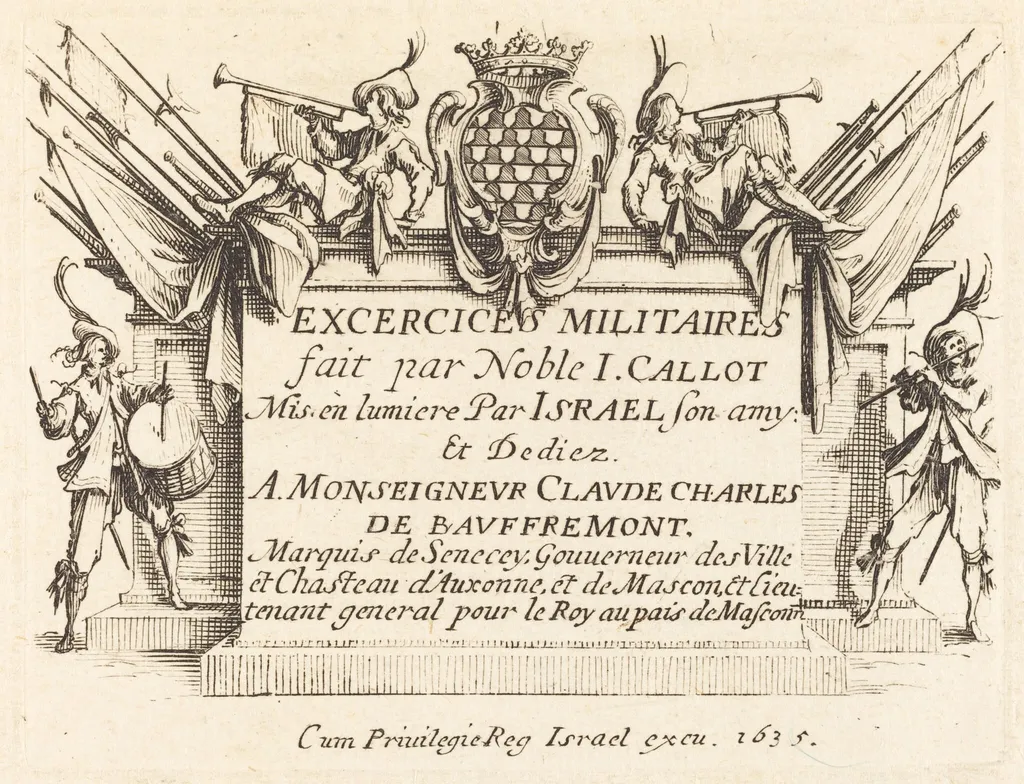
Title Page for "The Military Exercises" is an ink print by the Baroque artist Jacques Callot. It dates from 1634 and is held in the collection of the National Gallery of Art.
About this work
Overview
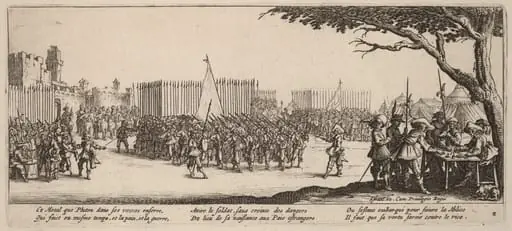
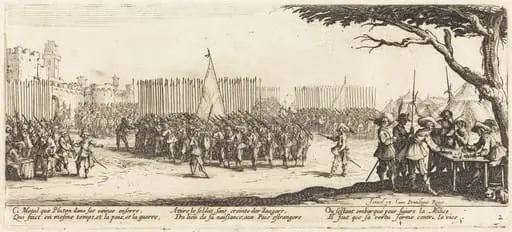
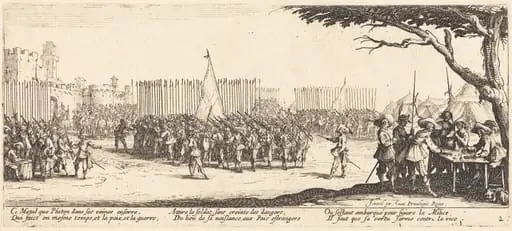
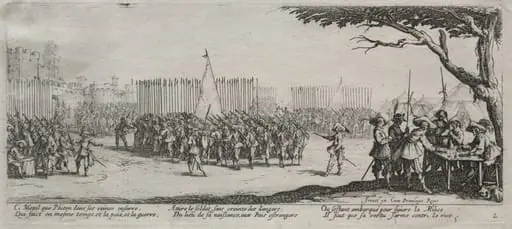
Created in 1634 by Jacques Callot, a French printmaker active in the Duchy of Lorraine, this etching serves as the title page for a military training manual. Executed on laid paper, the print presents a compact, orderly formation of soldiers on a walled field, exemplifying Callot’s prolific output of more than a thousand prints that recorded the visual culture of his era.
Subject & Meaning
The image depicts a regiment of infantrymen marching in tight ranks, each figure rendered with identical posture, suggesting the discipline and uniformity demanded by contemporary drill practices. By foregrounding the collective over individual identity, the work underscores the importance of coordinated movement in early‑modern warfare and reflects the instructional purpose of the accompanying manual.
Technique & Style
Callot employed a two‑plate system: a line plate to define the crisp outlines of the soldiers and a separate tonal plate to model shadows and depth. This combination, executed through drypoint etching, allows subtle gradations without the use of color, producing a sense of three‑dimensional space while maintaining the fine detail for which his prints are renowned.
History & Provenance
The print was originally bound to a printed guide on military exercises, circulating among officers and trainers in the 17th‑century French army. It later entered private collections of print enthusiasts before being acquired by a museum specializing in early modern graphic arts, where it remains a key example of Callot’s contribution to military illustration.
Context
During the early Baroque period, European powers placed increasing emphasis on standardized drill as armies grew larger and more professional. Callot’s work aligns with this trend, providing a visual reference that complements textual instructions, and reflects the broader interest in documenting contemporary social and military life through print.
Legacy
Callot’s systematic approach to depicting military formations influenced later printmakers and illustrators of tactical manuals. The precise replication of individual poses anticipates later studies of movement in art and contributed to the development of graphic techniques that balance narrative clarity with technical sophistication.
Artist & collection
Artist
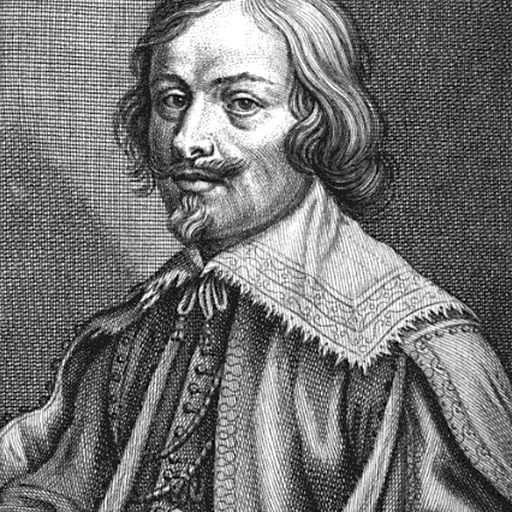
Jacques Callot was a baroque printmaker and draftsman from the Duchy of Lorraine.

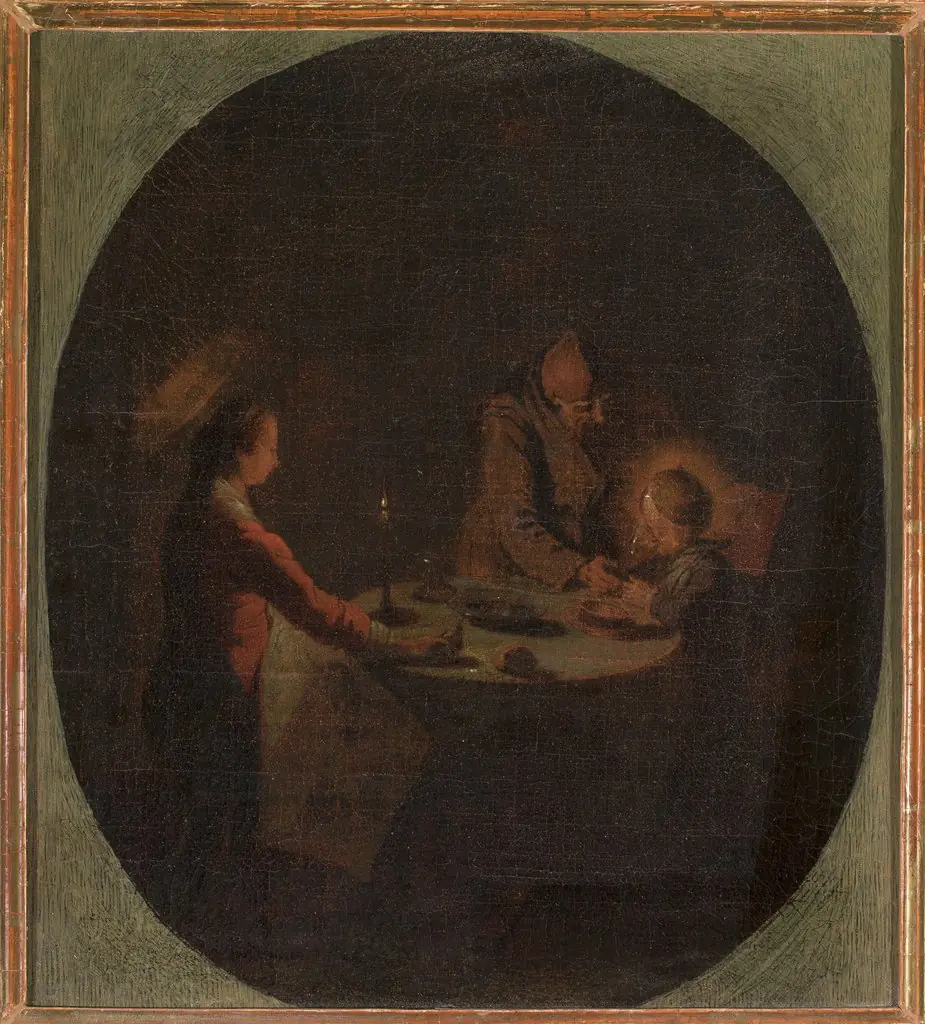 Holy Family at supper
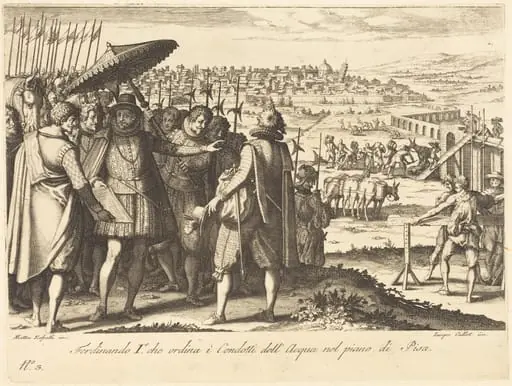 Restoration of the Aqueduct at Pisa
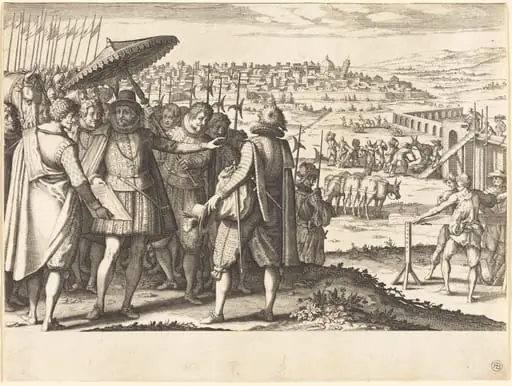 Restoration of the Aqueduct at Pisa
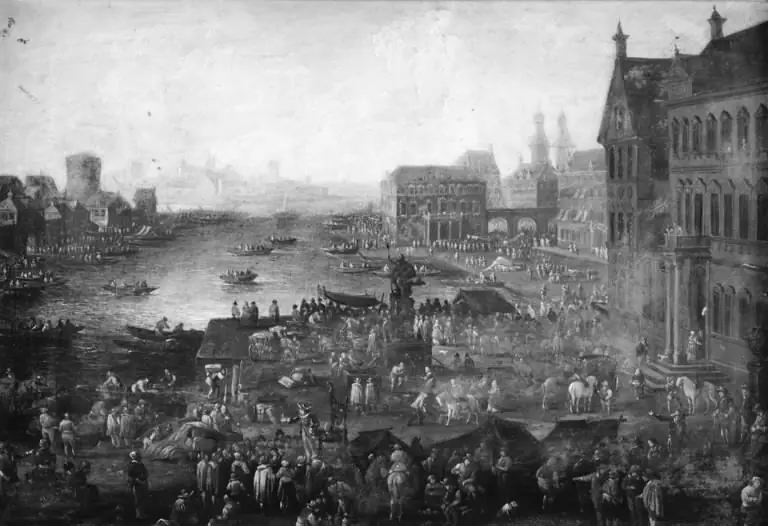 Square in Paris with Many Figures
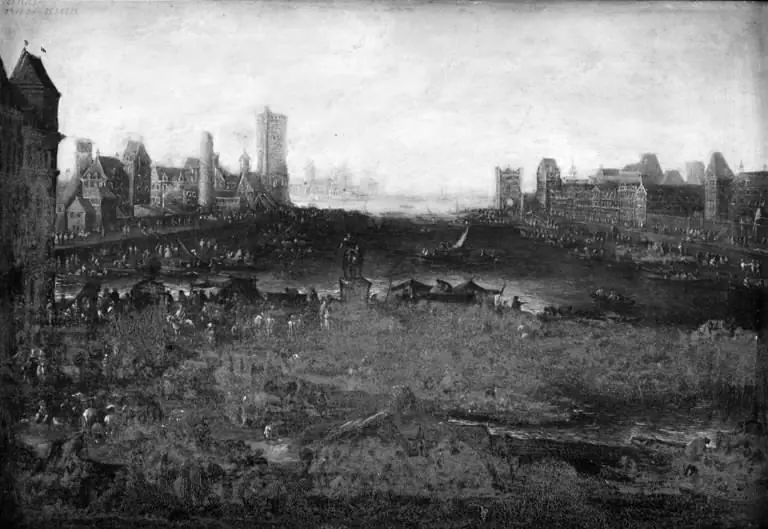 Square in Paris with Many Figures
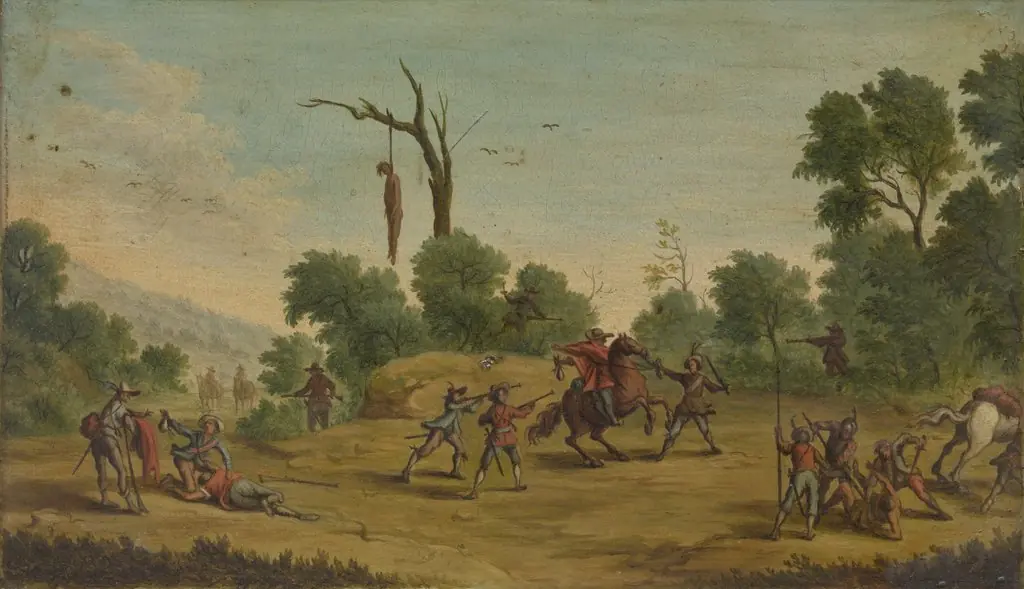 Horsemen Attacked by Robbers
 HOW WILL A COVERED PART BE CORRECTED?HOW WIKA A COVERED HEART DEED CORRECTED?
![Christ Walking on the Water [second plate], by Jacques Callot](https://artifactworldgallery.com/img/jacques-callot--christ-walking-on-the-water-second-plate--2069f3bfe4cb2126-w320.webp) Christ Walking on the Water [second plate]
Christ Walking on the Water [second plate]