Artwork
Two Palm Trees
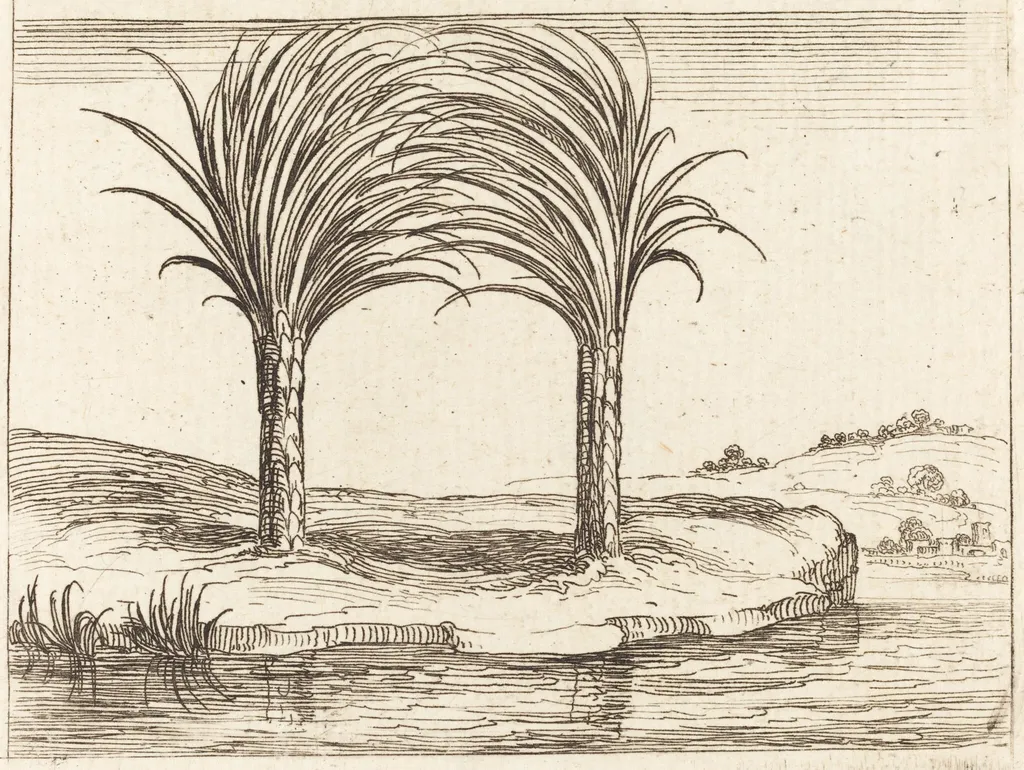
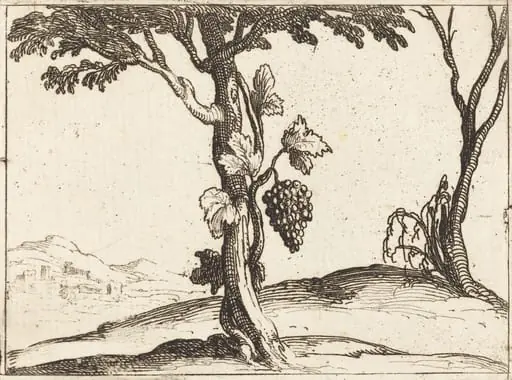
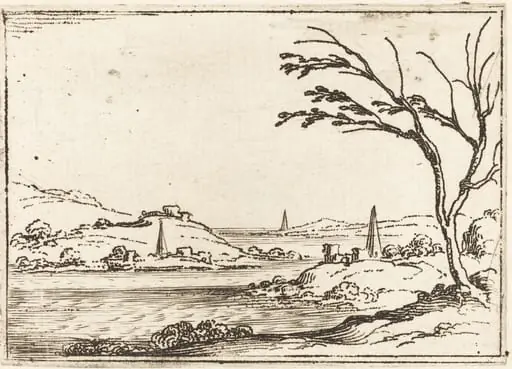
Two Palm Trees is an ink print by the Renaissance artist Jacques Callot. It dates from 1628 and is held in the collection of the National Gallery of Art.
About this work
Overview
Created in 1628, *Two Palm Trees* is an etching on laid paper by Jacques Callot, a French artist from the Duchy of Lorraine. Known for his prolific output in printmaking, Callot produced over 1,400 works that captured the textures of daily life and landscape. This piece stands as a quiet, focused study within his broader oeuvre, emphasizing natural forms rather than narrative scenes.
Subject & Meaning
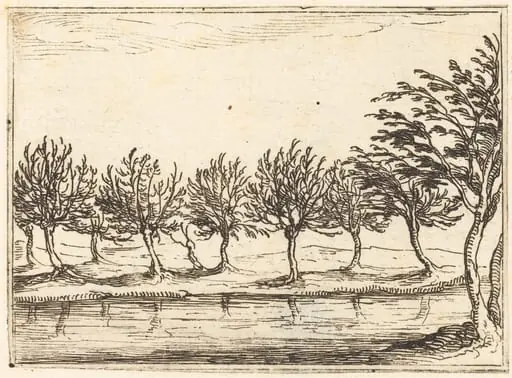
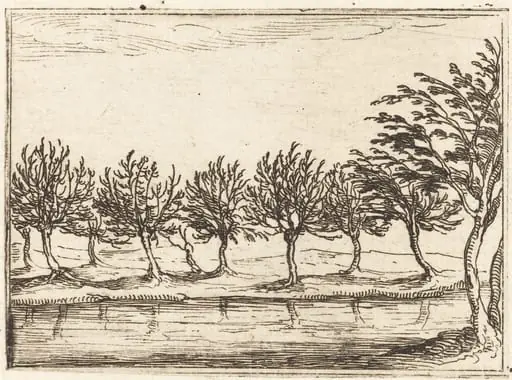
The composition features two slender palm trees rising from shallow water, their fronds casting dense, feathery shadows. Behind them, a low hill with miniature structures suggests a distant settlement, possibly evoking Mediterranean or Near Eastern locales. The scene lacks human figures, inviting contemplation of nature’s endurance and the subtle presence of human habitation beyond the frame.
Technique & Style
His precision in line weight and spacing creates a sense of atmospheric distance, with foreground elements sharply defined against the softly suggested horizon.
Callot employed etching to achieve fine, controlled lines on a metal plate, using acid to bite into the surface. The water is rendered with fluid, undulating strokes, while the tree trunks and foliage rely on dense cross-hatching for texture and depth. His precision in line weight and spacing creates a sense of atmospheric distance, with foreground elements sharply defined against the softly suggested horizon.
History & Provenance
The print was made during Callot’s mature period, when he was active in Florence and Paris, producing works for collectors and patrons across Europe. While no specific early ownership record is documented for this piece, its technical refinement aligns with prints circulated in aristocratic and scholarly circles. It survives as part of the broader legacy of 17th-century Northern European print collections.
Context
In the 1620s, European artists increasingly turned to landscape as a subject worthy of independent study. Callot’s etchings, including this one, reflect a growing interest in natural detail beyond religious or historical themes. His work contributed to a shift in printmaking from illustration toward observation, influencing later generations of draftsmen and topographical artists.
Legacy
Though not among Callot’s most widely reproduced works, *Two Palm Trees* exemplifies his mastery of etching’s potential for subtle tonal variation and spatial suggestion. It remains a reference for understanding how landscape elements were isolated and refined in early modern printmaking, contributing to the evolution of the genre beyond mere background decoration.
Own this work as a print
Artist & collection
Artist
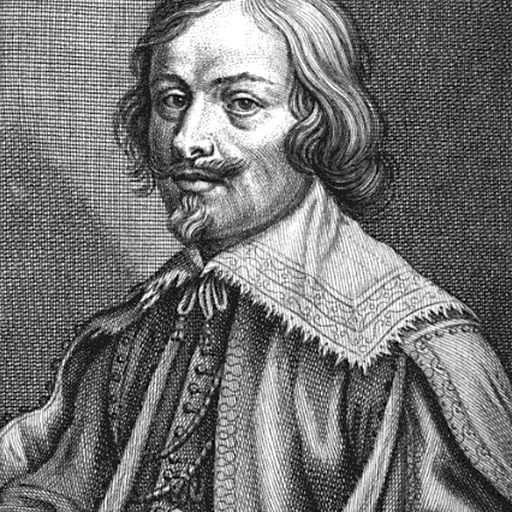
Jacques Callot was a baroque printmaker and draftsman from the Duchy of Lorraine.

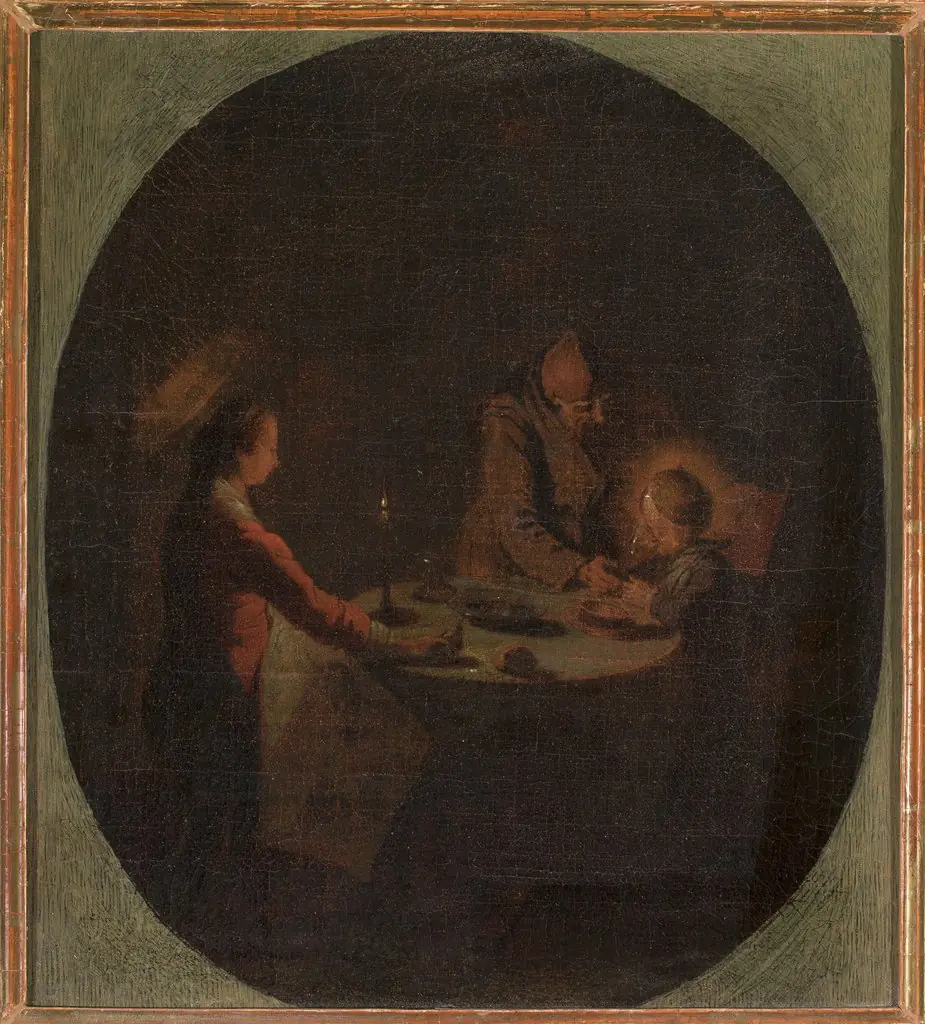 Holy Family at supper
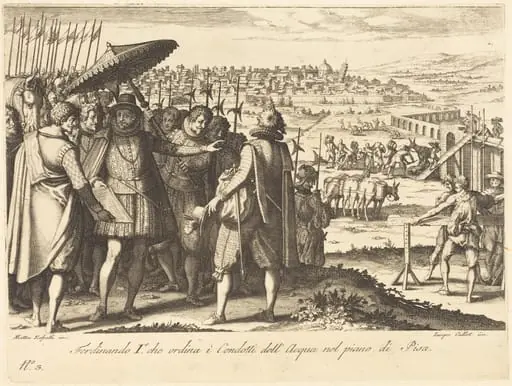 Restoration of the Aqueduct at Pisa
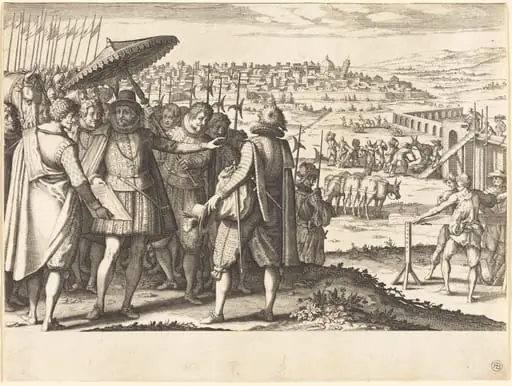 Restoration of the Aqueduct at Pisa
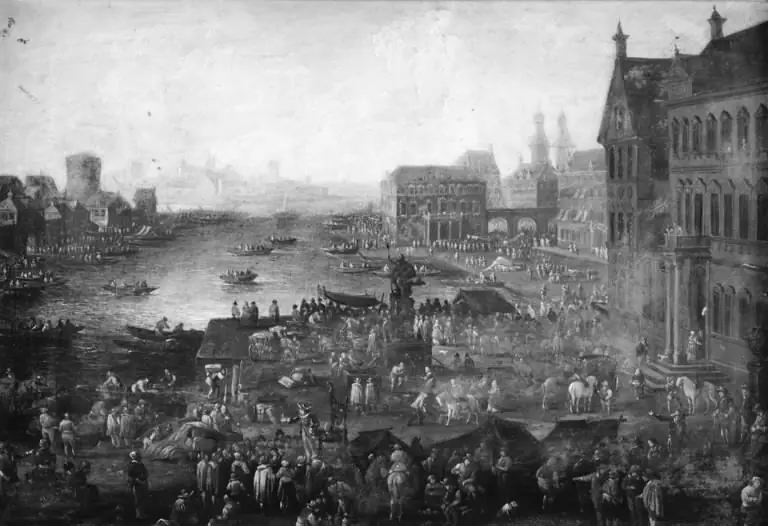 Square in Paris with Many Figures
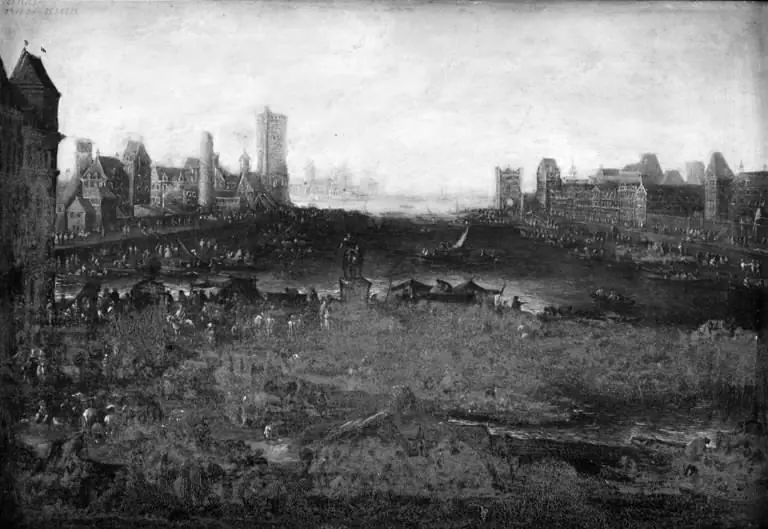 Square in Paris with Many Figures
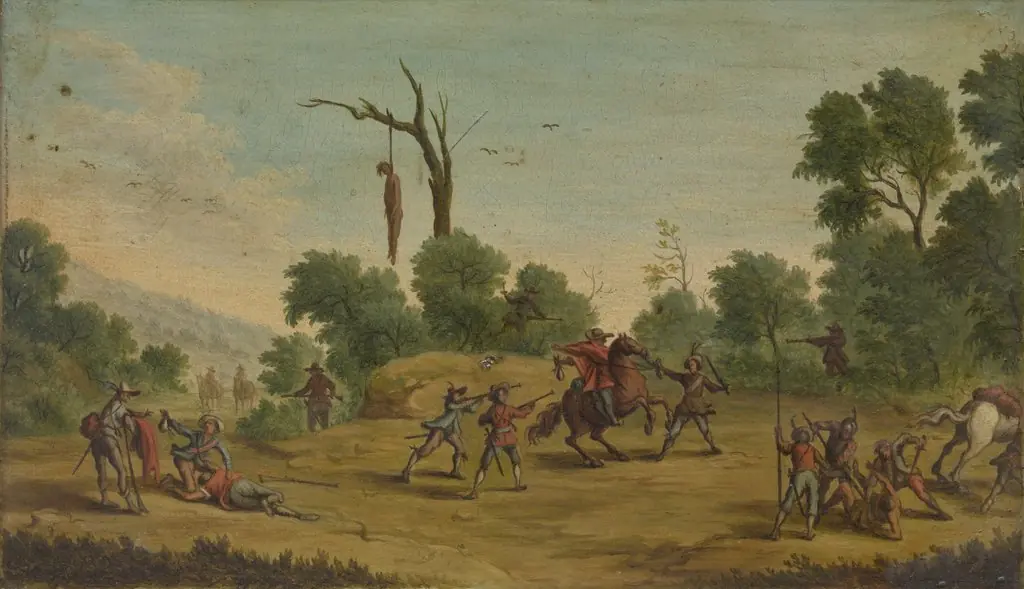 Horsemen Attacked by Robbers
 HOW WILL A COVERED PART BE CORRECTED?HOW WIKA A COVERED HEART DEED CORRECTED?
![Christ Walking on the Water [second plate], by Jacques Callot](https://artifactworldgallery.com/img/jacques-callot--christ-walking-on-the-water-second-plate--2069f3bfe4cb2126-w320.webp) Christ Walking on the Water [second plate]
Christ Walking on the Water [second plate]