Artwork
Herd of Sheep Near the Water
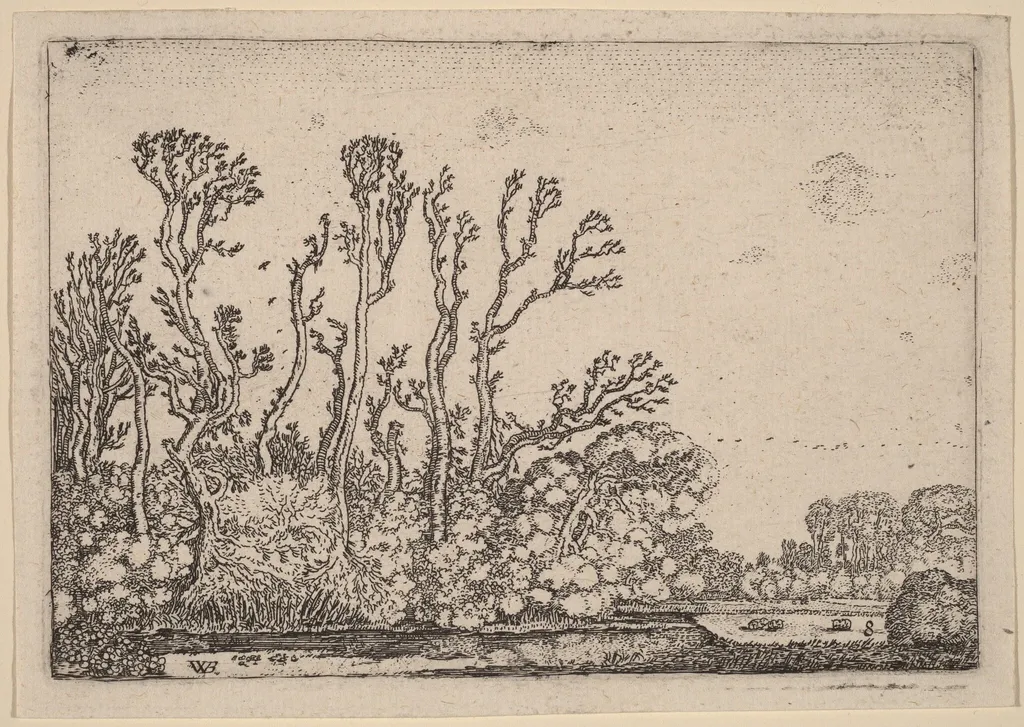
Herd of Sheep Near the Water is an ink print by the Baroque artist Willem Buytewech. It dates from 1621 and is held in the collection of the National Gallery of Art.
About this work
Overview
Buytewech’s use of fine, controlled lines captures subtle textures in foliage and terrain, characteristic of early 17th-century Northern European printmaking.
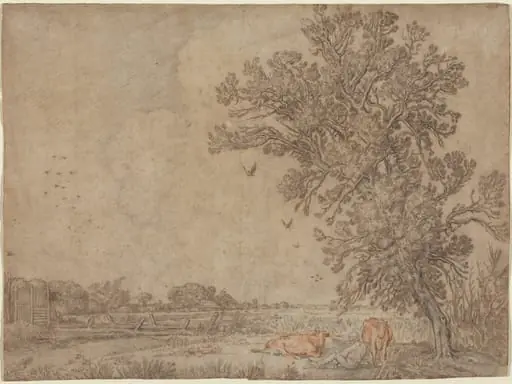
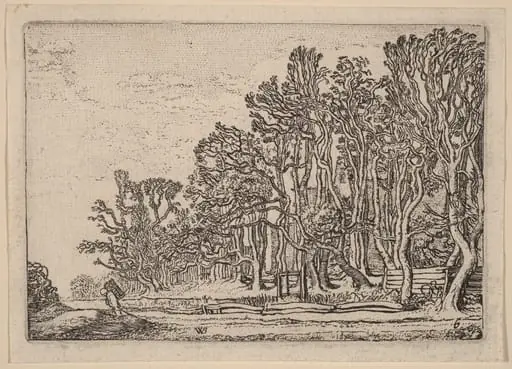
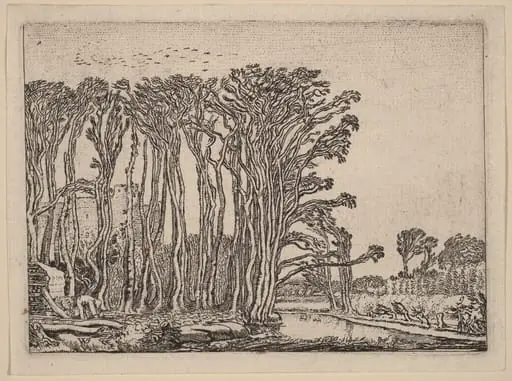
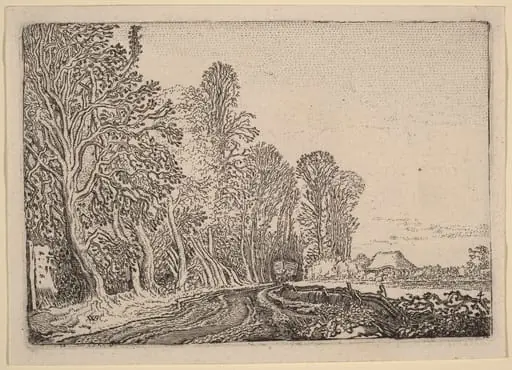
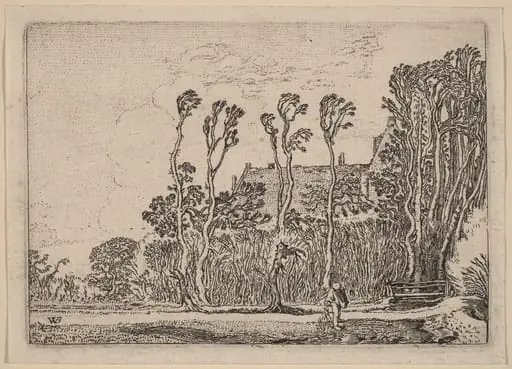
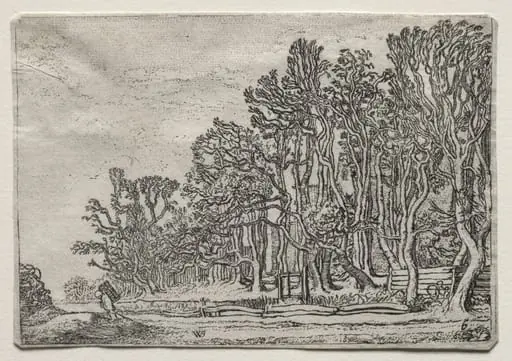
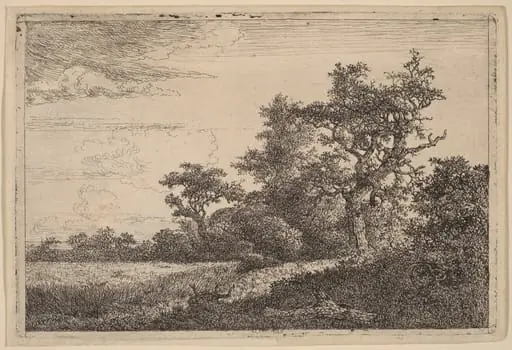
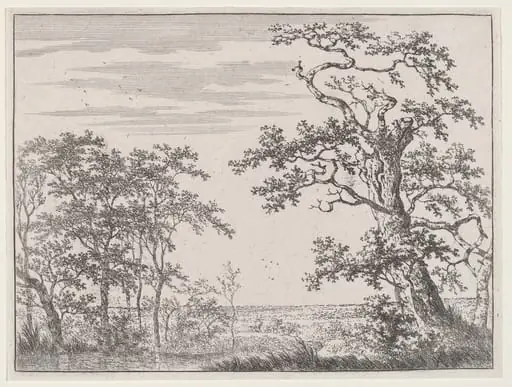
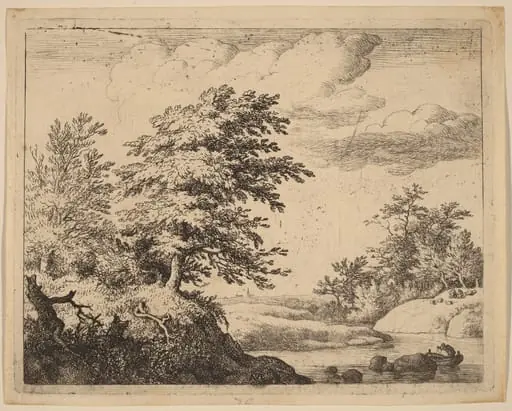
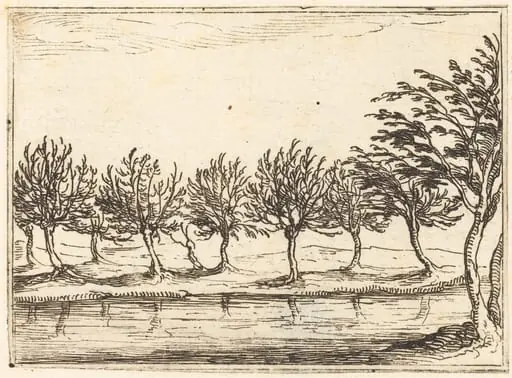
Herd of Sheep Near the Water is an etching by Willem Buytewech, dated 1621. It depicts a tranquil rural scene with a group of sheep near a still body of water, framed by sparse, bare trees and low vegetation. The work belongs to the Dutch tradition of landscape prints, emphasizing quiet observation over dramatic narrative. Buytewech’s use of fine, controlled lines captures subtle textures in foliage and terrain, characteristic of early 17th-century Northern European printmaking.
Subject & Meaning
The scene presents a modest, unidealized view of pastoral life, focusing on the quiet movement of sheep grazing near water. There is no human presence, suggesting an emphasis on nature’s rhythms rather than human activity. The stillness and simplicity of the composition may reflect contemporary Dutch values of order, diligence, and harmony with the land, common in the Golden Age’s secular landscapes.
Technique & Style
Buytewech employed etching, a technique involving acid-bitten lines on a metal plate, to achieve delicate tonal gradations and fine detail. The texture of grass, reeds, and bark is rendered with precise, varied strokes, creating a sense of depth without heavy shading. The composition avoids dramatic perspective, favoring a flattened, intimate space that invites close viewing, typical of Buytewech’s intimate landscape style.
History & Provenance
Created in 1621, the etching emerged during Buytewech’s active years in Rotterdam and Haarlem, when landscape and genre scenes gained popularity among Dutch collectors. While its early ownership is undocumented, it survives in multiple museum collections, indicating its circulation among connoisseurs of prints in the 17th and 18th centuries. Its preservation reflects the growing appreciation for etchings as autonomous artworks.
Context
This work belongs to a period when Dutch artists increasingly turned to everyday landscapes as subjects, moving away from religious or mythological themes. Buytewech was part of a generation that helped define the Dutch landscape print, influenced by both Flemish precedents and local observations of the countryside. The absence of human figures aligns with a broader trend toward naturalism and quiet contemplation in Dutch art.
Legacy
Buytewech’s etching contributed to the development of the Dutch landscape print as a distinct genre. His attention to atmospheric detail and restrained composition influenced later artists like Rembrandt and Jan van Goyen. Though not widely known today, the work remains a quiet example of how early 17th-century printmakers transformed ordinary scenes into enduring visual records of the natural world.
Artist & collection