Artwork
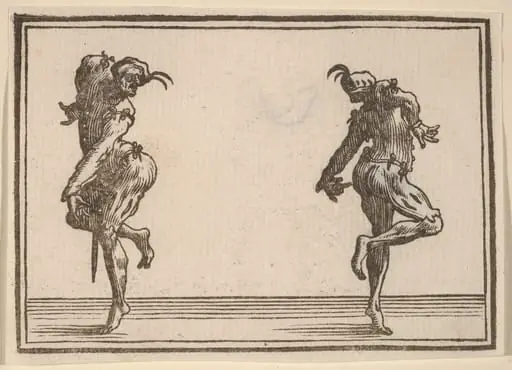
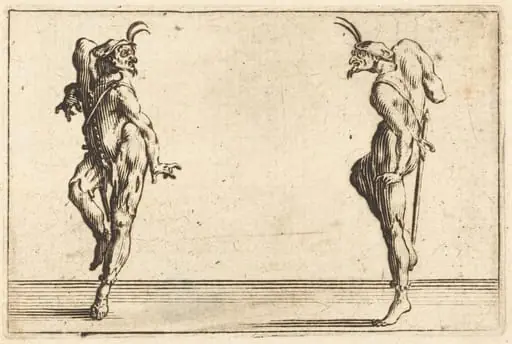
Two Zanni
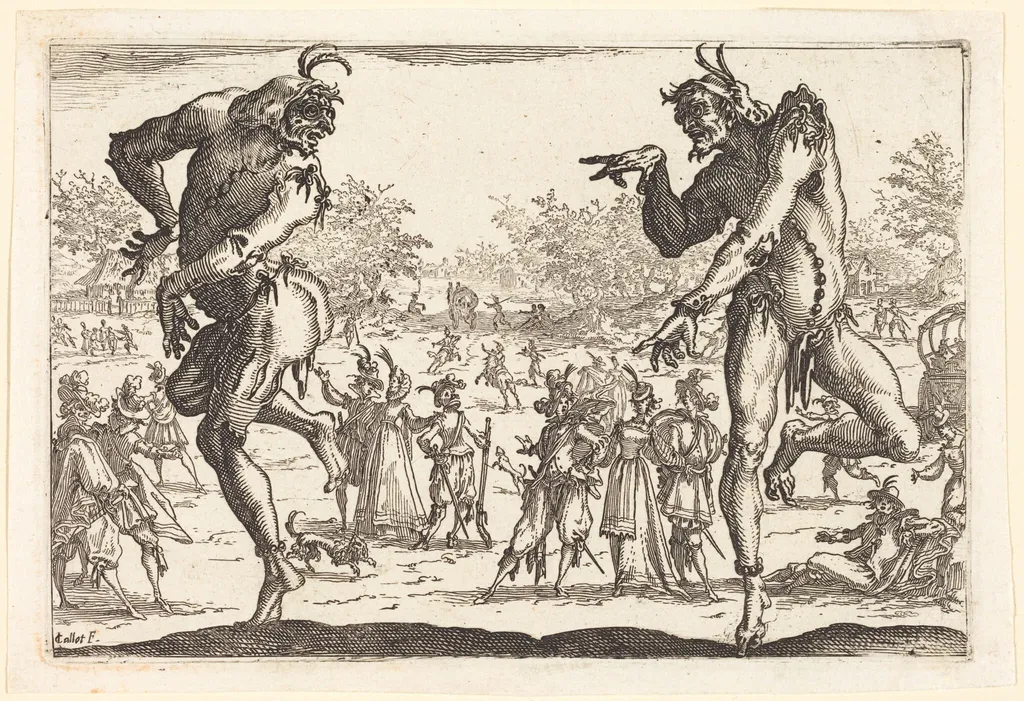
Two Zanni is an ink print by the Baroque artist Jacques Callot. It dates from 1616 and is held in the collection of the National Gallery of Art.
About this work
Overview
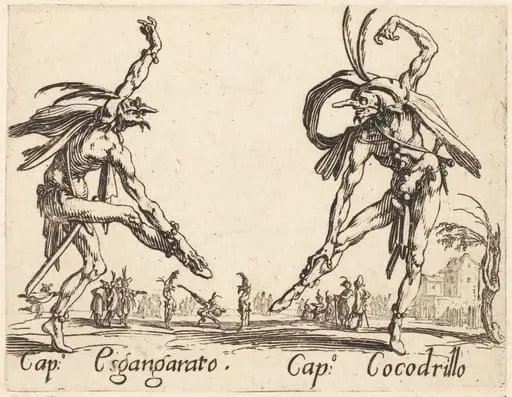
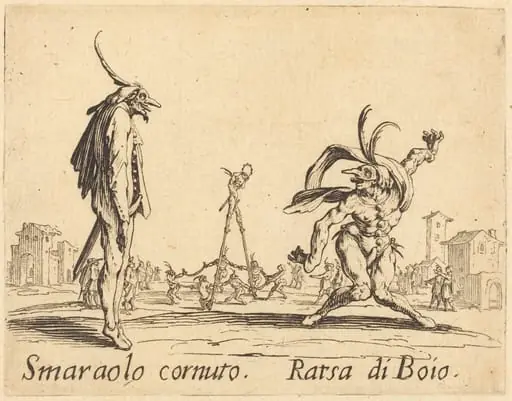
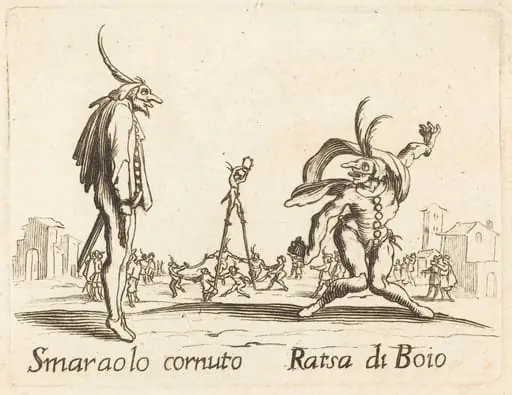
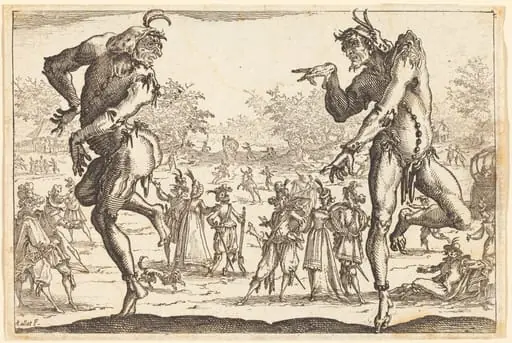
Created circa 1616, this etching by Jacques Callot portrays a pair of flamboyantly dressed figures positioned on a craggy shoreline. Behind them a bustling crowd of onlookers—some in elaborate attire, others in modest garments—fills the space, while twisted trees and a turbulent sky complete the composition. The work exemplifies Callot’s interest in theatrical motifs and lively street scenes.
Subject & Meaning
The central characters are rendered as exaggerated, horn‑capped men with untamed hair, echoing the mischievous servants known as zanni in the Italian commedia dell’arte tradition. Their animated gestures and expressive faces set them apart from the orderly spectators, suggesting a commentary on the contrast between chaotic folly and the structured social order of the period.
Technique & Style
Executed as an etching on laid paper, the image displays Callot’s meticulous line work and fine cross‑hatching that convey texture in both the rugged terrain and the crowded figures. The artist’s characteristic attention to detail allows for a dense narrative surface, while the chiaroscuro achieved through varied line density creates depth within the stormy backdrop.
History & Provenance
Jacques Callot, a prolific printmaker from the Duchy of Lorraine, produced more than a thousand etchings that recorded the customs, costumes, and conflicts of early seventeenth‑century Europe. This particular print, part of his extensive series on theatrical and everyday subjects, reflects his broader oeuvre that combined documentary observation with imaginative theatricality.
Artist & collection
Artist
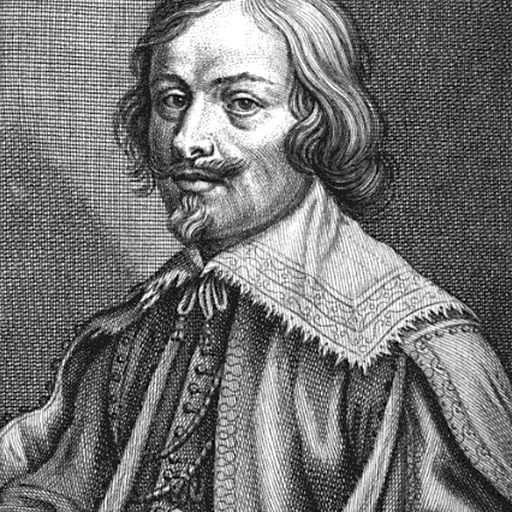
Jacques Callot was a baroque printmaker and draftsman from the Duchy of Lorraine.

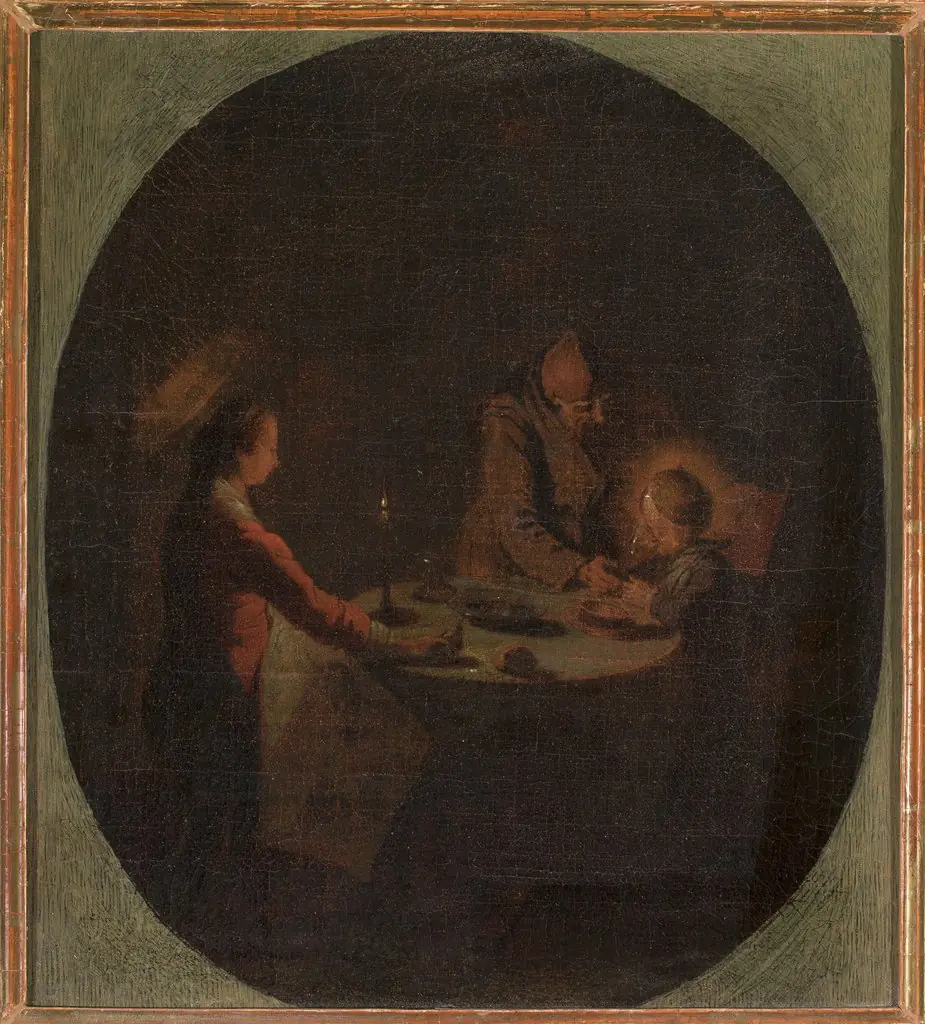 Holy Family at supper
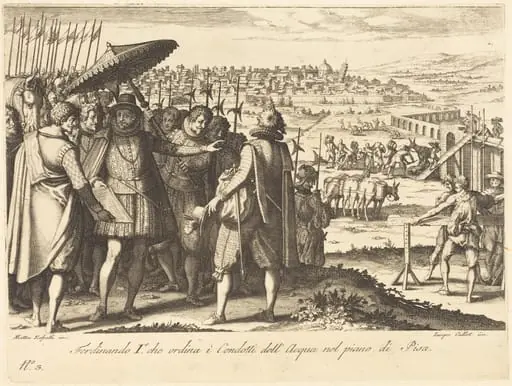 Restoration of the Aqueduct at Pisa
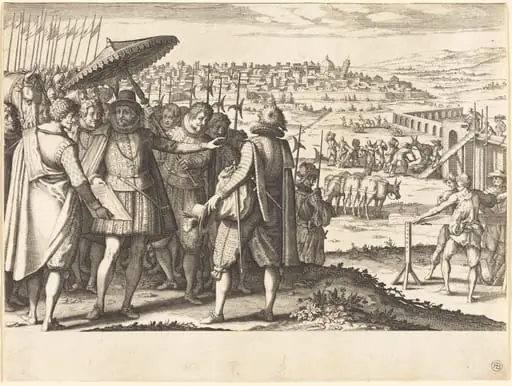 Restoration of the Aqueduct at Pisa
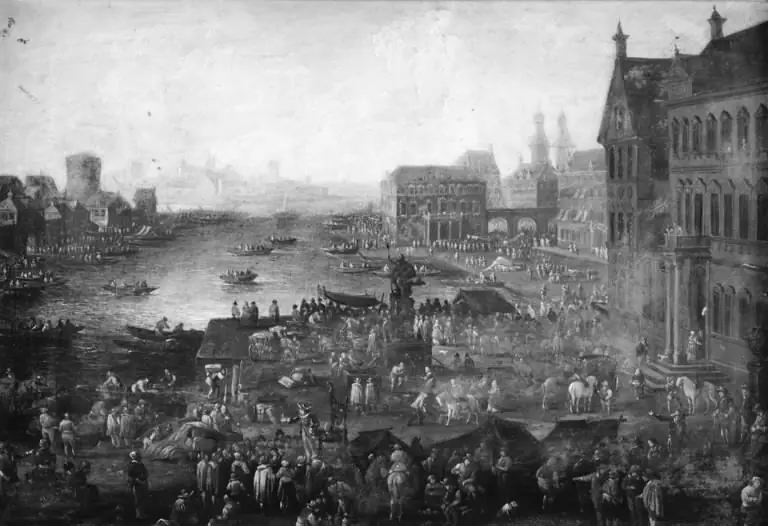 Square in Paris with Many Figures
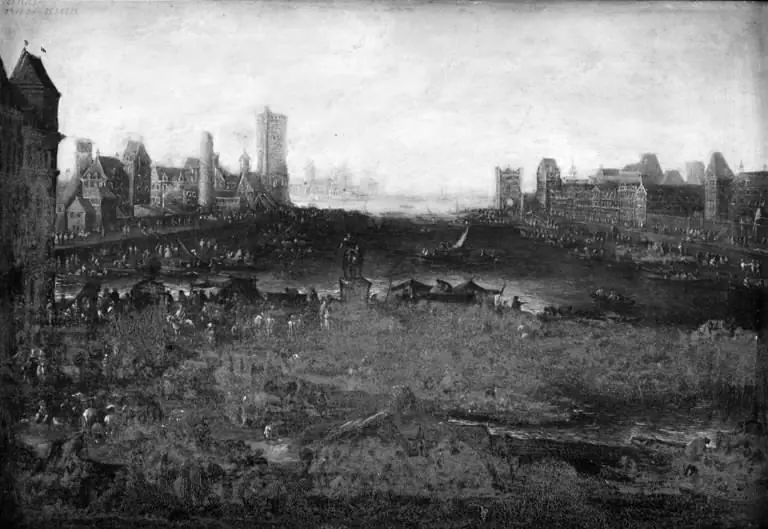 Square in Paris with Many Figures
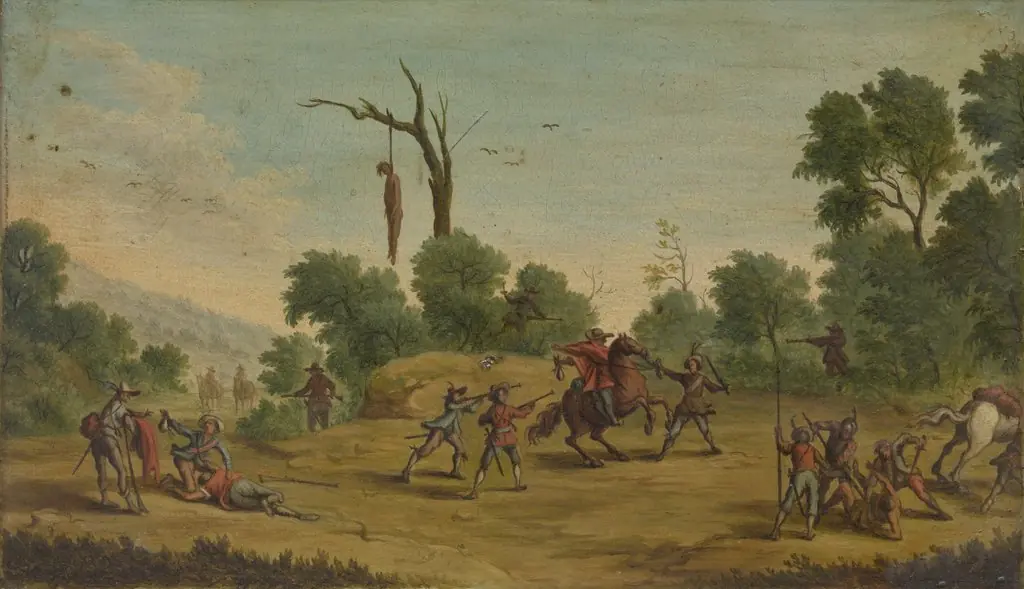 Horsemen Attacked by Robbers
 HOW WILL A COVERED PART BE CORRECTED?HOW WIKA A COVERED HEART DEED CORRECTED?
![Christ Walking on the Water [second plate], by Jacques Callot](https://artifactworldgallery.com/img/jacques-callot--christ-walking-on-the-water-second-plate--2069f3bfe4cb2126-w320.webp) Christ Walking on the Water [second plate]
Christ Walking on the Water [second plate]