Artwork
Smaralo Cornuto and Ratsa di Boio
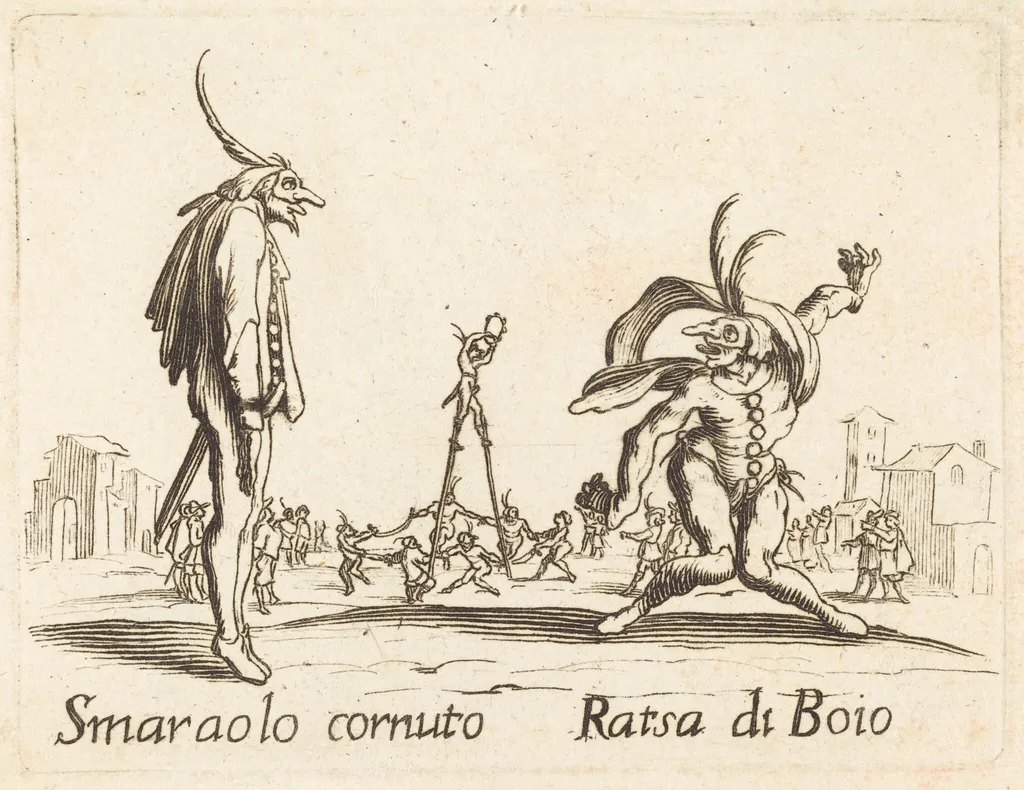
Smaralo Cornuto and Ratsa di Boio is an ink print by the Baroque artist French 17th Century. It dates from 1622 and is held in the collection of the National Gallery of Art.
About this work
Overview
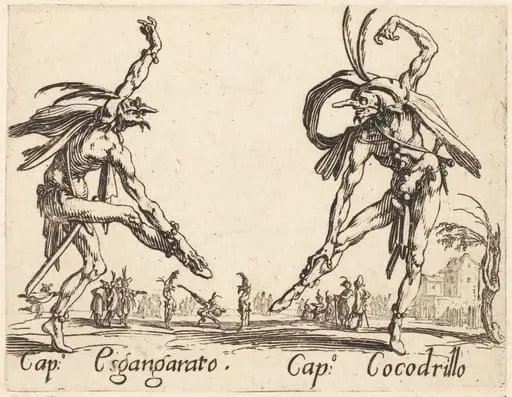
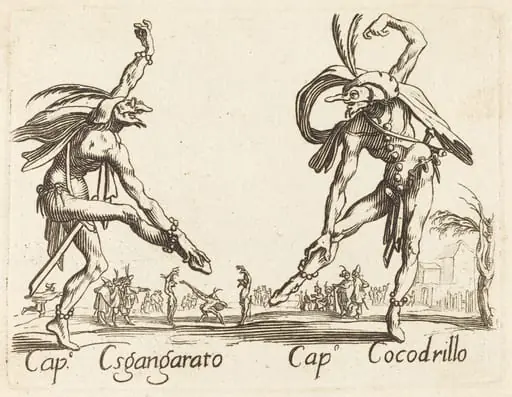
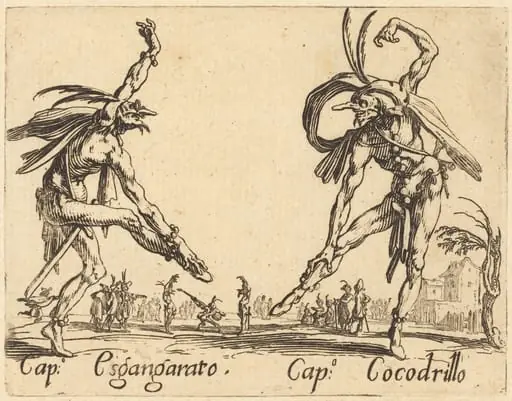
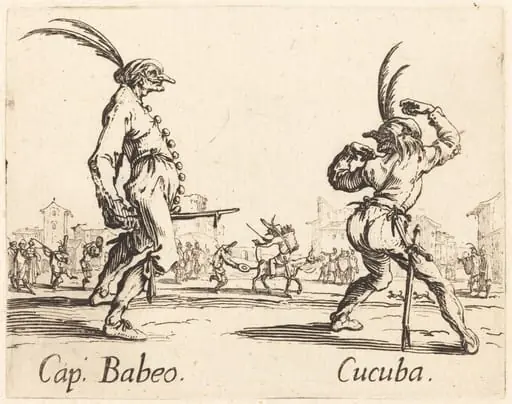
Smaralo Cornuto and Ratsa di Boio is an etching on laid paper depicting two fantastical, towering figures with hybrid animalistic features amidst a chaotic scene of tiny, scrambling figures on a riverbank.
Subject & Meaning
The print features two named, likely mythical or symbolic characters: Smaralo Cornuto, adorned with a feathered cape, and Ratsa di Boio, a horse-fish hybrid. Their context suggests either a mythological narrative or allegorical representation, though specific interpretations are unclear without further contextual information.
Technique & Style
Executed in etching, the work showcases a sharp, sketchy style that emphasizes the scene's wild and exaggerated nature. The technique's expressive potential is fully leveraged to convey dynamic energy and chaos.
History & Provenance
No specific historical or provenance details are provided for Smaralo Cornuto and Ratsa di Boio, leaving the artwork's origins, date, and ownership history unspecified.
Context
The inclusion of a riverbank setting and the juxtaposition of gigantic, mythical beings with tiny, frantic humans may allude to themes of disparity, the sublime, or the fantastical, common in Baroque or Surrealist contexts, though the exact artistic movement or influence is not specified.
Legacy
The impact or legacy of Smaralo Cornuto and Ratsa di Boio on subsequent art or cultural discourse is not detailed, suggesting either a lack of prominent influence or insufficient information to assess its broader artistic significance.
Artist & collection

Artist
Seventeenth-century French printmakers turned ink into story. Their tools were burin and acid, paper their stage. Look at the Beggar Woman with Rosary (1622), etched on laid paper, her hands folded around faith, or The…