Artwork
Fish Market
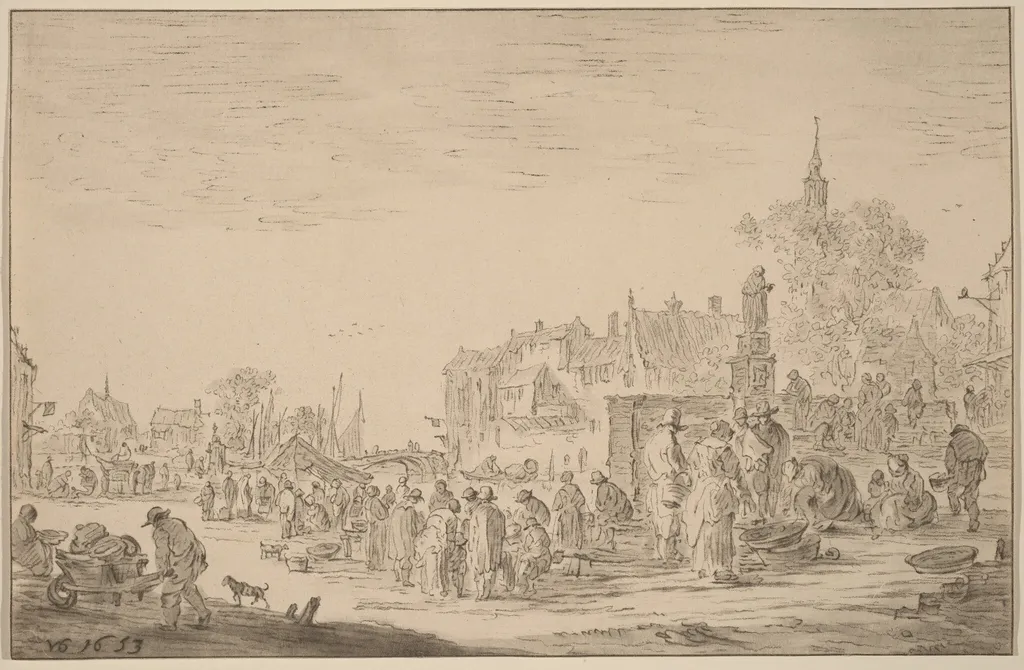
Fish Market is a chalk print by the Romanticist artist Jacobus Buys. It dates from 1767 and is held in the collection of the National Gallery of Art.
About this work
Overview
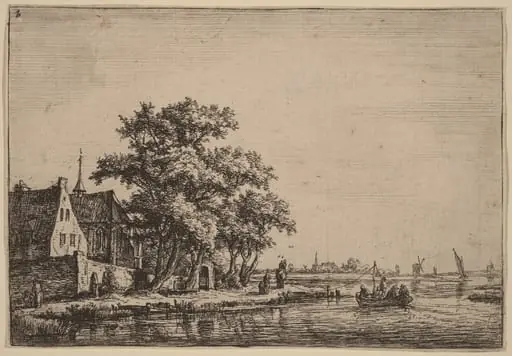
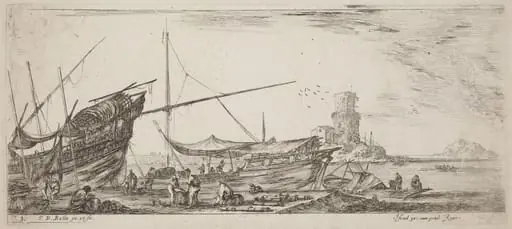
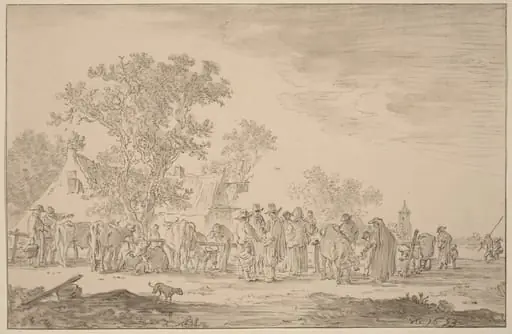
Fish Market, executed in 1767 by Cornelis Ploos van Amstel, is a black‑ink print on laid paper employing the chalk manner and roulette techniques. The work captures a bustling riverside market scene, populated by figures near boats and stalls, with a church spire and a waterside statue visible in the distance. The composition fills the sheet with activity, rendered in a rapid, sketch‑like manner.
Subject & Meaning
The print depicts a lively commercial exchange along a riverbank, where vendors and customers congregate around stalls and moored vessels.
The print depicts a lively commercial exchange along a riverbank, where vendors and customers congregate around stalls and moored vessels. The presence of a towering church spire and a solitary statue suggests a civic setting, while the ordinary dress of the figures emphasizes everyday life rather than a specific narrative. The scene conveys the rhythm of 18th‑century urban trade and communal interaction.
Technique & Style
Ploos van Amstel employed the chalk manner—a method that imitates the look of chalk drawing—combined with roulette, a tool that creates fine, dotted textures. Dense cross‑hatching builds shadows and volume, while numerous short strokes suggest surface texture on clothing and architecture. The overall effect is a brisk, gestural rendering that balances detailed line work with a sense of immediacy.
History & Provenance
Created in the late 1760s, Fish Market belongs to a period when Dutch artists explored printmaking as a means of disseminating genre scenes. The work is catalogued as a print rather than a painting, reflecting the artist’s interest in reproducible media. Its provenance traces through several European collections before entering a museum holding focused on 18th‑century Dutch graphic art.
Artist & collection
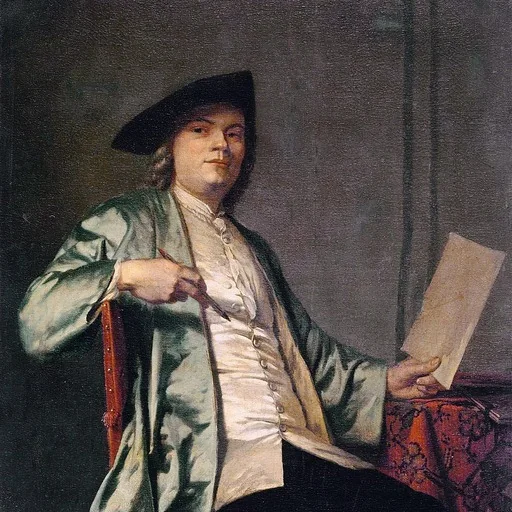

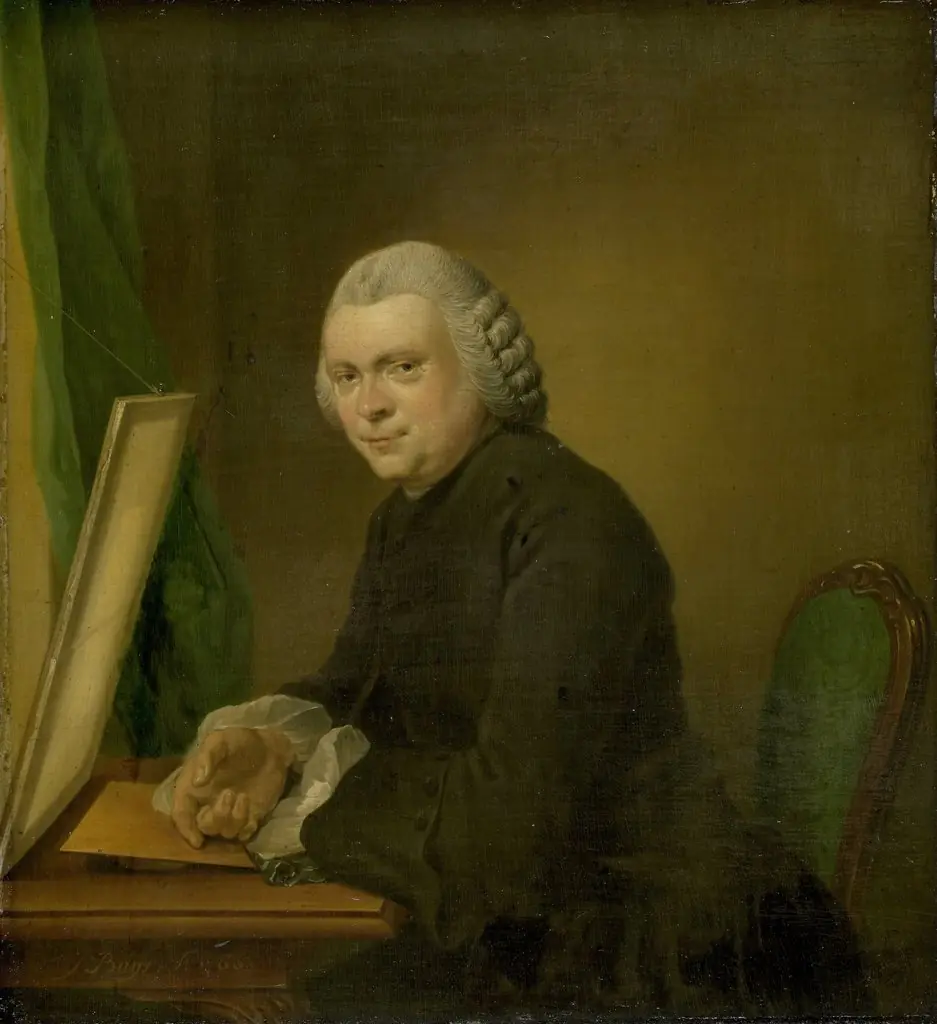 Portrait of Cornelis Ploos van Amstel
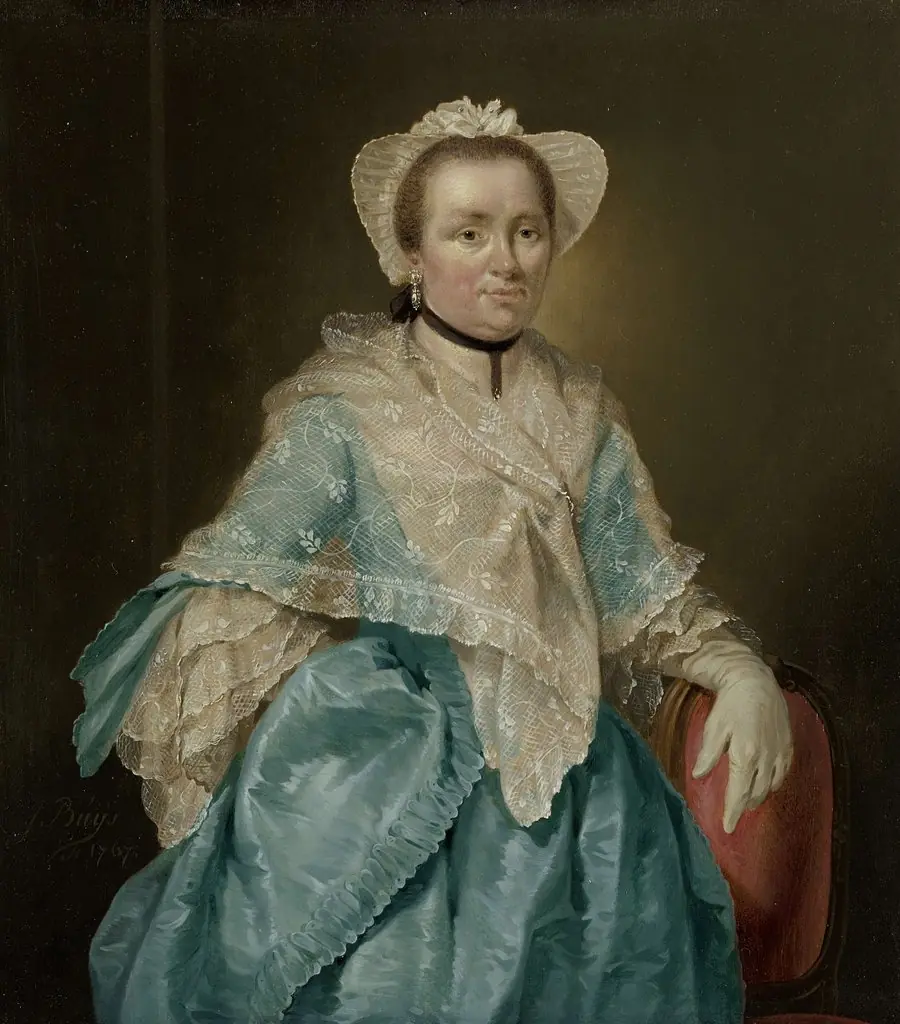 Portrait of Elisabeth Troost (1730-1790)
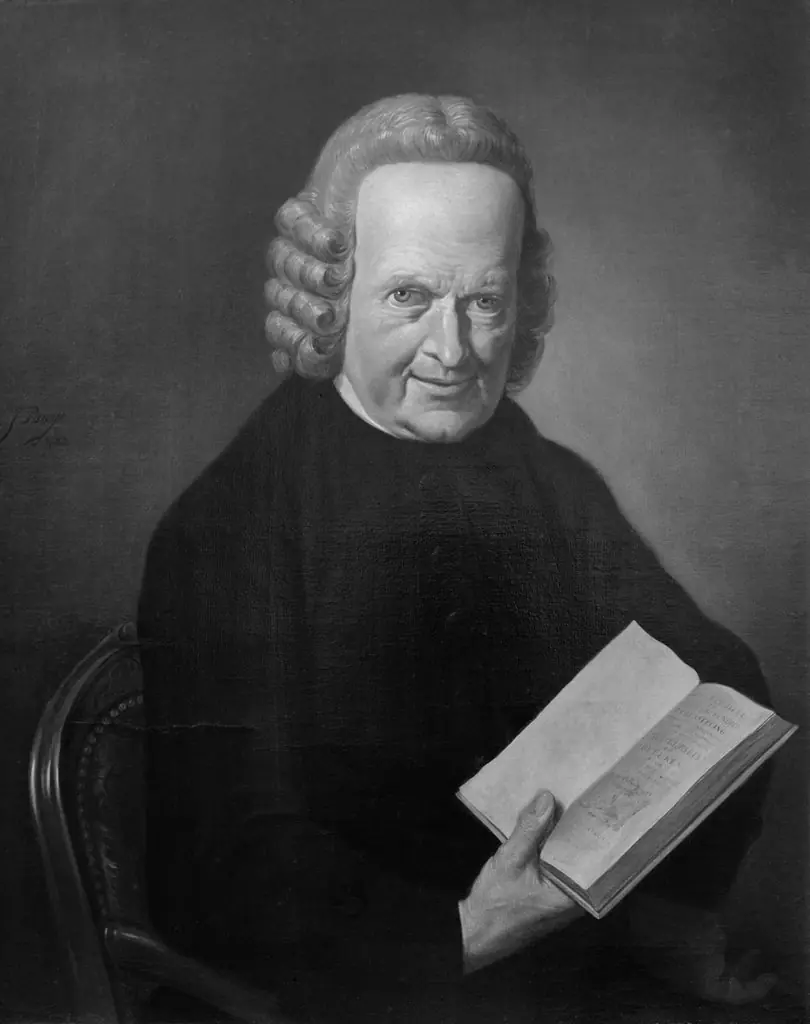 Johannes Monnikhoff (1707-1787)
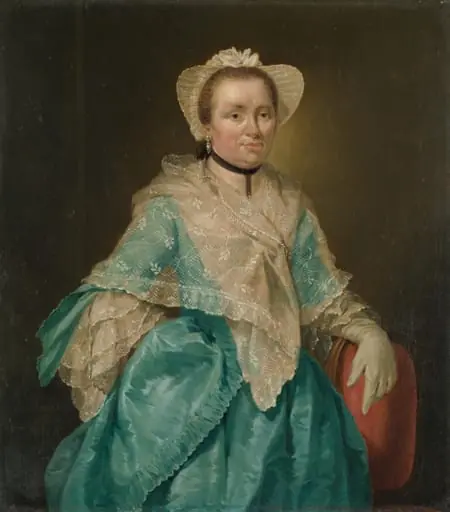 Portrait of Elisabeth Troost (1730-1790)
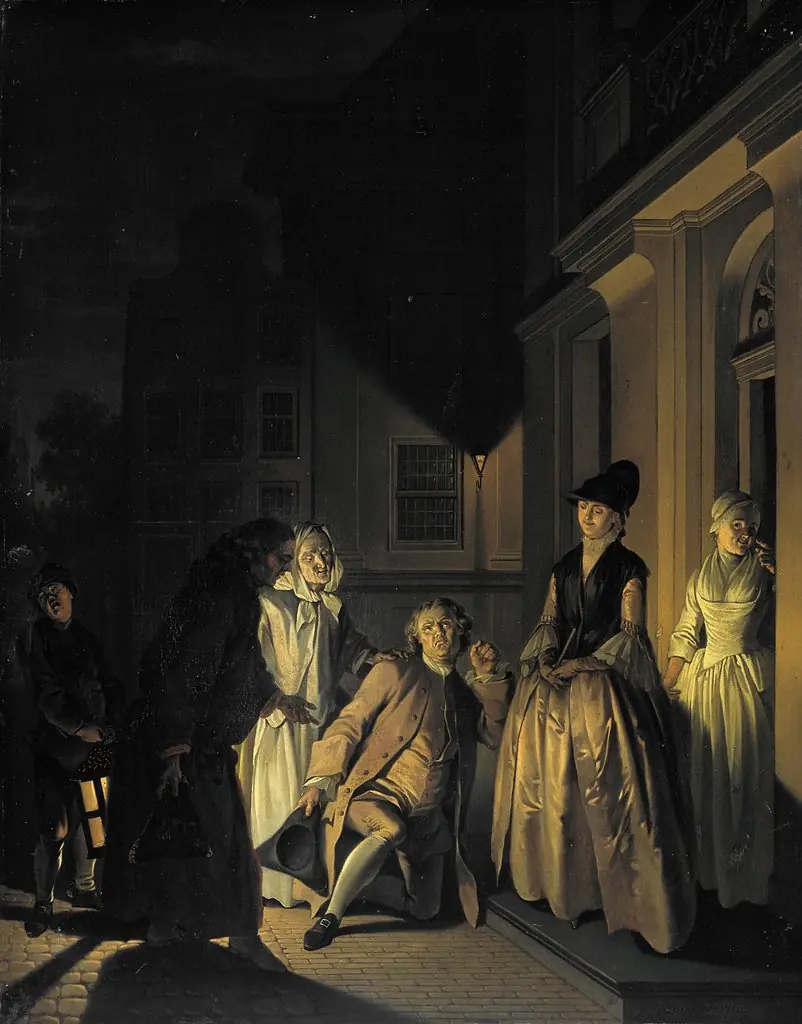 Scene from the Play 'Lubbert Lubbertse of de geadelde boer' by M. van Breda
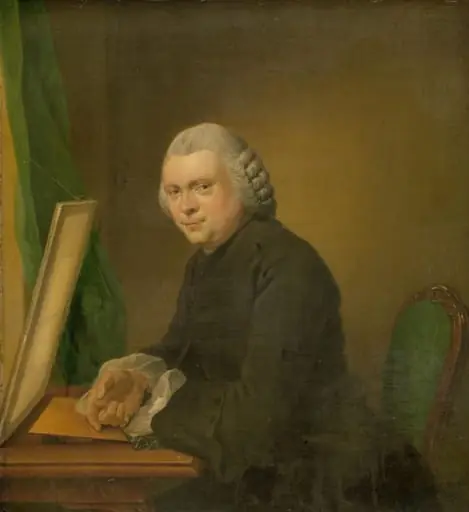 Portrait of Cornelis Ploos van Amstel
 Cavalier and Lady with a Page
 Pancake Woman