Artwork
Goodrich Castle, Herefordshire
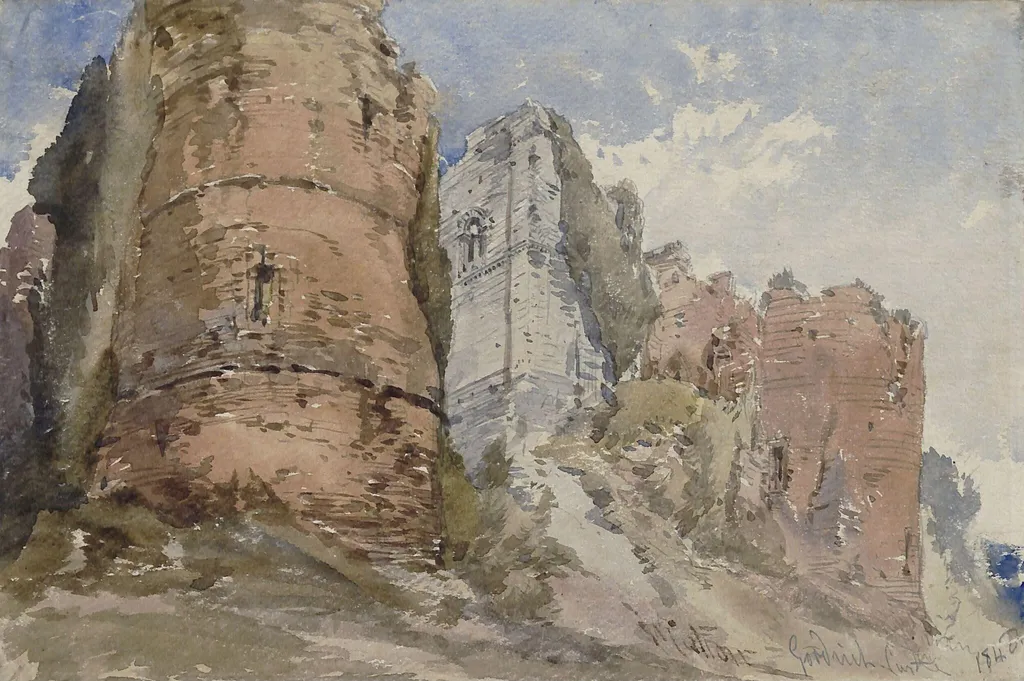
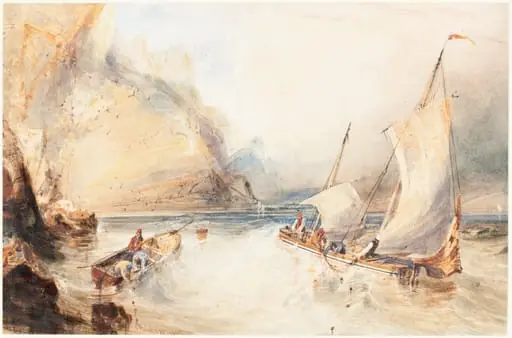
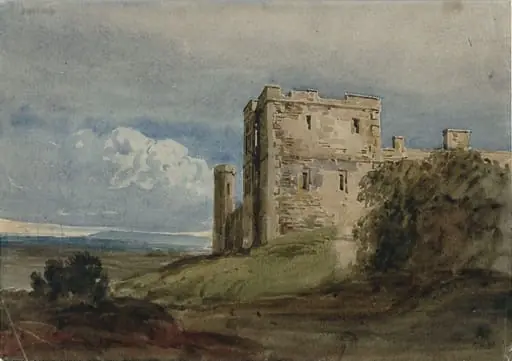
Goodrich Castle, Herefordshire is a watercolor work on paper by the British Romanticist artist William Callow. It dates from 1848 and is held in the collection of the Victoria and Albert Museum.
About this work
Overview
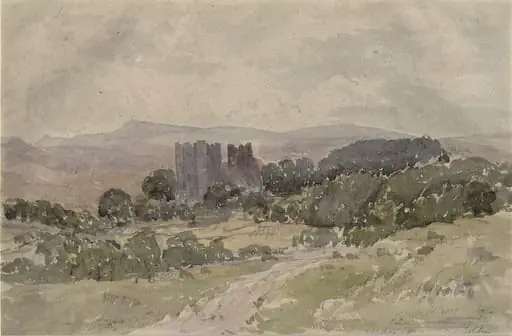
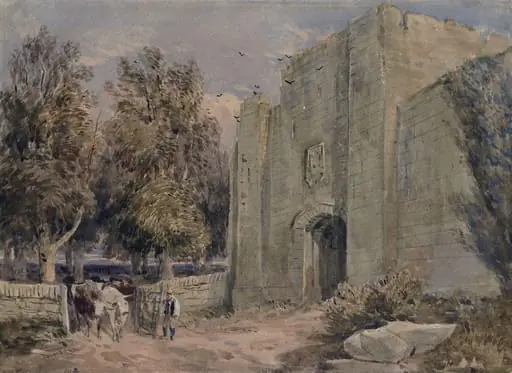
William Callow’s 1848 watercolour presents Goodrich Castle in Herefordshire as a weathered ruin. Rendered in a light, airy palette, the composition captures the crumbling stone walls and a slightly leaning tower against a soft, cloud‑dotted sky, emphasizing the passage of time on the historic structure.
Subject & Meaning
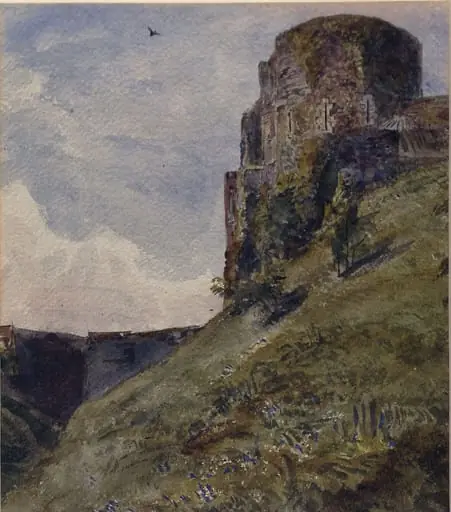
The work focuses on the castle’s dilapidated state, highlighting the interplay of stone, moss and ivy that cling to its surfaces. By portraying the ruin in a tranquil, natural setting, the image invites contemplation of history’s remnants within the broader landscape.
Technique & Style
Callow employs loose, rapid brushstrokes that give the piece a sketch‑like immediacy. The watercolour medium allows for delicate washes of pale sky and dry, rocky ground, while textured strokes suggest the roughness of stone and subtle shadows that convey age and decay.
History & Provenance
Signed by Callow, the watercolour dates to 1848, a period when British artists frequently documented medieval sites. The piece reflects the 19th‑century interest in antiquarian subjects and the growing popularity of watercolour as a portable medium for on‑site studies.
Context
Created during the Romantic era, the painting aligns with contemporary tendencies to emphasize the sublime qualities of nature and historic ruins. Goodrich Castle, a former defensive stronghold, served as an evocative symbol of England’s medieval past, resonating with Romantic ideals of nostalgia and the power of the natural world.
Artist & collection