Artwork
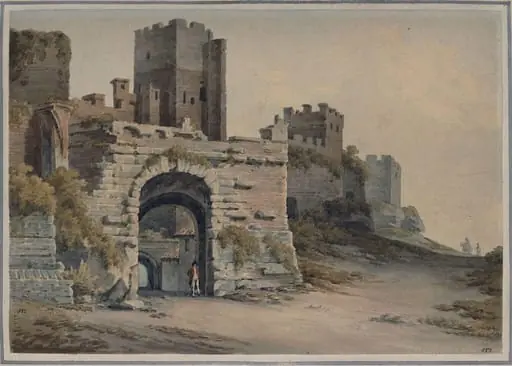
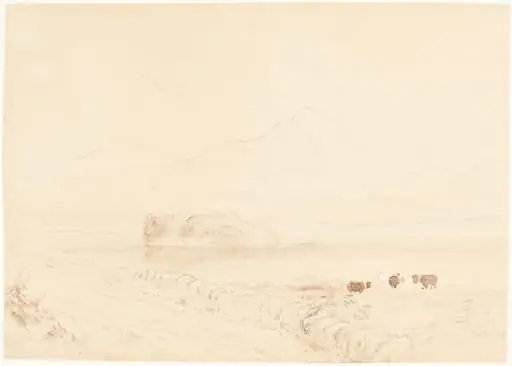
Gateway to Rhuddlan castle
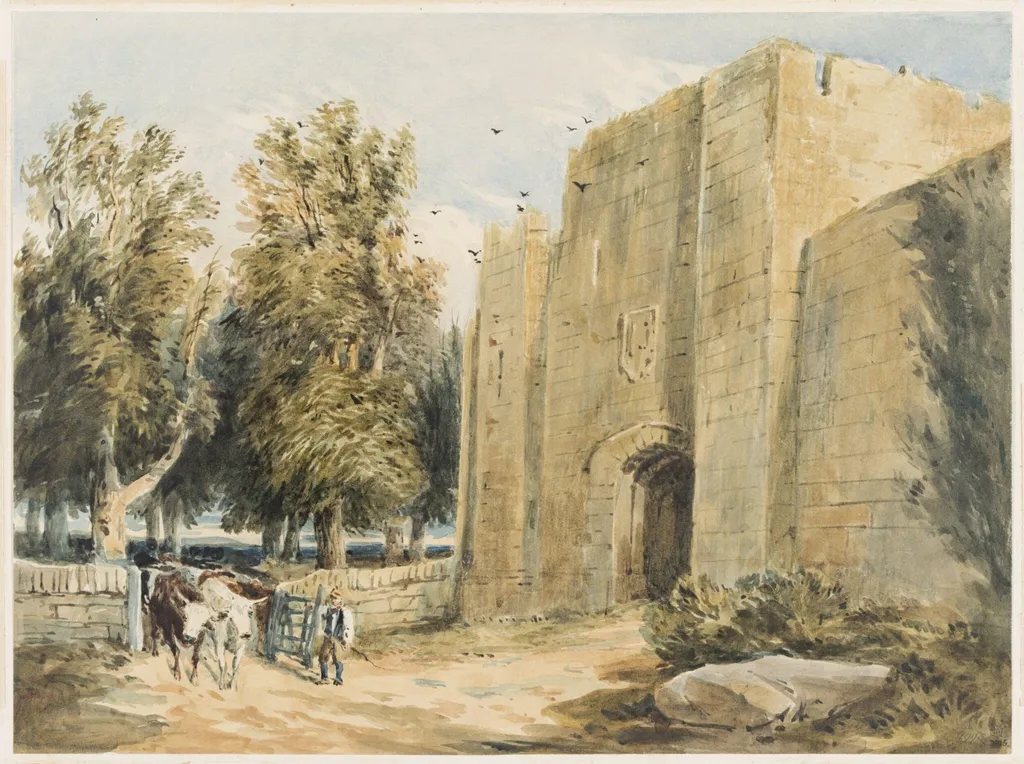
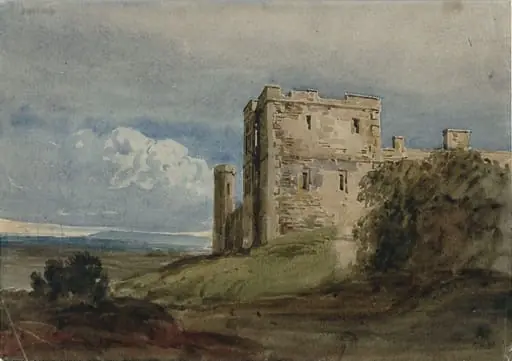
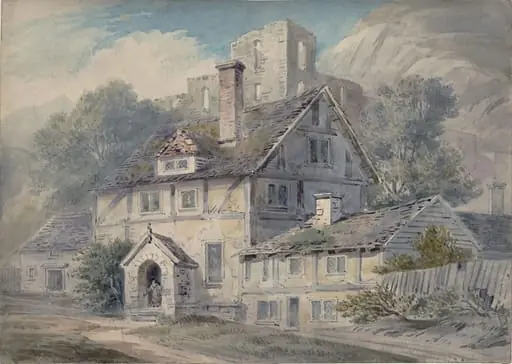
Gateway to Rhuddlan castle is a watercolor work on paper by David Cox. It dates from 1850 and is held in the collection of the Victoria and Albert Museum.
About this work
Overview
Cox’s choice of medium allows for a delicate interplay of transparency and wash, capturing the subtle effects of natural light without overt dramatization.
Created in 1850, this watercolour by David Cox portrays the entrance gateway of Rhuddlan Castle in North Wales. The scene is rendered with a quiet, observational tone, emphasizing the weathered stone structure and its integration into the surrounding landscape. Cox’s choice of medium allows for a delicate interplay of transparency and wash, capturing the subtle effects of natural light without overt dramatization.
Subject & Meaning
The gateway, a surviving fragment of a medieval fortress, stands as a quiet relic of historical authority. Cows grazing before it suggest the passage of time and the return of the land to pastoral use. The absence of human figures reinforces a sense of solitude, inviting contemplation rather than narrative. The composition frames the ruin as part of an enduring, living landscape rather than a monument to be revered.
Technique & Style
Cox employed loose, fluid brushwork to suggest texture—rough stone, rustling leaves, and soft grass—without detailed rendering. Washes of diluted pigment create gradations of light and shadow, with the sky rendered in pale, open tones that allow the architecture to emerge naturally. The technique reflects his commitment to capturing transient atmospheric conditions, aligning with the broader English watercolour tradition of the period.
History & Provenance
The painting was produced during the later phase of Cox’s career, when he focused increasingly on landscape studies in Wales and the English countryside. It likely originated from one of his sketching trips to North Wales, where he documented historic sites with a preference for unidealized, everyday views. Its provenance traces to private collections in Britain, though specific ownership records remain limited.
Context
In mid-19th century Britain, interest in medieval ruins grew alongside Romanticism and early antiquarianism. Cox’s depiction diverges from picturesque embellishment, instead presenting Rhuddlan as a quiet, lived-in site. His approach reflects a shift toward empirical observation in landscape art, influenced by direct study of nature and a rejection of staged compositions common in earlier traditions.
Legacy
Cox’s watercolours, including this one, contributed to the elevation of watercolour as a serious medium for landscape expression. His emphasis on naturalism and atmospheric effect influenced later generations of British artists. Though not widely exhibited in his lifetime, his works are now recognized for their quiet integrity and technical innovation within the watercolour canon.
Own this work as a print
Artist & collection
Artist
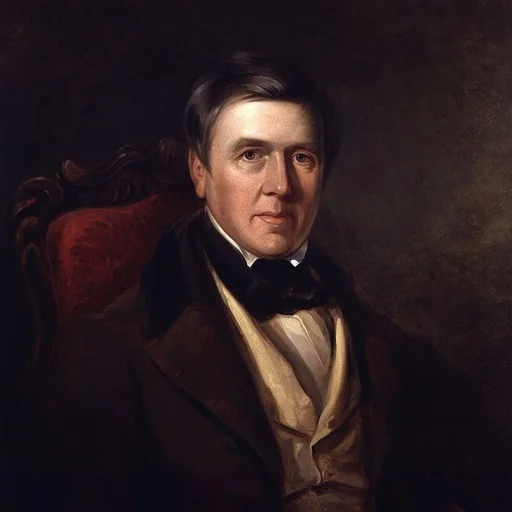
David Cox (29 April 1783 – 7 June 1859) was an English landscape painter, one of the most important members of the Birmingham School of landscape artists and an early precursor of Impressionism.

![Trees [verso], by David Cox](https://artifactworldgallery.com/img/david-cox--trees-verso--2f59ba73e183df09-w320.webp)
![Chatsworth [recto], by David Cox](https://artifactworldgallery.com/img/david-cox--chatsworth-recto--3f4d97adb21a8333-w320.webp)