Artwork
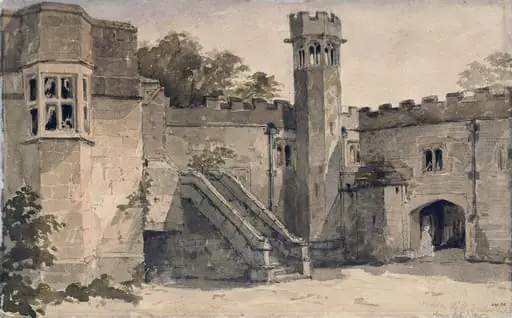
Gateway of Rhuddlan Castle, North Wales
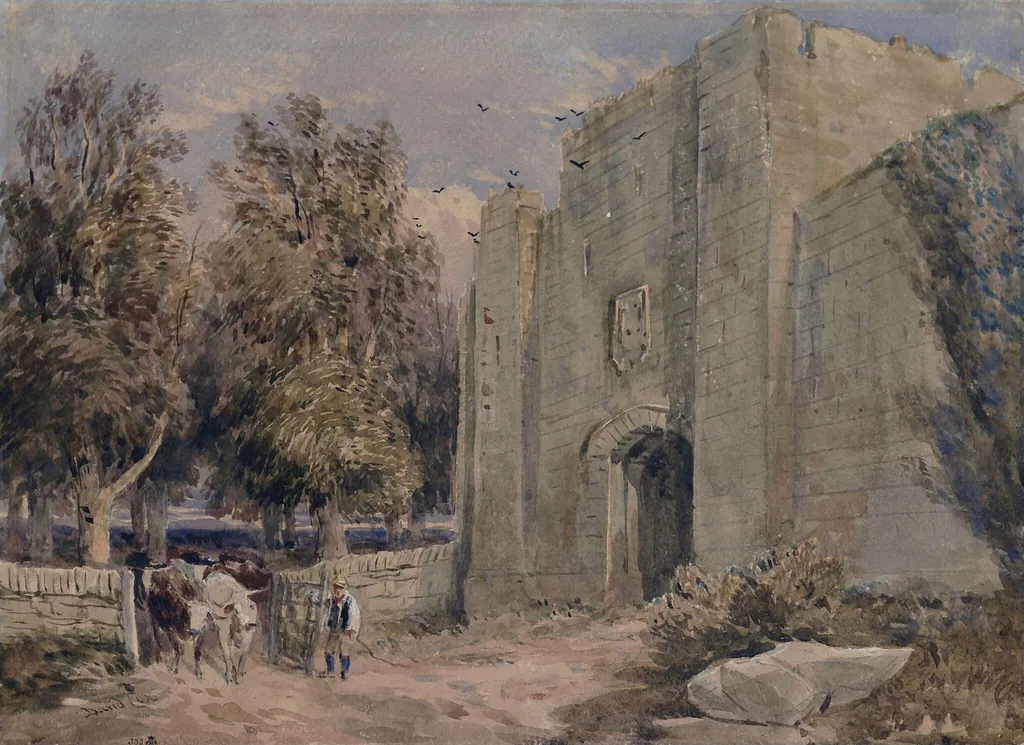
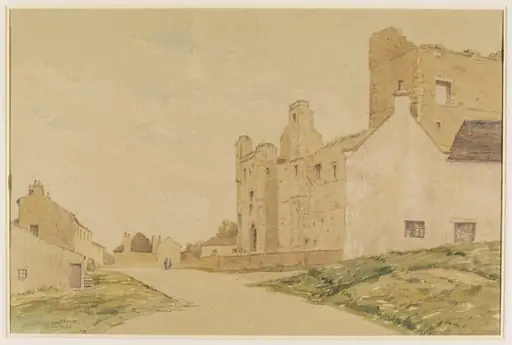
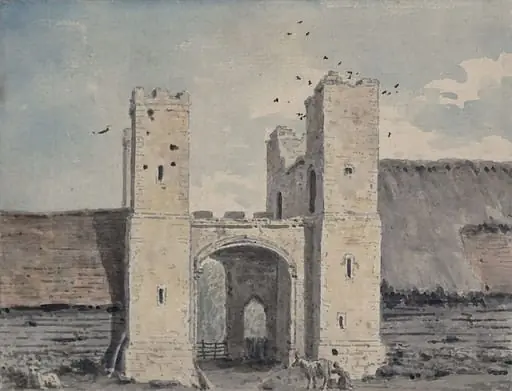
Gateway of Rhuddlan Castle, North Wales is a watercolor work on paper by David Cox. It dates from 1850 and is held in the collection of the Victoria and Albert Museum.
About this work
Overview
The work is a quiet, observational piece, emphasizing the passage of time through the castle’s weathered stonework and the subdued rural activity around it.
David Cox the Elder created this watercolour in 1850, capturing the gateway of Rhuddlan Castle in North Wales. The work is a quiet, observational piece, emphasizing the passage of time through the castle’s weathered stonework and the subdued rural activity around it. Executed in transparent washes, the composition balances architectural ruin with everyday life, reflecting Cox’s interest in landscape as a record of place and memory.
Subject & Meaning
The gateway, partially decayed, stands as a silent witness to history, while two figures—leading a cow and calf—move through the archway, grounding the scene in daily rural existence. The presence of life amid ruin suggests continuity rather than loss. Bare trees and a low wooden fence frame the composition, reinforcing a sense of stillness and seasonal transition, evoking a contemplative mood rather than grandeur.
Technique & Style
Cox employed loose, fluid brushwork and diluted watercolours to suggest texture and atmosphere without detail. The stones of the gate are rendered with soft washes of grey and ochre, their erosion implied rather than defined. The sky, pale and lightly tinted, holds faint traces of birds, while the foliage is reduced to delicate, skeletal strokes. This approach prioritizes mood over precision, aligning with the Romantic tradition of emotional landscape.
History & Provenance
The watercolour was completed during Cox’s later years, a period when he focused on Welsh and English rural scenes. It entered the Victoria and Albert Museum’s collection as part of a broader acquisition of 19th-century British watercolours. Its preservation reflects institutional recognition of Cox’s contribution to the medium, particularly his role in elevating landscape watercolour beyond topographical recording.
Context
In mid-19th century Britain, interest in historic ruins and pastoral life grew alongside industrial expansion. Cox’s depiction of Rhuddlan Castle aligns with this cultural shift, offering a gentle counterpoint to urbanization. Unlike grander antiquarian studies, his work avoids romanticized drama, instead presenting decay and routine as coexisting elements of the landscape.
Legacy
Cox’s watercolours, including this one, influenced later generations of British landscape artists who valued expressive brushwork and atmospheric tone over academic finish. His ability to convey quiet dignity in ordinary scenes helped redefine watercolour as a serious medium for personal observation, not merely preliminary sketching or decorative art.
Artist & collection
Artist
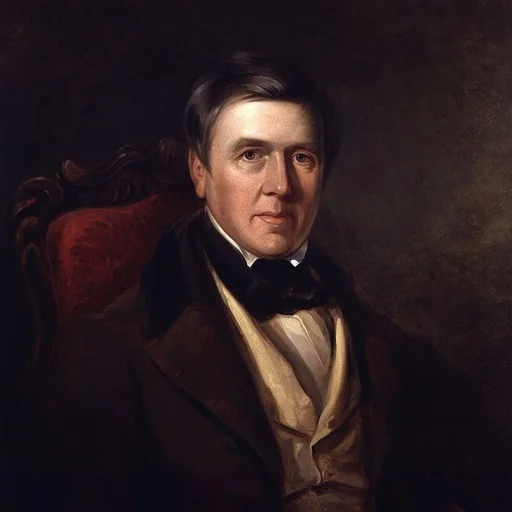
David Cox (29 April 1783 – 7 June 1859) was an English landscape painter, one of the most important members of the Birmingham School of landscape artists and an early precursor of Impressionism.

![Trees [verso], by David Cox](https://artifactworldgallery.com/img/david-cox--trees-verso--2f59ba73e183df09-w320.webp)
![Chatsworth [recto], by David Cox](https://artifactworldgallery.com/img/david-cox--chatsworth-recto--3f4d97adb21a8333-w320.webp)