Artwork
Route de Port-Marly
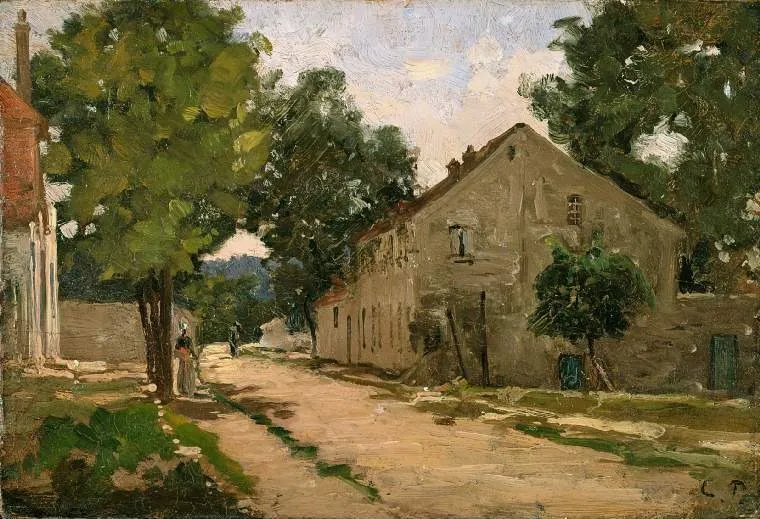
Route de Port-Marly is an oil painting by Camille Pissarro. It dates from 1863 and is held in the collection of the Fitzwilliam Museum.
About this work
Overview
Route de Port-Marly, painted in 1863 by Camille Pissarro, is a wood landscape depicting a serene rural scene. Characterized by loose, visible brushstrokes, the work showcases Pissarro's early stylistic tendencies.
Subject & Meaning
The painting captures a tranquil moment in a suburban setting, featuring a gray house, a partially visible red-roofed building, a woman in a dark dress, and surrounding trees. The subject reflects Pissarro's interest in everyday rural and suburban life.
Technique & Style
Executed with loose, expressive brushstrokes reminiscent of quick sketches, the painting's textured surface contrasts with the smooth finishes prevalent during the period. This approach foreshadows Pissarro's future contributions to Impressionist and Neo-Impressionist movements.
History & Provenance
Created in 1863, Route de Port-Marly was painted during Pissarro's formative period, following studies under Gustave Courbet and Jean-Baptiste-Camille Corot. The work's provenance details are not specified here.
Context
Painted in a time when polished finishes were the norm, Route de Port-Marly's visible brushwork was an unconventional choice, aligning with emerging trends that would later define Impressionism.
Legacy
While specific legacy details of Route de Port-Marly are not provided, the painting exemplifies Pissarro's evolving style, which would significantly influence both Impressionist and Post-Impressionist movements.
Artist & collection
Artist
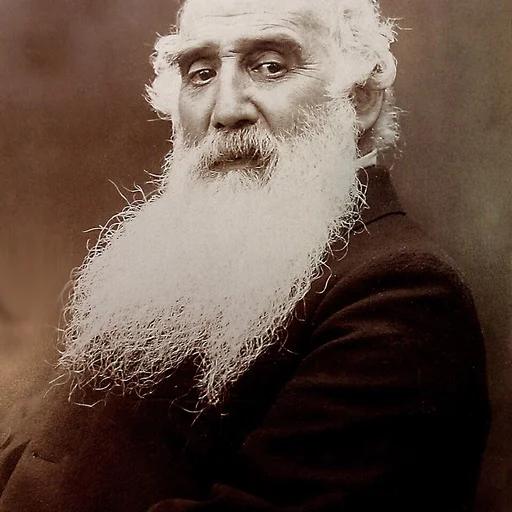
Jacob Abraham Camille Pissarro ( piss-AR-oh; French: ; 10 July 1830 – 13 November 1903) was a Danish-French Impressionist and Neo-Impressionist painter born on the island of Saint Thomas (now in the US Virgin Islands, but then in the…

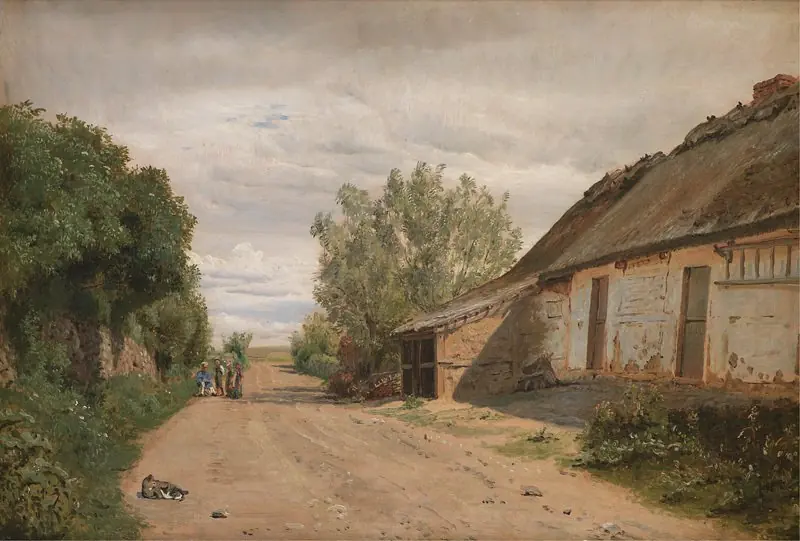 The Outskirts of the Village of Vejby. By the Roadside the Painter J.Th. Lundbye Sketching
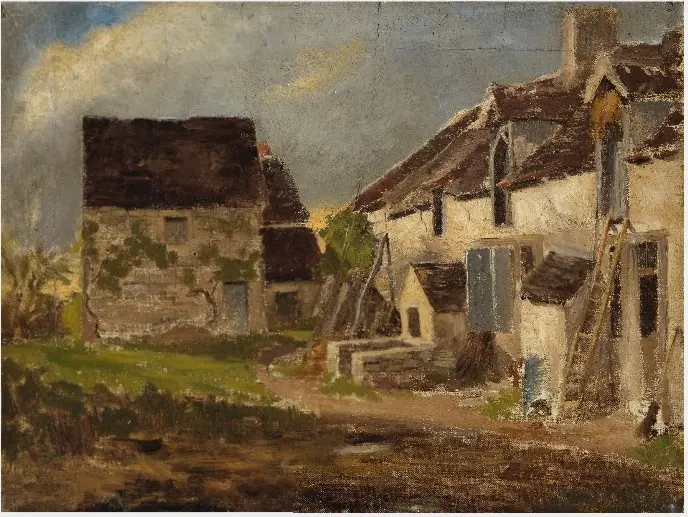 A House and Out-offices
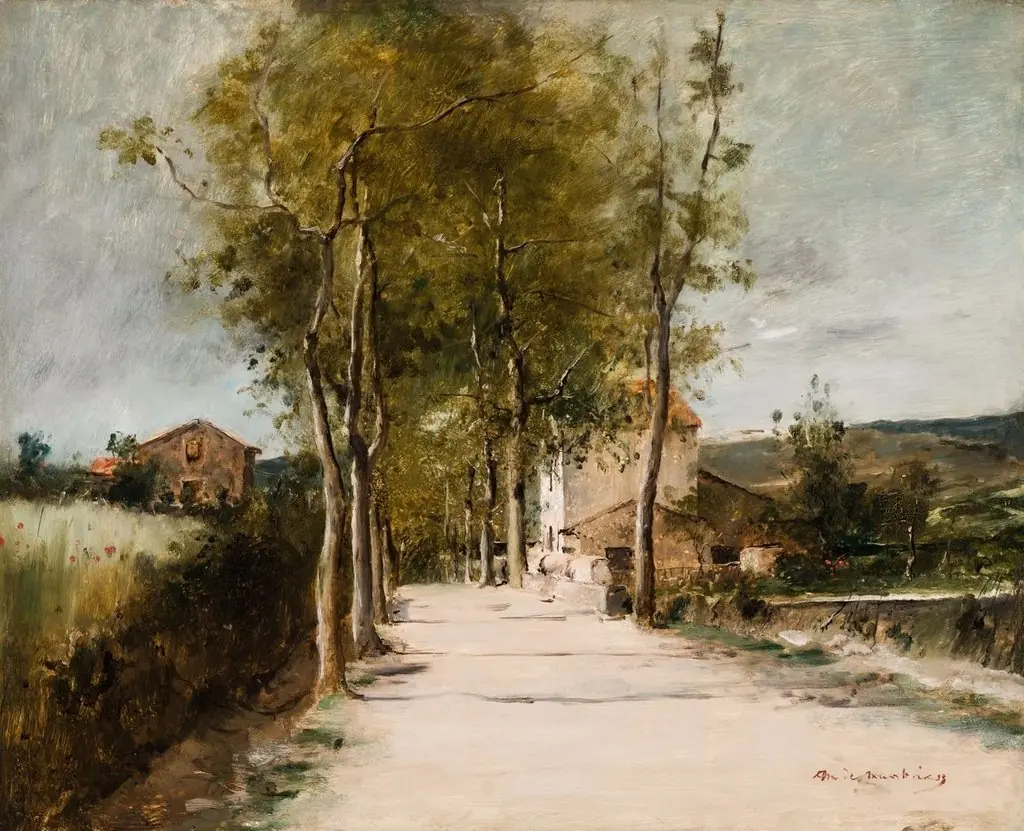 Landscape with Alley and Building
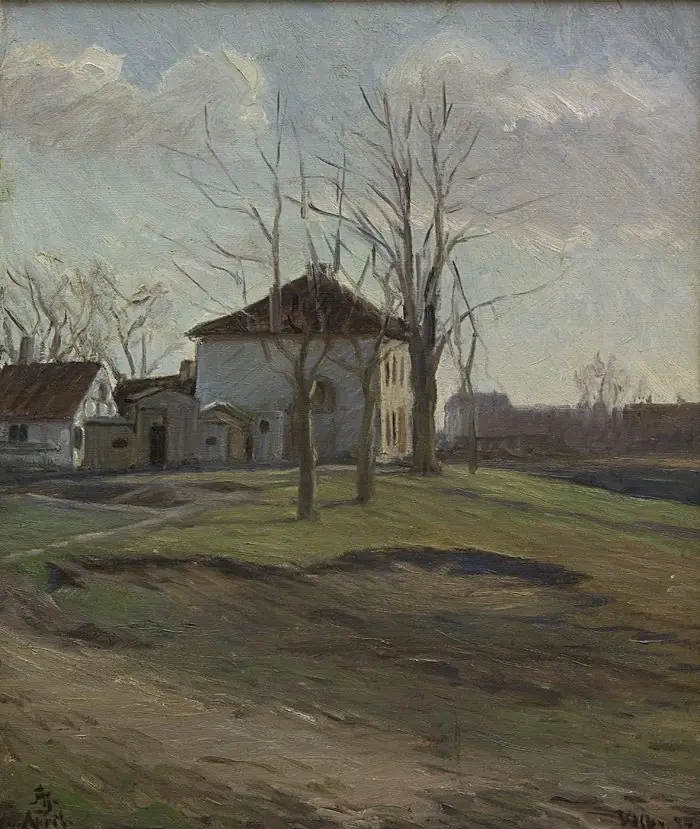 A Farm in Valby, near Copenhagen
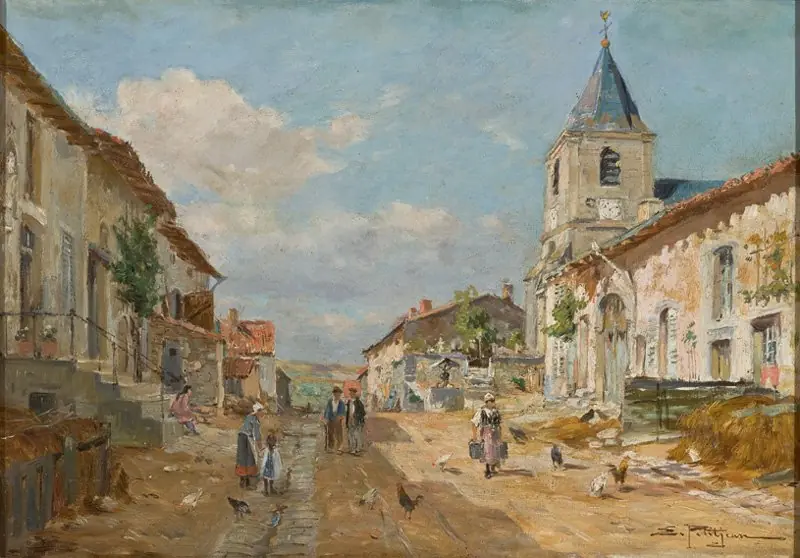 Street of a Village
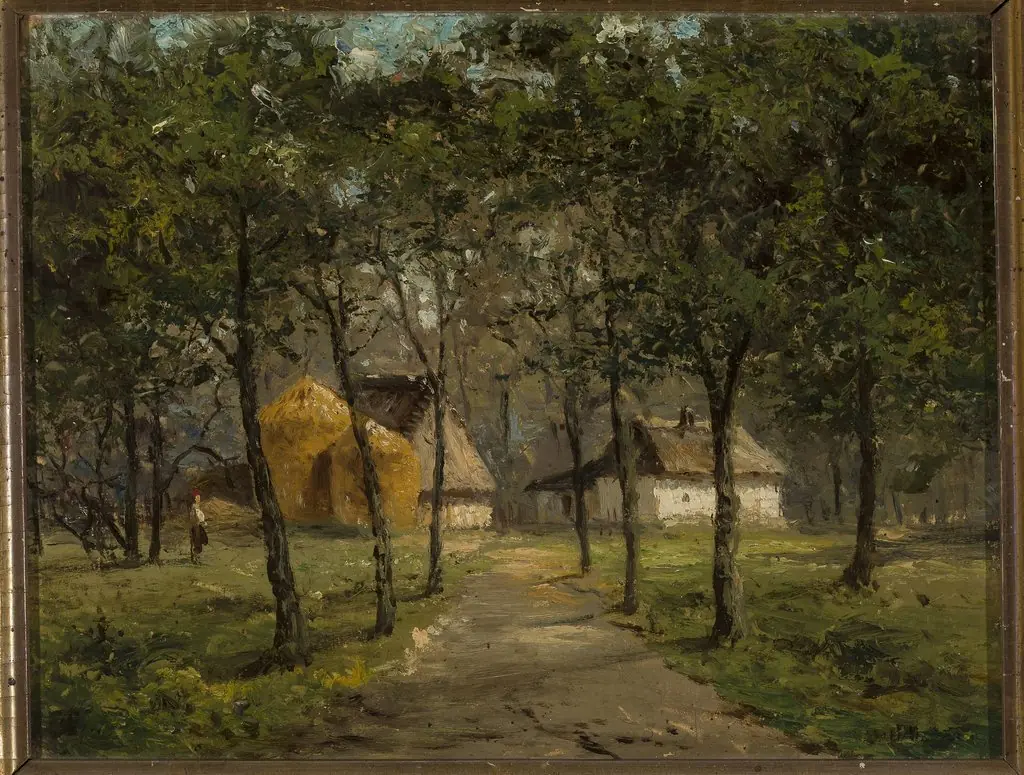 Landscape with houses among trees
 Village Street in Normandy
 Lyngbyvejen ved Vintappergården
 Village Scene, Barbizon
 French Street Scene
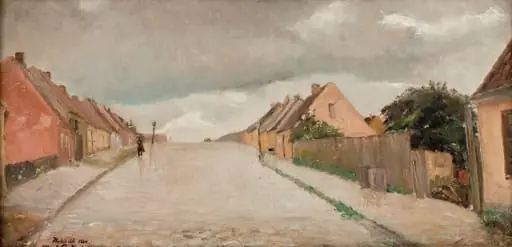 Bakkegade i Hillerød
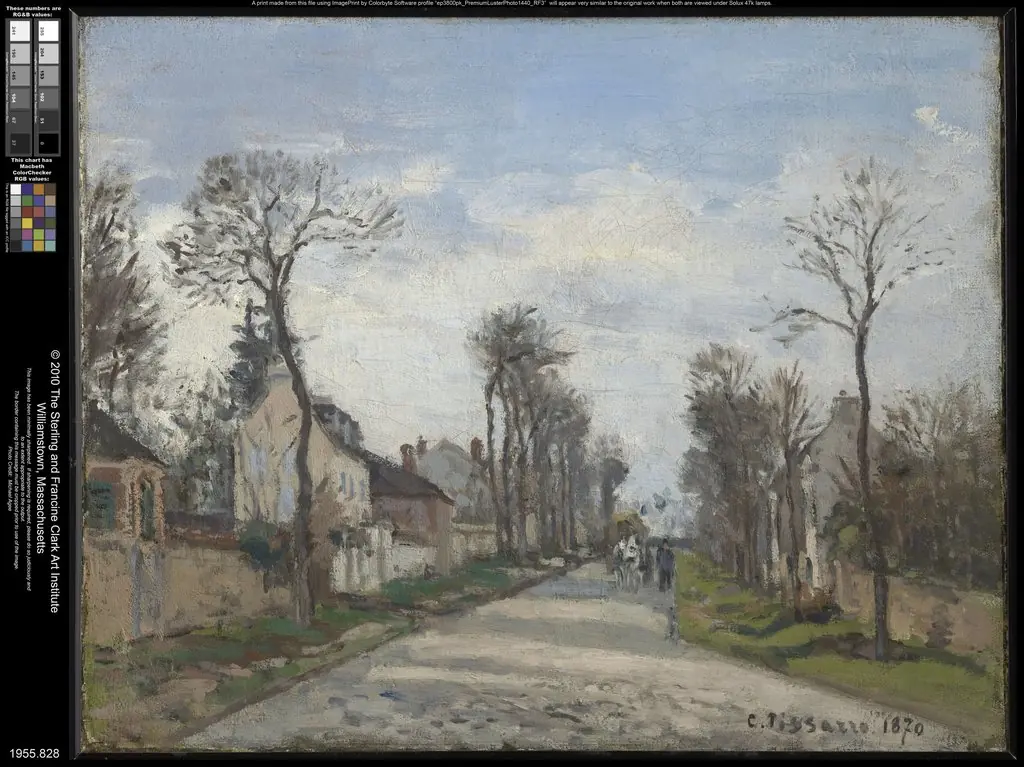 Route de Versailles, Louveciennes