Artwork
Pra della Valle
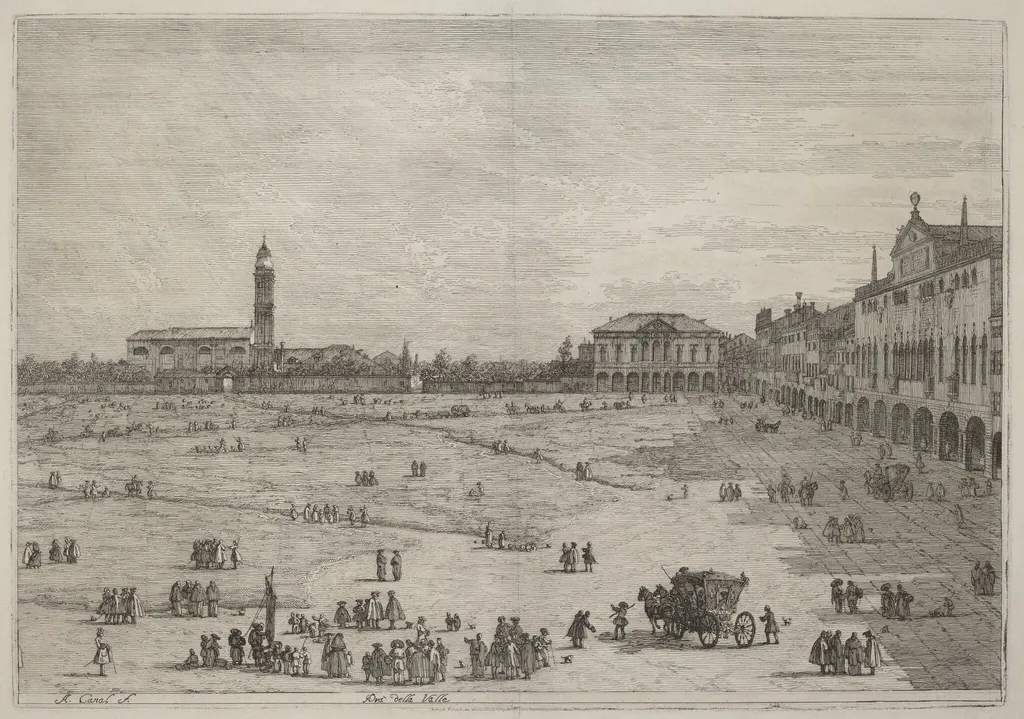
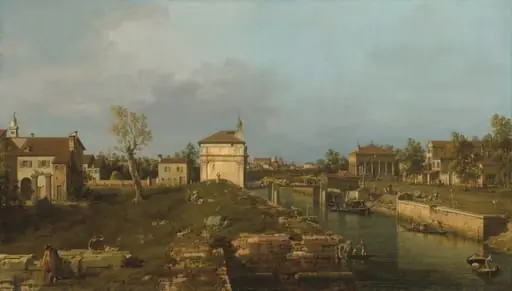
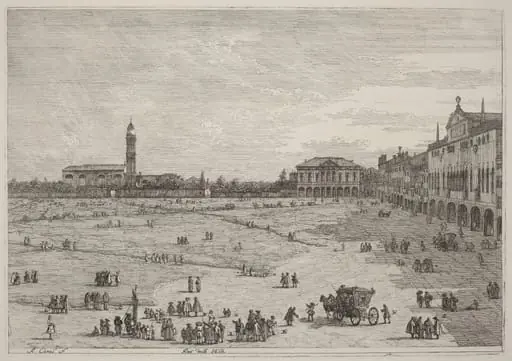
Pra della Valle is an ink print by the Baroque artist Canaletto. It dates from 1740 and is held in the collection of the National Gallery of Art.
About this work
Overview
It portrays a public square in Padua, not Venice, reflecting the artist’s broader interest in urban landscapes beyond his native city.
Created around 1740, *Pra della Valle* is an etching by Giovanni Antonio Canal, known as Canaletto. It portrays a public square in Padua, not Venice, reflecting the artist’s broader interest in urban landscapes beyond his native city. As a printmaker, Canaletto used etching to translate architectural detail into delicate line work, capturing both the structure and atmosphere of public spaces with precision and restraint.
Subject & Meaning
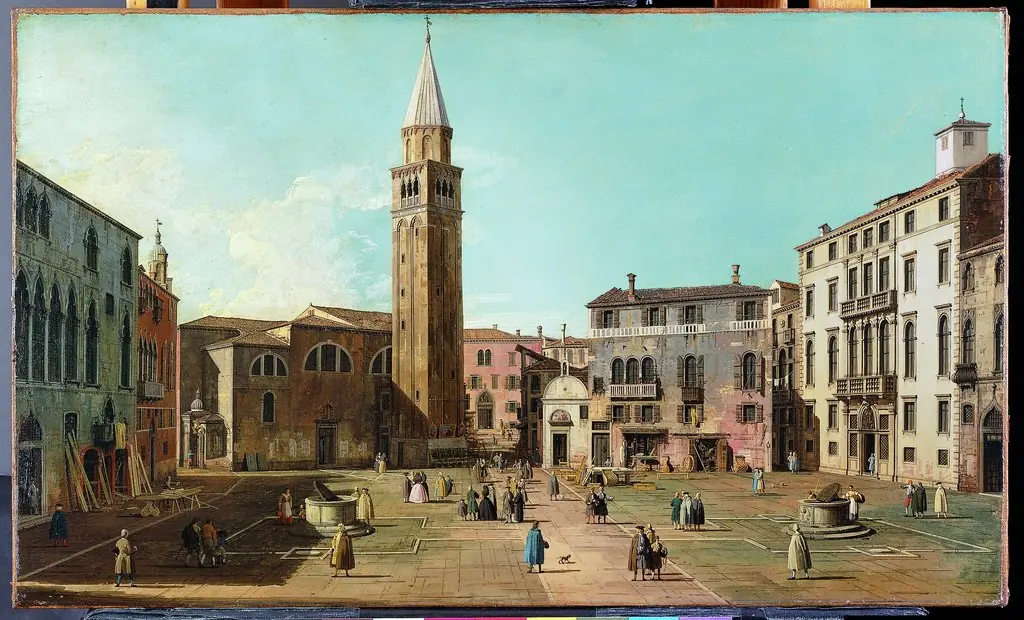
The scene depicts Pra della Valle, one of Europe’s largest town squares, alive with everyday activity. Figures are scattered in small clusters—some seated, others walking—while a horse-drawn carriage moves along the edge. The composition emphasizes the square’s scale and social function, presenting it not as a monument but as a lived environment. The cloudy sky softens the light, reinforcing a quiet, observational tone rather than a celebratory one.
Technique & Style
Canaletto employed etching to render fine architectural details—arches, columns, and the tower’s verticality—with controlled linework. The tonal range is subtle, achieved through varying line density rather than heavy shading. Buildings are rendered with geometric clarity, while human figures are minimized to suggest movement without distraction. This restrained approach aligns with his broader practice: accuracy in structure, understated human presence.
History & Provenance
The etching was produced during Canaletto’s period of active printmaking, likely as part of a series documenting Italian urban spaces. Though less documented than his paintings, his prints circulated among collectors and travelers seeking accurate depictions of continental cities. This work likely entered private collections in the 18th century, eventually finding its way into institutional holdings through later acquisitions.
Context
In the mid-18th century, etchings of urban views served both documentary and aesthetic purposes. Canaletto’s work responded to a growing demand from Grand Tour travelers for reliable images of Italian cities. Pra della Valle, though less famous than Venetian subjects, reflects his method of selecting significant public spaces and rendering them with topographical fidelity, balancing observation with compositional order.
Legacy
Canaletto’s etchings, including this one, contributed to the development of topographical printmaking in Europe. His ability to merge architectural precision with atmospheric nuance influenced later artists and surveyors. While overshadowed by his paintings, these prints remain valuable for their clarity and restraint, offering a quiet counterpoint to the more theatrical vedute of his contemporaries.
Artist & collection
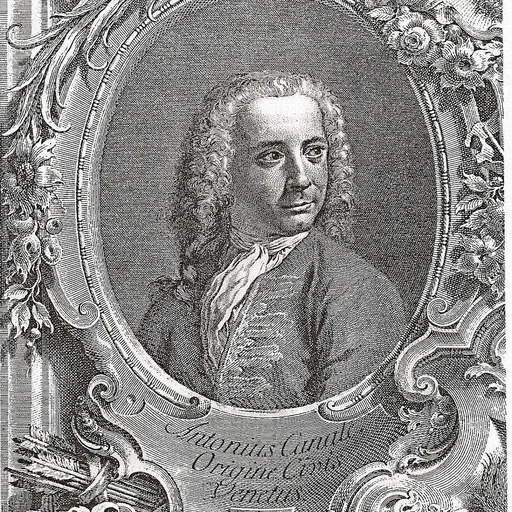
Artist
Giovanni Antonio Canal (18 October 1697 – 19 April 1768), commonly known as Canaletto (Italian: ), was an Italian painter from the Republic of Venice, considered an important member of the 18th-century Venetian school.