Artwork
Views: Prà della Valle, Padua
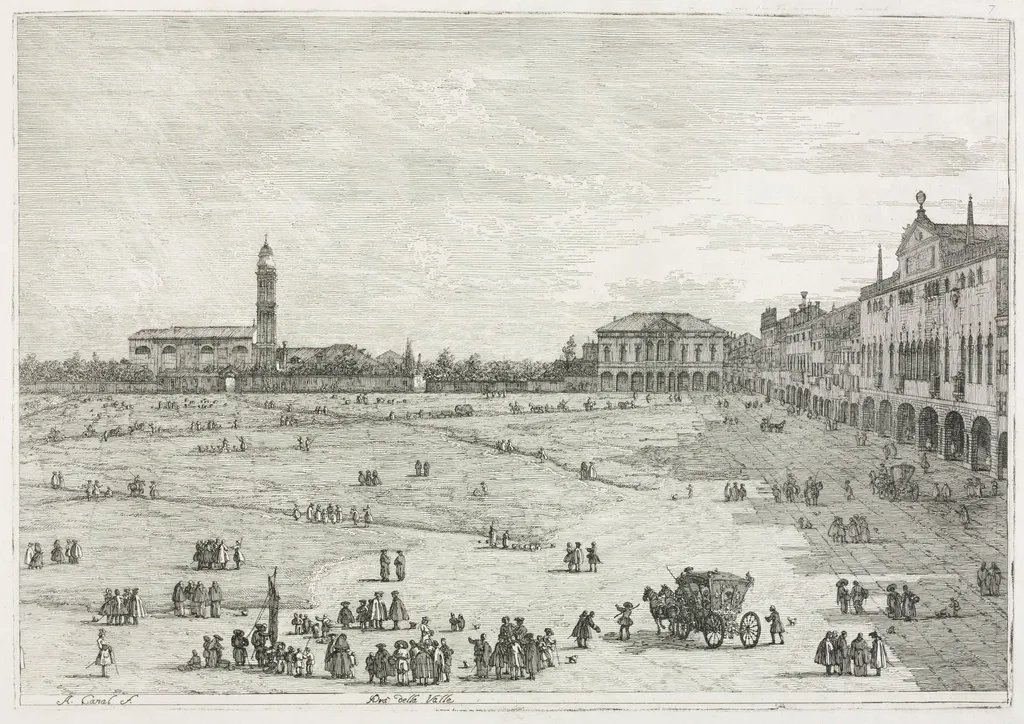
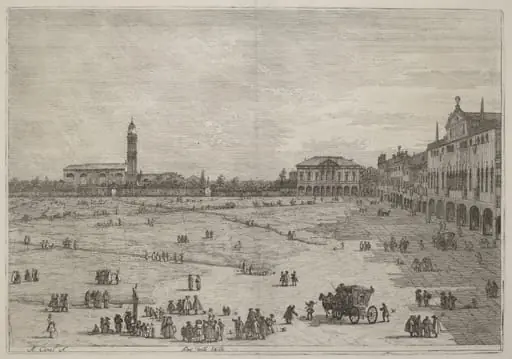
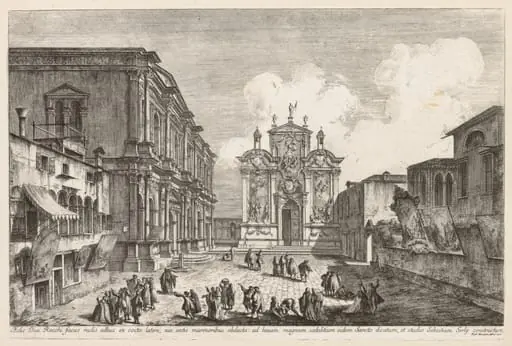
Views: Prà della Valle, Padua is a print by the Baroque artist Canaletto. It dates from 1740 and is held in the collection of the Cleveland Museum of Art.
About this work
Overview
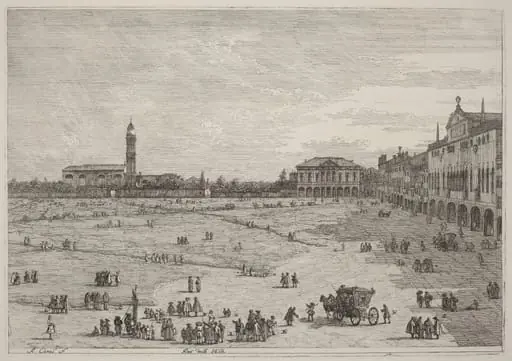
Created in 1740, this print by Antonio Canaletto captures the expansive piazza of Prà della Valle in Padua. The composition presents a bustling public space framed by the distinctive tower, a colonnaded edifice, and a row of modest dwellings, all rendered with a sense of ordered activity.
Subject & Meaning
The scene portrays pedestrians engaged in conversation, small groups gathering, and a horse‑drawn carriage positioned toward the lower right. By depicting everyday movement within an architecturally significant setting, the work reflects the 18th‑century interest in documenting urban life and civic spaces.
Technique & Style
Canaletto employs a careful modulation of light and shadow to model the façades and figures, a technique that enhances spatial depth and realism. The print, produced through etching, continues his practice of precise vedute, where meticulous observation meets a subtle atmospheric effect.
History & Provenance
Part of Canaletto’s broader output that includes views of Venice, Rome, and London, this print exemplifies his reputation as a leading Venetian vedutista. It was circulated among collectors of the period who valued accurate yet aesthetically refined representations of European cities.
Artist & collection
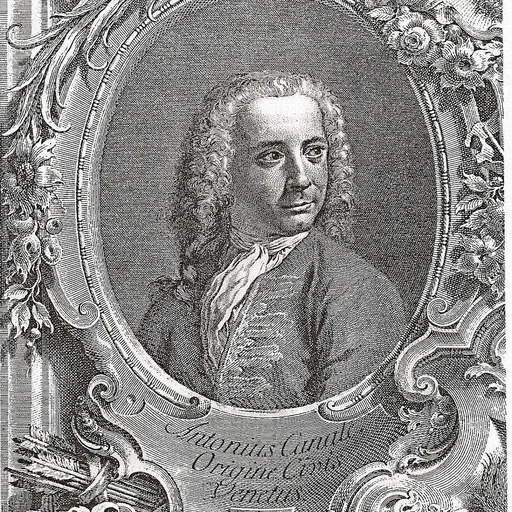
Artist
Giovanni Antonio Canal (18 October 1697 – 19 April 1768), commonly known as Canaletto (Italian: ), was an Italian painter from the Republic of Venice, considered an important member of the 18th-century Venetian school.

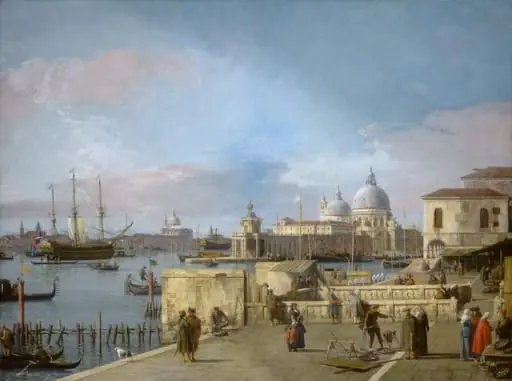
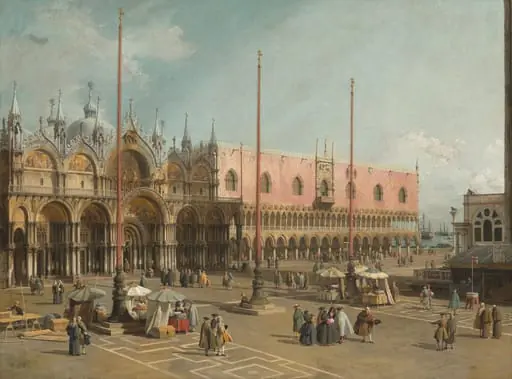
 Pra della Valle
 Pra della Valle
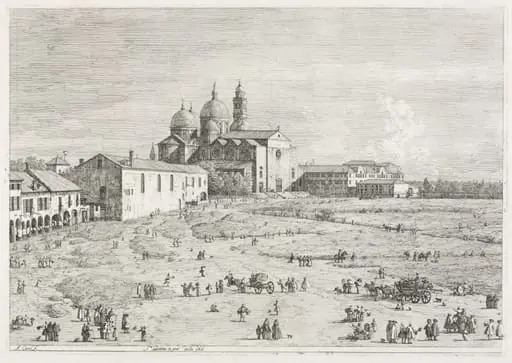 Views: Church of Saint Justina in Prà della Valle, Padua
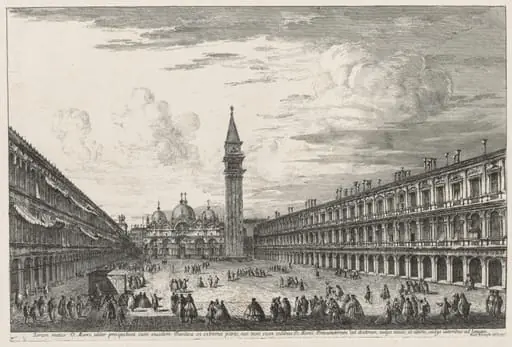 Views of Venice: Piazzo S. Marco
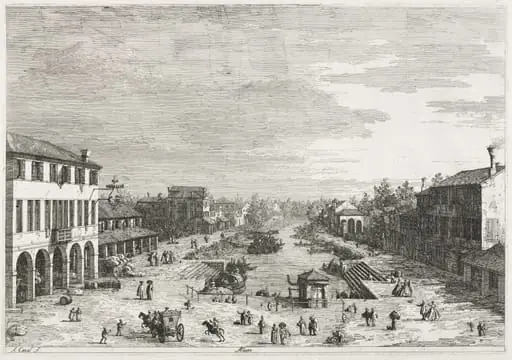 Views: Views of Mestre, a Town in the Province of Venice
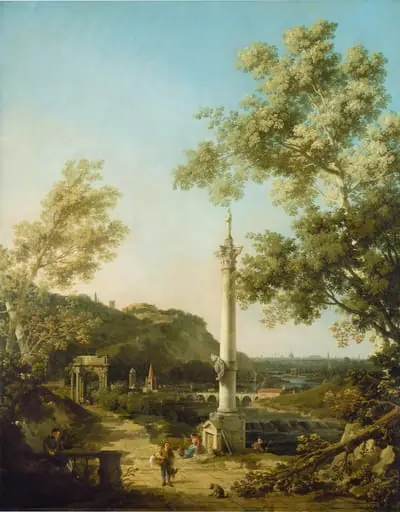
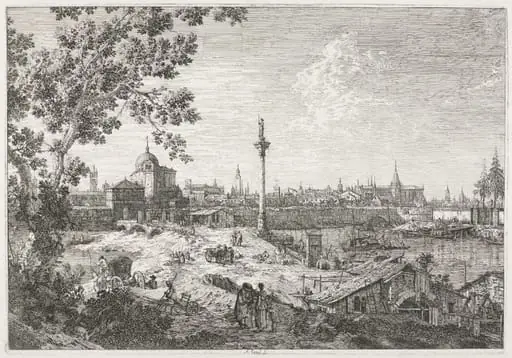 Views: Imaginary View of Padua
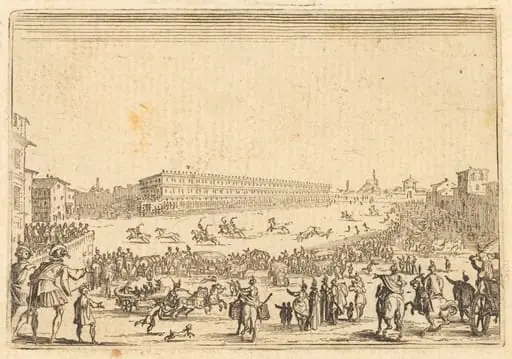 Piazza Presso alla Porta al Prato
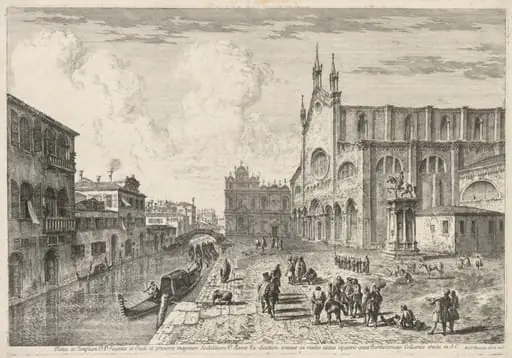 Views of Venice: Campo S. S. Giovanni e Paolo
 Piazza Presso alla Porta al Prato
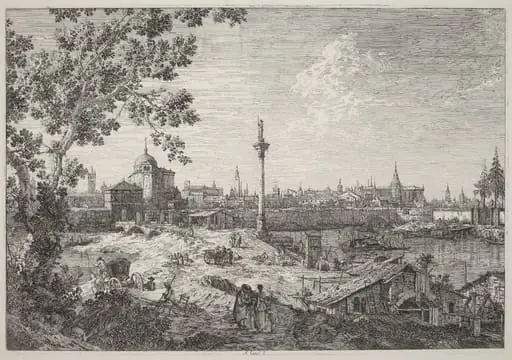 Imaginary View of Padua
 Views of Venice: Campo S. Rocco