Artwork
Interior of a Barn Built on Ancient Ruins
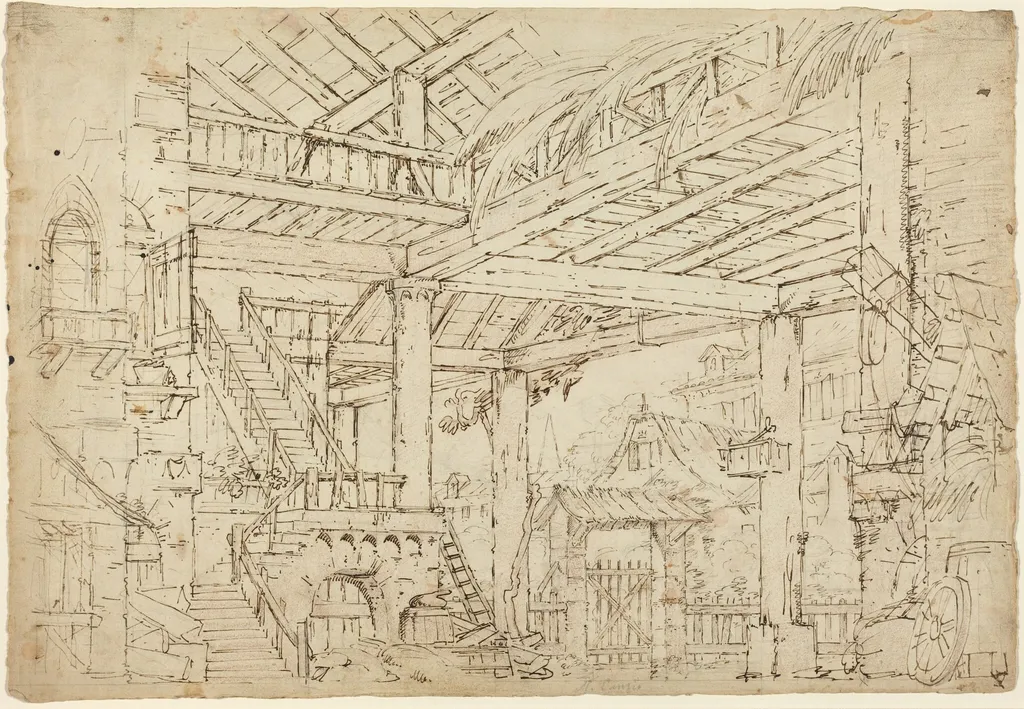
Interior of a Barn Built on Ancient Ruins is an ink drawing by the Romanticist artist Michele Canzio. It dates from 1828 and is held in the collection of the National Gallery of Art.
About this work
Overview
Executed in pen and brown ink with brown chalk over graphite, the work is rendered on wove paper and includes incised lines likely intended for transfer.
Created in 1828 by Michele Canzio, this drawing captures the interior of a barn constructed atop the remnants of older stone structures. Executed in pen and brown ink with brown chalk over graphite, the work is rendered on wove paper and includes incised lines likely intended for transfer. The composition conveys a sense of temporal layering, where architectural fragments from different eras coexist in disarray.
Subject & Meaning
The scene depicts a space where ancient masonry emerges through the framework of a rustic, partially built barn. Crumbling walls, exposed beams, and uneven planks suggest a site in flux—neither fully restored nor entirely abandoned. The overlapping forms imply a history buried beneath everyday use, reflecting a quiet tension between preservation and decay, utility and memory.
Technique & Style
Canzio employed rapid, overlapping strokes in pen and chalk to suggest texture and spatial confusion. The lines are deliberately unrefined, creating a dense network that blurs boundaries between structural elements. Incised guidelines hint at preparatory intent, yet the final execution retains the immediacy of a field sketch, prioritizing atmospheric effect over precision.
History & Provenance
The drawing is dated to 1828, placing it within Canzio’s active period documenting architectural remnants in southern Italy. While specific ownership history is not documented, its medium and technique align with studies made by artists of the time who recorded vernacular and archaeological sites for academic or personal interest.
Context
In early 19th-century Italy, artists and antiquarians increasingly turned to rural and ruined sites as subjects of study. Canzio’s sketch reflects this trend, capturing the informal integration of ancient materials into contemporary rural life. Such drawings served as visual records of cultural continuity, where past and present coexisted in practical, unmonumental ways.
Legacy
Though not widely exhibited, this work exemplifies a quiet genre of topographical drawing that valued observation over idealization. Its raw, layered technique influenced later artists interested in the material traces of history, offering a model for depicting architecture not as static monument but as evolving, contested space.
Artist & collection


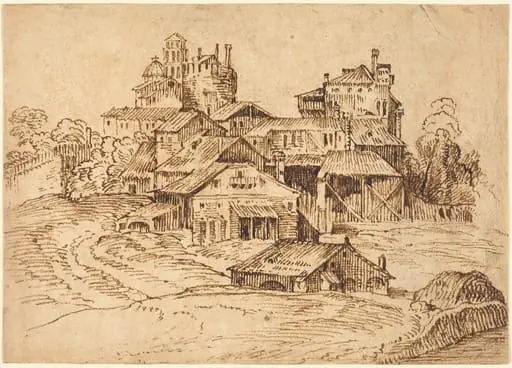 View of an Italian Town (after Titian or Domenico Campagnola)
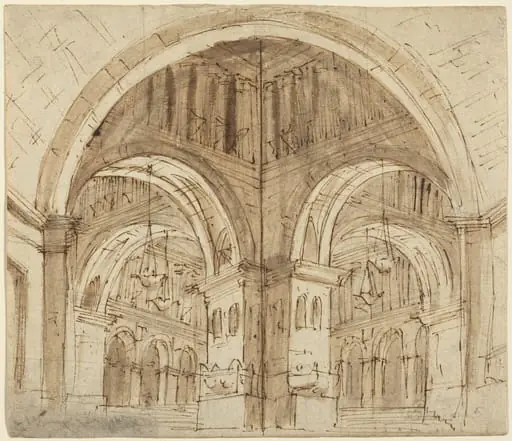 Design for a Vaulted Hall
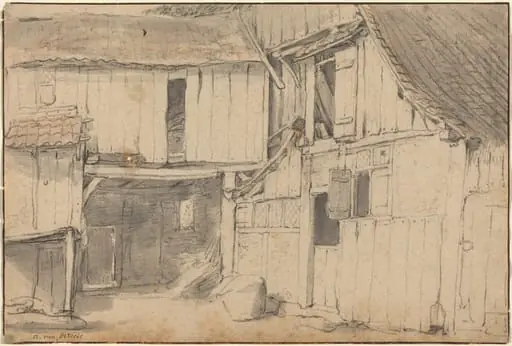 Interior of a Courtyard
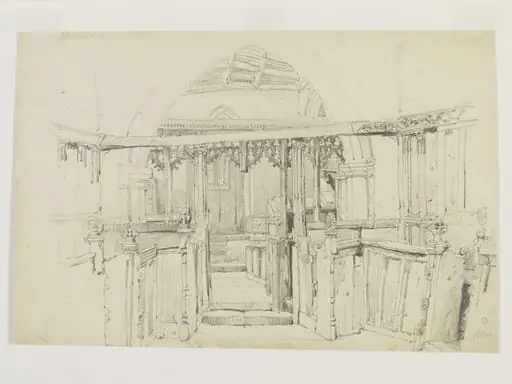 Blore-Ray Church in Staffordshire
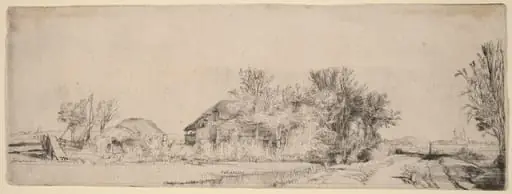 Landscape with a Road beside a Canal
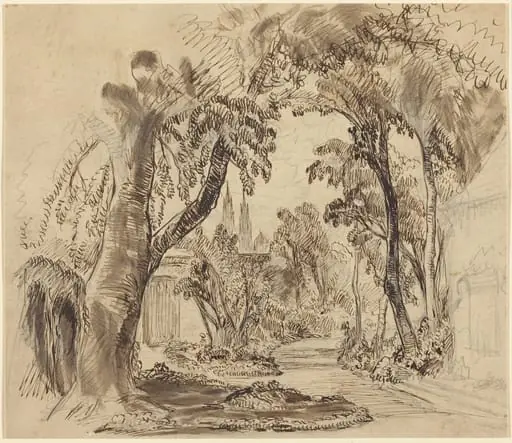 A Tree-lined Garden Path (Preliminary Sketch for "Sleeping Beauty and the Beast"?)
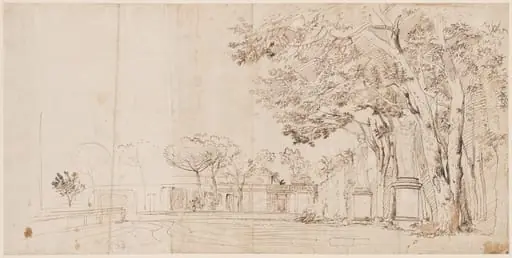 The Gardens of the Villa Medici
 Furniture Shop
 Cottages
 Courtyard of a Swiss Country House