Artwork
Landscape with a Road beside a Canal
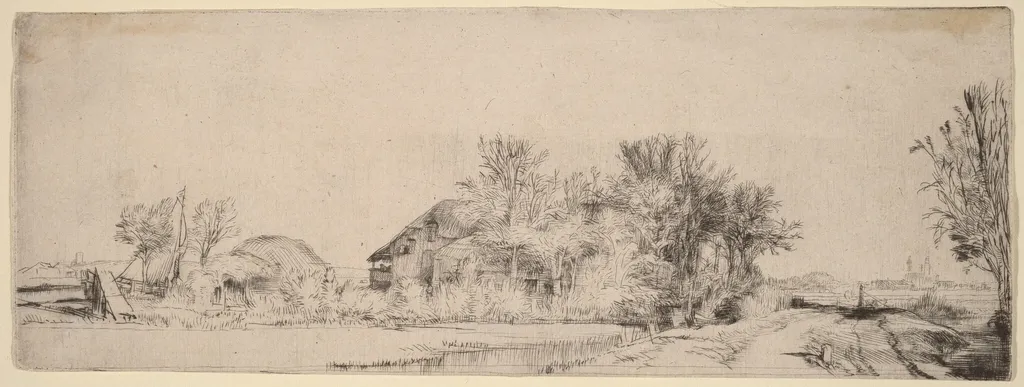
Landscape with a Road beside a Canal is an ink print by the Baroque artist Rembrandt. It dates from 1652 and is held in the collection of the National Gallery of Art.
About this work
Overview
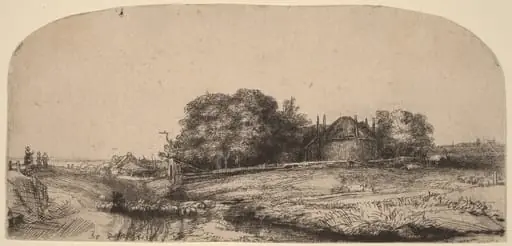
Landscape with a Road beside a Canal is a drypoint print created by Rembrandt van Rijn around 1652, depicting a serene landscape scene.
Subject & Meaning
The print shows a tranquil landscape with a road paralleling a canal, accompanied by trees, bushes, and a distant house under a light sky. The reflective water in the canal adds a notable detail, enhancing the overall calm atmosphere.
Technique & Style
Rembrandt employed a range of tones in this drypoint to achieve depth and texture. While not a painting, the work's use of contrasting light and dark values relates to the principles of chiaroscuro, though its expression is unique to the drypoint medium.
History & Provenance
Created circa 1652, specific details about the print's history and ownership before its current location are not provided in the available information.
Context
Produced during Rembrandt's mature period, this work reflects his ongoing exploration of landscape themes and his mastery of etching techniques, including drypoint, which he used to explore expressive and atmospheric effects.
Legacy
As part of Rembrandt's oeuvre, Landscape with a Road beside a Canal contributes to the artist's reputation for capturing nuanced lighting and serene natural environments in his prints, influencing later artists in their depiction of landscape serenity and use of drypoint for expressive texture.
Artist & collection
Artist
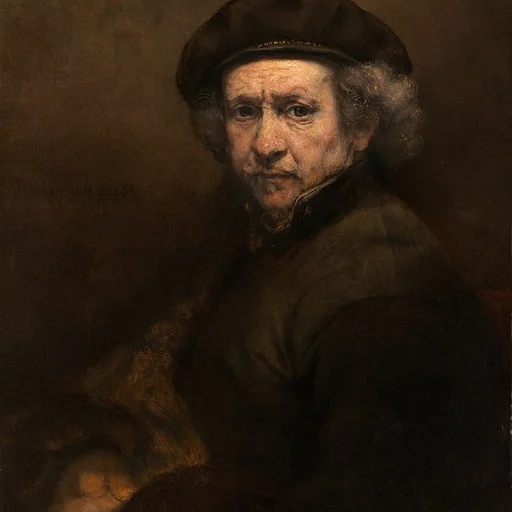
Rembrandt Harmenszoon van Rijn (15 July 1606 – 4 October 1669), known mononymously as Rembrandt, was a Dutch Golden Age painter, printmaker, and draughtsman.

 Landscape with a Hay Barn and a Flock of Sheep
![View of Houtewael near the Sint Anthoniespoort [recto], by Rembrandt](https://artifactworldgallery.com/img/rembrandt--view-of-houtewael-near-the-sint-anthoniespoort-recto--2919925de9060e70-w320.webp) View of Houtewael near the Sint Anthoniespoort [recto]
View of Houtewael near the Sint Anthoniespoort [recto] Landscape with a Milkman
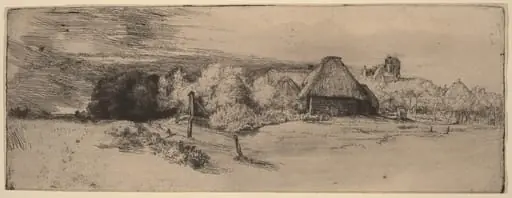 Landscape with Trees, Farm Buildings and a Tower
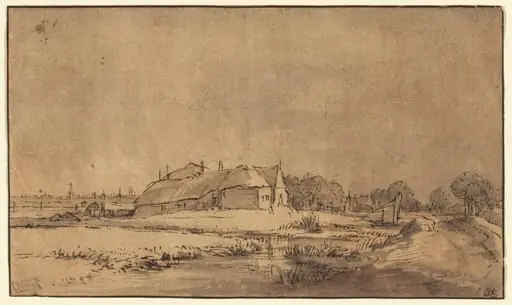 Cottages and Barn beside a Road
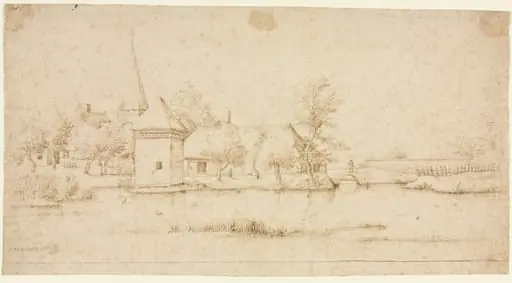 Landscape with a Moated Village
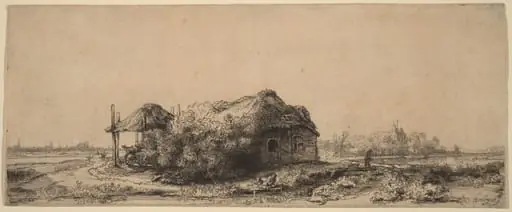 Landscape with a Cottage and Hay Barn: Oblong
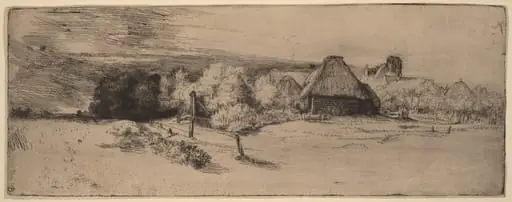 Landscape with Trees, Farm Buildings and a Tower
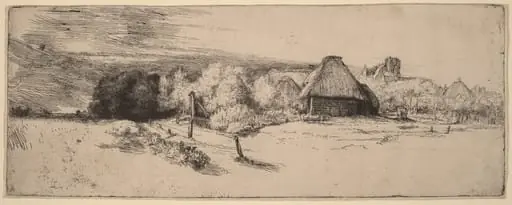 Landscape with Trees, Farm Buildings and a Tower
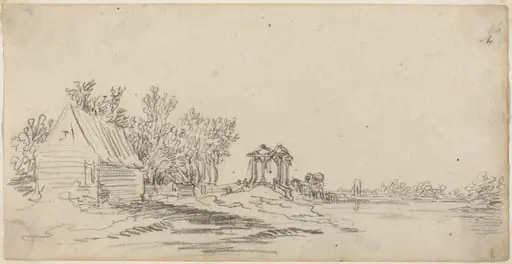 River Landscape with a Distant Bridge