Artwork
The Piazza, Siena
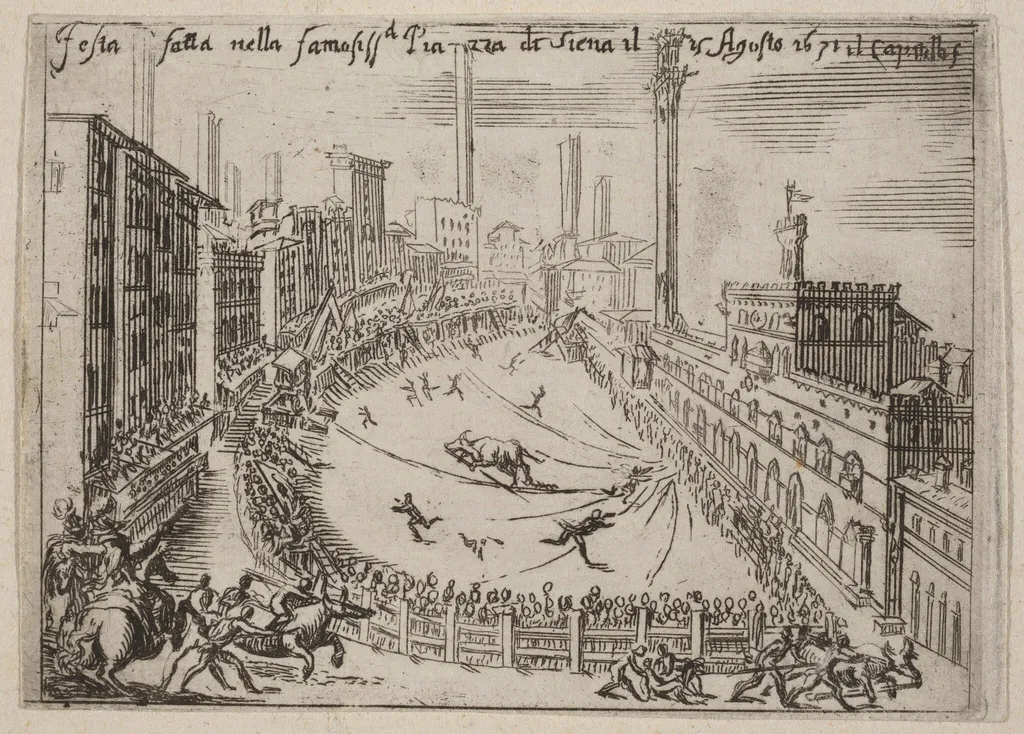
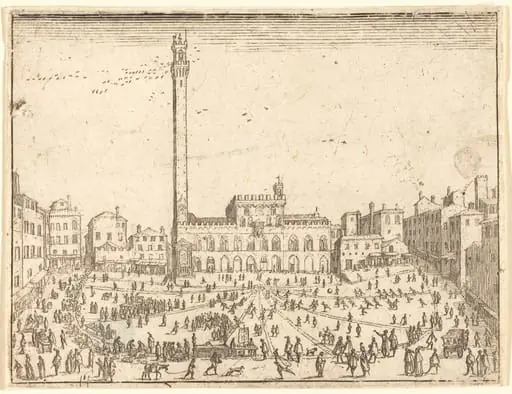
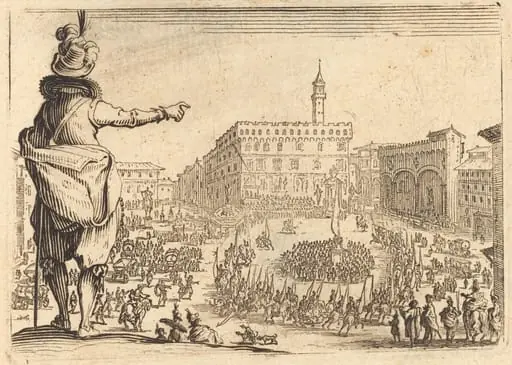
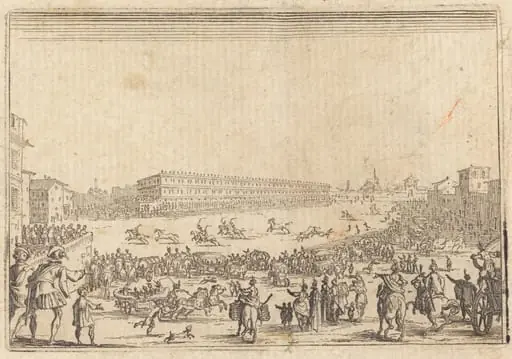
The Piazza, Siena is an ink print by the Baroque artist Bernardino Capitelli. It dates from 1631 and is held in the collection of the National Gallery of Art.
About this work
The artist carved this scene onto a metal plate, then inked it to print.
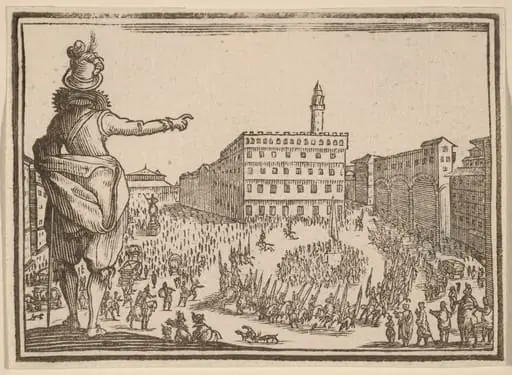
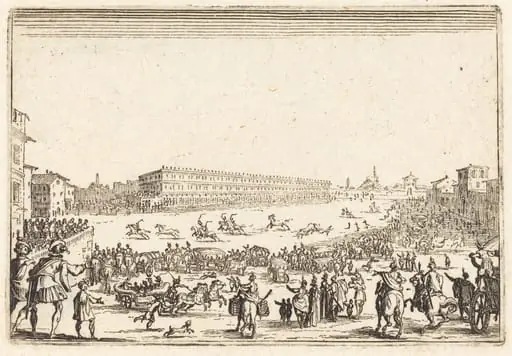
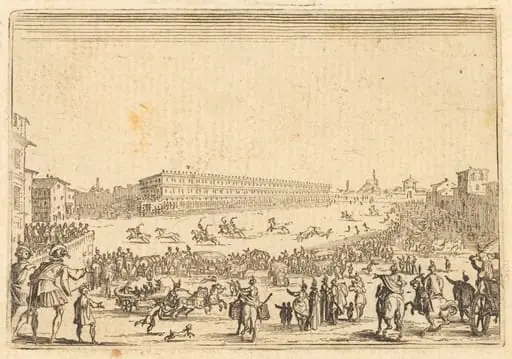
You see a detailed etching of Siena’s main square in 1631. The buildings look sharp and precise, like a photo. People walk around shops and chat in small groups. The artist carved this scene onto a metal plate, then inked it to print.
Etching lets artists make many copies with fine lines. This one shows everyday life in an Italian town. The light feels warm, like late afternoon.
Check out another etching by Capitelli, Bernardino next.
Overview
Bernardino Capitelli’s 1631 etching, titled The Piazza, Siena, presents a meticulous view of Siena’s principal square. Rendered in fine line work, the image captures the architecture and bustling activity of the space, offering a snapshot of urban life in early‑17th‑century Italy.
Subject & Meaning
The composition focuses on the central piazza, surrounded by sharply defined buildings and populated by figures engaged in daily routines—shopping, conversing, and moving through the streets. The scene reflects the ordinary rhythms of the city’s inhabitants, emphasizing communal interaction within a public setting.
Technique & Style
Capitelli employed traditional etching, incising the design onto a metal plate before applying ink and pressing it onto paper. The resulting print is characterized by precise, photographic‑like lines and a warm, late‑afternoon illumination that enhances the depth and texture of the architectural forms.
History & Provenance
Created in 1631, the work belongs to Capitelli’s series of urban views that document Italian locales. While specific ownership records are limited, the etching has been cited in studies of early modern printmaking as an example of the medium’s capacity to reproduce detailed cityscapes.
Artist & collection