Artwork
Pentecost
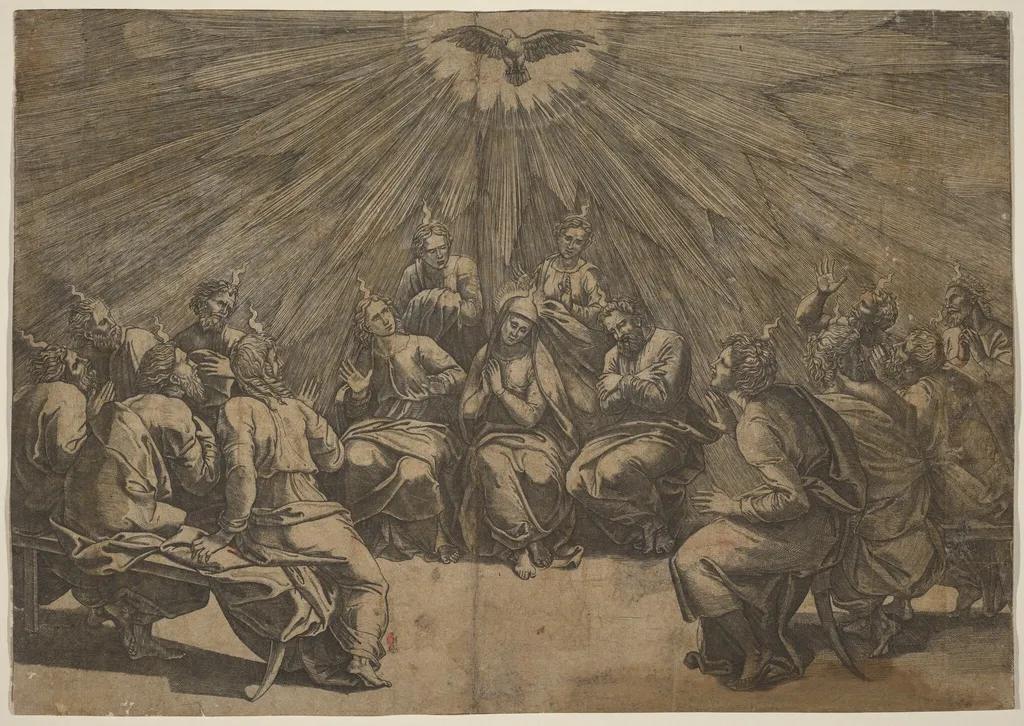
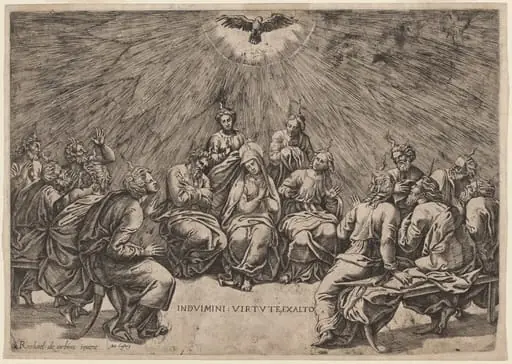
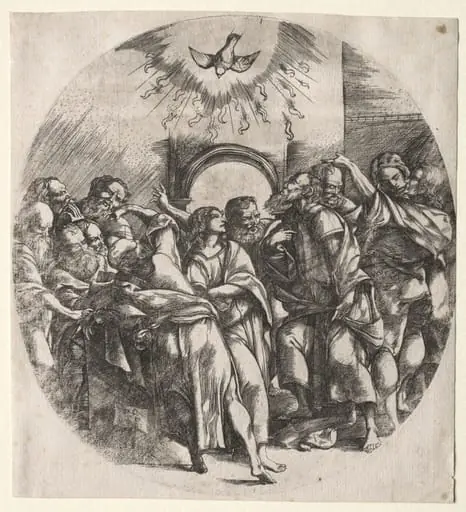
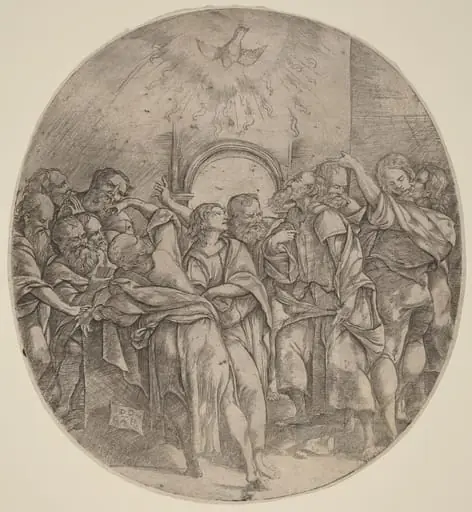
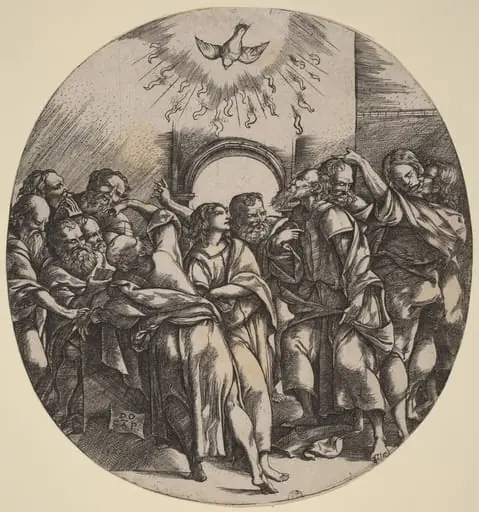
Pentecost is an ink print by the Renaissance artist Gian Jacopo Caraglio. It dates from 1535 and is held in the collection of the National Gallery of Art.
About this work
Overview
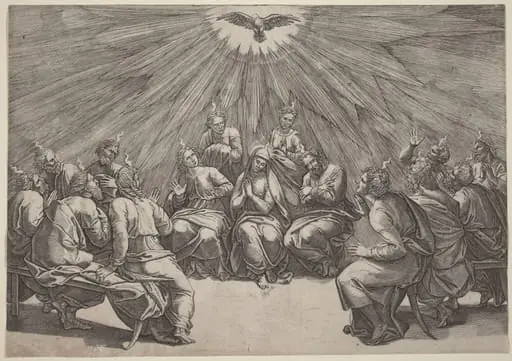
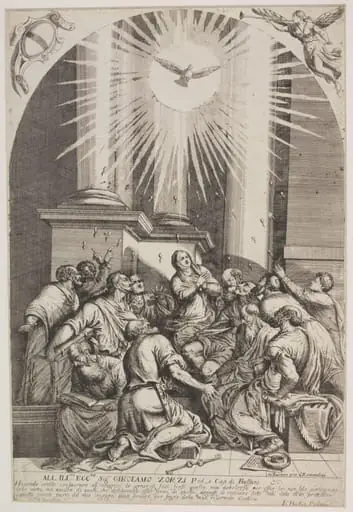
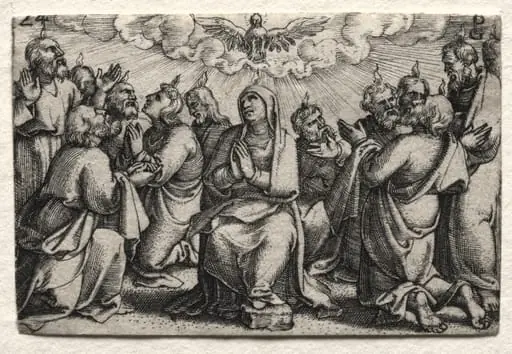
Gian Jacopo Caraglio’s 1535 engraving titled Pentecost portrays a compact assembly of figures gathered within a shadowed interior. The composition directs the viewer’s eye upward toward a luminous dove, whose presence is emphasized by radiating shafts of light that pierce the surrounding darkness.
Subject & Meaning
The work visualizes the biblical episode when the Holy Spirit descended upon the apostles, a moment traditionally signified by a dove. The participants, clad in modest robes and positioned in various postures of reverence, convey a collective focus on the divine visitation.
Technique & Style
Caraglio achieved the scene’s dramatic contrast through meticulous incised lines on a copper plate, employing dense cross‑hatching to render deep shadows and finer strokes for illuminated areas. The interplay of line density creates a sense of volume and atmospheric depth characteristic of mid‑sixteenth‑century Northern Italian printmaking.
History & Provenance
Created in 1535, the engraving reflects Caraglio’s mature period after his apprenticeship with Marcantonio Raimondi. Surviving impressions are held in several European collections, indicating the print’s circulation among patrons interested in religious subjects during the Counter‑Reformation.
Context
Pentecost aligns with contemporary visual interpretations of the Holy Spirit, where the dove functions as a standard iconographic element. Caraglio’s rendering situates the event within an intimate, interior space, diverging from the grand outdoor settings favored by some of his contemporaries.
Artist & collection