Artwork
The Descent of the Holy Spirit
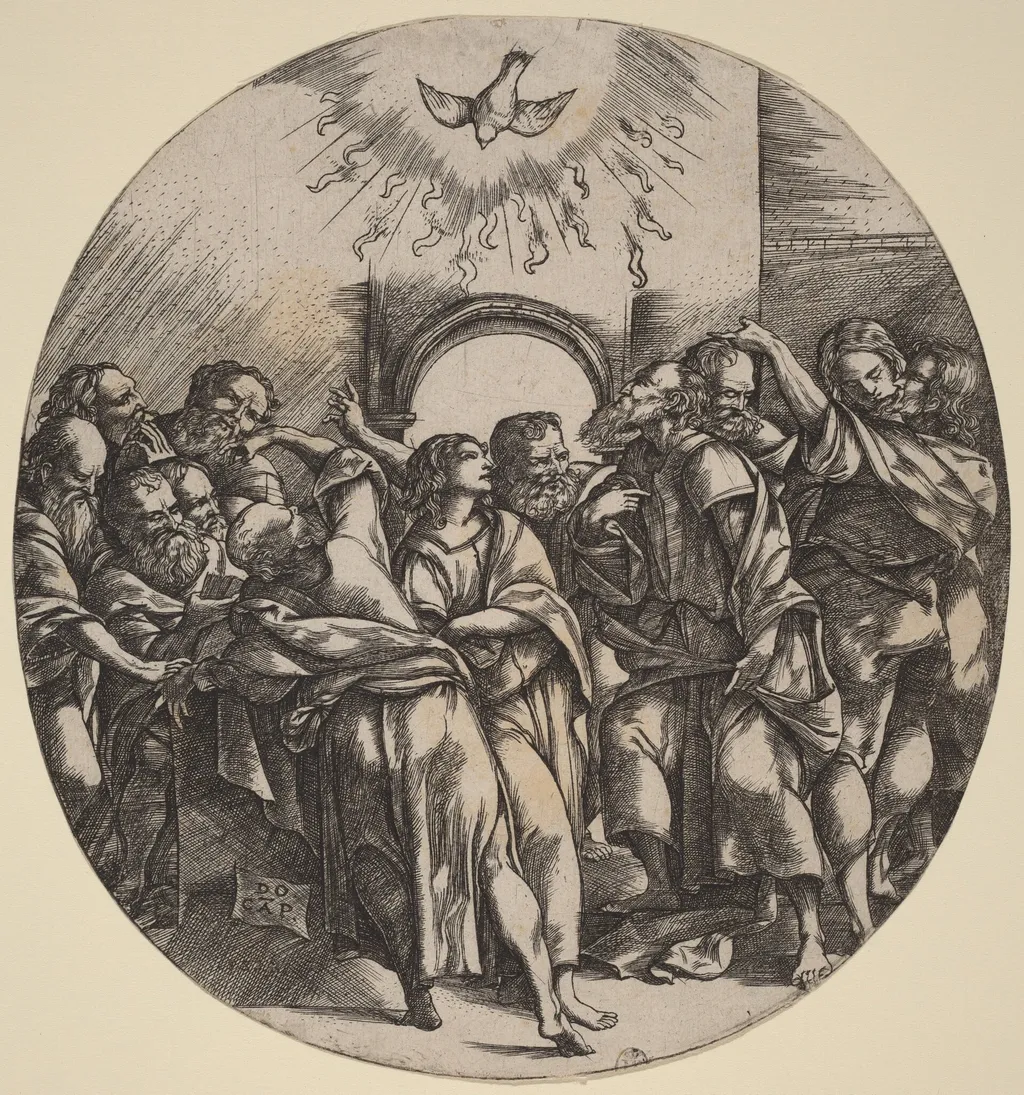
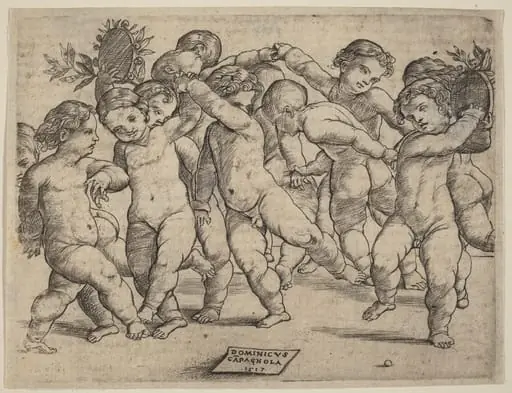
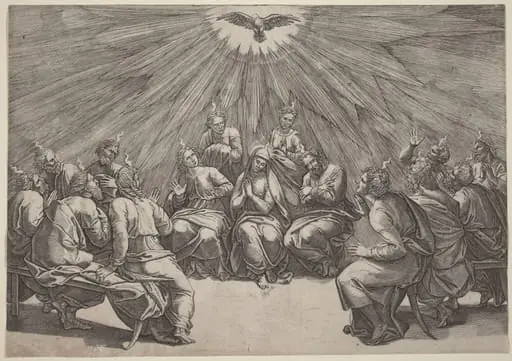
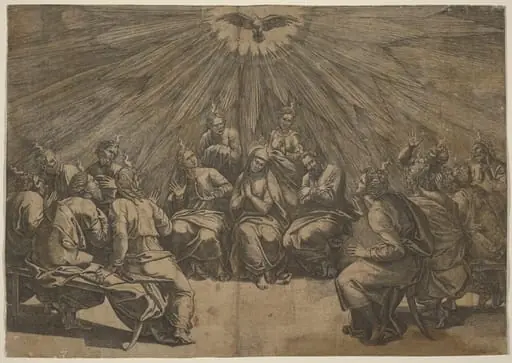
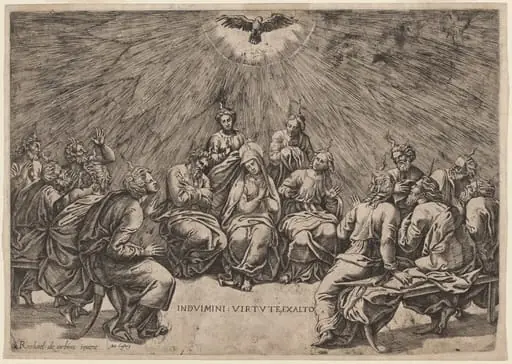
The Descent of the Holy Spirit is an ink print by the Renaissance artist Domenico Campagnola. It dates from 1518 and is held in the collection of the National Gallery of Art.
About this work
Overview
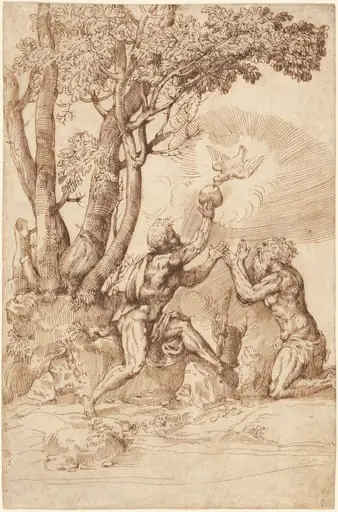
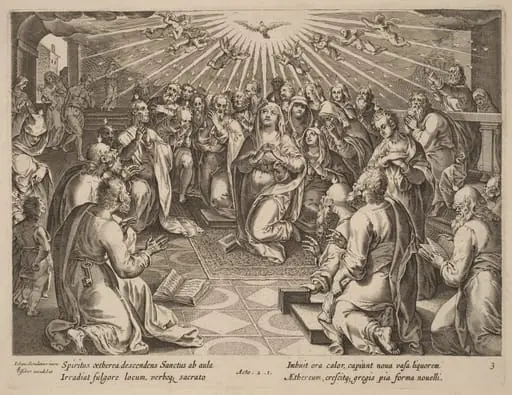
Domenico Campagnola’s 1518 engraving, titled *The Descent of the Holy Spirit*, presents a compact assembly of figures whose gazes lift toward a luminous presence above. The central motif is a winged light, reminiscent of a dove, hovering over the crowd, suggesting the biblical moment when the Holy Spirit descends upon the faithful.
Subject & Meaning
The work visualizes the Pentecostal episode described in the Acts of the Apostles, where the Holy Spirit appears as a radiant, winged entity. The gathered figures, robed in flowing garments and captured in gestures of prayer or awe, embody the collective reception of divine inspiration, emphasizing communal devotion and the transformative power of the spirit.
Technique & Style
Fine incisions create subtle gradations of tone, while the contrast between the darkened figures and the luminous dove‑like light enhances the spiritual focus.
Campagnola employs delicate line work and cross‑hatching to model forms and suggest atmospheric depth. Fine incisions create subtle gradations of tone, while the contrast between the darkened figures and the luminous dove‑like light enhances the spiritual focus. The engraving reflects the Northern Renaissance’s attention to detail and the emerging interest in expressive chiaroscuro within printmaking.
History & Provenance
Created in the early sixteenth century, the print belongs to Campagnola’s mature period, when he was active in Padua and Venice. Surviving copies are held in several European collections, indicating the work’s circulation among collectors of religious prints during the Reformation era, though specific ownership records remain limited.
Context
The engraving emerges at a time when printed images of biblical narratives were increasingly used for personal devotion and didactic purposes. Campagnola’s choice of a compact composition aligns with contemporary devotional prints that aimed to bring scriptural moments into intimate, domestic settings, complementing the rise of private religious practice.
Artist & collection