Artwork
The Descent of the Holy Spirit
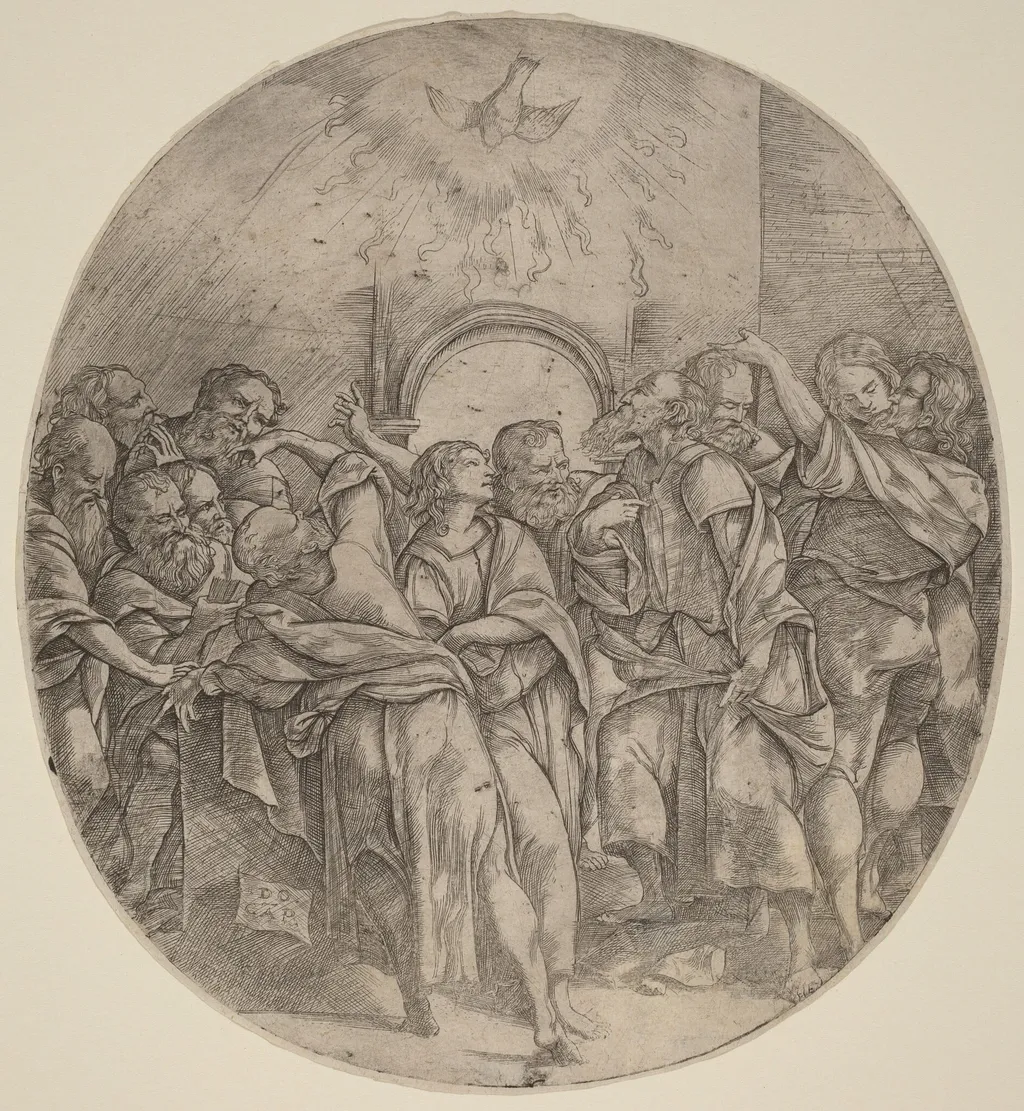
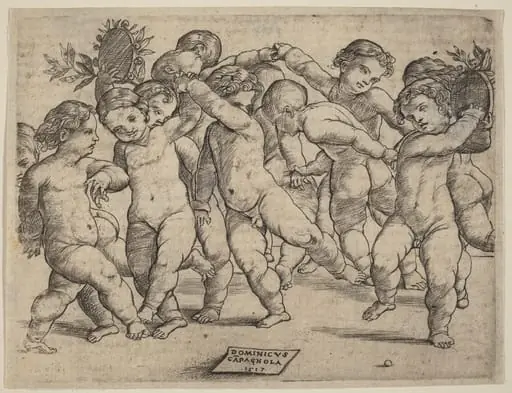
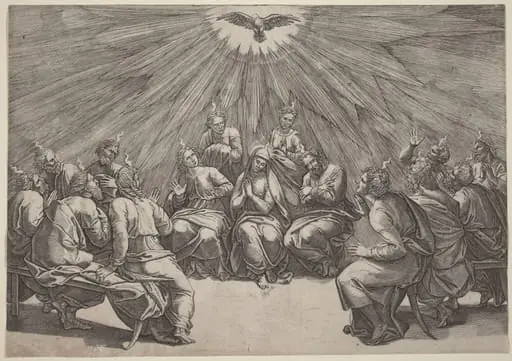
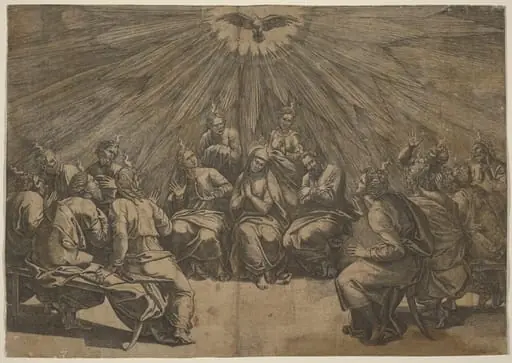
The Descent of the Holy Spirit is an ink print by the Renaissance artist Domenico Campagnola. It dates from 1518 and is held in the collection of the National Gallery of Art.
About this work
Overview
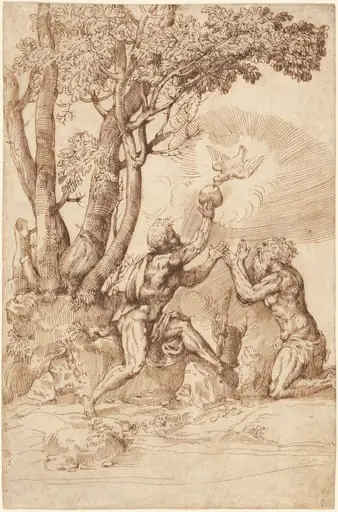
Domenico Campagnola’s 1518 engraving, titled *The Descent of the Holy Spirit*, presents a compact assembly of figures gathered beneath a luminous source. Central to the composition is a woman in a long robe, her hands clasped in prayer, while a dove—symbol of the Holy Spirit—hovers above, illuminated by a shaft of light that penetrates the crowd.
Subject & Meaning
The work visualizes the biblical moment when the Holy Spirit descends upon the apostles, a scene traditionally associated with Pentecost. The upward‑gazing participants, many with raised or open hands, convey a collective reception of divine inspiration, while the central female figure underscores the inclusive nature of the spiritual encounter.
Technique & Style
Campagnola employs the fine‑line engraving method, rendering intricate shadows and textures across garments and faces. Delicate cross‑hatching creates depth and volume, allowing each figure to retain individual presence within the densely packed group. The contrast between the darkened crowd and the bright, almost ethereal light above accentuates the supernatural element.
History & Provenance
Created in the early sixteenth century, the print reflects the Venetian printmaking tradition in which Campagnola was active. Though specific ownership records are scarce, the engraving circulated among collectors of religious prints, contributing to the spread of devotional imagery during the Renaissance.
Context
The engraving aligns with contemporary religious reforms that emphasized personal piety and the experience of the Holy Spirit. Its compact composition and emphasis on individual gestures echo the period’s shift toward more intimate, affective representations of sacred events.
Artist & collection