Artwork
Christ Driving the Money Changers from the Temple
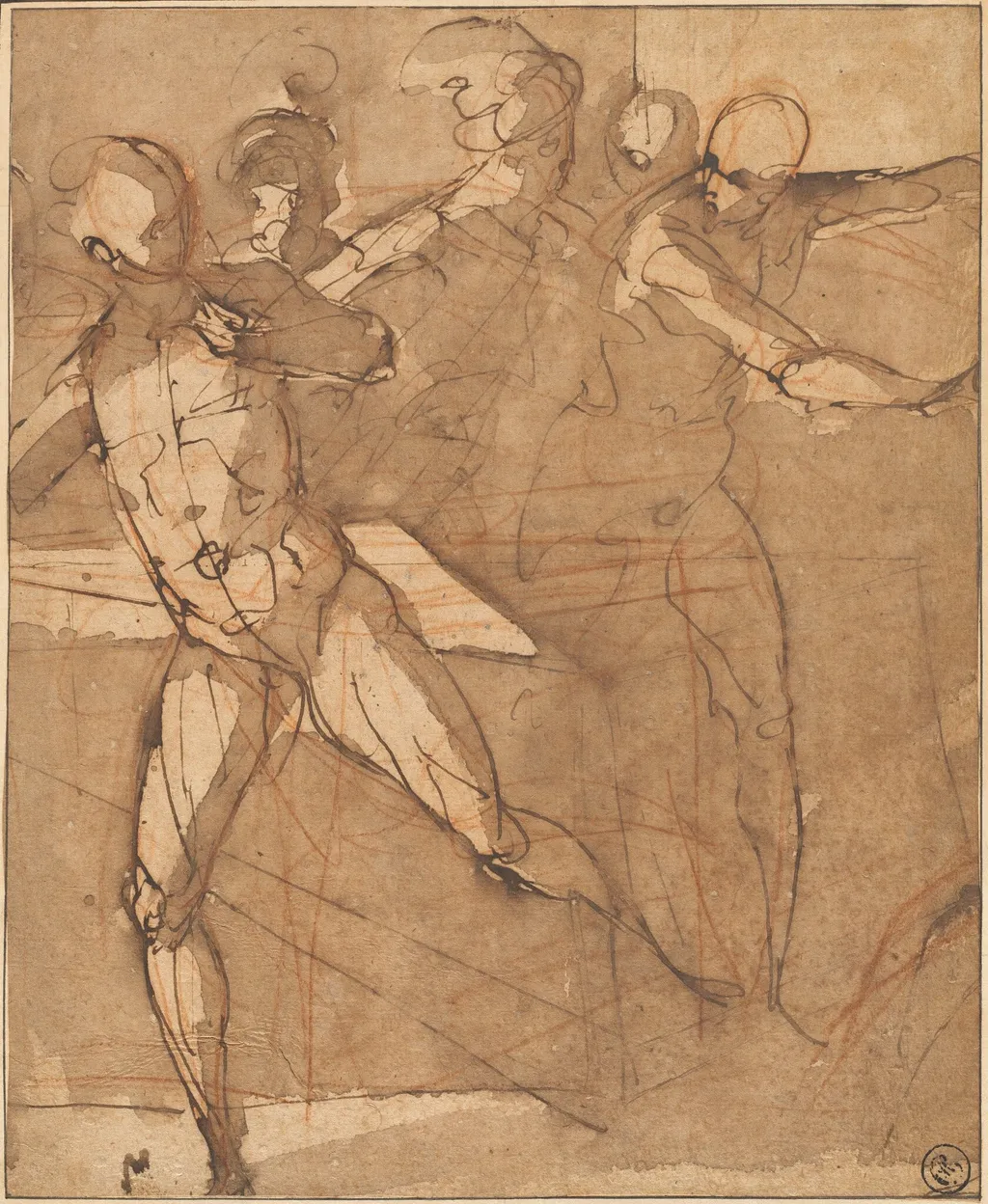
Christ Driving the Money Changers from the Temple is an ink drawing by the Renaissance artist Ludovico called Cigoli Cardi. It is held in the collection of the National Gallery of Art.
About this work
Overview
This drawing by Ludovico Cardi, known as Cigoli, depicts the biblical episode of Christ expelling merchants and money changers from the Temple.
This drawing by Ludovico Cardi, known as Cigoli, depicts the biblical episode of Christ expelling merchants and money changers from the Temple. Executed in 1586, it is rendered in pen and brown ink with brown wash over red chalk on laid paper, reflecting the preparatory methods favored by Renaissance draftsmen. The work belongs to a tradition of religious subjects rendered in graphic media for study or presentation.
Subject & Meaning
The scene illustrates Christ’s purification of the Temple, as recounted in the Gospels, where he overturns the tables of those exchanging currency and selling sacrificial animals. Cigoli emphasizes Christ’s authority through dynamic gesture and the chaotic movement of figures, underscoring the moral imperative of sacred space. The composition conveys divine judgment without overt symbolism, focusing instead on human action and spatial tension.
Technique & Style
Cigoli employed red chalk for initial outlines, refined with pen and brown ink to define forms and contours. Brown wash was layered to model volume and suggest shadow, enhancing the three-dimensionality of figures and architecture. The use of laid paper, with its visible chain lines, was standard for Italian drawings of the period, offering a textured ground that complemented the ink’s fluidity and the chalk’s warmth.
History & Provenance
Created during Cigoli’s early career in Florence, the drawing likely served as a study for a larger commission or as an independent work for a private patron. Its survival suggests it was valued for its compositional clarity and expressive force. While its early ownership is undocumented, it entered institutional collections in the modern era, preserving its place in Renaissance graphic art.
Context
In late 16th-century Italy, religious themes remained central to artistic production, even in drawings. Cigoli’s approach aligns with Counter-Reformation ideals, favoring clarity and emotional immediacy. His training under the Florentine school and exposure to Michelangelo’s figures informed his dynamic figures and architectural settings, placing this work within a broader movement toward naturalism in sacred subjects.
Legacy
Though less known than his painted altarpieces, this drawing exemplifies Cigoli’s skill as a draftsman and his engagement with narrative intensity through graphic means. It contributes to the understanding of how Renaissance artists used preparatory studies to explore theological themes with precision and emotional weight, influencing later generations in both technique and subject treatment.
Artist & collection


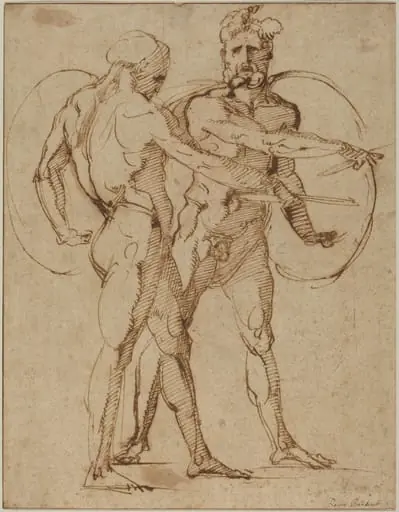 Two Male Nudes
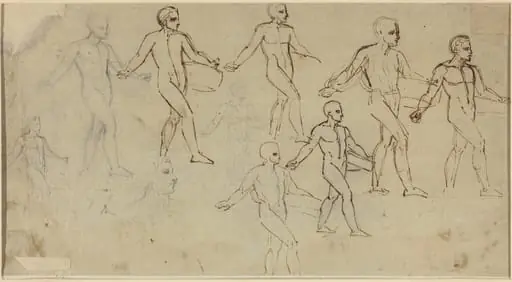 Studies of a Sower (Illustration for Thomson's _Seasons_)
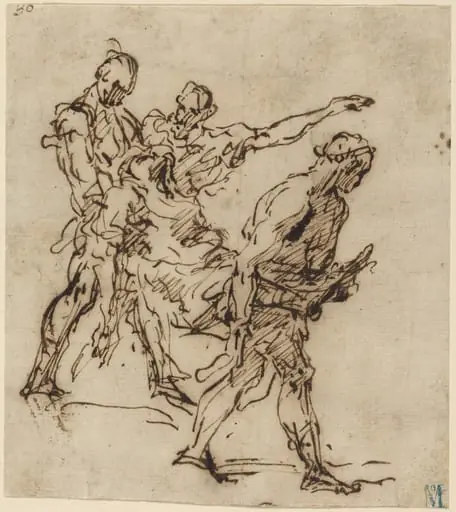 Figures Carrying a Body
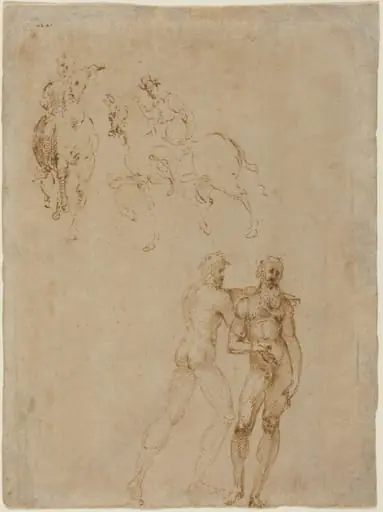 Two Horsemen and Two Male Nudes
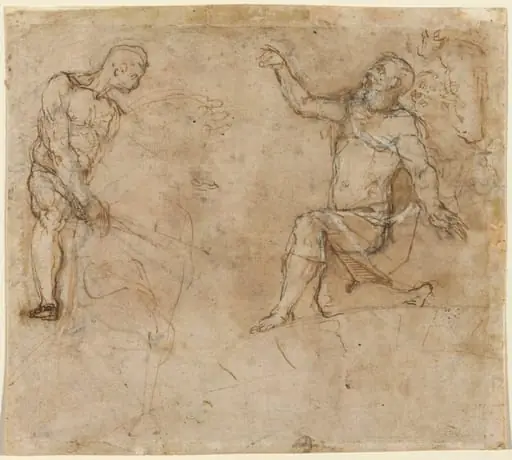 Figure Studies
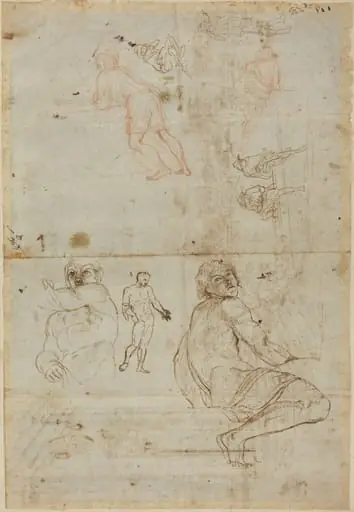 Figures from the Farnese Palace and from Life
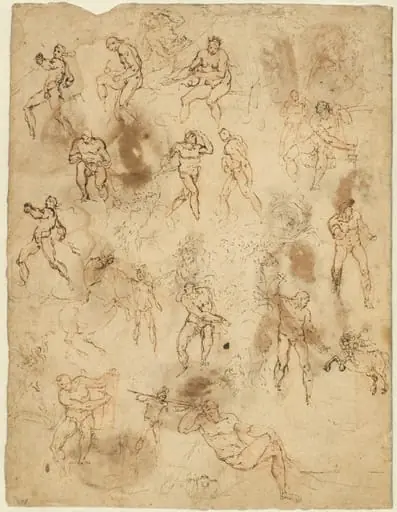 Studies of Figures (verso)
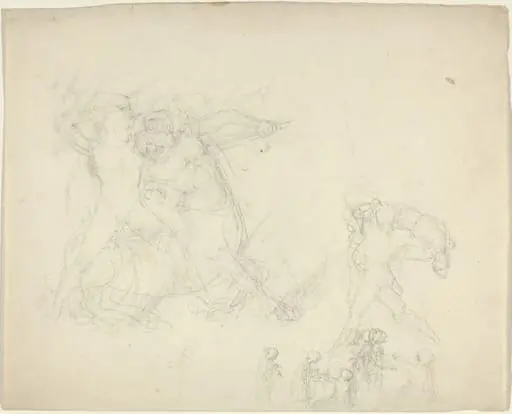 Sheet of Studies, including a Man Battling a Centaur
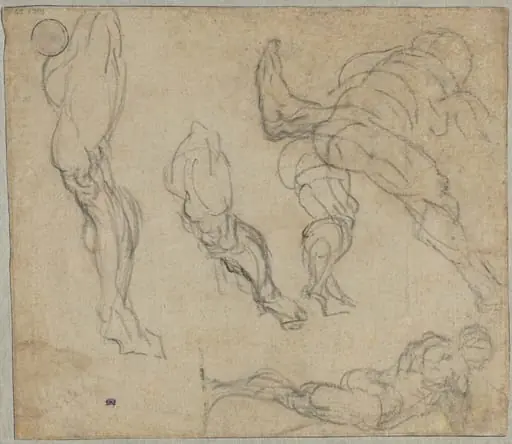 Figures and Legs (verso)
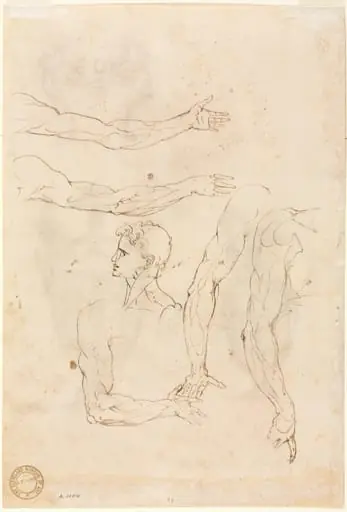 Sketches of Five Arms and a Head (verso)
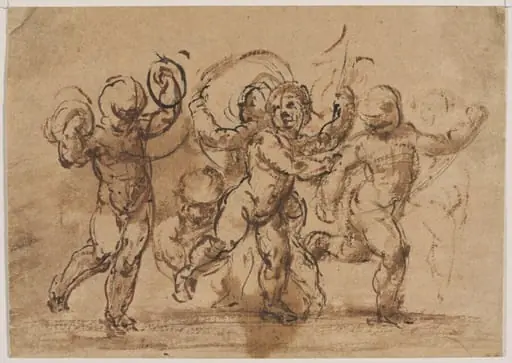 Boys running
![Saint Matthew and Saint Jerome [verso], by Correggio](https://artifactworldgallery.com/img/correggio--saint-matthew-and-saint-jerome-verso--233cd3c0f2701d8c-w320.webp) Saint Matthew and Saint Jerome [verso]
Saint Matthew and Saint Jerome [verso]