Artwork
Figures Carrying a Body
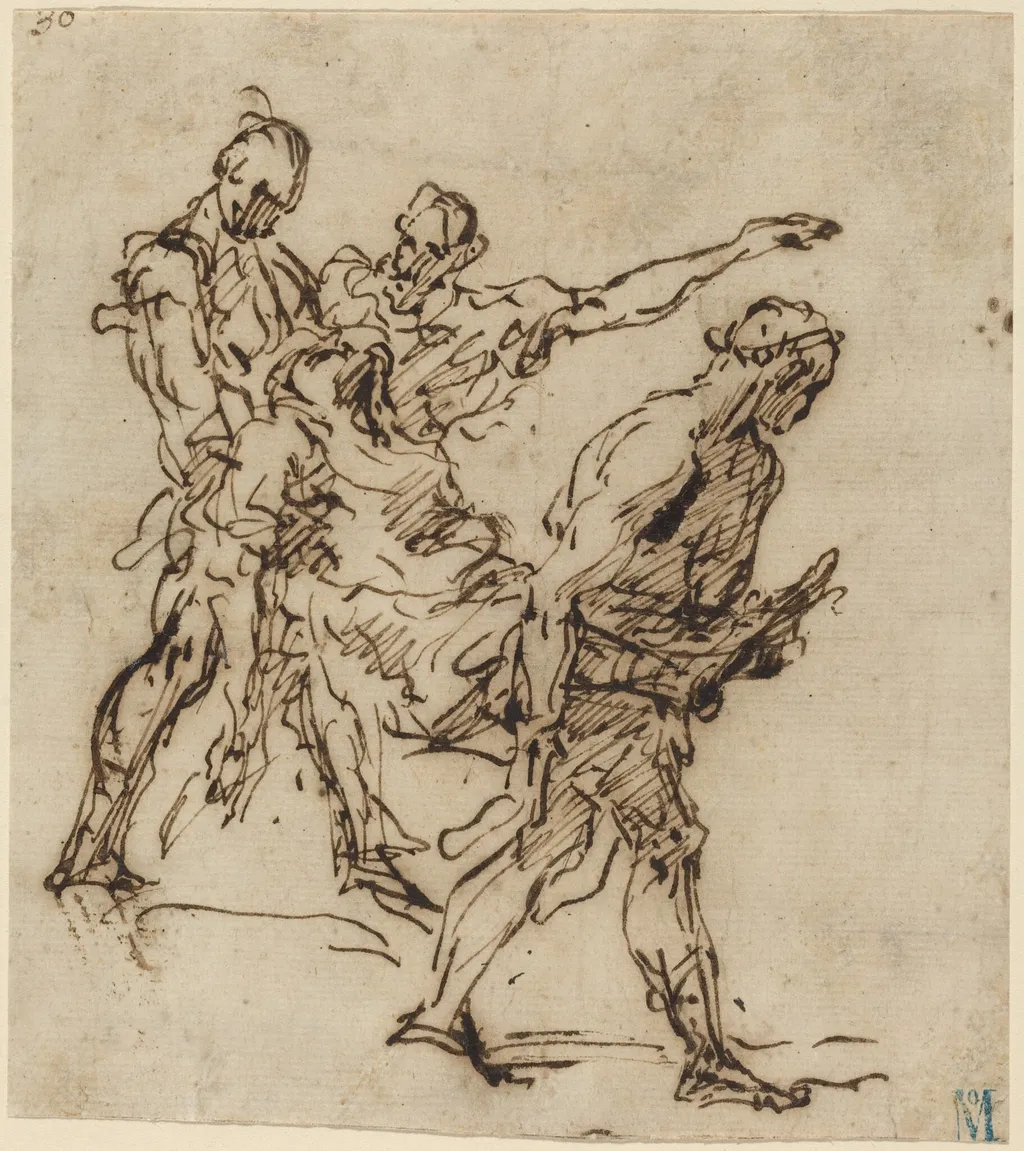
Figures Carrying a Body is an ink drawing by the Baroque artist Italian 17th Century. It is held in the collection of the National Gallery of Art. This ink drawing depicts four robed figures transporting a wrapped body on a stretcher.
About this work
Overview
The absence of detail emphasizes the solemnity of the act, focusing attention on movement and weight rather than individual identity.
This ink drawing depicts four robed figures transporting a wrapped body on a stretcher. Executed in brown ink on laid paper, the work is a study in economy of line and expressive mark-making. The figures move with a sense of purpose, their forms rendered through rapid, deliberate strokes. The absence of detail emphasizes the solemnity of the act, focusing attention on movement and weight rather than individual identity.
Subject & Meaning
The scene portrays a funeral procession, likely referencing a ritualized act of burial. The wrapped body and uniform attire of the bearers suggest a formal, possibly religious or communal custom. The lack of facial features or contextual setting universalizes the moment, transforming it from a specific event into a quiet meditation on mortality and collective duty.
Technique & Style
The artist employs cross-hatching with fine, intersecting lines to model volume and shadow, avoiding smooth tonal gradients. Short, angular strokes define fabric folds and the stretcher’s structure, creating texture through repetition rather than blending. The ink’s fluidity and the paper’s texture contribute to a sense of immediacy, as if the drawing was made in real time during the procession.
History & Provenance
The drawing’s origin is undocumented, but its materials and technique align with early modern European draftsmanship, possibly from the 16th or 17th century. It lacks signatures or inscriptions, and its path through collections remains untraced. Its survival suggests it was preserved as a study or personal sketch rather than a finished work.
Context
During the period when such drawings were made, religious and secular rituals surrounding death were deeply embedded in daily life. Artists often recorded these moments not as grand narratives but as observational studies. This piece reflects a broader tradition of sketching transient human actions, capturing the weight of ordinary ceremonies with minimal means.
Legacy
Though unsigned and unattributed, the drawing exemplifies how expressive line work can convey emotional gravity without ornamentation. Its directness influenced later artists seeking to capture movement and ritual through rapid, unembellished draftsmanship. It remains a quiet testament to the power of simplicity in visual storytelling.
Artist & collection

Artist
This Italian artist worked in the 17th century, making engravings, ink drawings, and oil paintings.

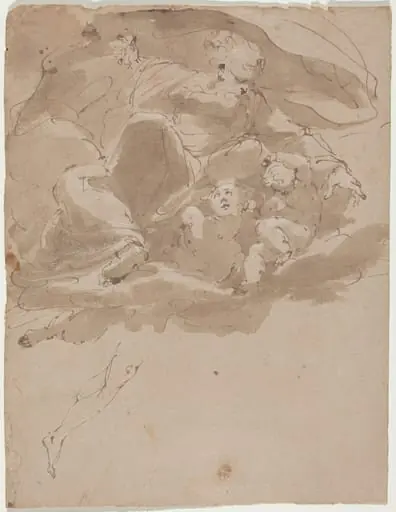
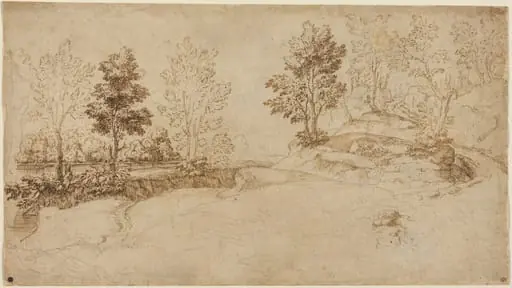
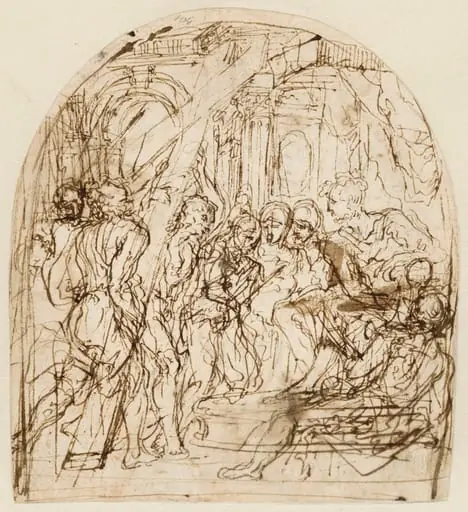
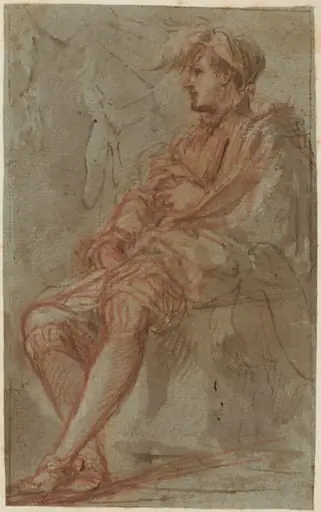
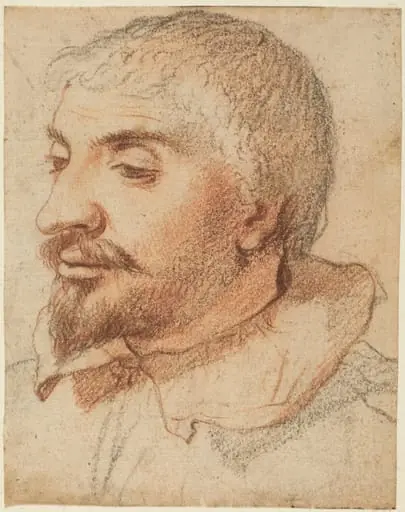
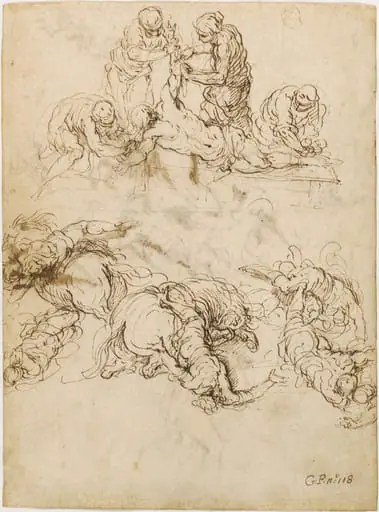 The Martyrdom of Saint Bartholomew; The Conversion of Saint Paul
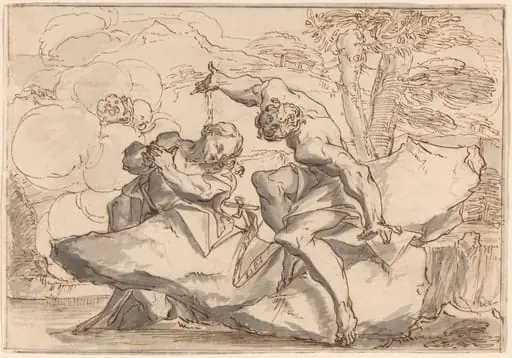 The Baptism of Christ
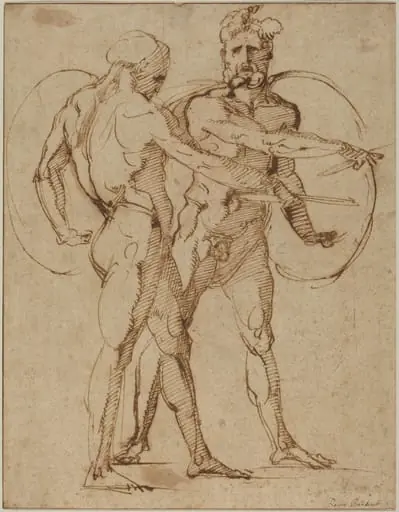 Two Male Nudes
![Two Studies of the Statue of Alexander and Bucephalus [verso], by Hubert Robert](https://artifactworldgallery.com/img/hubert-robert--two-studies-of-the-statue-of-alexander-and-bucephalus-verso--c8baec3f622cceea-w320.webp) Two Studies of the Statue of Alexander and Bucephalus [verso]
Two Studies of the Statue of Alexander and Bucephalus [verso]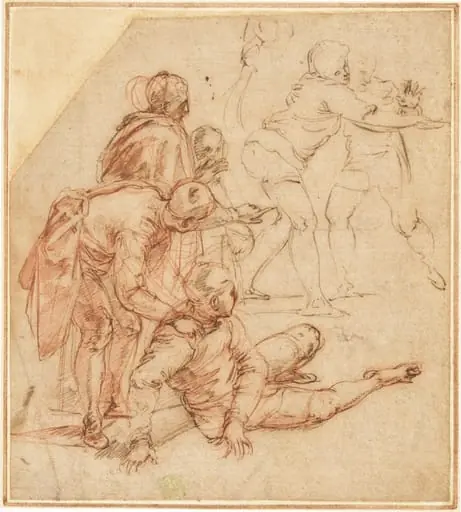 Spectators Amazed
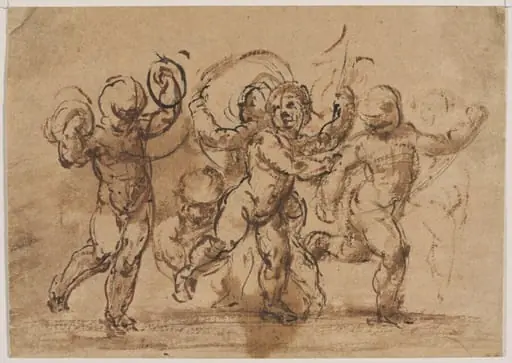 Boys running
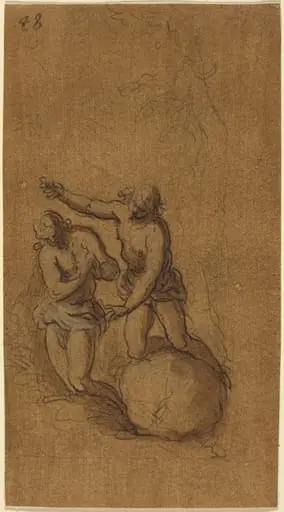 The Baptism of Christ
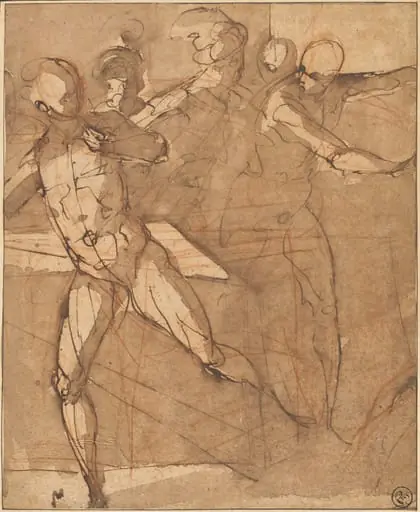 Christ Driving the Money Changers from the Temple
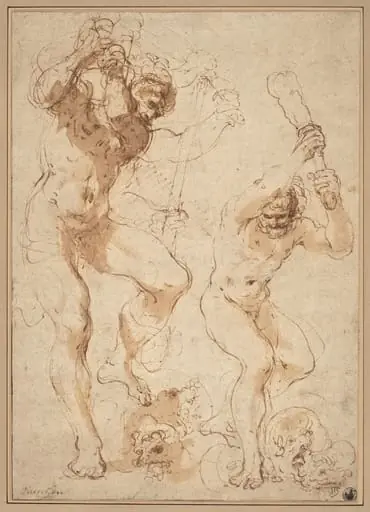 Hercules Slaying the Hydra
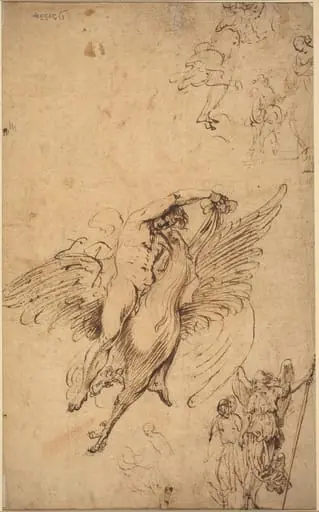 Ganymede
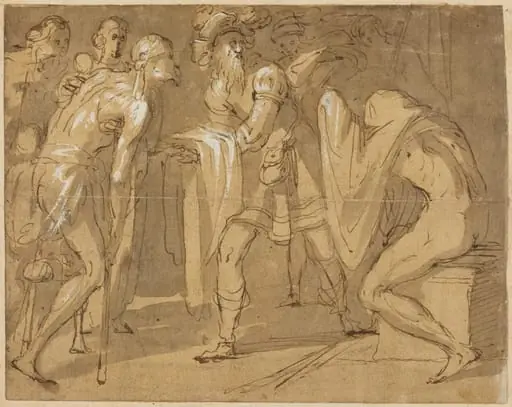 Saint Homobono
![Saint Matthew and Saint Jerome [verso], by Correggio](https://artifactworldgallery.com/img/correggio--saint-matthew-and-saint-jerome-verso--233cd3c0f2701d8c-w320.webp) Saint Matthew and Saint Jerome [verso]
Saint Matthew and Saint Jerome [verso]