Artwork
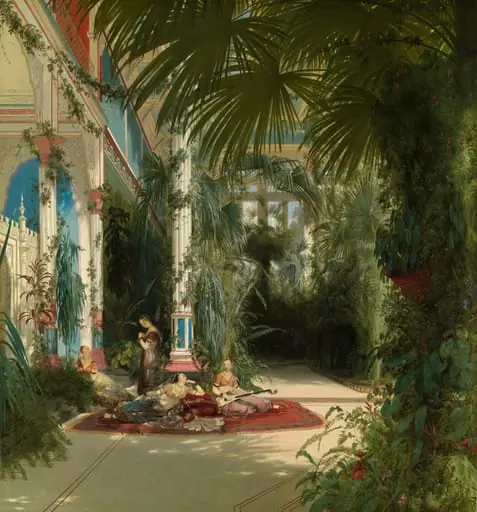
The Interior of the Palm House on the Pfaueninsel Near Potsdam
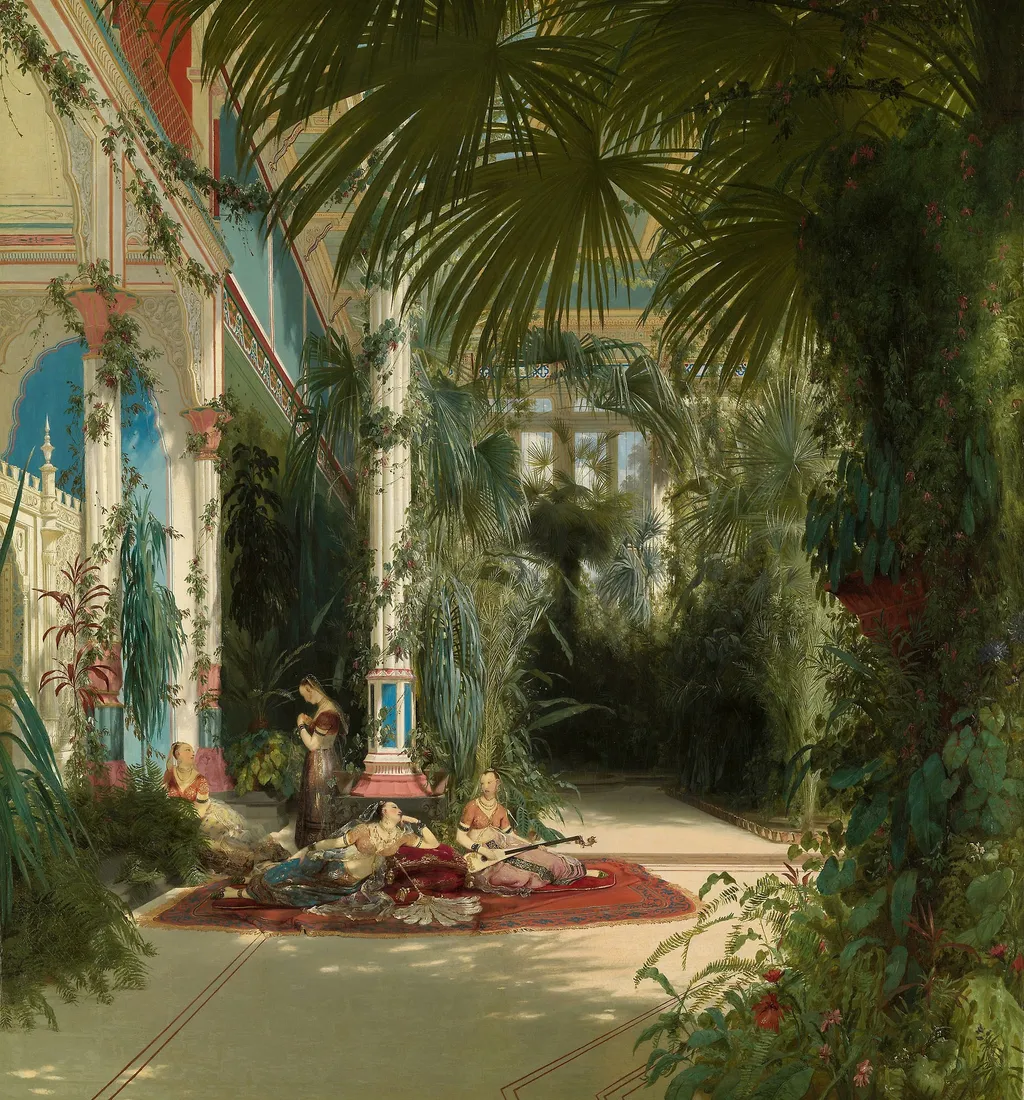
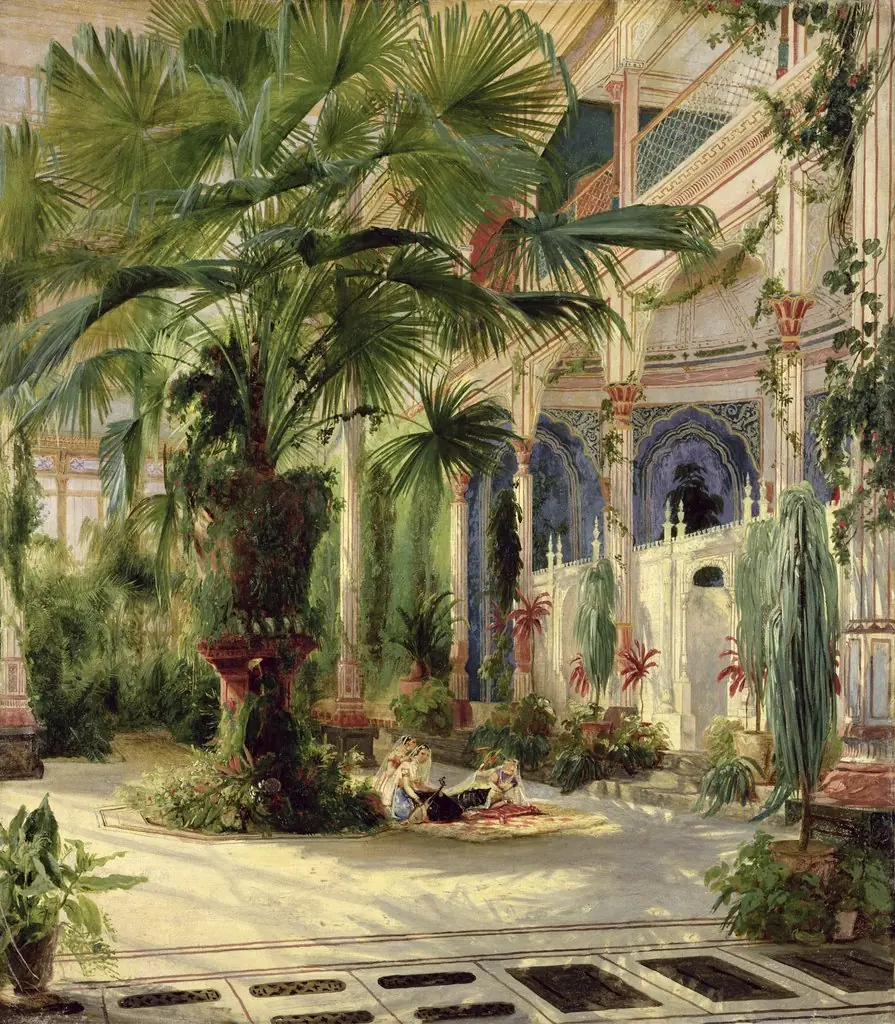
The Interior of the Palm House on the Pfaueninsel Near Potsdam is an oil painting by the German Romanticist artist Carl Blechen. It dates from 1834 and is held in the collection of the Art Institute of Chicago.
About this work
Overview
The work captures a moment of quiet repose within an artificial botanical environment, blending architectural structure with organic growth.
Painted in 1834 by Carl Blechen, this oil on canvas depicts the interior of a glasshouse on Pfaueninsel, a small island near Potsdam. Blechen, a professor at the Berlin Academy of Arts, was known for his atmospheric landscapes. The work captures a moment of quiet repose within an artificial botanical environment, blending architectural structure with organic growth. Its composition reflects a Romantic fascination with nature’s immersion in human-made spaces.
Subject & Meaning
A group of women, dressed in garments suggesting Eastern or South Asian influences, recline on a red rug amid towering palms and dense foliage. Their relaxed posture and intimate interaction suggest a private, leisurely escape. The exotic attire and setting evoke a romanticized notion of distant lands, common in 19th-century European imagination. The scene is less a documentary record than a poetic fantasy, where nature and cultural fantasy merge in a tranquil, enclosed world.
Technique & Style
Blechen employed layered glazes and careful modulation of light to render the dappled sunlight filtering through the glass roof. The contrast between the vibrant greens of the plants and the warm tones of the rug and clothing creates visual harmony. Brushwork varies from precise detail in the figures to looser, atmospheric rendering in the background, enhancing the sense of depth and immersive enclosure. The painting balances realism with poetic suggestion, characteristic of German Romanticism.
History & Provenance
Commissioned by King Friedrich Wilhelm IV of Prussia, the painting was created for the Pfaueninsel palace grounds, a site transformed into a romantic retreat. Blechen had access to the Palm House during its early years, allowing direct observation. The work remained in royal collections until the 20th century, later entering the collection of the Alte Nationalgalerie in Berlin, where it is now held. Its preservation reflects its significance in Prussian cultural patronage.
Context
In the 1830s, European aristocrats cultivated exotic plants and architectural follies as symbols of enlightenment and global curiosity. The Pfaueninsel Palm House, built in the 1810s, was part of this trend. Blechen’s painting responds to both scientific interest in botany and the Romantic ideal of nature as spiritual refuge. The inclusion of figures in foreign dress aligns with contemporary Orientalist aesthetics, reflecting broader cultural fantasies about the East.
Legacy
The painting stands as a key example of how German Romanticism merged landscape, architecture, and human presence to evoke emotional depth. Blechen’s treatment of light and interior space influenced later artists exploring the boundaries between nature and built environments. While its Orientalist elements are now critically examined, the work remains valued for its technical nuance and its quiet meditation on seclusion, beauty, and the artificial cultivation of nature.
Own this work as a print
Artist & collection
Artist
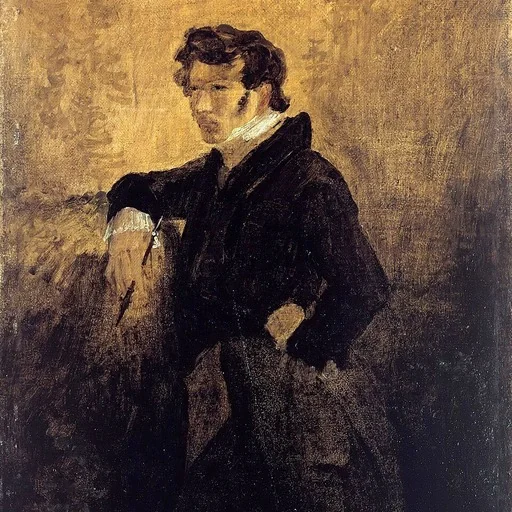
Carl Eduard Ferdinand Blechen (29 July 1798 – 23 July 1840) was a German landscape painter and a professor at the Academy of Arts, Berlin. His distinctive style was characteristic of the Romantic ideals of natural beauty.

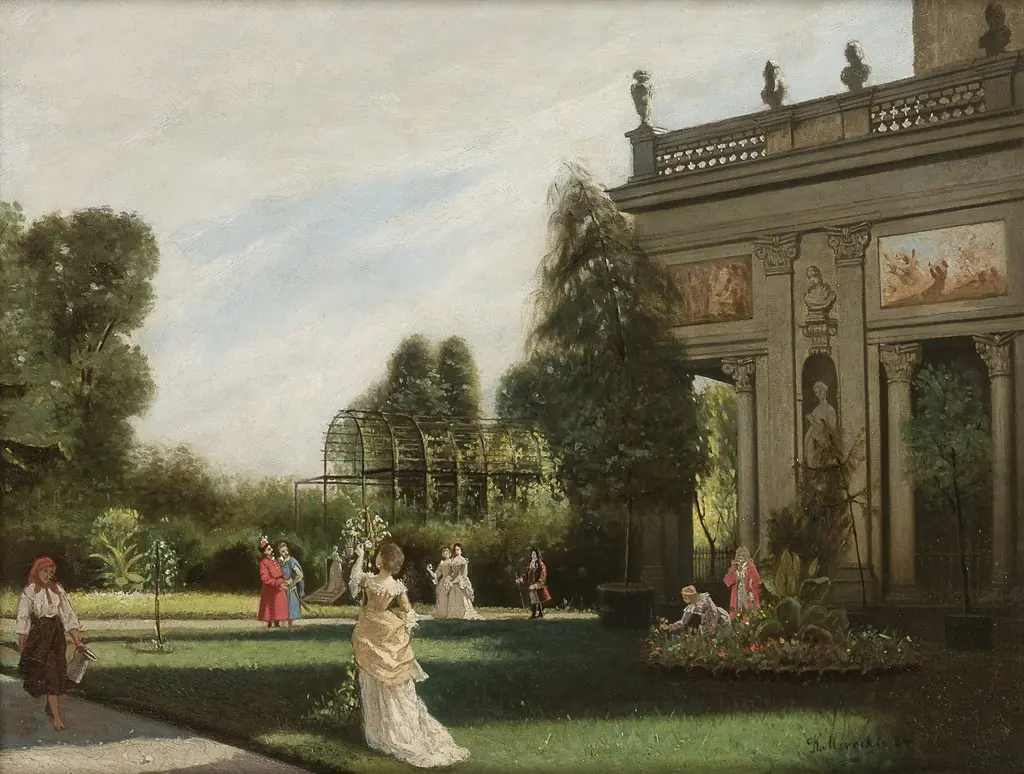 Wilanów
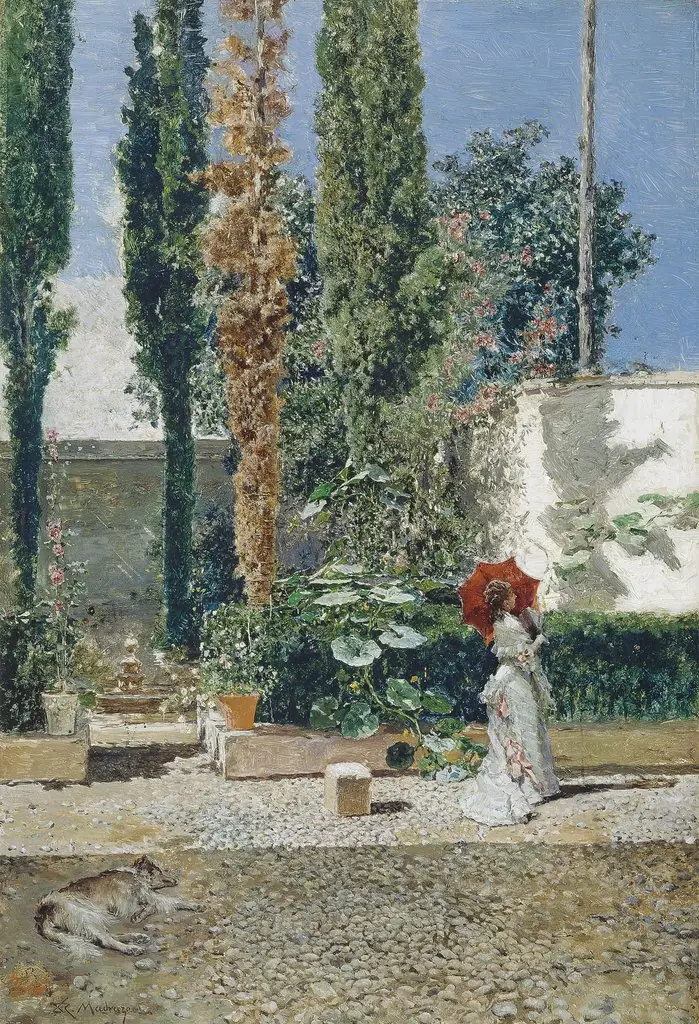 The Garden of the Fortuny Residence
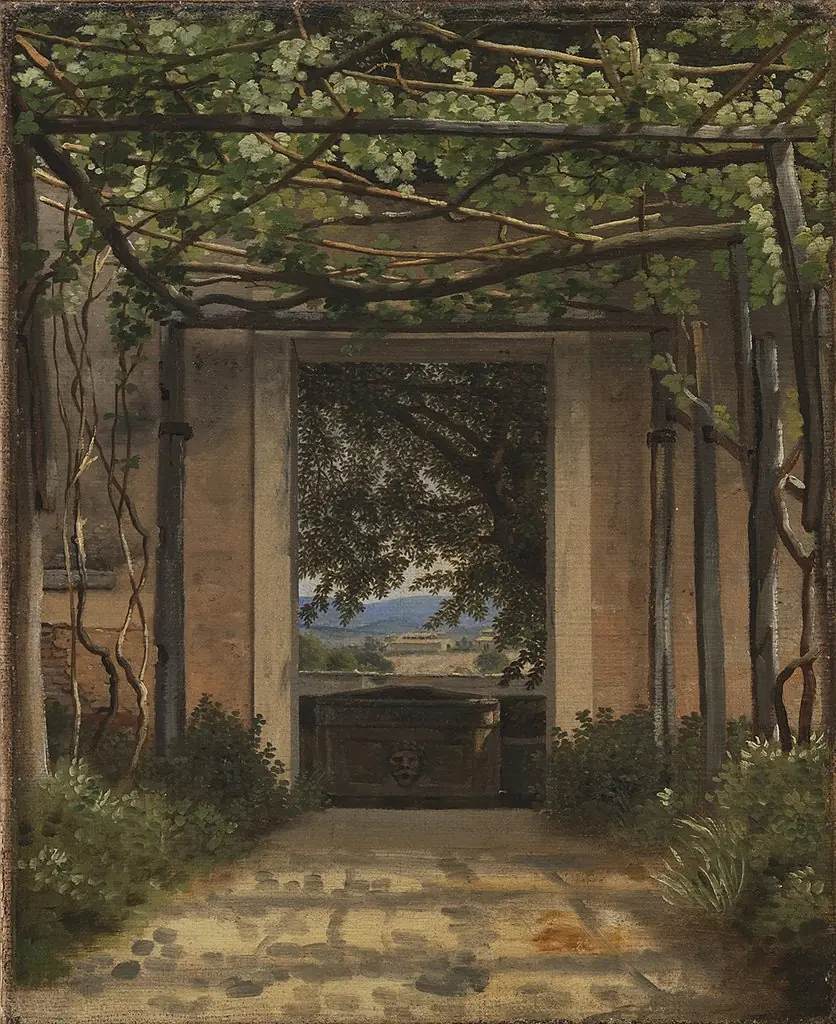 A Pergola, Italy
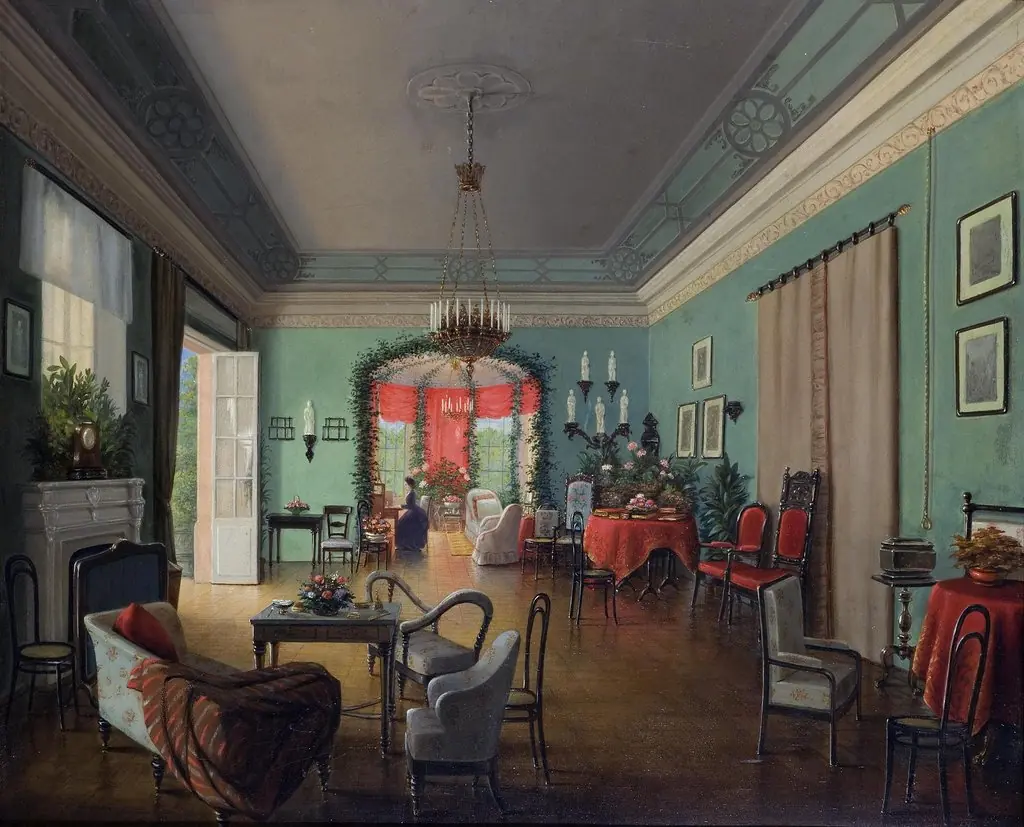 Drawing Room
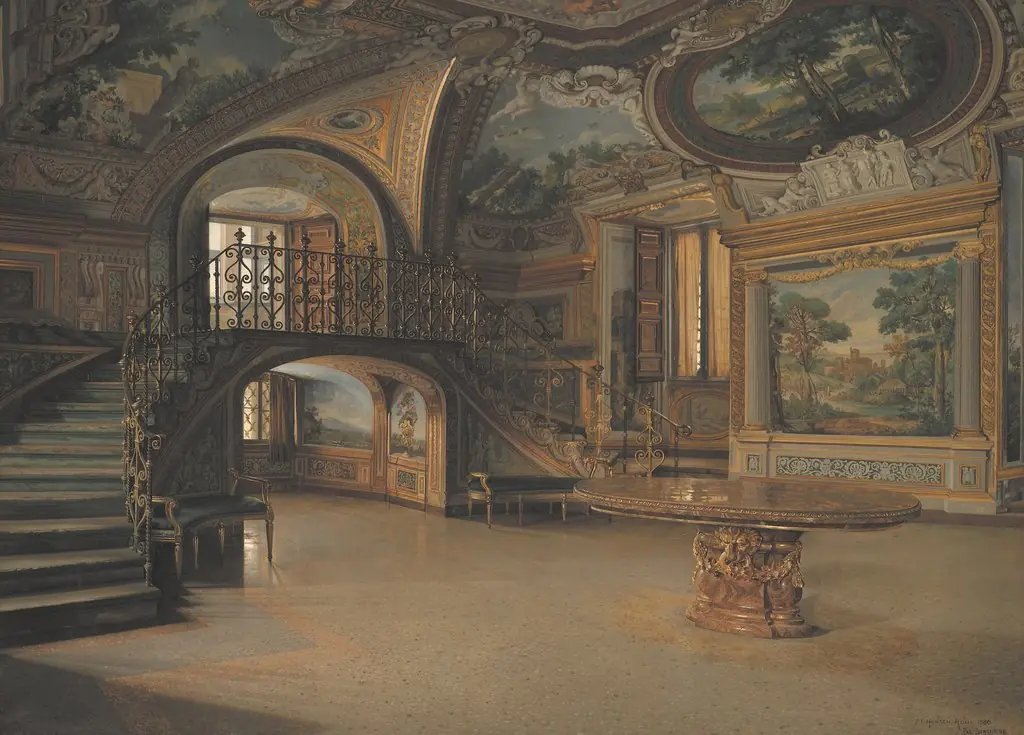 En sal i Palazzo Borghese
 En sal i Palazzo Borghese
 The Garden Steps Leading to the Artist's Studio on Blegdammen
 Interior of the Byzantine Court
 The Garden Steps Leading to the Painter Christen Købke's Studio at Blegdammen, Copenhagen
 Paisaje con figuras junto a un lago