Artwork
Mountainous landscape
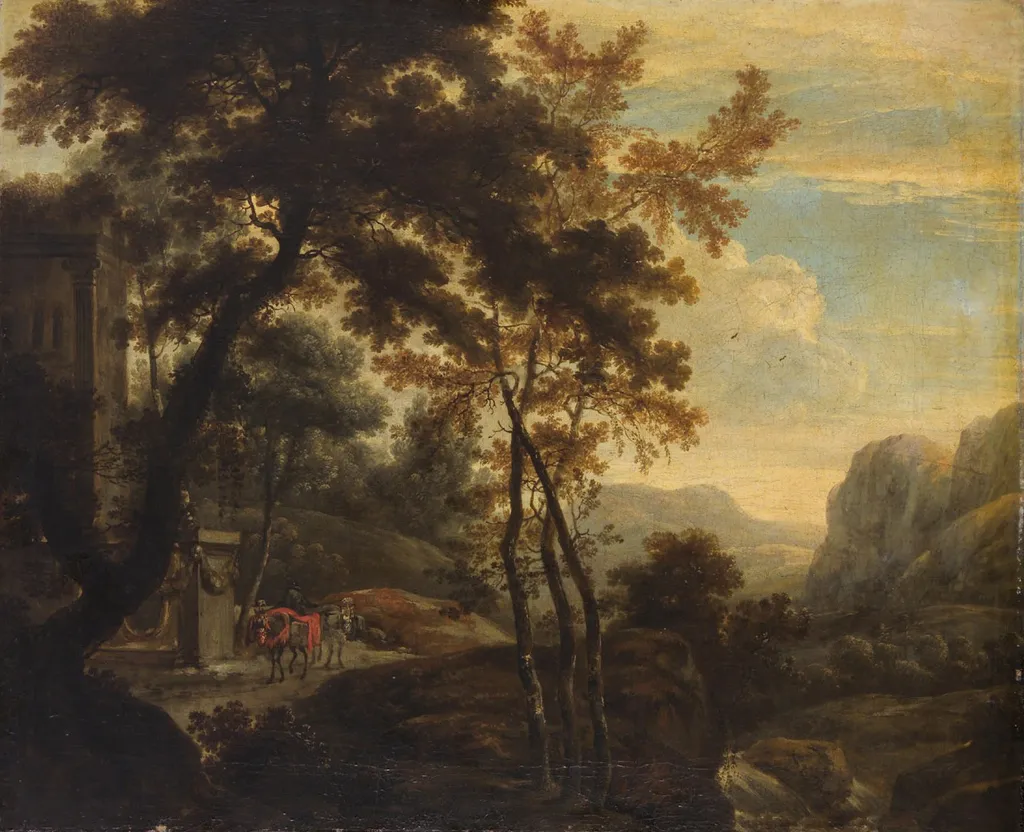
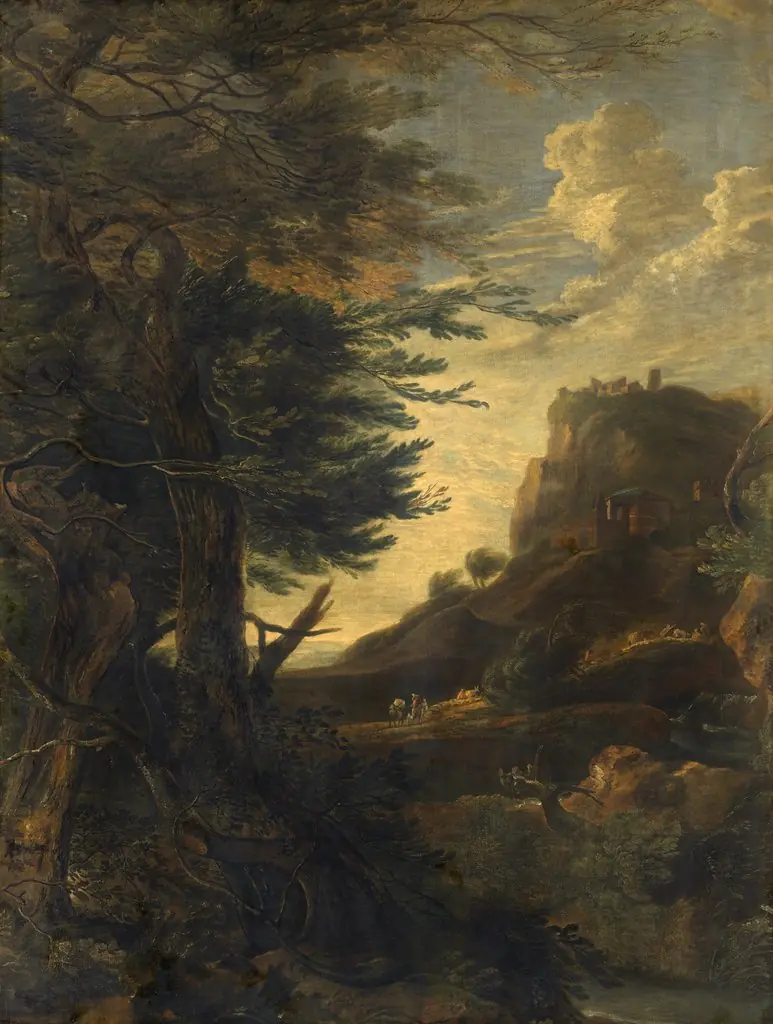
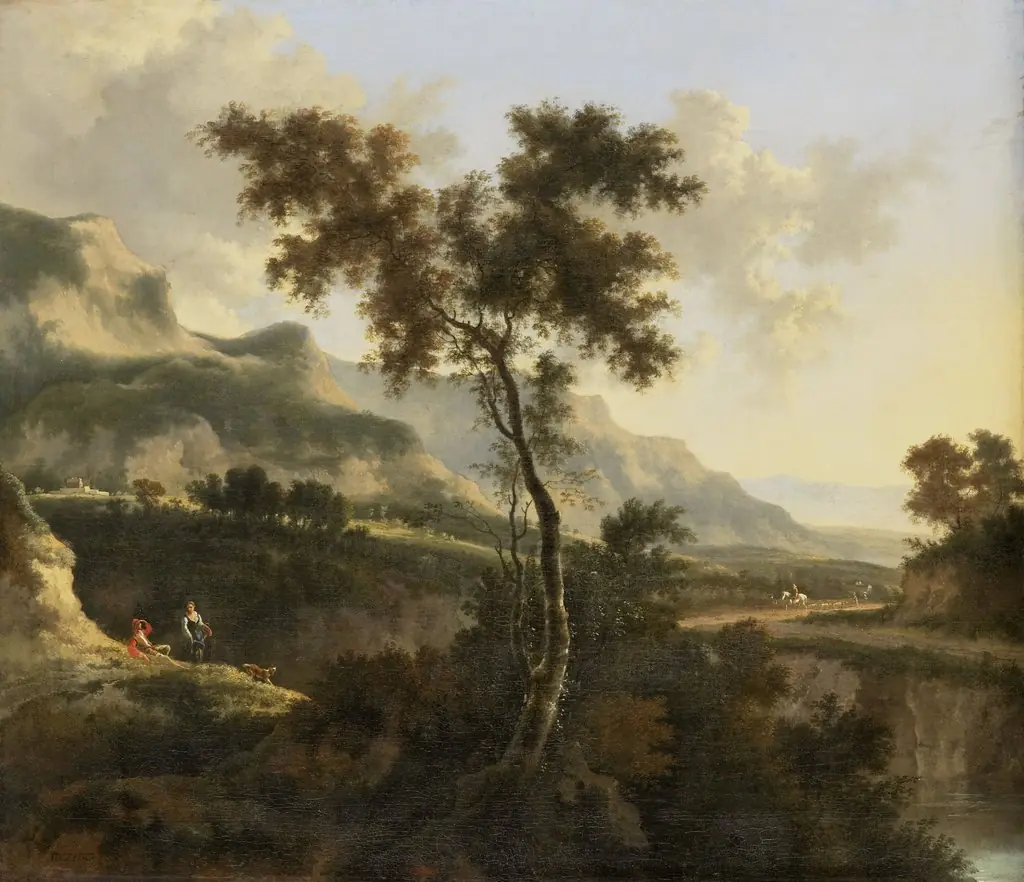
Mountainous landscape is a paint painting by the Dutch Golden Age artist Carl Ferdinand Fabritius. It dates from 1661 and is held in the collection of the Kunsthistorisches Museum.
About this work
Overview
Though born in Warsaw, he operated within the broader Dutch Golden Age tradition of landscape painting, adapting its observational rigor to alpine terrain.
Carl Ferdinand Fabritius completed this oil painting in 1661 during his time in Vienna, where he lived from 1659 until his death in 1673. Though born in Warsaw, he operated within the broader Dutch Golden Age tradition of landscape painting, adapting its observational rigor to alpine terrain. The work presents a tranquil, elevated countryside, rendered with attention to naturalistic detail and atmospheric depth.
Subject & Meaning
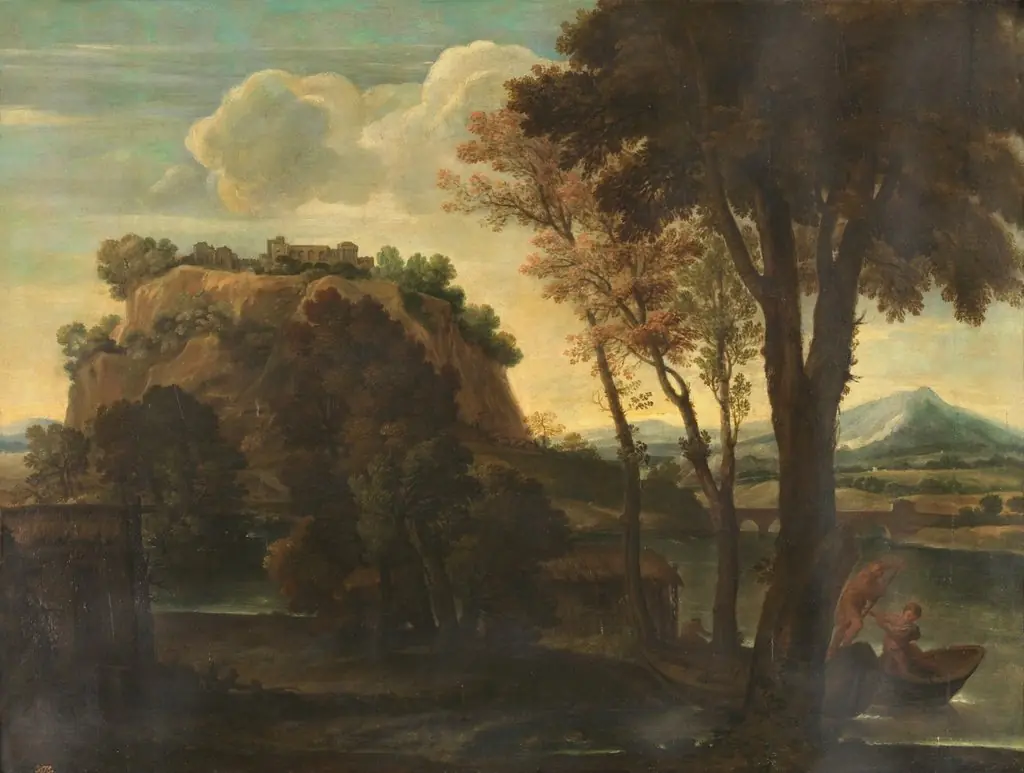
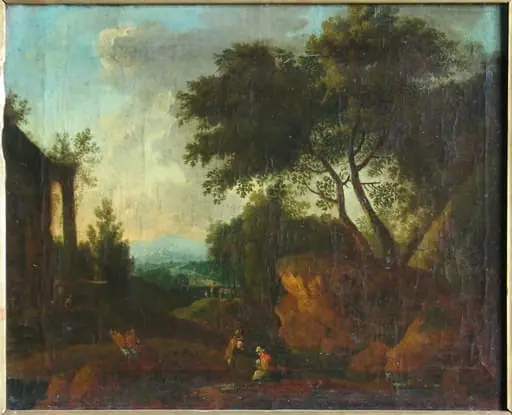
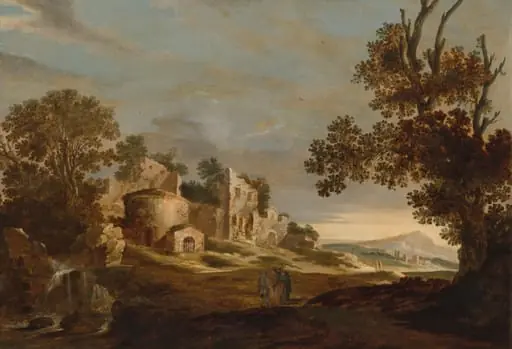
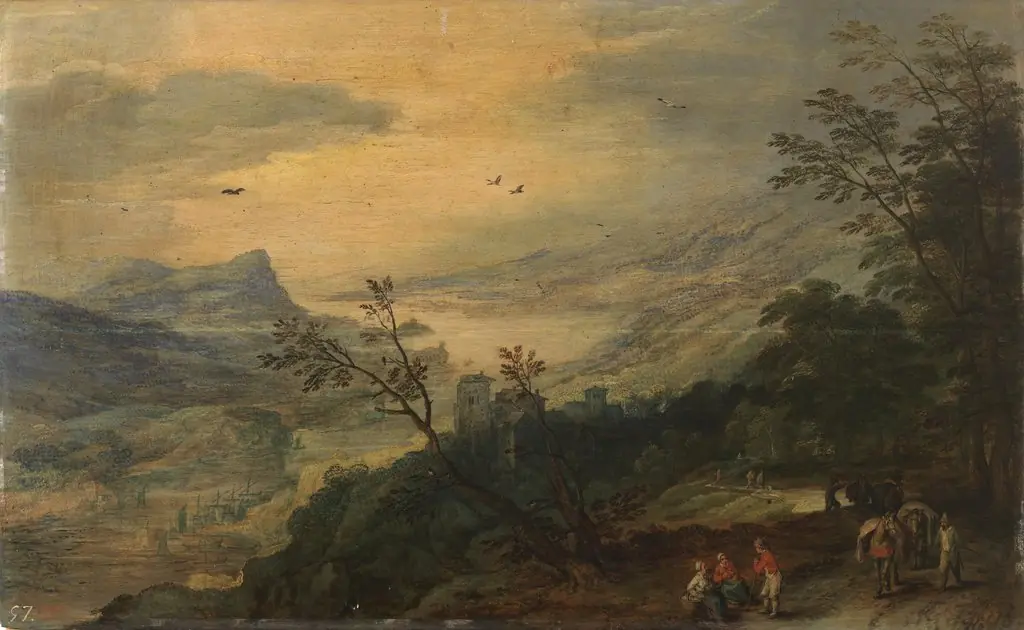
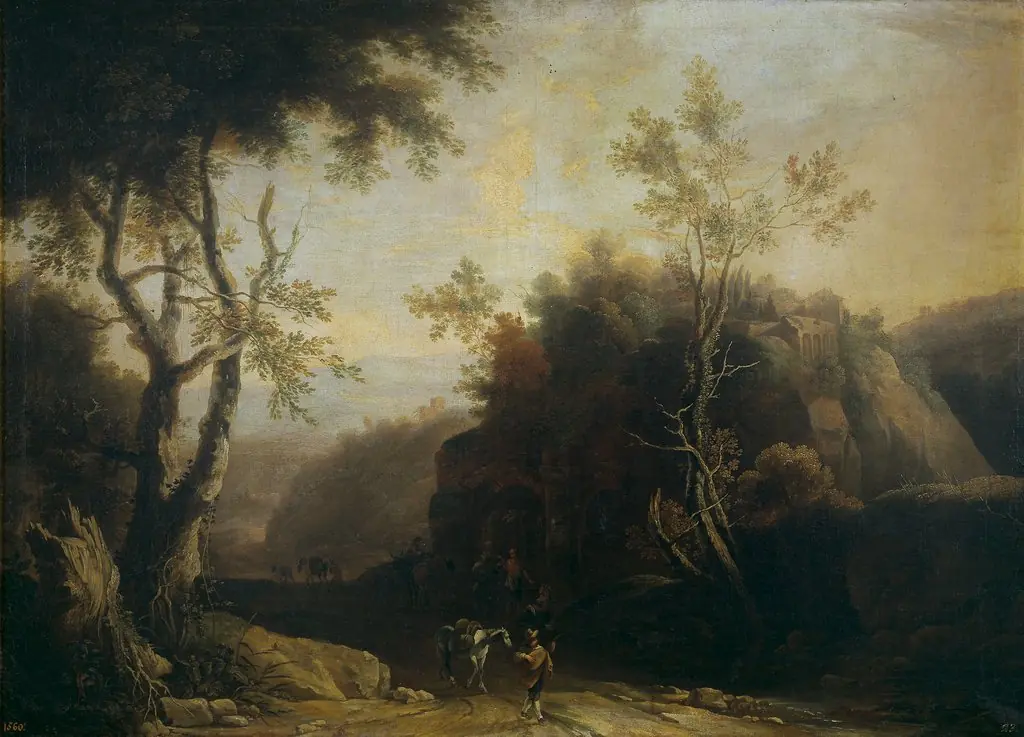
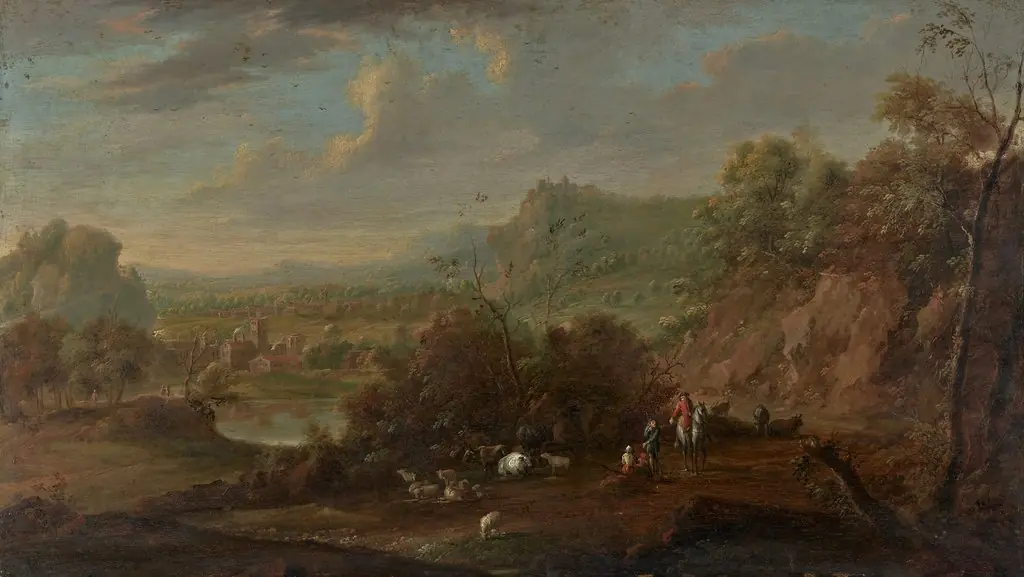
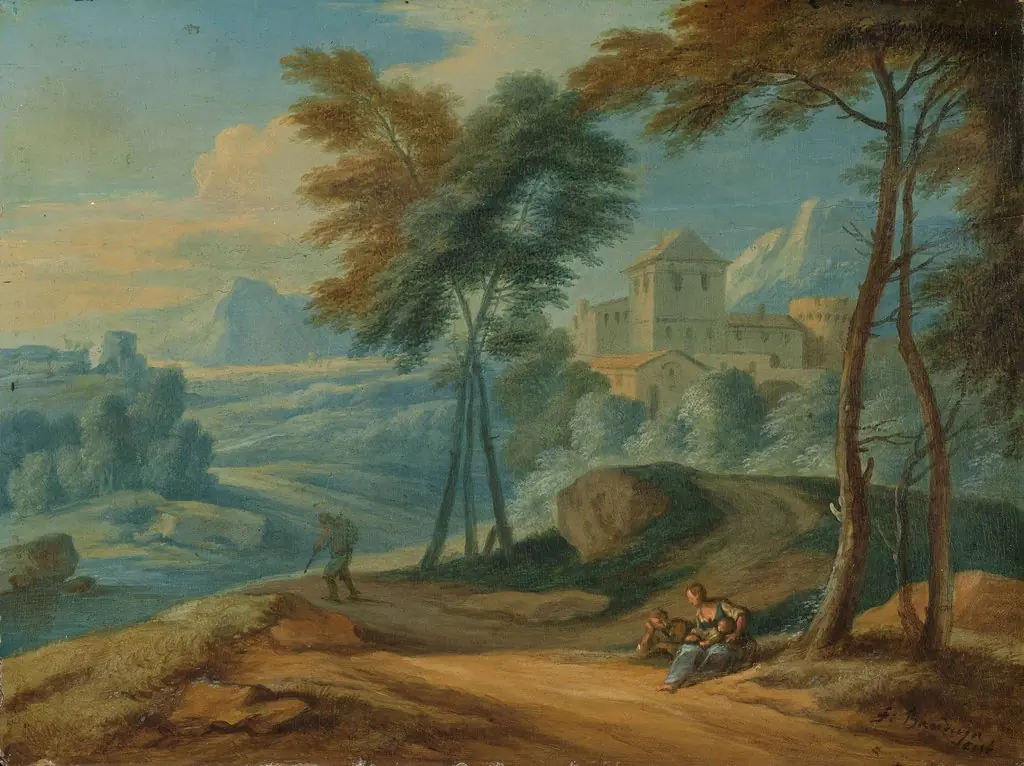
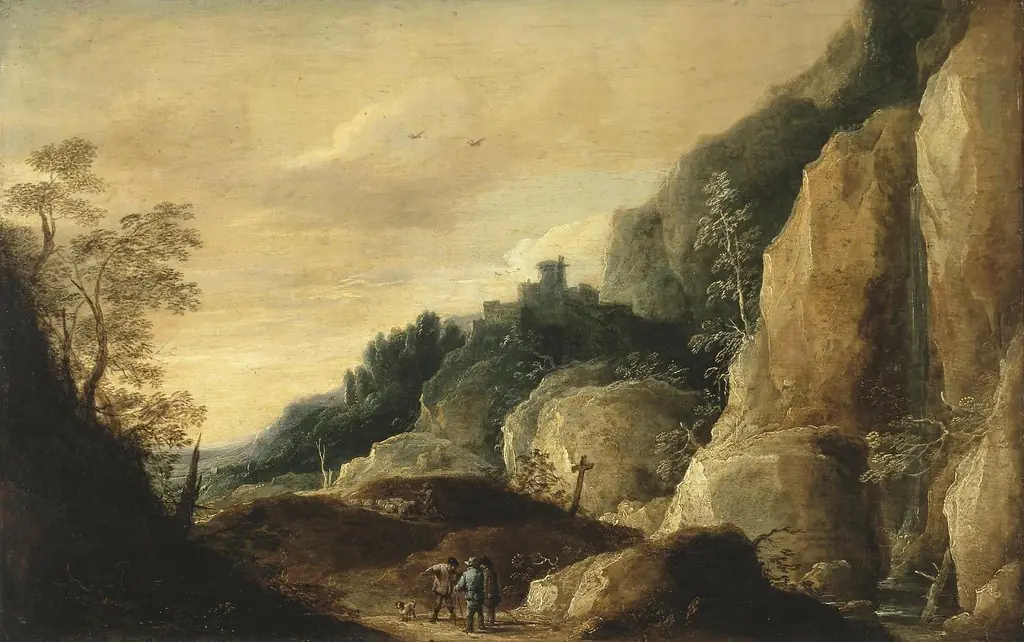
The scene features a winding path through dense trees, flanked by a lone rider guiding a second horse draped in red cloth. A columned structure appears in the distance, nestled against a rocky outcrop, suggesting human presence without narrative emphasis. The composition invites quiet contemplation, emphasizing solitude and the quiet integration of travel within an enduring natural setting.
Technique & Style
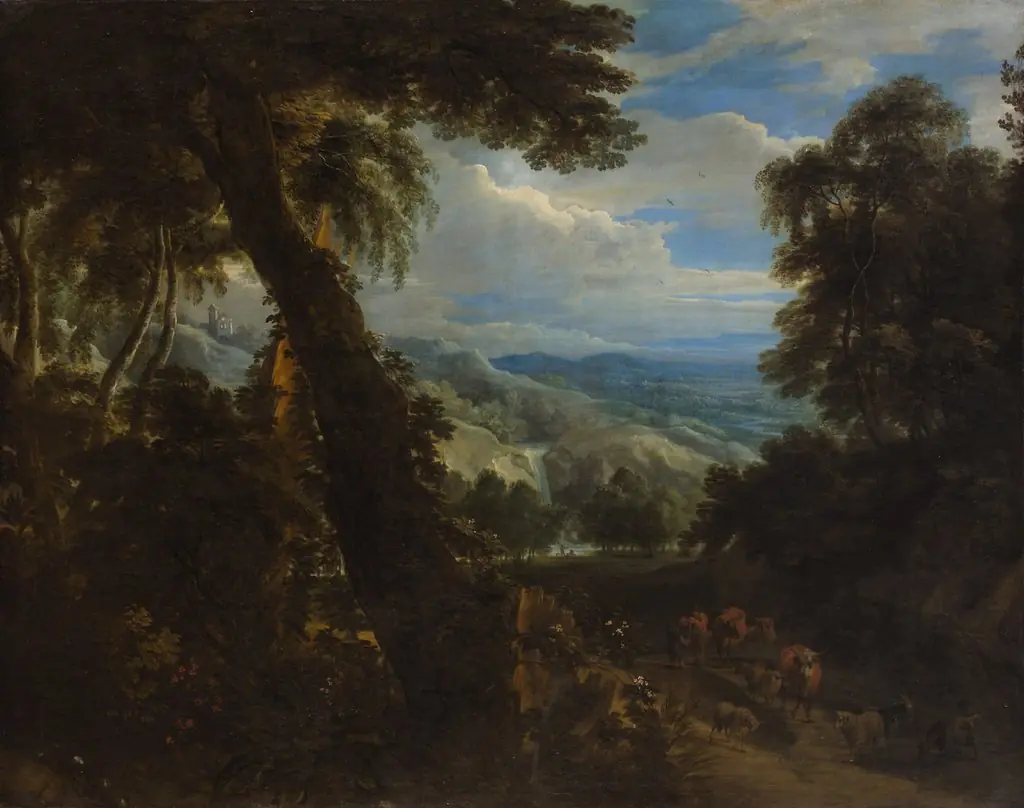
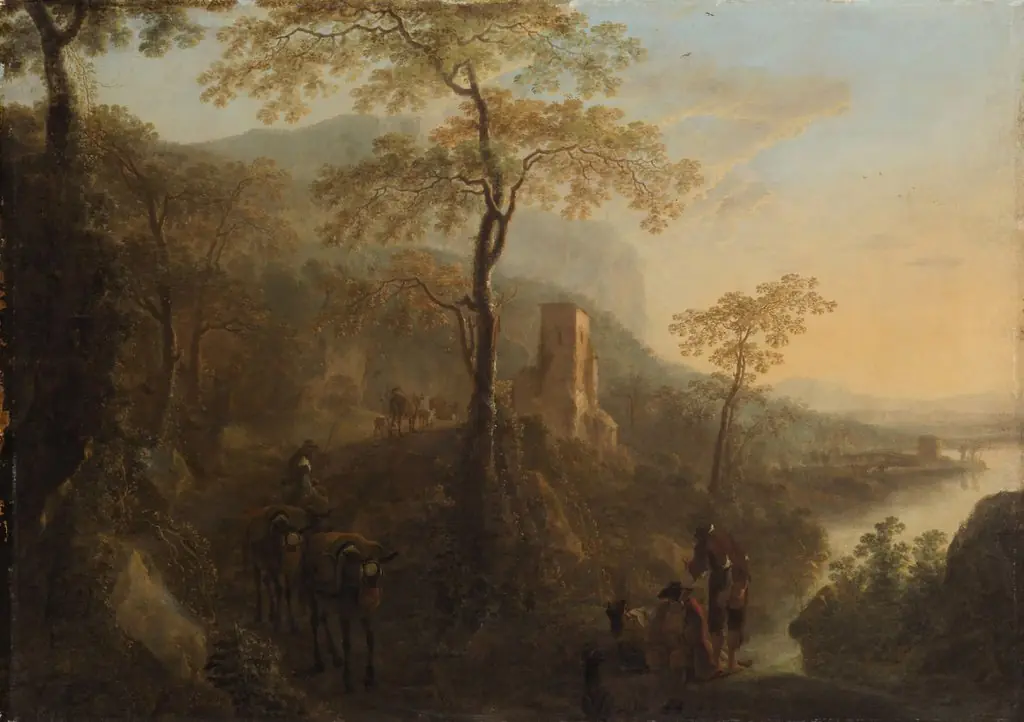
Fabritius employed chiaroscuro to model the forms of trees and rock with subtle gradations of light and shadow, lending volume and solidity. Earth-toned pigments—olive greens, ochres, and muted browns—create a harmonious palette that recedes into a hazy, soft-focus horizon. The brushwork is controlled yet fluid, balancing precision with atmospheric suggestion.
History & Provenance
Painted during Fabritius’s Vienna years, the work reflects his transition from Dutch influences to Central European topography. Little documentation survives regarding its early ownership, but its style aligns with other landscapes he produced in the early 1660s. It remains a representative example of his mature phase, distinct from his earlier Dutch works.
Context
While Dutch painters often depicted flat, water-rich lowlands, Fabritius turned to the rugged elevations of the Austrian countryside, adapting compositional conventions to new terrain. His work bridges the Dutch emphasis on realism with the emerging interest in varied European landscapes, reflecting the mobility of artists and patrons during the late 17th century.
Legacy
Fabritius’s landscapes, though less widely known than those of his Dutch contemporaries, contributed to the expansion of landscape representation beyond the Netherlands. His use of light and topographical observation influenced later Central European painters seeking to capture natural grandeur with quiet restraint.
Artist & collection
Artist
Carl Ferdinand Fabritius (1637 – 21 January 1673) was a painter in the Bishopric of Paderborn (German: Fürstbistum Paderborn).