Artwork
Mountain landscape
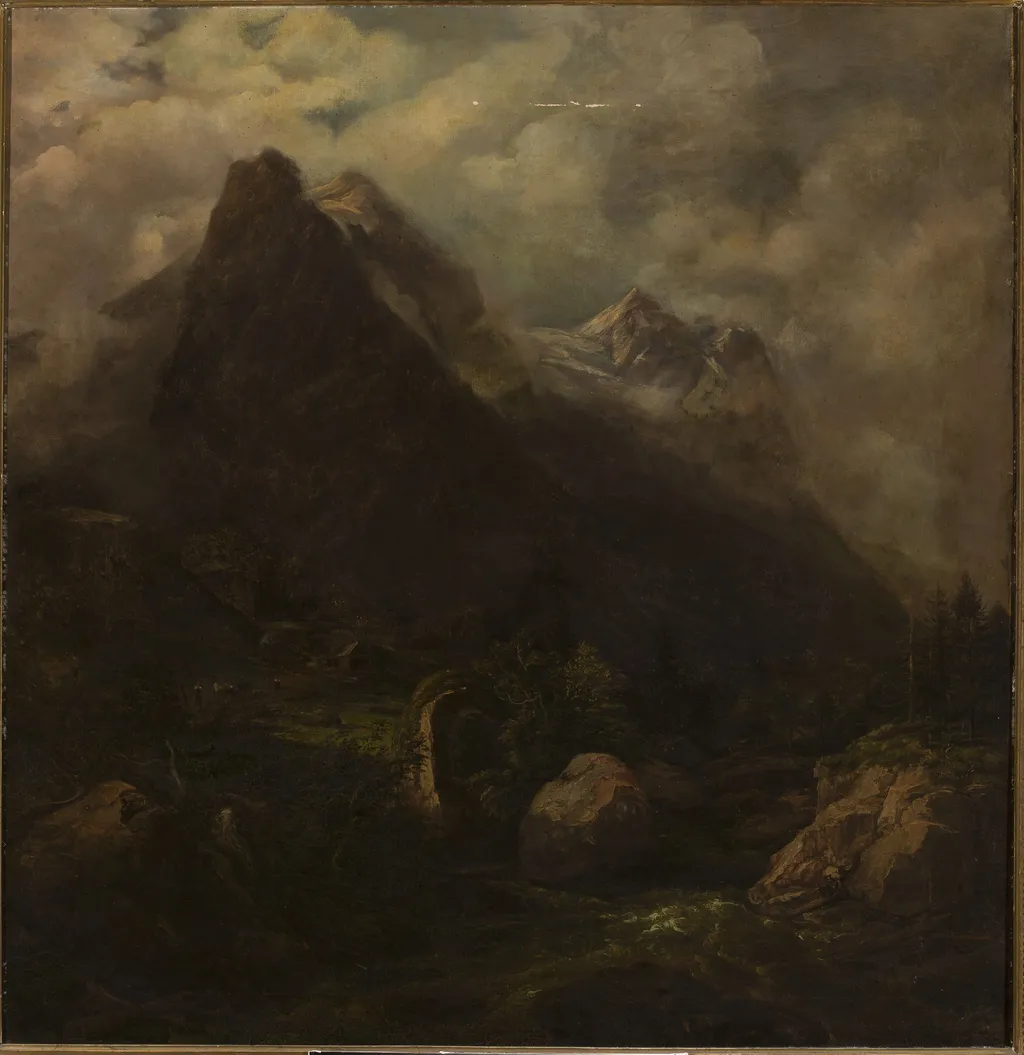
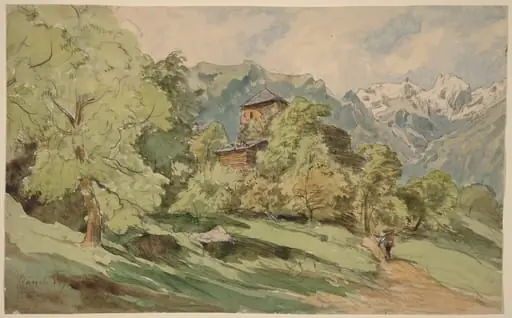
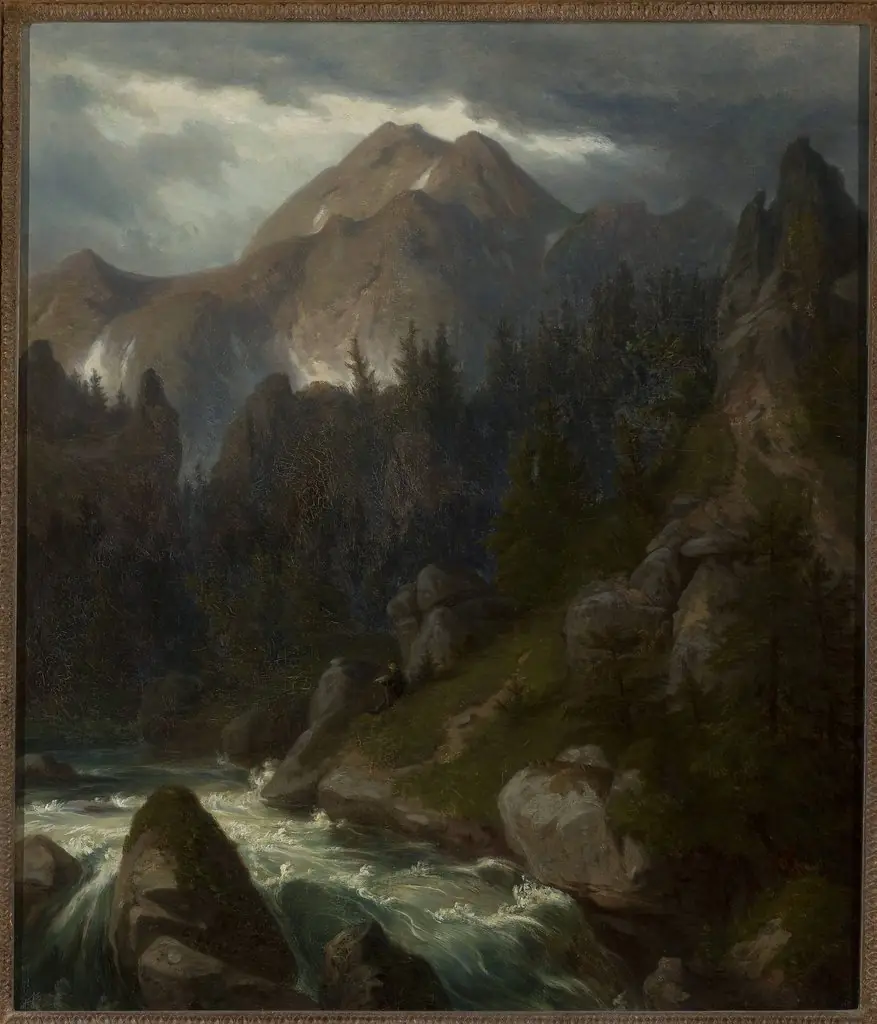
Mountain landscape is an oil painting by the Hudson River School artist Carl Wagner. It dates from 1841 and is held in the collection of the National Museum in Warsaw.
About this work
Overview
Wagner, known for his focus on natural scenery, worked within the Romantic tradition, emphasizing emotional resonance through landscape.
Painted around 1841 by German artist Carl Wagner, this oil-on-canvas landscape presents a dramatic mountain scene. Wagner, known for his focus on natural scenery, worked within the Romantic tradition, emphasizing emotional resonance through landscape. Though often linked to European Romanticism, the work's compositional gravity and atmospheric treatment show affinities with contemporaneous American landscape practices, particularly the Hudson River School.
Subject & Meaning
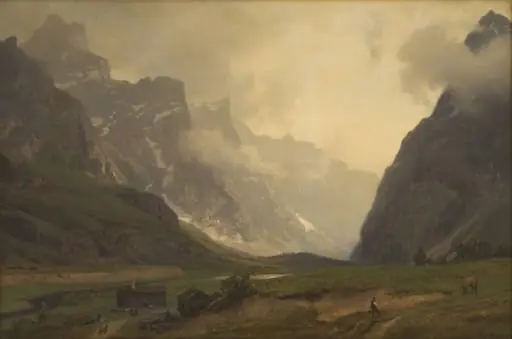
The painting centers on a towering, rugged peak flanked by lesser summits, evoking nature’s grandeur and permanence. Clouds partially obscure a pale sky, creating a tension between light and shadow that suggests both tranquility and awe. The absence of human figures reinforces a sense of solitude, aligning with Romantic ideals that viewed wilderness as a space for spiritual reflection rather than conquest or habitation.
Technique & Style
Wagner employed oil paint to build layered textures and subtle tonal shifts, using chiaroscuro to define the mountains’ mass and depth. Dark, heavily modeled rock faces contrast with the softer, diffused light of the upper sky, guiding the viewer’s eye upward. The brushwork is deliberate but not overly detailed, favoring atmospheric cohesion over topographical precision, a hallmark of Romantic landscape sensibility.
History & Provenance
The painting has been part of the National Museum in Warsaw’s collection since at least the mid-20th century. Its presence there reflects postwar efforts to consolidate European Romantic art within Polish national holdings. While Wagner’s oeuvre is not widely documented, this work remains a significant example of 19th-century German landscape painting preserved outside its country of origin.
Context
Created during a period when European artists increasingly sought emotional depth in nature, Wagner’s work resonates with broader Romantic trends across Germany and beyond. Though American artists like Cole and Durand developed similar themes, Wagner’s approach remained rooted in Central European traditions, blending observed topography with symbolic weight, distinct from the more expansive vistas of the Hudson River School.
Legacy
Though Carl Wagner is not among the most widely studied Romantic painters, this landscape contributes to understanding the transnational exchange of landscape aesthetics in the 19th century. Its preservation in Warsaw underscores how Romantic imagery transcended national borders, influencing collections and visual culture far from its point of origin.
Artist & collection
Artist
Carl Wagner (19 October 1796 in Roßdorf (Thüringen) - 10 February 1867 in Meiningen) was a German painter and representatives of the Romantic landscape painting.