Artwork
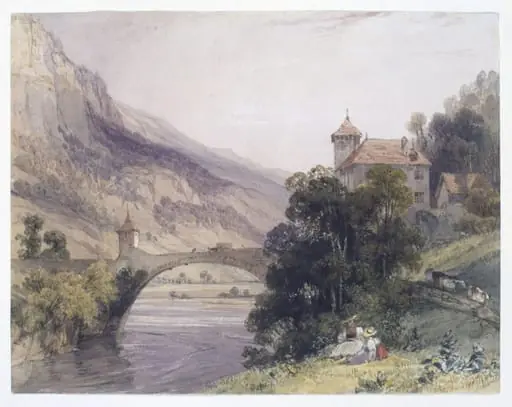
The Castle of Bürglen with the Alps Beyond
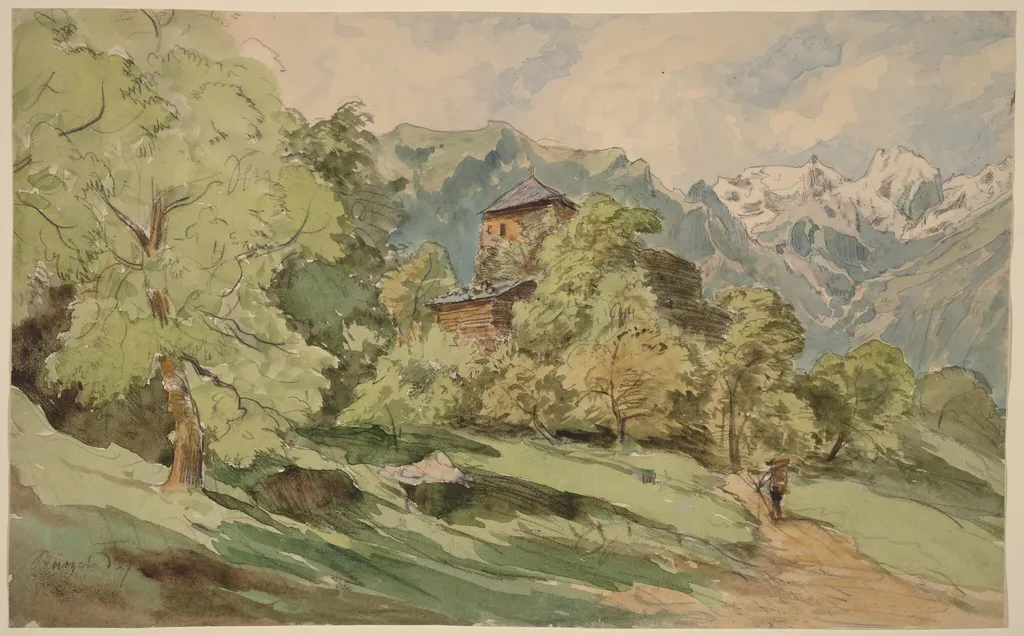
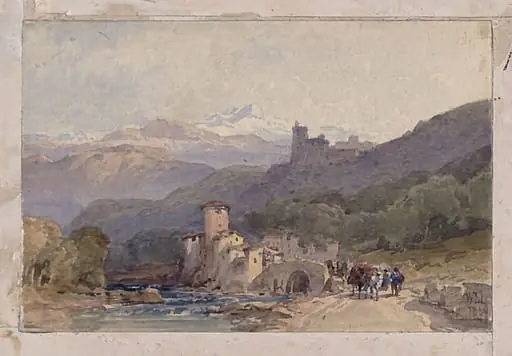
The Castle of Bürglen with the Alps Beyond is a chalk drawing by the Impressionist artist Carl Wagner. It dates from 1862 and is held in the collection of the National Gallery of Art.
About this work
Overview
Created in 1862, *The Castle of Bürglen with the Alps Beyond* is a drawing executed in watercolor and black chalk on wove paper. German artist Carl Wagner, active in the first half of the nineteenth century, rendered the fortified structure of Bürglen perched against a sweeping Alpine backdrop, presenting a compact yet atmospheric landscape typical of his oeuvre.
Subject & Meaning
The composition centers on Bürglen Castle, a medieval stronghold situated in the Swiss countryside, positioned within a broad vista that opens toward the towering Alps. By juxtaposing the human-made edifice with the expansive mountain range, the work underscores the Romantic fascination with the sublime power of nature and the emotional response evoked by such dramatic scenery.
Technique & Style
Wagner combined the fluidity of watercolor washes with the precision of black chalk outlines, allowing delicate tonal gradations to suggest atmospheric depth while retaining clear architectural detail. The choice of wove paper provides a smooth surface that supports both media, and the overall handling reflects the Romantic landscape tradition’s emphasis on mood, light, and the interplay between solid forms and surrounding space.
History & Provenance
This particular drawing, produced toward the end of his life, exemplifies his mature approach to scenic representation.
Born in 1796, Wagner pursued a career focused on landscape painting until his death in 1867. This particular drawing, produced toward the end of his life, exemplifies his mature approach to scenic representation. While specific ownership records are limited, the piece has been documented in catalogues of 19th‑century German Romantic art and remains a reference point for Wagner’s treatment of Alpine subjects.
Context
The mid‑nineteenth century saw a surge of interest in Alpine tourism and the Romantic ideal of the untouched wilderness. Wagner’s depiction aligns with contemporary travel literature and the era’s visual culture, which celebrated remote mountain vistas as sites of spiritual renewal and aesthetic contemplation, situating the work within broader European artistic trends of the period.
Artist & collection
Artist
Carl Wagner (19 October 1796 in Roßdorf (Thüringen) - 10 February 1867 in Meiningen) was a German painter and representatives of the Romantic landscape painting.

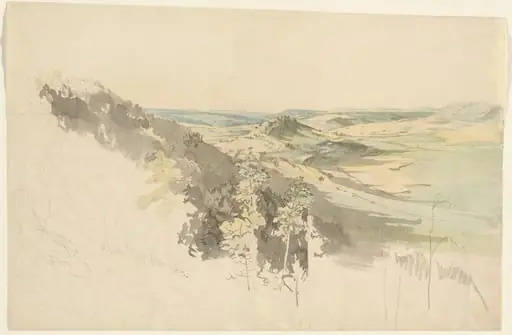
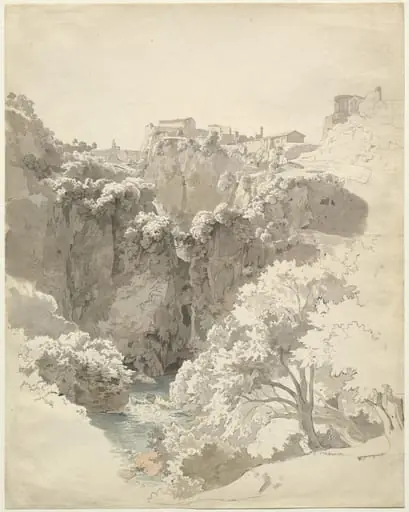
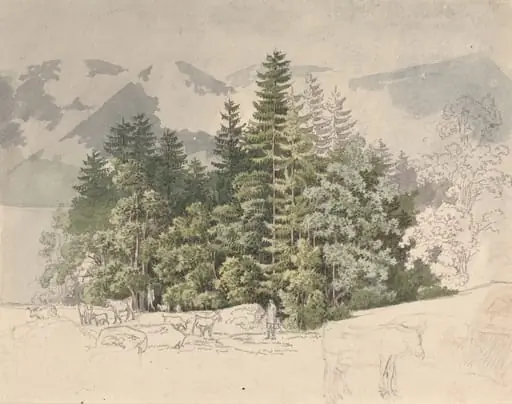 Alpine Landscape
 Strada di Aquila
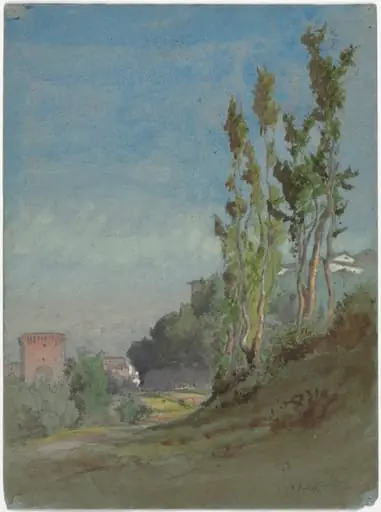 Albano, Italy
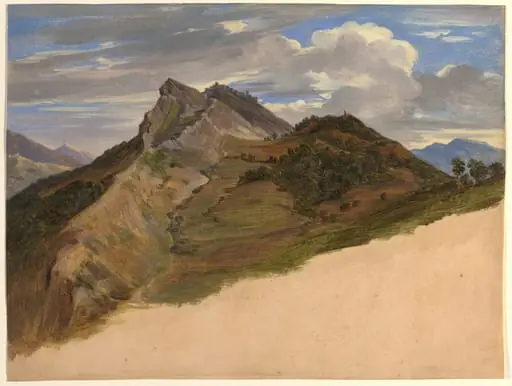 Civitella Seen from the North
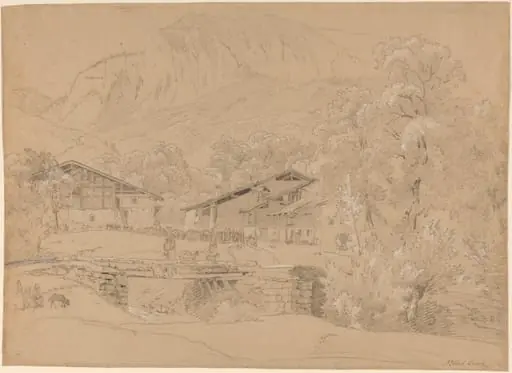 An Alpine Village in Summertime
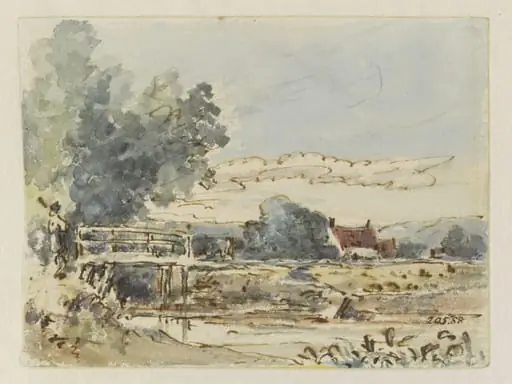 A bridge over a stream, with a cottage behind
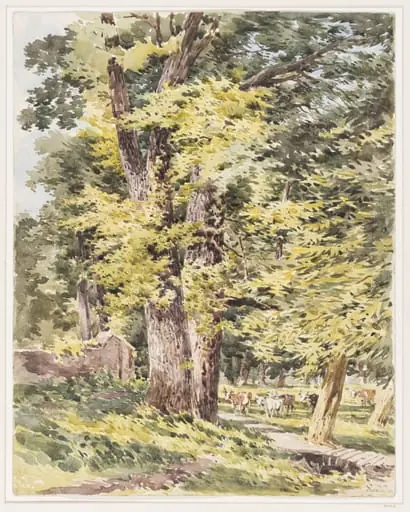 Park at Stoke, Guildford
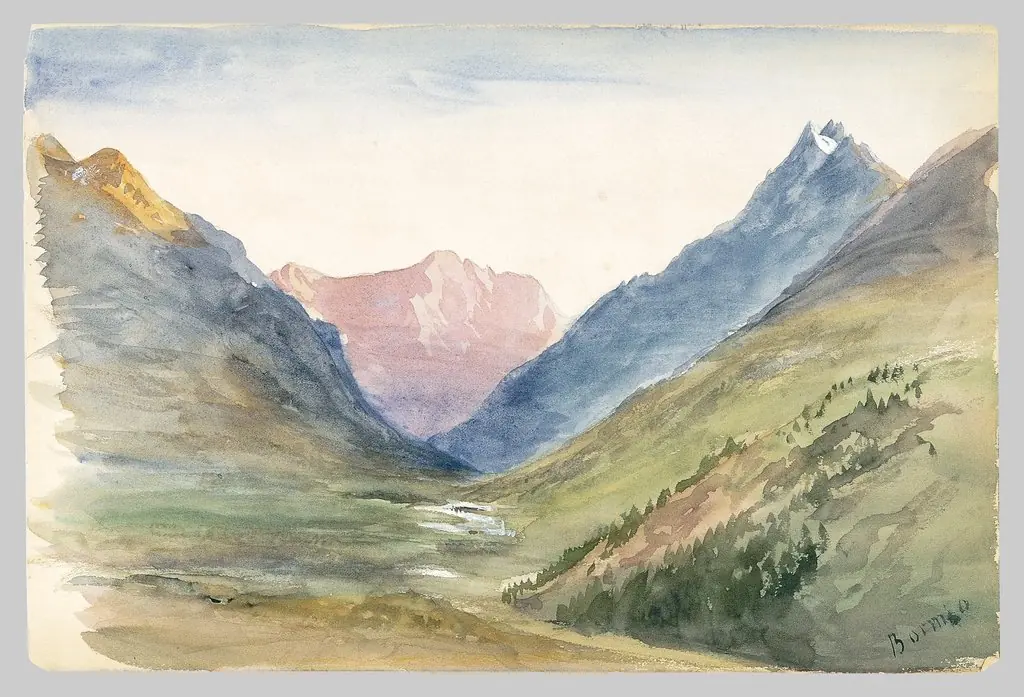 Mountain View at Bormio (from Switzerland 1869 Sketchbook)
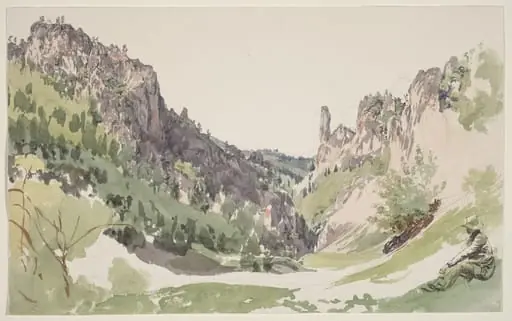 A Seated Man Contemplating a Sunlit Mountain Valley
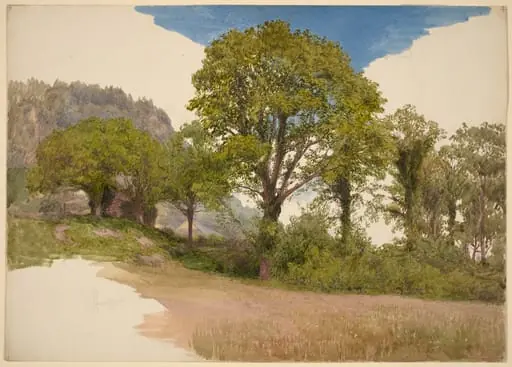 Trees Profiled against the Sky
 The Bridge of St. Maurice, Valais, Switzerland
 Smyrne