Artwork
The Dance
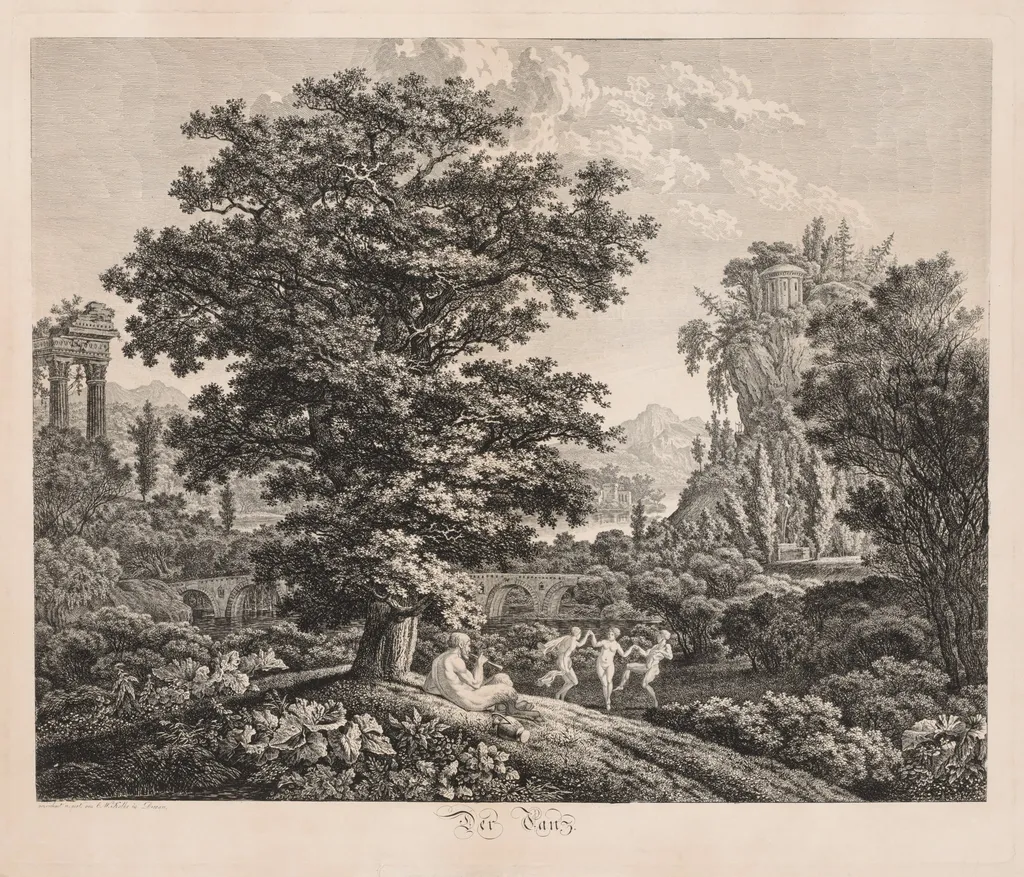
The Dance is a print by the Romanticist artist Carl Wilhelm I Kolbe. It dates from 1799 and is held in the collection of the Cleveland Museum of Art.
About this work
Overview
The print titled *The Dance* depicts a circle of nude figures moving to the accompaniment of a satyr, set against a backdrop of ancient ruins and a natural landscape. The composition balances mythological elements with a detailed rendering of surrounding flora, creating a scene that merges imagined antiquity with observable nature.
Subject & Meaning
At its core, the work presents a classical idyll: a group of naked dancers, a satyr playing music, and a sacrificial altar suggest ritual celebration in a mythic past. The inclusion of ruins and the altar reinforces themes of antiquity and reverence, while the communal dance evokes notions of harmony between humanity and the divine.
Technique & Style
The print combines the orderly, idealized forms of classicism with a scientific attention to botanical detail. Human bodies and architectural fragments are stylized in a manner typical of late‑18th‑century classicism, whereas the trees, burdocks and other foreground plants are rendered with precise, almost taxonomic accuracy, reflecting contemporary naturalist influences.
Context
Created at the close of the 18th century, the piece reflects the prevailing artistic trend that sought to reconcile Enlightenment rationalism with a renewed interest in classical antiquity. This synthesis of classical motifs and empirical observation mirrors broader cultural currents that valued both aesthetic idealism and the emerging study of nature.
Artist & collection
Artist
Carl Wilhelm Kolbe (20 November 1757/59, Berlin - 13 January 1835, Dessau) was a German etcher, graphic artist and author.

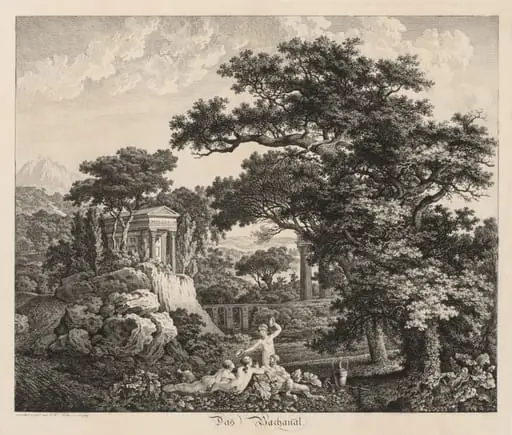
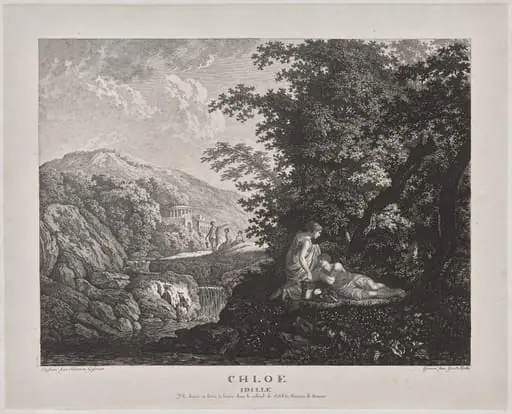
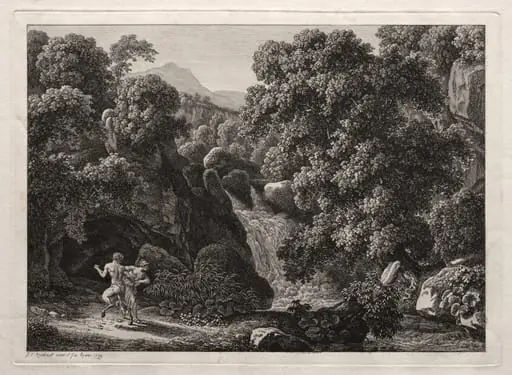 Heroic Landscape: The Satyr and the Nymph
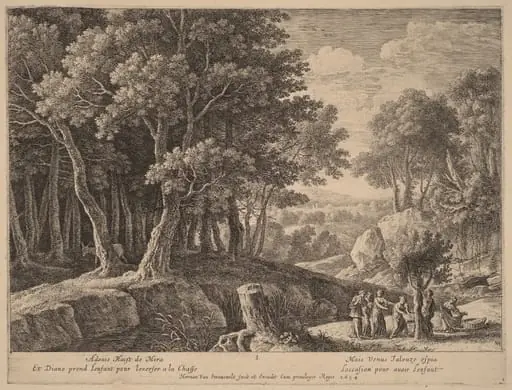 Birth of Adonis
 I was also in Arcadia (Kai ego en Arkadia)
 Heroic Landscape: Cattle Crossing the River
 Heroic Landscape
 Phaeton
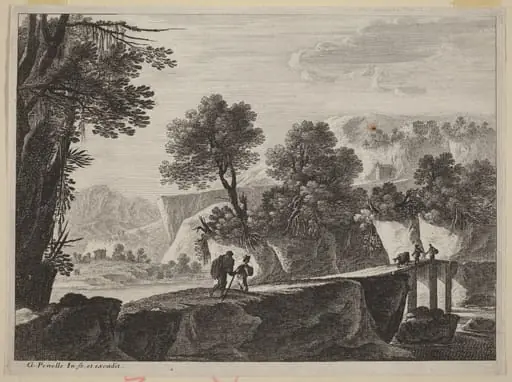 Travelers Approaching a Bridge
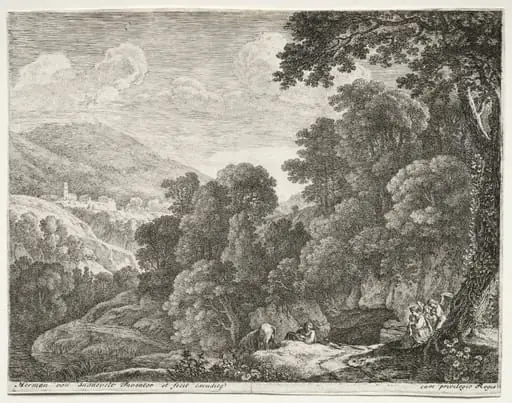 The Cave
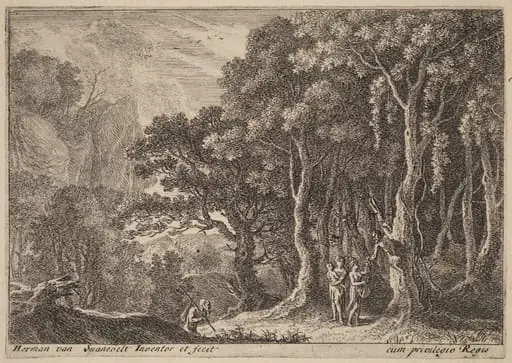 A Satyr Gathering Fruit
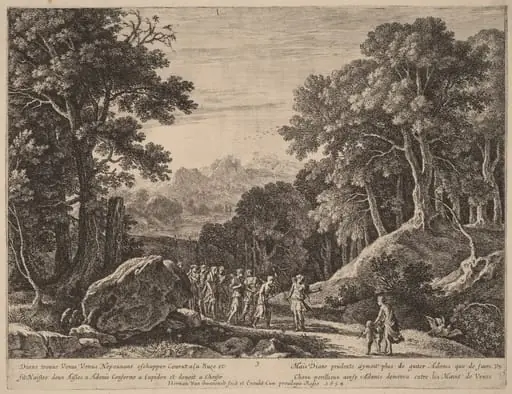 Venus Offering Diana a Choice between Cupid and Adonis
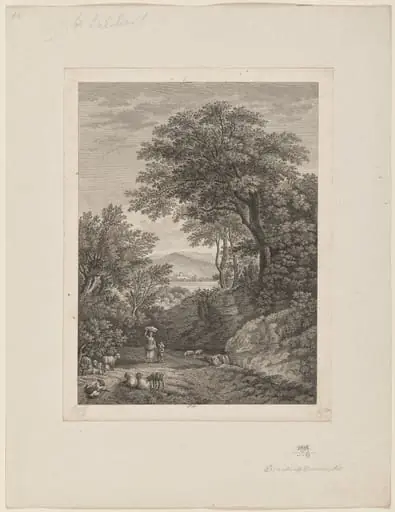 Landscape with Shepherds