Artwork
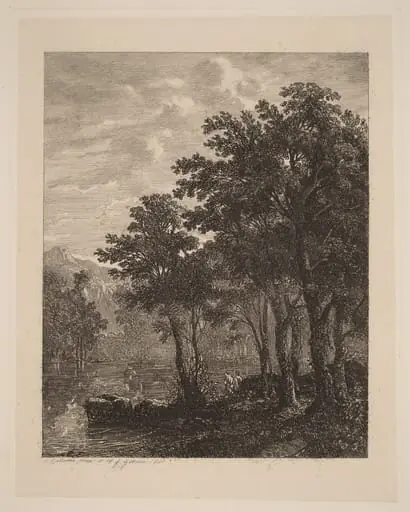
Landscape with Shepherds
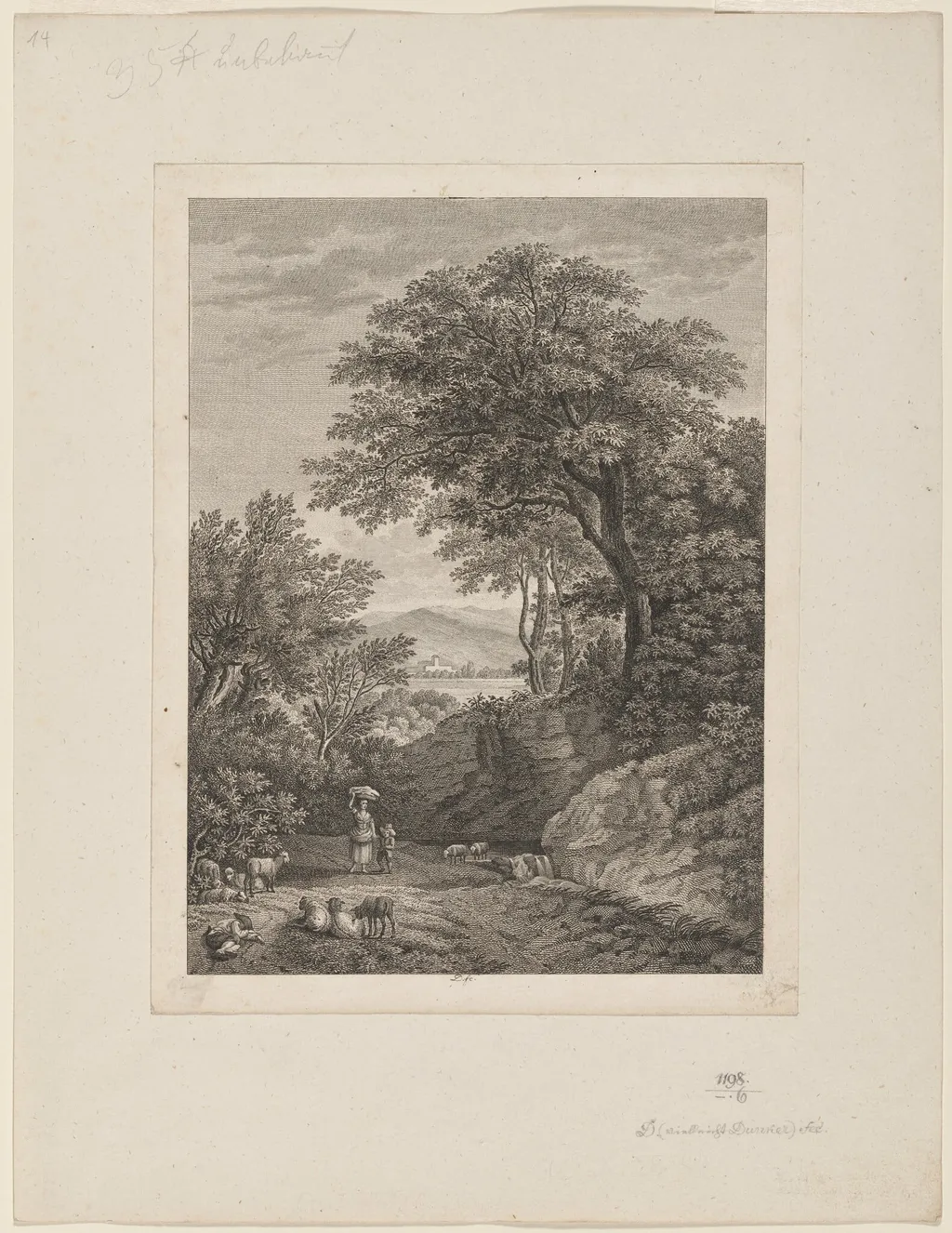
Landscape with Shepherds is an ink print by the Baroque artist Monogrammist D. It dates from 1750 and is held in the collection of the National Gallery of Art.
About this work
Overview
This black-and-white print, dated around 1750, is an etching on laid paper by an artist known only as Monogrammist D.
This black-and-white print, dated around 1750, is an etching on laid paper by an artist known only as Monogrammist D. It depicts a tranquil rural scene with shepherds and livestock, rendered in fine linear detail. The composition balances foreground figures with a receding landscape, emphasizing quiet movement and natural order. The medium allows for subtle tonal gradations achieved through controlled incisions on a metal plate.
Subject & Meaning
The scene centers on a woman guiding sheep along a dirt path, accompanied by a child. Their modest presence suggests daily pastoral labor, unembellished and untheatrical. Distant elements—a church spire and rolling hills—anchor the figures within a broader rural world, implying continuity between human activity and the land. No narrative climax is offered; instead, the image conveys stillness and routine.
Technique & Style
The artist employed etching, a printmaking method involving acid-bitten lines on a metal plate. Fine, deliberate strokes define rocks, grasses, and woolly sheep, while varying line density creates texture and shadow. The use of laid paper, with its subtle chain-line texture, enhances the tactile quality of the image. The style is restrained, favoring clarity and observation over dramatic effect.
History & Provenance
The work is attributed to Monogrammist D, an unidentified printmaker active in the mid-18th century. Little is known of their life or other works, though this piece aligns with regional traditions of Dutch and Flemish landscape etching. Its survival in collections suggests it was valued for its quiet realism, though its early ownership remains undocumented.
Context
Created during a period when landscape prints gained popularity among middle-class collectors, this work reflects a shift from grand historical scenes to intimate, everyday rural views. Similar subjects appeared in prints by contemporaries in the Low Countries, where pastoral life was idealized as orderly and harmonious. The absence of overt sentiment aligns with prevailing aesthetic values of understated observation.
Legacy
Though the artist’s identity remains obscure, this etching contributes to a broader 18th-century tradition of landscape printmaking that prioritized naturalism over ornament. Its preservation in institutional collections underscores its role as a quiet example of artisanal print culture. It offers insight into how ordinary rural life was visually recorded outside the realm of major artistic figures.
Artist & collection

 Traveler Pointing the Way
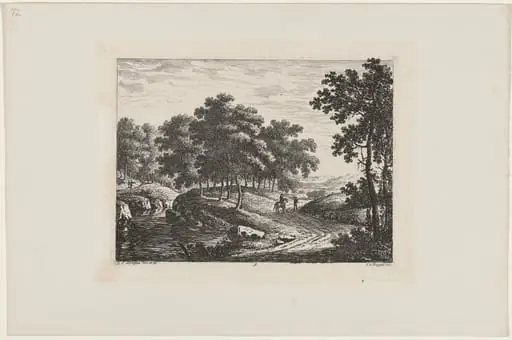 Rider on a Path
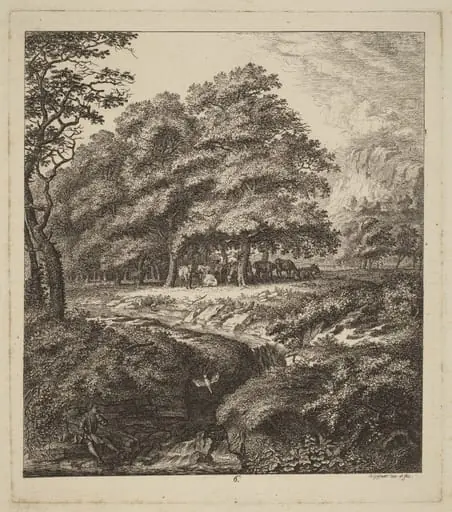 Cattle Resting in a Grove with a Man Seated beside a Brook
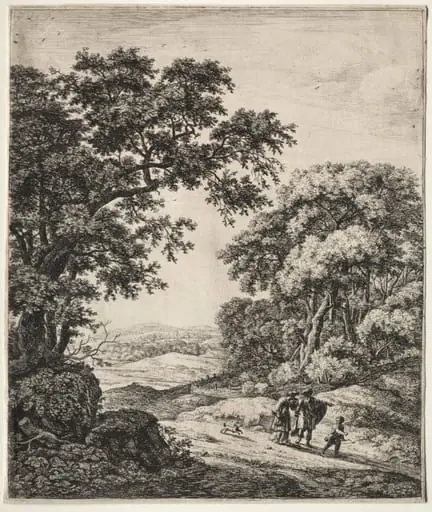 Six large upright landscapes with scenes from the Old Testament: Abraham Dismissing Hagar and Ishmael
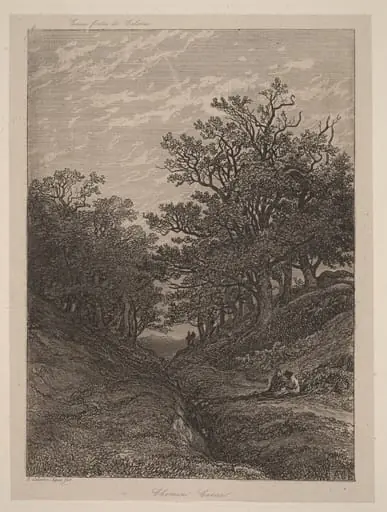 Chemin Creux
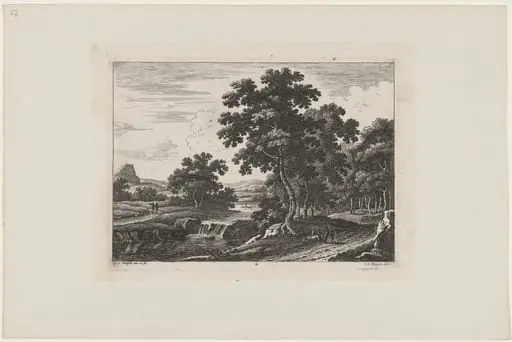 Traveler by a Waterfall
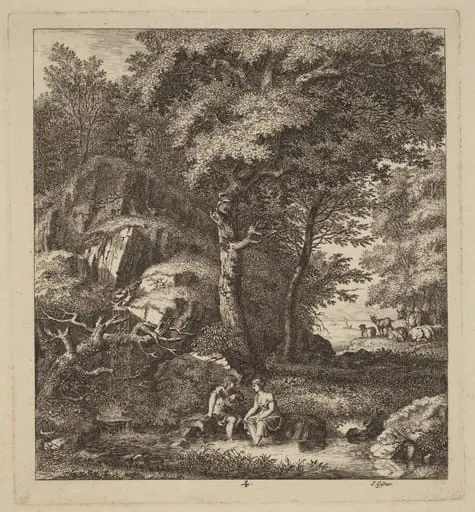 A Shepherd and a Young Woman With Their Feet in a Brook
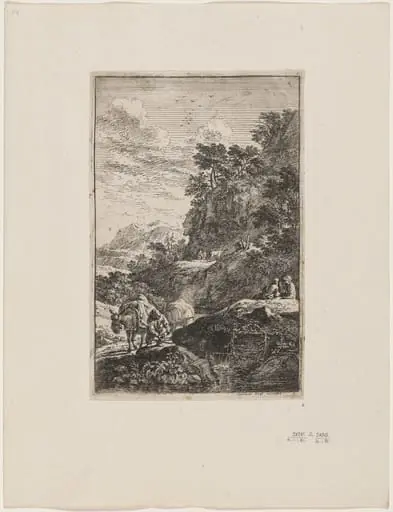 Drover with Two Mules
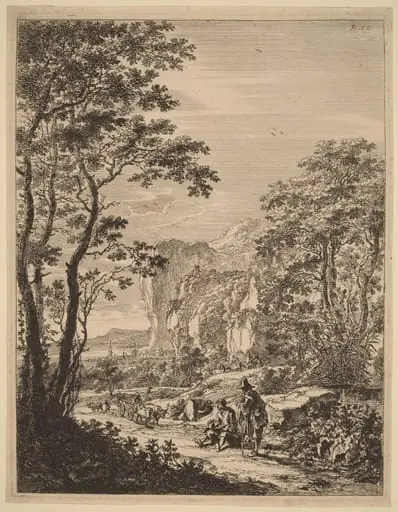 The Ox-Cart: View between Ancona and Sinigaglia
 Trees by a River