Artwork
Scene in the Upper Himmalayahs. View in the Manga Valley
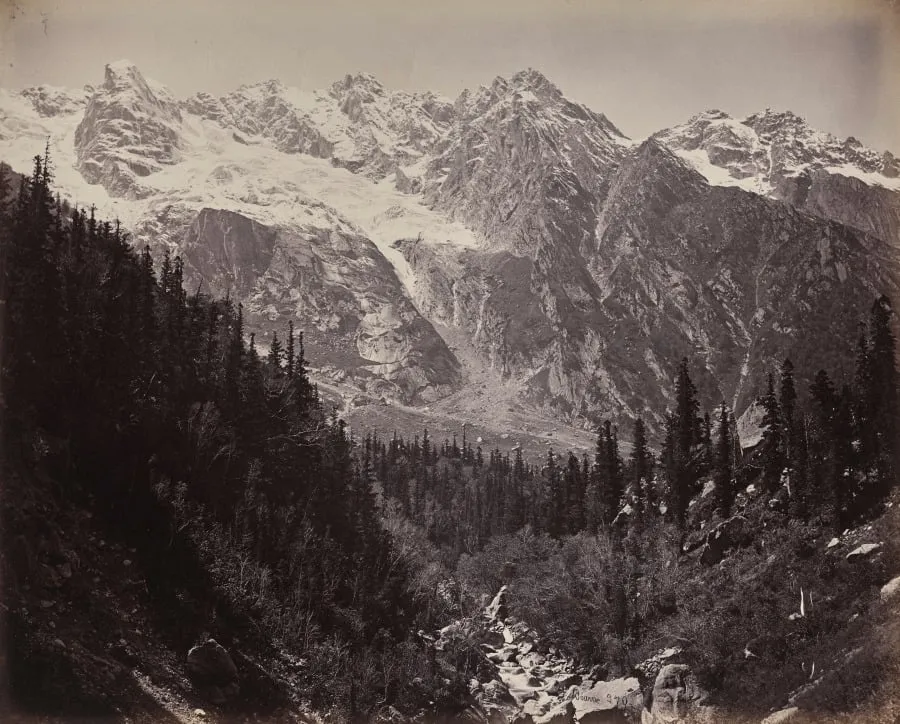
Scene in the Upper Himmalayahs. View in the Manga Valley is a photography by the Impressionist artist Samuel Bourne. It dates from 1866 and is held in the collection of the Cleveland Museum of Art.
About this work
You see a quiet valley in the Himalayas: snow peaks, a winding river, and tiny figures leading pack animals along a narrow trail.
You see a quiet valley in the Himalayas: snow peaks, a winding river, and tiny figures leading pack animals along a narrow trail.
Bourne didn’t paint this—he took it with a camera. In the 1860s, he lugged heavy glass plates up steep paths to make some of the first photographs of the region. The valley looks almost untouched, but the British Empire was already changing the land.
If you like these early mountain photos, look up Samuel Bourne (British, 1834–1912).
Overview
This photograph is one of fifty taken by Samuel Bourne in the 1860s during an extensive journey through northern India. Captured in the Manga Valley of the upper Himalayas, it documents a remote landscape with minimal human intervention. Bourne carried bulky glass plate equipment over treacherous terrain to record regions rarely seen by Western audiences, producing some of the earliest photographic evidence of the region.
Subject & Meaning
The image depicts a tranquil mountain valley framed by snow-capped peaks and a meandering river. Tiny figures guide pack animals along a narrow path, suggesting human presence without dominance over the environment. The scene conveys isolation and natural grandeur, yet its creation by a British photographer reflects the imperial project of documenting and categorizing colonial territories.
Technique & Style
Bourne used large-format glass plate negatives and a cumbersome camera, requiring meticulous preparation in extreme conditions. The photograph’s sharp detail and tonal range reveal technical precision despite the logistical challenges of transporting equipment at high altitudes. The composition emphasizes depth and scale, with careful attention to light and topography, typical of 19th-century topographical photography.
History & Provenance
The photograph was made during Bourne’s multi-year expedition across northern India, undertaken after he relocated from England in 1860. His album, later sold to the Victoria and Albert Museum, became a key visual archive of the subcontinent before widespread modernization. These images were widely circulated in Britain as both scientific records and exotic representations.
Context
While the valley appears pristine, British colonial infrastructure—roads, telegraph lines, and administrative outposts—was already extending into the Himalayas. Bourne’s work served both aesthetic and imperial interests, providing visual evidence for British claims of knowledge and control. His photographs were used in lectures and publications that shaped European perceptions of India’s geography and culture.
Legacy
Bourne’s Himalayan photographs remain among the most significant early visual records of the region. They are studied today for their technical achievement and their role in colonial visual culture. While valued for their historical accuracy, they are also critically examined for the ways they framed indigenous landscapes as untouched and available for Western observation.
Artist & collection

Artist
Samuel Bourne was a British photographer known for his prolific seven years' work in India, from 1863 to 1870.

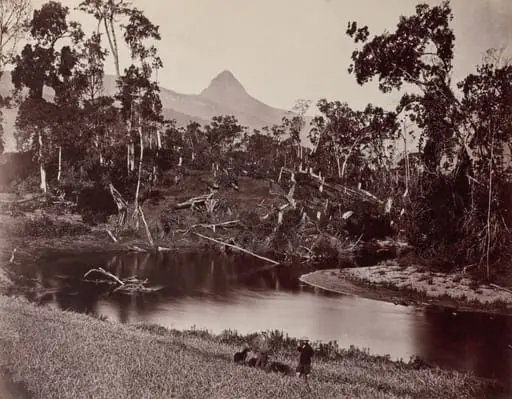 Ceylon Views to Adam's Tooth
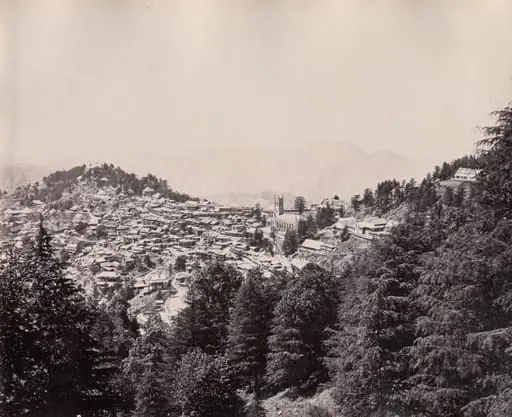 Shimla
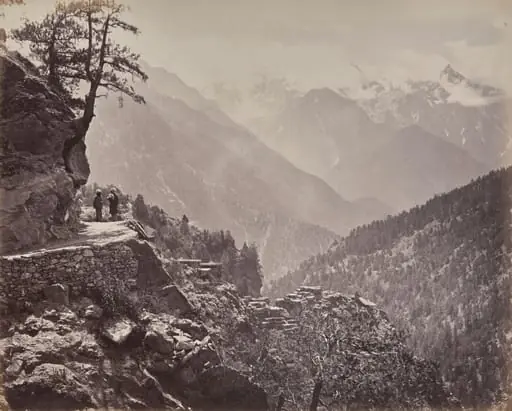 The Upper Himmalayahs. View on the New Road between India and China. Mt. Pangi with the Snowy Peaks of China in the Distance
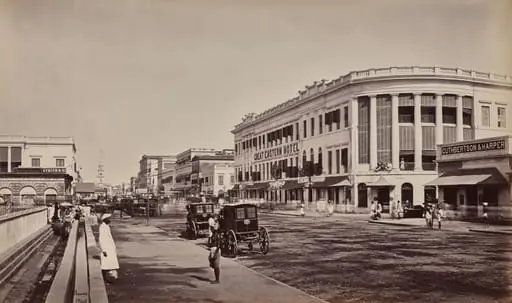 Calcutta. Old Court House Street
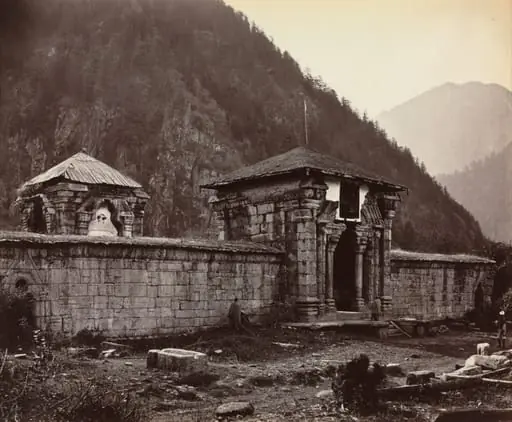 Temple at Naveshera, Kashmir, India
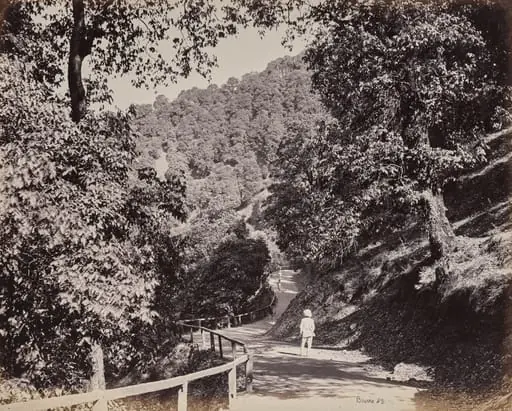 Shimla. The Mall near Rabq Lodge
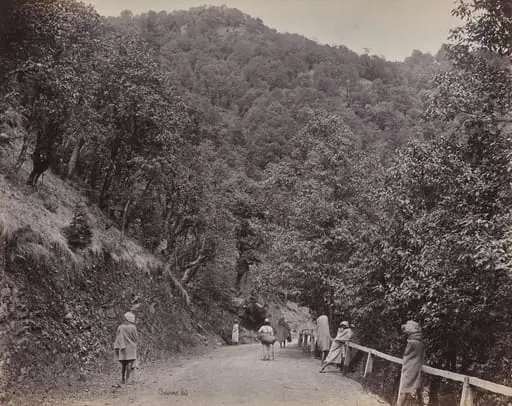 Shimla. The Mall or Principal
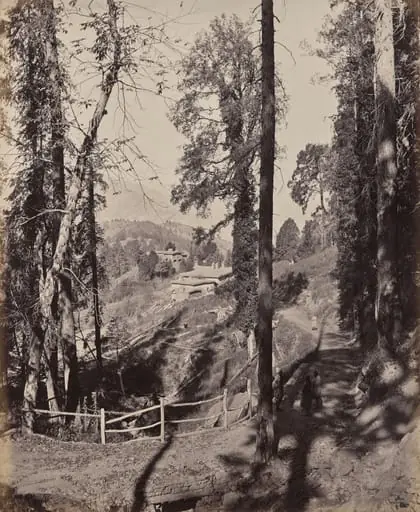 Murree. A Hill Station in the Himmalayahs, View Through the Forest
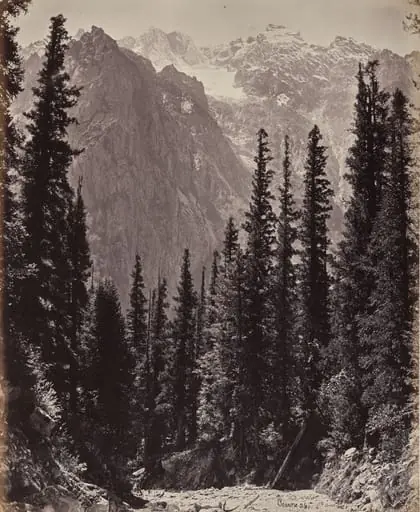 The Upper Himmalayahs. View in the Manga Valley
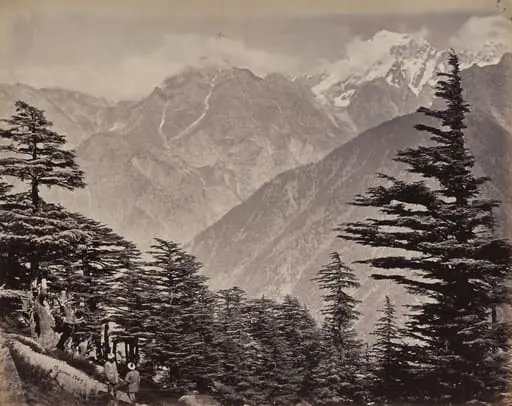 The Upper Himmalayahs. View Near China Mountains. Deoders in the Foreground
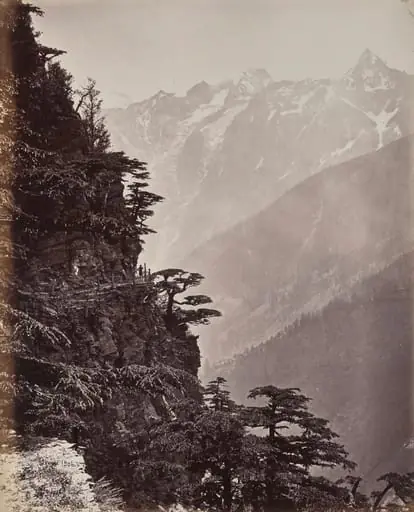 The Upper Himmalayahs. View on the New Road Near Rogi
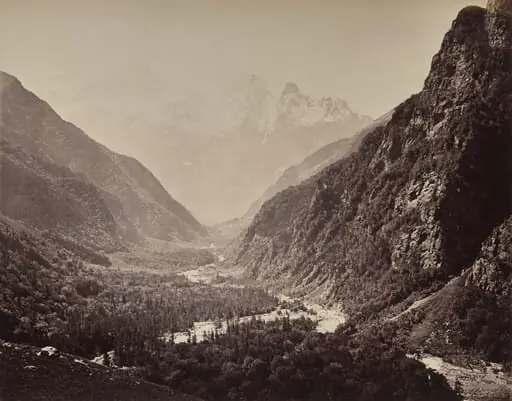 The Upper Himmalayahs. View of Valley from Fallaldasa with Srikanta Peaks in the Distance
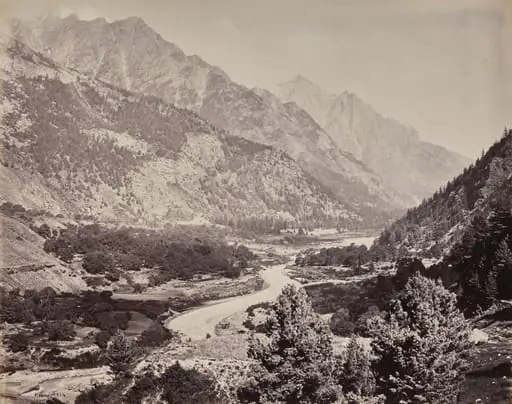 The Upper Himmalayahs. View in the Buspa Valley from Sangla
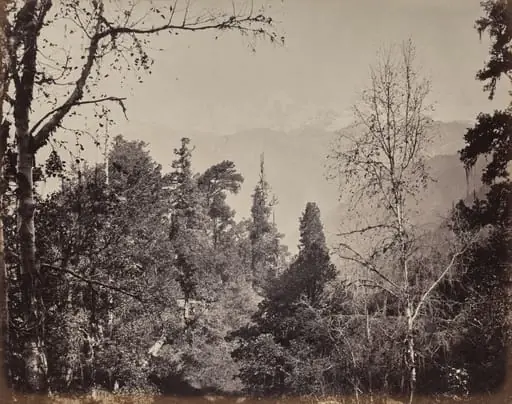 The Upper Himmalayahs. View of the Mountain of Bunderpoonch with the Jumnootri Peak, 20,458 above the Level of the Sea
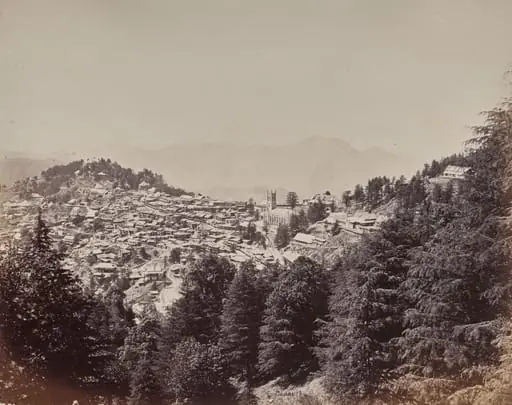 Shimla. From Mount Jakko, Looking West
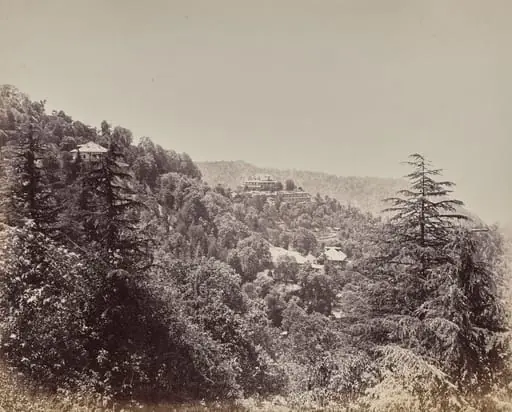 Shimla. The Yarrows and Neighboring Hills
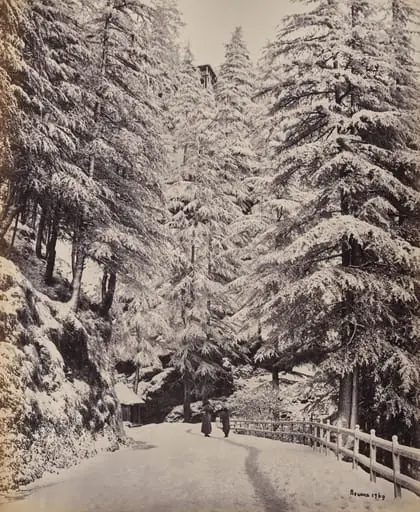 Shimla. View on the Mall in Winter
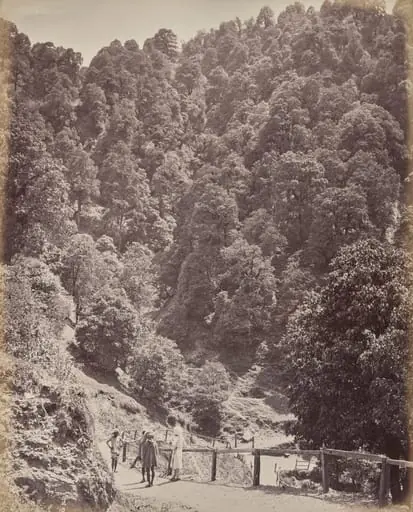 Shimla. View North of Mount Jakko