Artwork
Shimla. View from Oakover House
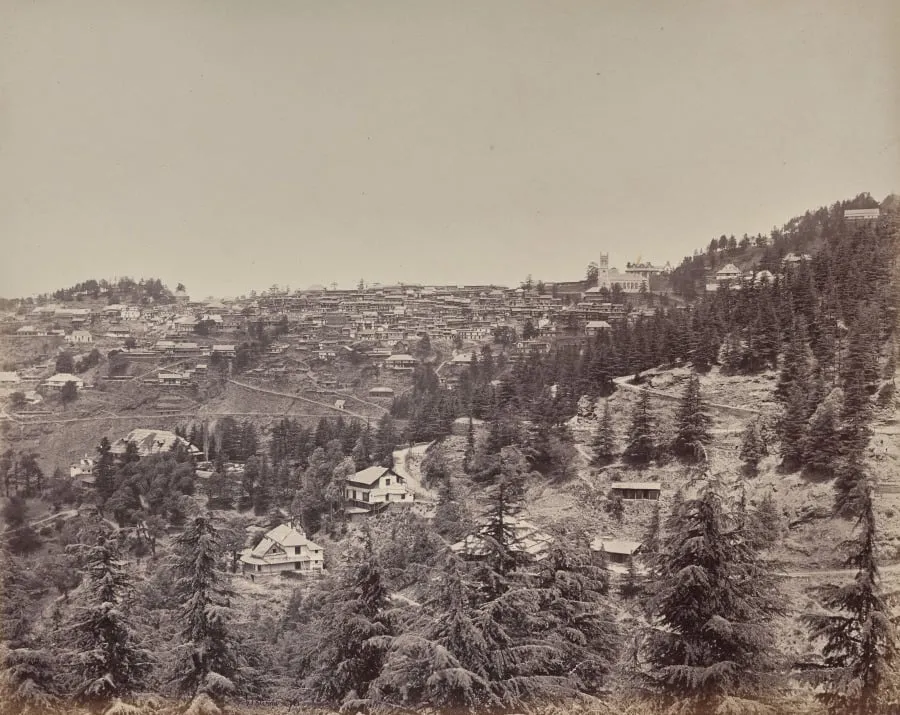
Shimla. View from Oakover House is a photography by the Impressionist artist Samuel Bourne. It dates from 1866 and is held in the collection of the Cleveland Museum of Art.
About this work
The image shows the Taj Mahal and other landmarks before modern restorations changed them.
You see a quiet hill town in India, bathed in soft morning light. Houses cling to the slope, their roofs stacked like steps. A few figures walk the winding road, small against the vast green hills.
This painting is actually a photograph—one of the first taken in the Himalayas. Bourne lugged heavy glass plates up steep trails to get these views. The image shows the Taj Mahal and other landmarks before modern restorations changed them.
To see more early photos of India, look up Samuel Bourne (British, 1834–1912).
Overview
This photograph, taken in the 1860s by British photographer Samuel Bourne, captures the hill station of Shimla from the vantage of Oakover House. It is one of approximately fifty images in a series documenting northern India’s landscapes and architecture during the early years of photographic documentation. Bourne carried heavy glass plate negatives along treacherous mountain paths to record these scenes, making this among the earliest photographic records of the Himalayan region.
Subject & Meaning
The image presents Shimla as a quiet, terraced settlement nestled into the slopes of the hills, with modest dwellings arranged in stepped rows beneath a vast expanse of green landscape. Scattered figures on the winding path emphasize the scale of the terrain and the solitude of the setting. Rather than celebrating colonial presence, the photograph quietly records the town’s integration into its natural environment, offering a sober view of life in a British administrative retreat.
Technique & Style
Bourne used the wet-plate collodion process, requiring delicate glass negatives and on-site chemical development. The soft morning light and extended exposure time capture subtle tonal gradations in the misty hills and textured rooftops. The composition avoids dramatic angles, favoring a balanced, panoramic perspective that prioritizes topographical accuracy over aesthetic flourish, reflecting the documentary aims of early photographic surveys.
History & Provenance
The photograph belongs to a larger album compiled by Bourne during his travels across India between 1863 and 1870. It was likely produced for British audiences interested in colonial administration and landscape, though its value today lies in its archival precision. The original plates and prints are held in institutional collections, including the Victoria and Albert Museum and the British Library, where they serve as primary sources for architectural and environmental history.
Context
Shimla was established as the summer capital of British India in the mid-19th century, offering respite from the heat of the plains. Bourne’s photographs document not only the natural scenery but also the emerging colonial infrastructure—roads, bungalows, and administrative buildings—integrated into the Himalayan foothills. His work coincided with broader imperial efforts to map and classify the subcontinent through visual means.
Legacy
Bourne’s photographs remain among the most systematic visual records of 19th-century India. His images of Shimla and other sites provide baseline references for understanding how landscapes and monuments have changed over time. While not widely exhibited in his lifetime, his archive has since become essential for historians, architects, and conservators studying pre-modern Indian environments.
Artist & collection

Artist
Samuel Bourne was a British photographer known for his prolific seven years' work in India, from 1863 to 1870.

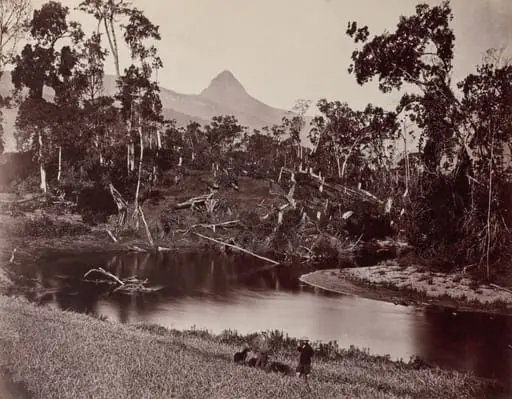 Ceylon Views to Adam's Tooth
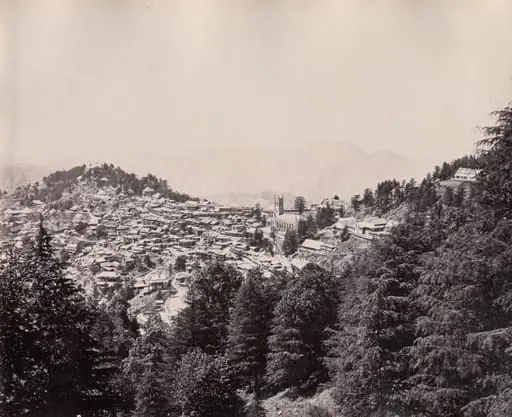 Shimla
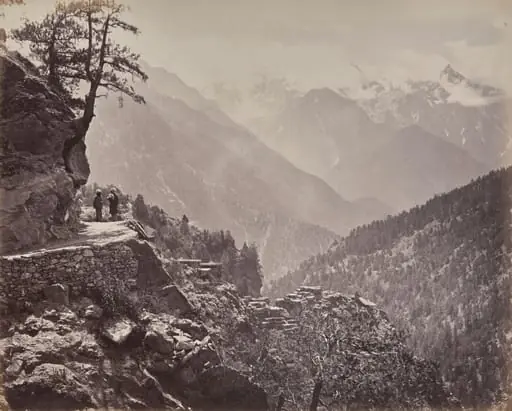 The Upper Himmalayahs. View on the New Road between India and China. Mt. Pangi with the Snowy Peaks of China in the Distance
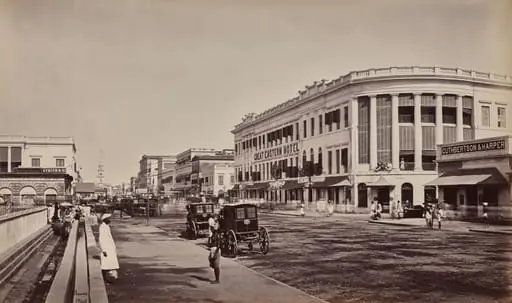 Calcutta. Old Court House Street
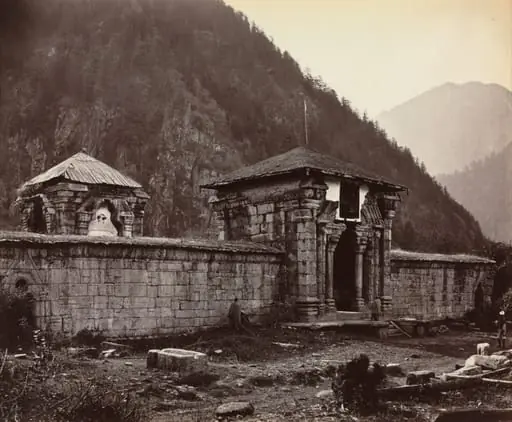 Temple at Naveshera, Kashmir, India
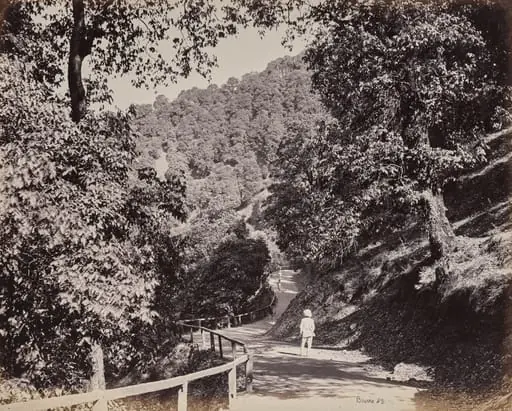 Shimla. The Mall near Rabq Lodge
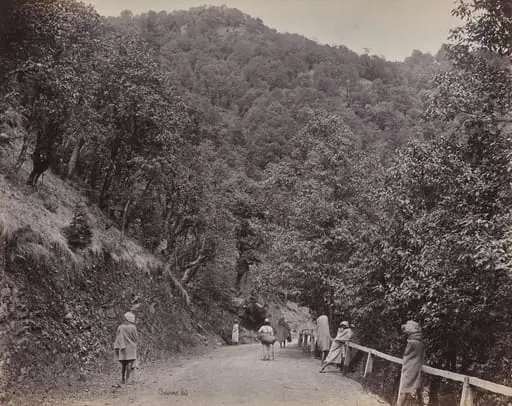 Shimla. The Mall or Principal
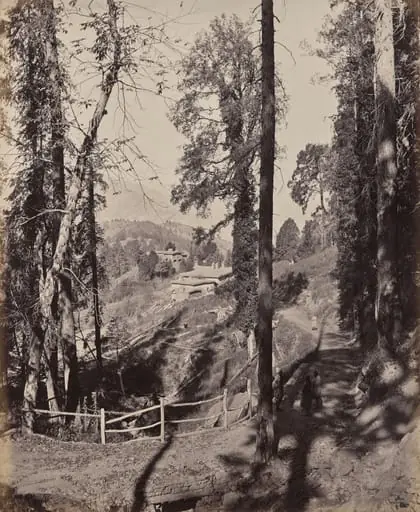 Murree. A Hill Station in the Himmalayahs, View Through the Forest
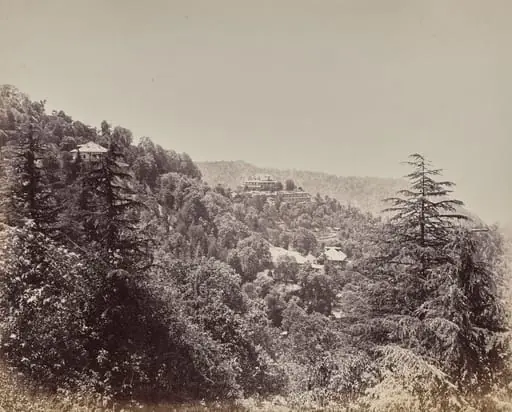 Shimla. The Yarrows and Neighboring Hills
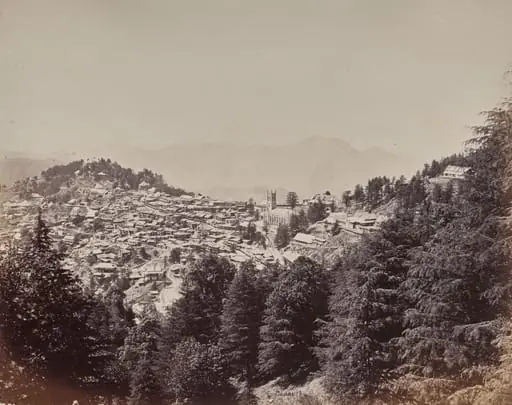 Shimla. From Mount Jakko, Looking West
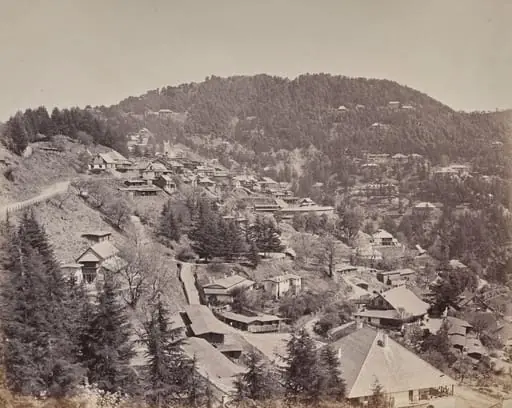 Shimla. Houses of European Residents, Looking East
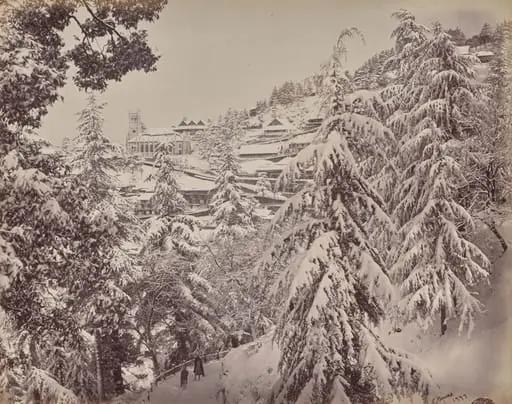 Shimla. View of the Church from Mount Jakko Looking West with Part of the Mall in Winter
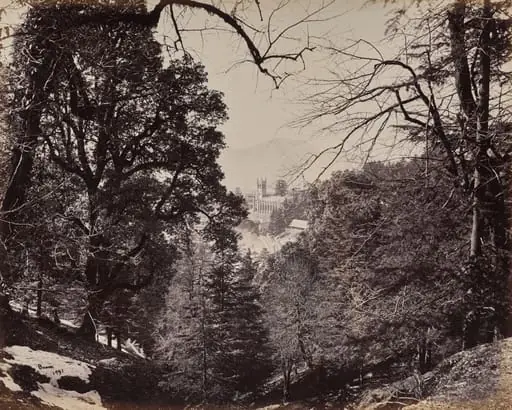 Shimla. The Church Through the Trees, from Jakko
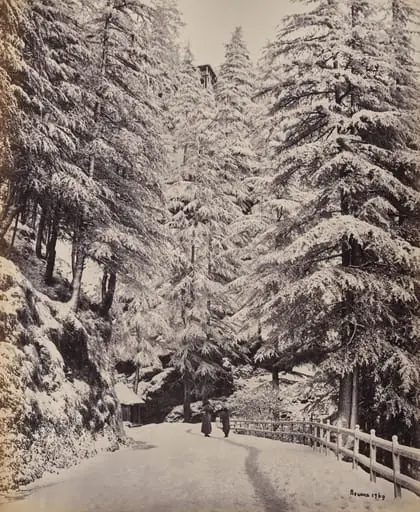 Shimla. View on the Mall in Winter
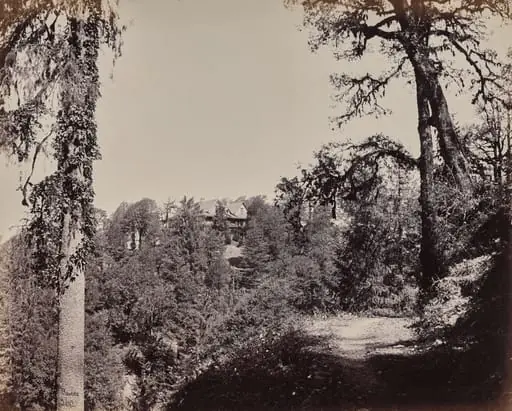 Shimla. Sir Hugh Rose's Bungalow at Mahasso
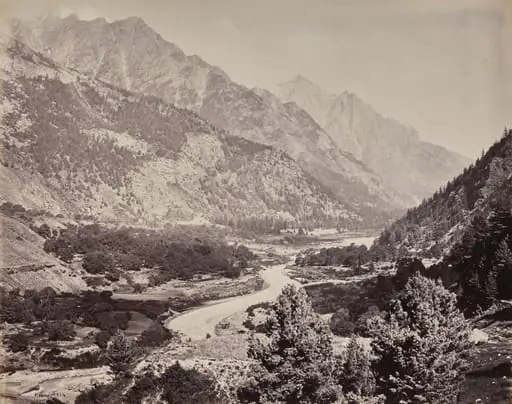 The Upper Himmalayahs. View in the Buspa Valley from Sangla
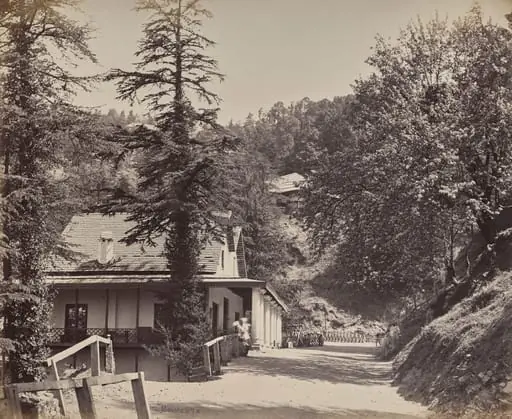 Simla. The Mall near Combermere Bridge