Artwork
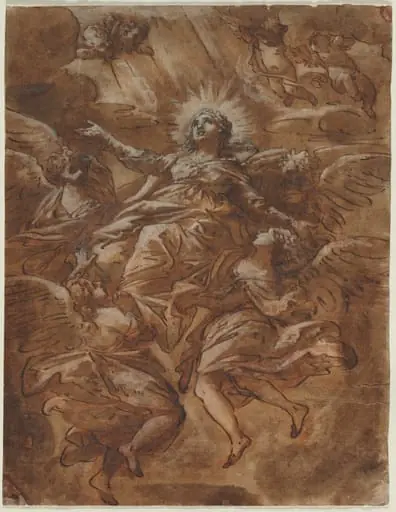
The Assumption of the Virgin
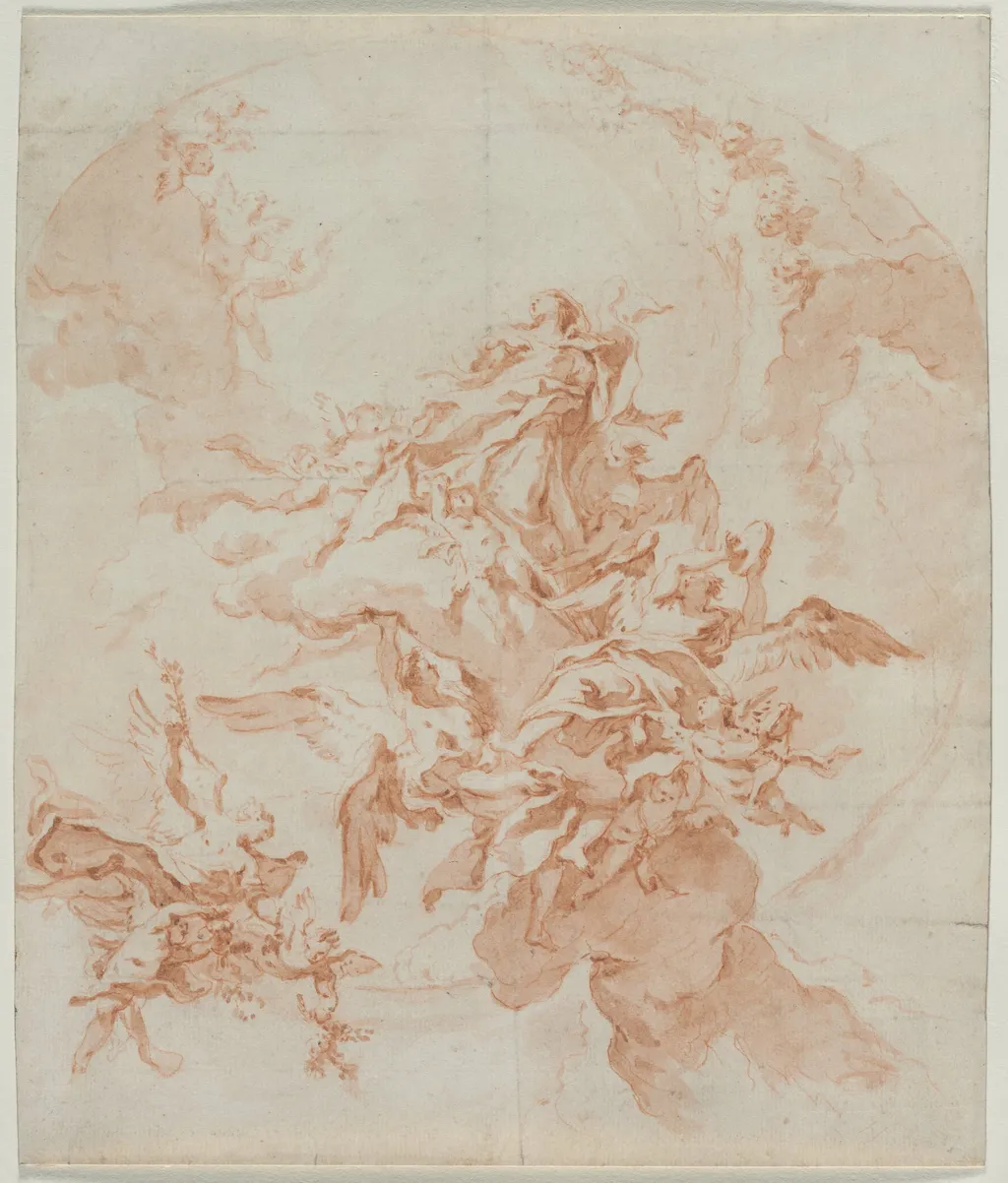
The Assumption of the Virgin is a drawing by the Romanticist artist Carlo Carlone. It dates from 1754 and is held in the collection of the Cleveland Museum of Art.
About this work
Overview
The Assumption of the Virgin, a drawing by Carlo Innocenzo Carlone, dates to circa 1754. It is now part of the Cleveland Museum of Art's collection.
Subject & Meaning
The work depicts the Virgin Mary's ascent into heaven, surrounded by a swirling group of angels and cherubs. Mary is centrally positioned with outstretched arms and an upwards gaze, conveying spiritual elevation.
Technique & Style
Rendered in a delicate, dreamy manner, the drawing features subtle shading and texture, creating depth. Soft colors and gentle lines evoke serenity, focusing attention on the central figure.
History & Provenance
Created by Carlone, an Italian artist active in the Holy Roman Empire (1686-1775), the drawing reflects his involvement with Baroque and Rococo styles, influenced by his work in Austria and Germany.
Context
The subject aligns with common religious art themes of the period, while the style bridges Baroque and Rococo, characteristic of 18th-century European religious art.
Legacy
As a piece by Carlone, it contributes to the understanding of transitional artistic styles in 18th-century Europe, though its broader impact on the art historical canon is not distinctly outlined in available information.
Artist & collection
Artist
Carlo Innocenzo Carlone or Carloni (1686–1775) was an Italian painter and engraver, active especially in the Holy Roman Empire.

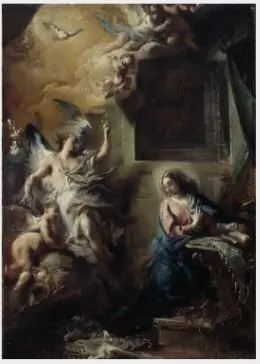
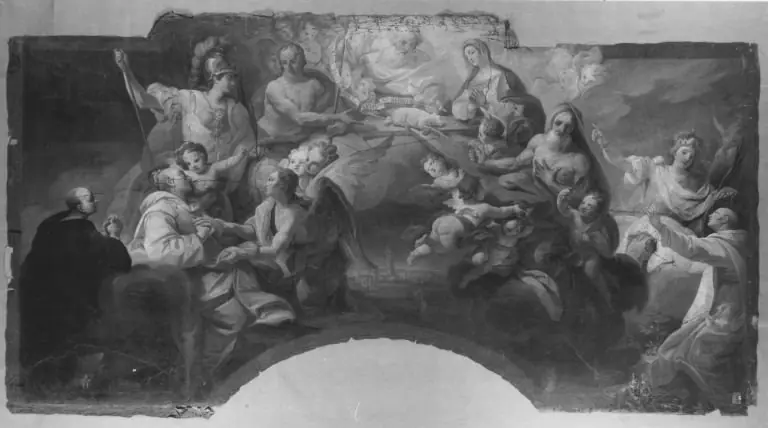
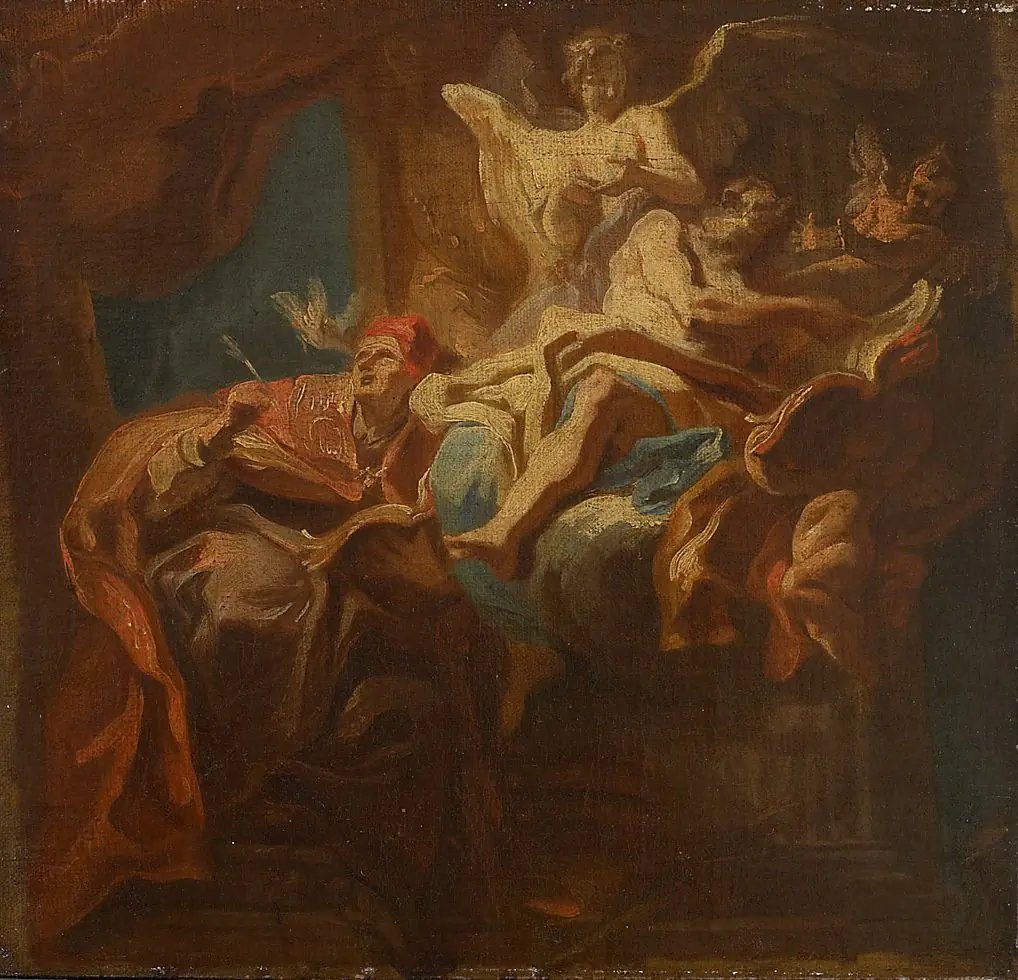
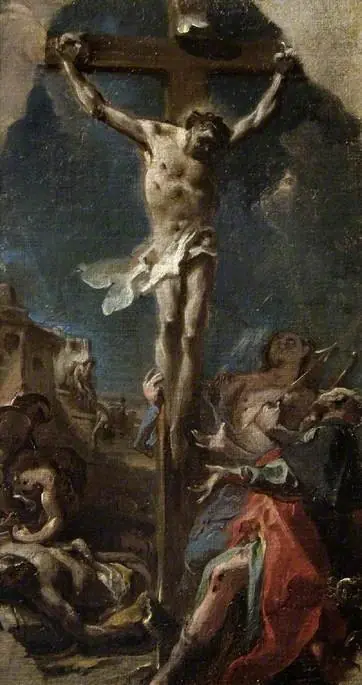
 Assumption of the Virgin
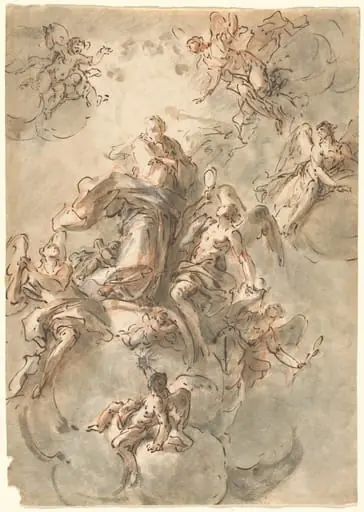 Virgin of the Immaculate Conception
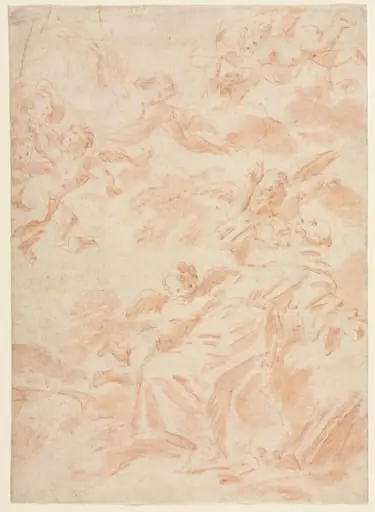 The Stigmatization of Saint Francis
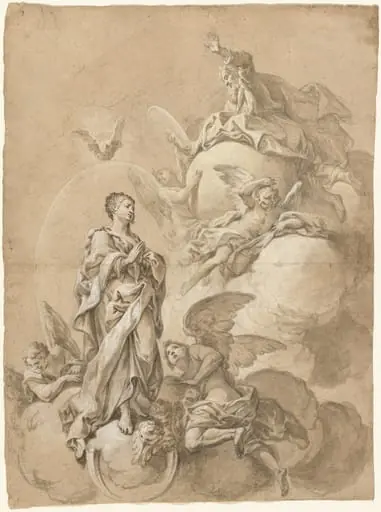 Vision of the Immaculate Conception
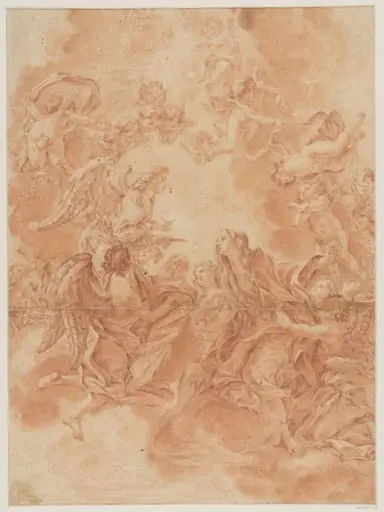 The Communion of St Mary Magdalene
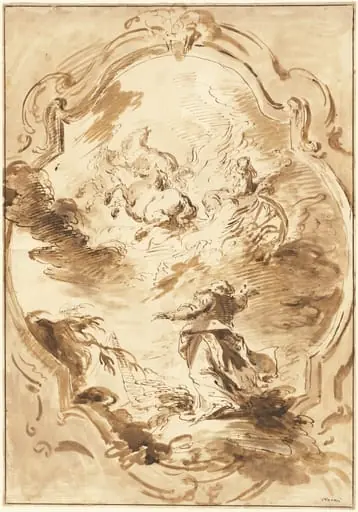 Elisha Watching Elijah Ascend in the Fiery Chariot
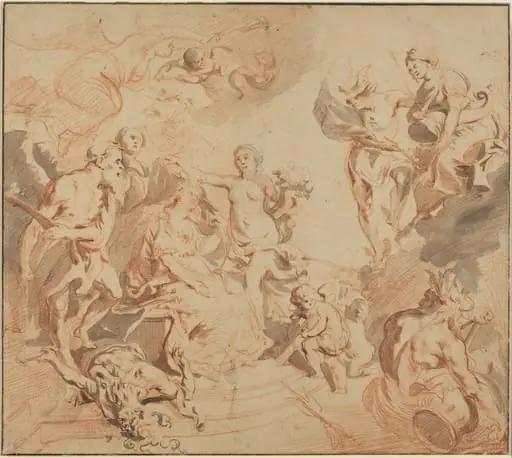 Antwerp Blessed with Abundance
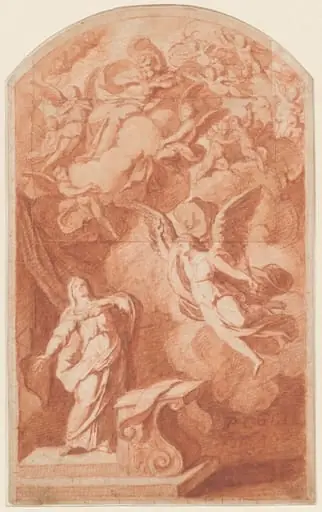 The Annunciation
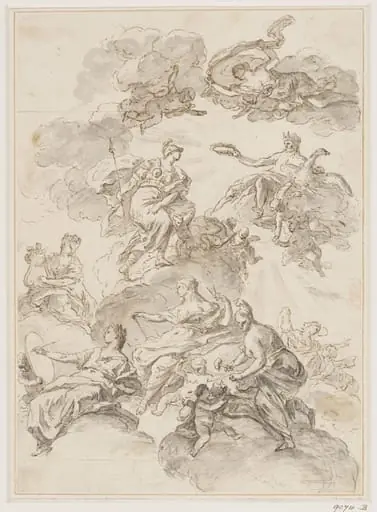 Minerva commending the arts of sculpture, architecture, painting and music to Jupiter
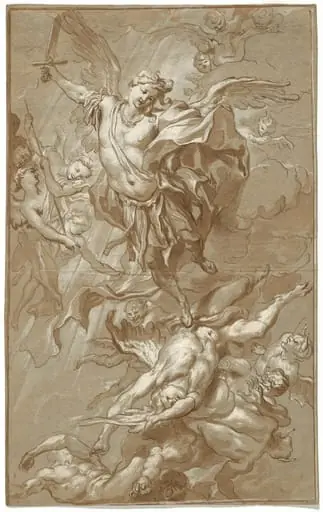 Saint Michael and the Rebel Angels