Artwork
Apollo Chasing Daphne
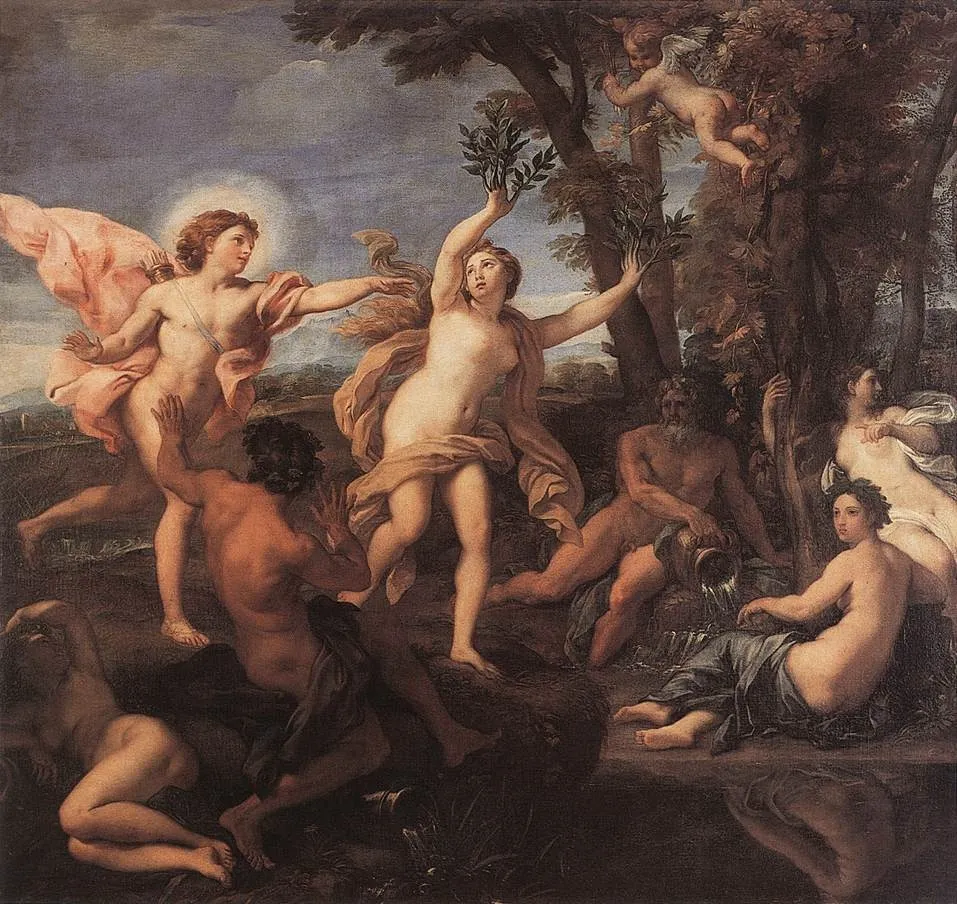
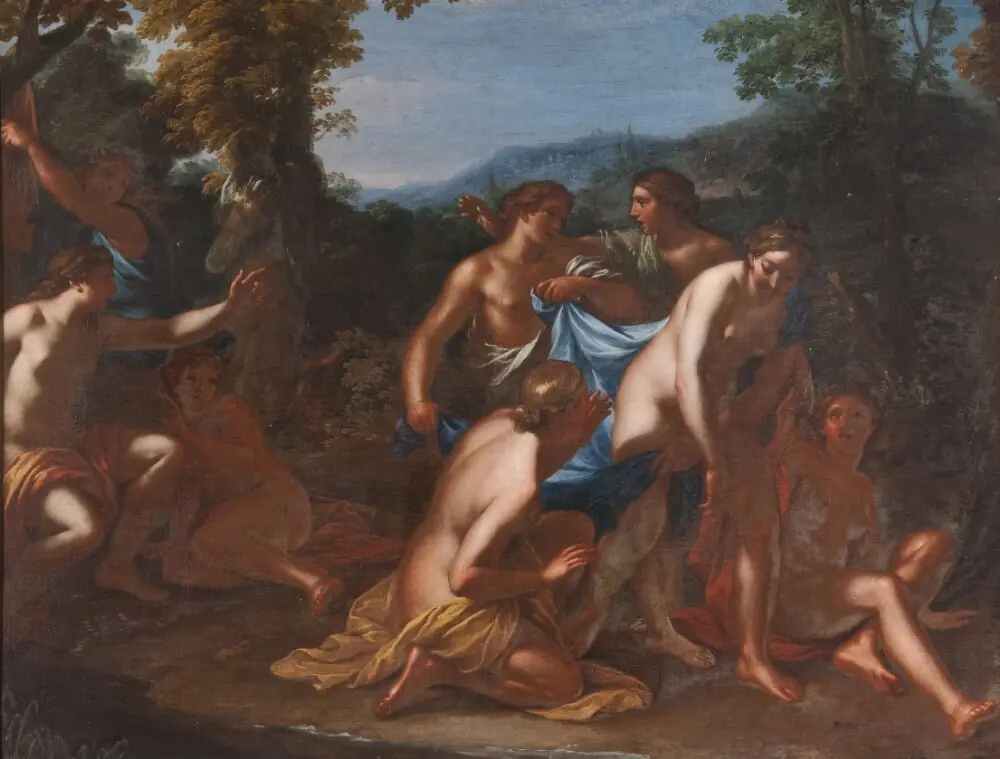
Apollo Chasing Daphne is an oil painting by the High Baroque Italian artist Carlo Maratta. It dates from 1691 and is held in the collection of the Royal Museums of Fine Arts of Belgium.
About this work
Overview
The painting is now part of the Royal Museums of Fine Arts of Belgium’s collection, reflecting its enduring presence in European art institutions.
Painted in 1691 by Carlo Maratta, this oil on canvas work illustrates a moment from Ovid’s *Metamorphoses*. Maratta, a central figure in Roman art of the late Baroque period, executed the piece during a time when classical themes were favored by ecclesiastical and noble patrons. The painting is now part of the Royal Museums of Fine Arts of Belgium’s collection, reflecting its enduring presence in European art institutions.
Subject & Meaning
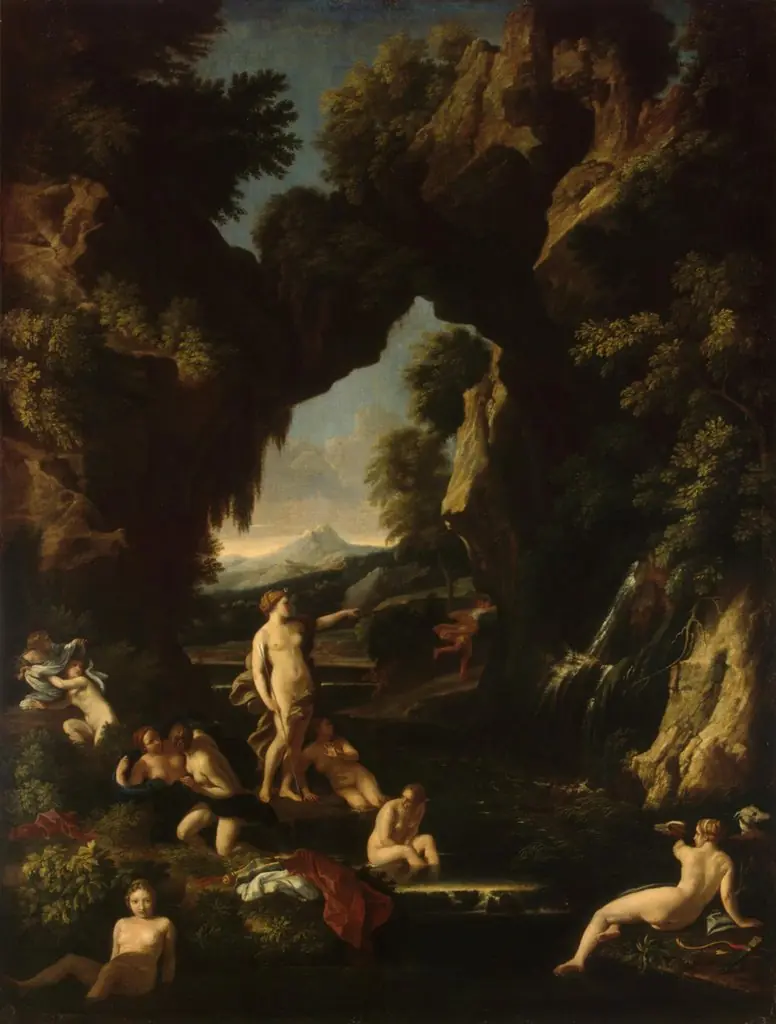
The scene captures Apollo’s pursuit of the nymph Daphne as she begins to transform into a laurel tree to escape him. Rooted in Ovid’s myth, the moment signifies the tension between desire and transformation, divine power and mortal vulnerability. Maratta renders the transition with subtle physical changes—fingers becoming branches, skin turning to bark—emphasizing the inevitability of Daphne’s metamorphosis and Apollo’s futile chase.
Technique & Style
Maratta employs a refined chiaroscuro to model the figures with soft gradations of light and shadow, enhancing their three-dimensionality without theatrical intensity. His brushwork is controlled and elegant, aligning with a classicizing approach that tempers Baroque dynamism with restraint. The landscape background, rendered in muted tones, recedes gently, framing the central figures without distracting from their narrative tension.
History & Provenance
Commissioned during Maratta’s peak influence in Rome, the painting likely originated in a private or ecclesiastical collection before entering Belgian holdings. Its presence in the Royal Museums of Fine Arts of Belgium suggests acquisition during the 18th or 19th century, possibly through diplomatic or aristocratic channels. The work’s survival in good condition reflects careful stewardship over centuries.
Context
Maratta’s style emerged in reaction to the more flamboyant Baroque of his contemporaries, favoring clarity and compositional balance influenced by Raphael and classical antiquity. In late 17th-century Rome, such classicizing narratives were favored by the papal court as expressions of moral and aesthetic order. This painting reflects a broader cultural preference for mythological subjects that conveyed virtue, restraint, and poetic transformation.
Legacy
Though less celebrated today than some Baroque peers, Maratta’s work maintained influence through his role as a teacher and his adherence to classical ideals. *Apollo Chasing Daphne* exemplifies a quieter, more introspective strand of Baroque mythological painting, one that prioritized narrative clarity and formal harmony over spectacle. It remains a representative example of Roman classicism in the decades before Rococo ascendance.
Artist & collection
Artist
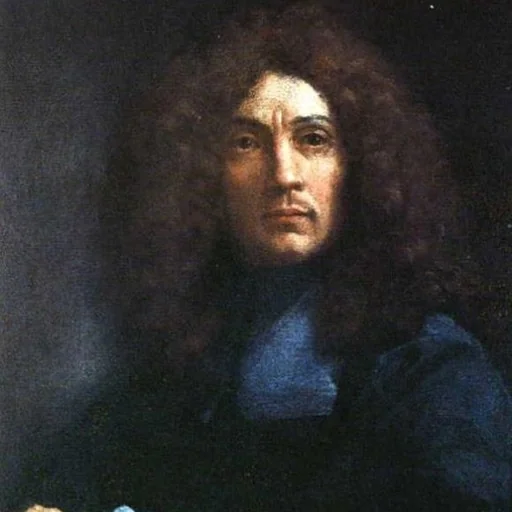
Carlo Maratta or Maratti (18 May 1625 – 15 December 1713) was an Italian Baroque painter and draughtsman, active principally in Rome where he was the leading painter in the second half of the 17th century.

Museum
Royal Museums of Fine Arts of Belgium
Continue through works from the same source collection.